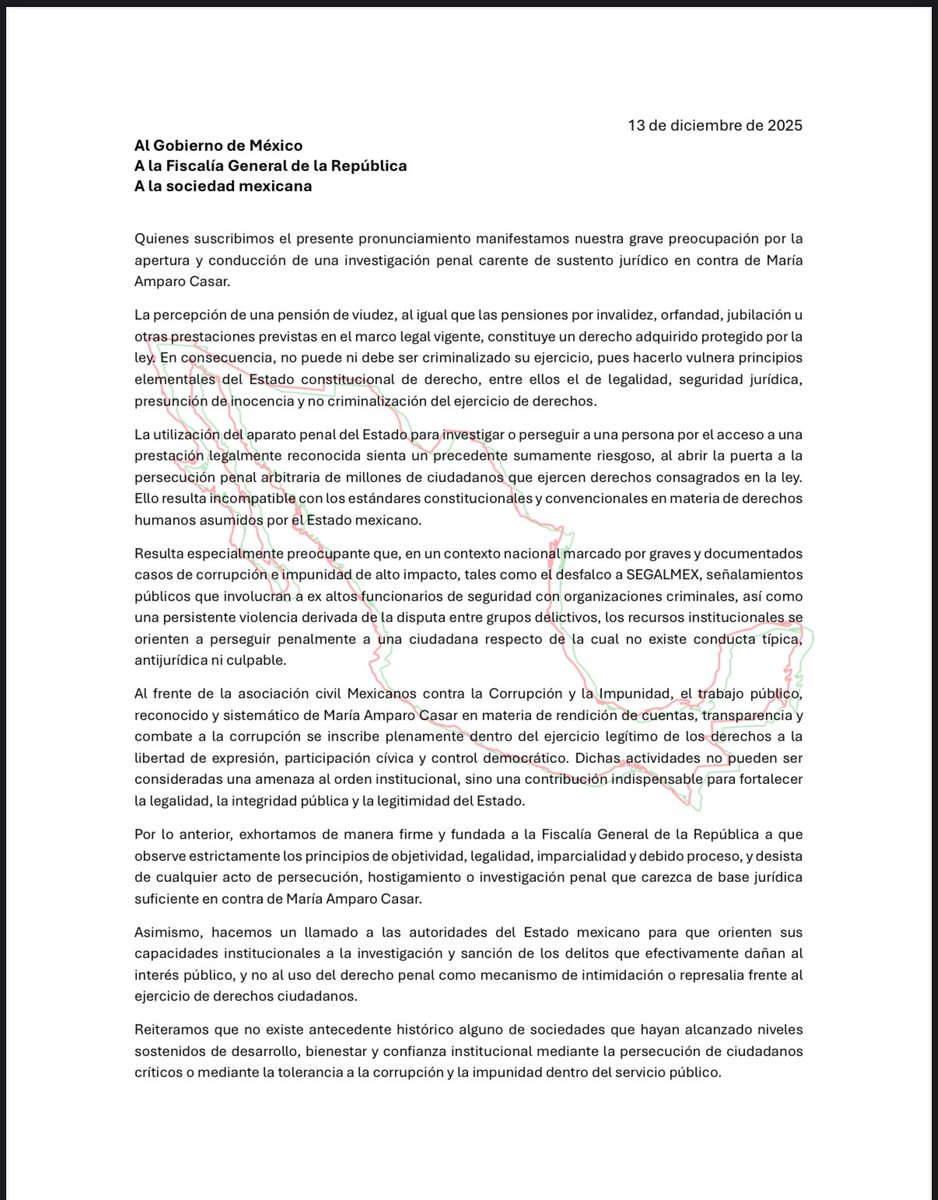
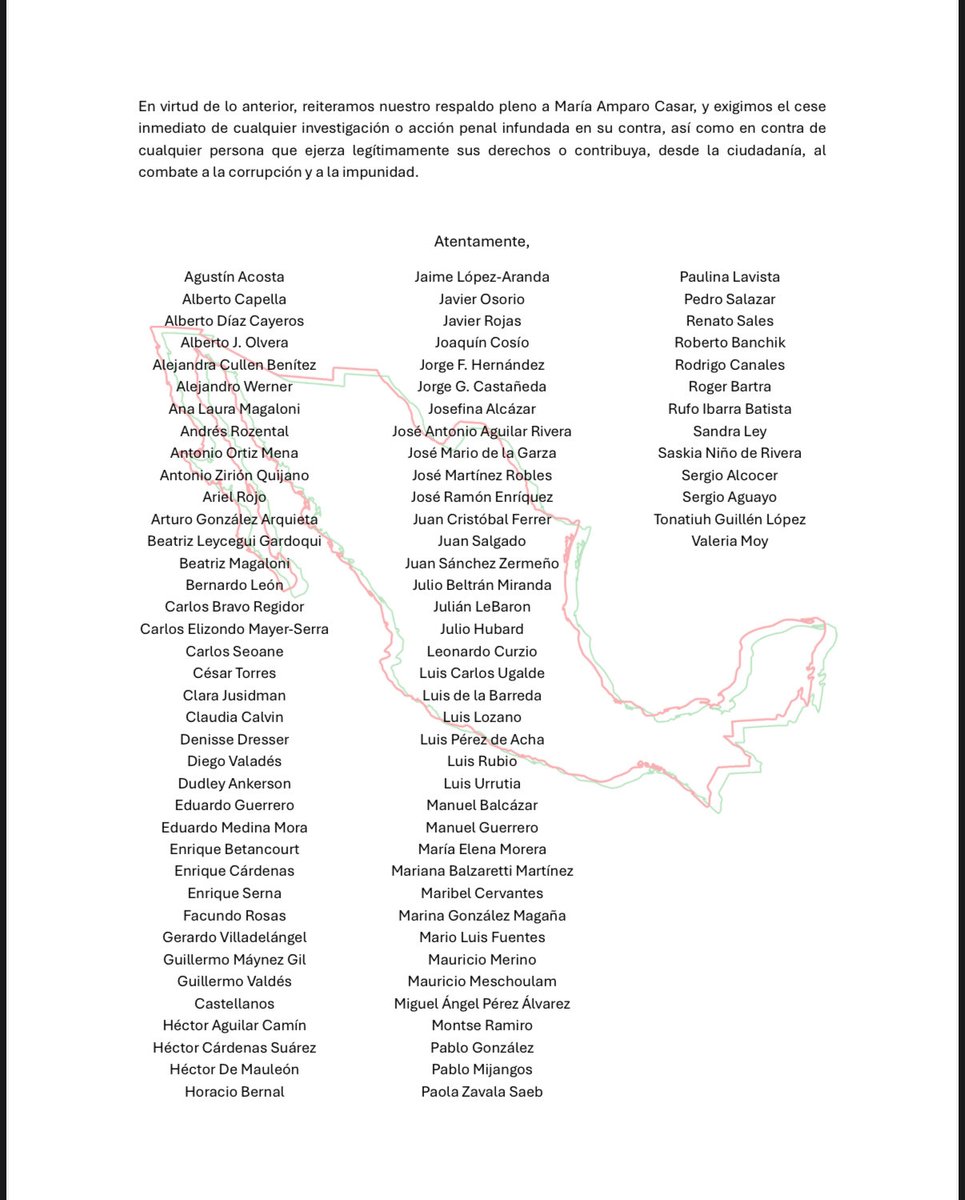
Ha comenzado a correr este pronunciamiento en solidaridad con María Amparo Casar y en contra de la persecución arbitraria de que se le quiere hacer víctima.
Se agradece su RT.
👇
Sin acarreados, sin amenazas de retiro de beca, sin frutsis, sin tortas de queso de puerco, sin 500 de "ayuda", sin camiones pagadas por el partido..
Hijole chairos esto si calienta..😡
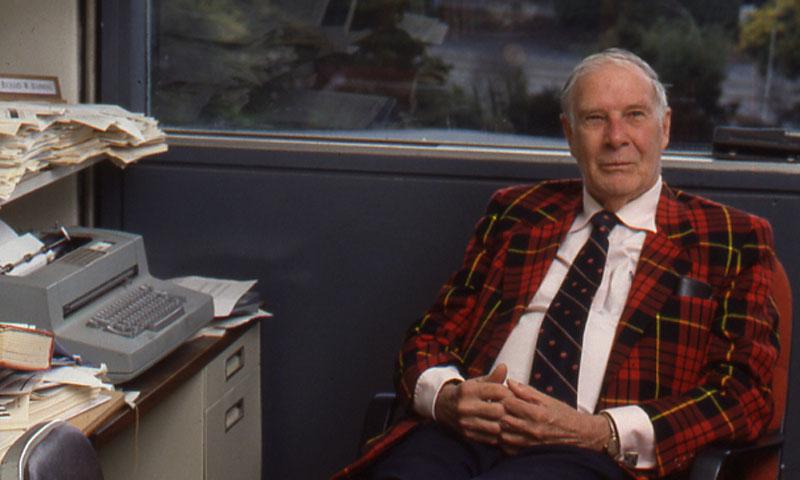
A mathematician at Bell Labs noticed that the scientists who won Nobel Prizes and the ones who never amounted to anything were equally smart, equally hardworking, and equally credentialed, and the only thing that separated them was a single question almost nobody is brave enough to ask themselves before they die.
His name was Richard Hamming.
He spent 30 years at Bell Labs, in the same building as John Tukey, Walter Brattain, and a long list of physicists who took home Nobel prizes for work they did down the hall from his office, including the legendary Claude Shannon.
His invention of error-correcting codes made modern computing possible. He has won the Turing Award. And all the while he was creating his own legacy he was secretly doing a study on the people around him.
The study was straightforward. 2 Teams. The legends and the lost. Same I.Q.s. Degrees same. Same desk hours. Same access to the world’s best resources.
And yet, at the end of 40 years in their careers, one group had changed entire fields, and the other group could not be remembered by their own colleagues five years after retirement. He wanted to discover what the actual difference was.
In March 1986, he stood before 200 researchers in a Bellcore auditorium and told them what he had seen.
He said it all came down to one question. And hardly anyone he ever met was willing to ask it directly.
He called it the Friday-afternoon ritual. He spent years blocking out his Friday afternoons and not doing anything productive with them every week. No experiments. No meetings. No deliverables.
He called it Great Thoughts Time. He sat down with a notebook and asked himself a couple of questions in order. What are the most relevant problems in my discipline? And why I am not working on either of them.”
Most weeks, the answer was the same, he said. For a week now he had marched confidently in a direction he did not think was the most important direction. He was a goer. He worked a bit. He was getting clean results that would publish in respected journals. (
And for five days straight he'd been lying to himself about whether any of it mattered.
The reason almost nobody does this ritual is because the honest answer is unbearable. The thing is that if you sit down on a Friday afternoon and say out loud that you are not working on the most important problem in your field, now you have to do something about it.
You have an immediate change in direction, or you have to keep lying to yourself every week from that point on. Most people choose the lie.
In the short term it’s cheaper, but over a career it’s more expensive.
Hamming took the ritual a step further in the Bell Labs cafeteria. He began approaching scientists he barely knew, asking them what they thought the most important problems in their field were.
A week later he would ask them why they had not worked on these problems. Eventually people wouldn't have lunch with him. “I had to keep finding new tables,” he said.
Nobody had a good answer for that, and being around someone who kept asking it made every meal feel like a performance review.
The line that broke me is the line that most people skim over in the transcript. His words: If you do not work on an important problem you are unlikely to do important work.
That’s not motivational line. It is a rational one. You cannot make a great result from a problem that does not matter. Input restricts the output. The choice of the problem is the ceiling of the career.
The transcript has been freely available on the internet for almost 40 years. Stripe Press published the complete lectures as a book. Naval Ravikant quotes it all the time. It’s still given out to new hires at every serious engineering lab in Silicon Valley.
Most people will not run the ritual this Friday. They will be busy. They always are.
TV Tuesday—Buster Keaton slips up on the job & leaves a passer-by (played by his wife, Eleanor) in her slip in this clip from a 1956 episode of “Circus Time.”
#oldhollywood#damfino#classictv
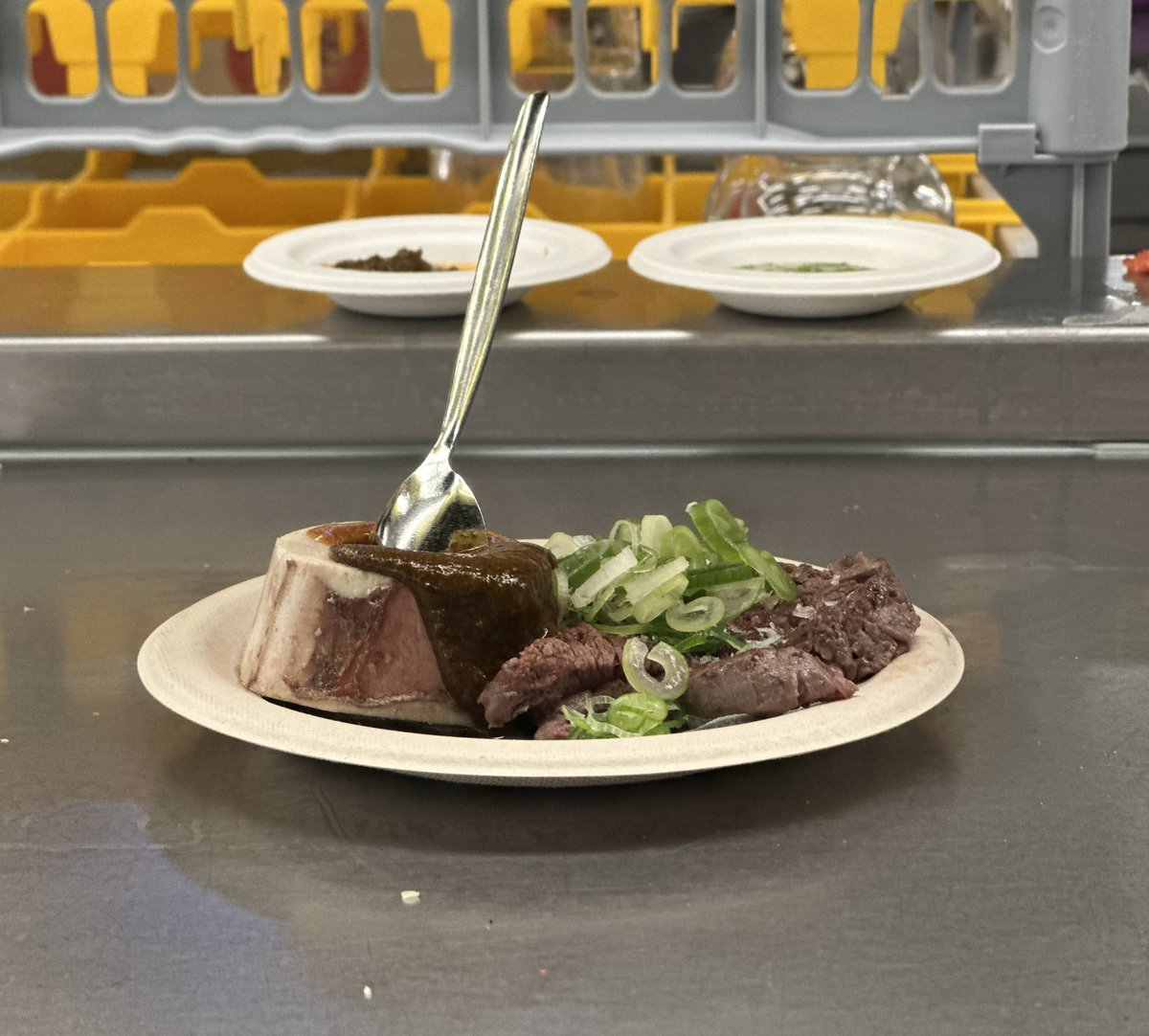
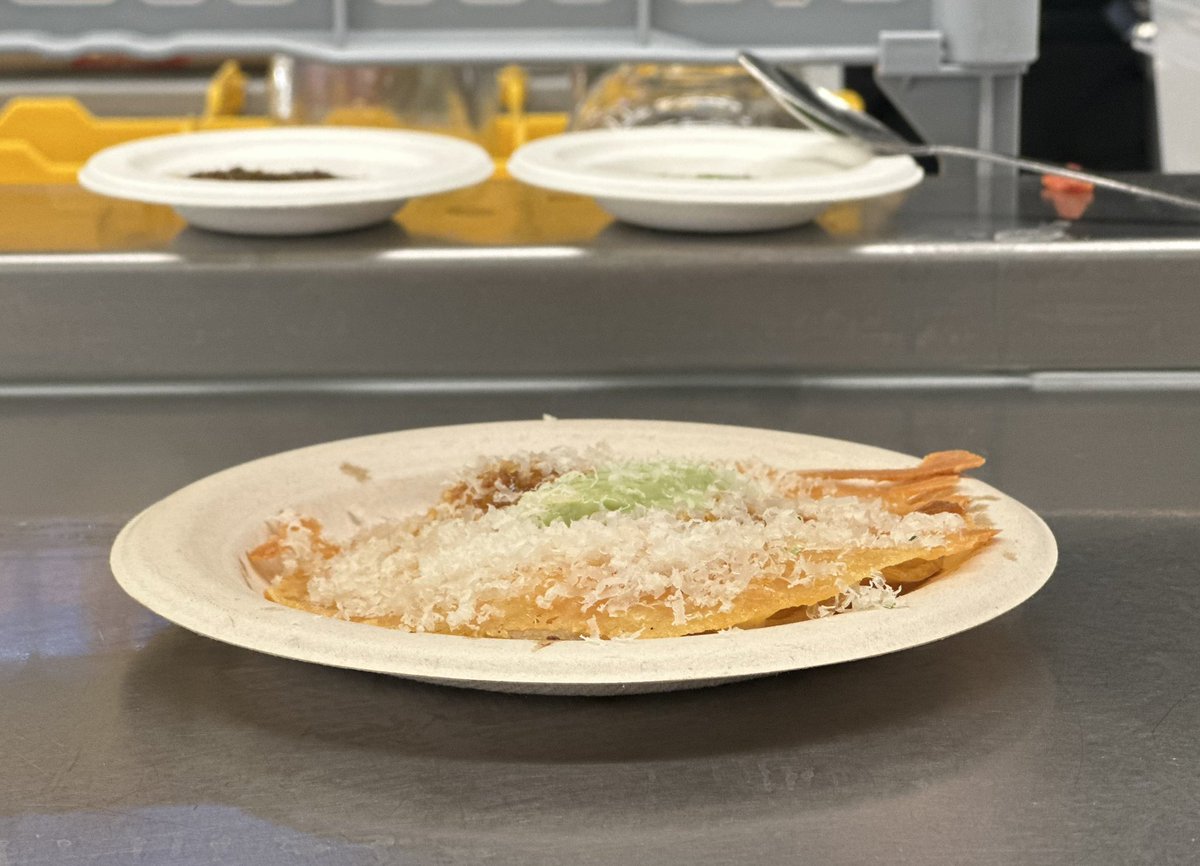
Me sumo a los partidarios de Chiribita en Bernabéu Market. La mayoría de sus tacos están a otro nivel. Mis favoritos: el gobernador, el de tuétano y el gringo. Y, además, mucho acento mexicano entre mis acompañantes de barra. Ganas de volver, y eso que el entorno no es el mejor. Gracias a @cook_obsession por la pista.
Es educación, conexiones construidas, y la decisión de competir. En México gusta el "sí se puede". Pero necesitamos saber. Necesitamos poder. La diferencia entre "sí se puede" y "sí sé, puedo" no es semántica. Es la distancia entre aplaudir desde las gradas y estar en la cancha
An interesting visualization of the tides on our planet
The Moon's gravitational pull creates two tidal bulges on opposite sides of the Earth, causing the rise and fall of sea level we perceive as tides. As the Earth rotates, different parts of the planet pass through these tidal bulges, resulting in two high tides and two low tides each day.
:A true masterpiece of human engineering. The Orion spacecraft is far more than just a capsule — it’s a sophisticated, fully integrated lifeboat designed to carry humans safely through the deadliest environment we’ve ever dared to enter: the void of deep space. Every inch of Orion has been engineered with one goal in mind — https://t.co/2iqjF4qNW7 features a state-of-the-art life support system that recycles air and water with remarkable efficiency. Its massive heat shield is built to withstand blistering temperatures of nearly 2,800°C (5,000°F) during the fiery plunge back through Earth’s atmosphere — hotter than the surface of the Sun. Powered by the European Service Module, Orion unfurls vast solar arrays to drink in sunlight for energy, while its powerful engines perform the delicate, life-saving maneuvers required in the unforgiving expanse between Earth and the Moon.This machine represents decades of relentless innovation, international collaboration, and pure human ambition.Orion isn’t merely a https://t.co/Y56PwmmBif is humanity’s boldest bridge yet — carrying us back to the Moon, onward to Mars, and ultimately toward the stars beyond.
This image was taken in 1969 and shows Margaret Hamilton, a software engineer at MIT, standing beside a stack of folders containing nothing less than the printed code of the software that she and her team wrote for Apollo 11—the mission that carried the first human to the Moon.
The stack, which contained around 140,000 lines of code (about 80 KB of data), is as tall as she is.
It stands as a symbol not only of the enormous amount of work required for such an achievement, but also of the crucial role played by software that was, at the same time, both small and immensely powerful in the success of the lunar mission.
This visualization shows the Hybrid Free Return Trajectory, a masterpiece of orbital mechanics that ensures the crew's safety using the laws of gravity.
Artemis II won't go straight to the Moon. First, it enters a High Earth Orbit (HEO) to test life support systems. Then, a Trans-Lunar Injection (TLI) burn pushes the Orion capsule toward the Moon. The beauty of this path is that if the engine fails once they are on their way, lunar gravity will naturally "slingshot" the capsule back toward Earth without any additional fuel.
The loops near Earth represent the Perigee Raising Maneuver, where the spacecraft uses its own velocity and Earth's gravity to "climb" higher before making the final push. It’s a delicate balance of v = sqrt(GM/r), where G is the gravitational constant, M is Earth's mass, and r is the orbital radius.
By following this "figure-eight," NASA minimizes the risk of the crew being stranded in deep space, making the Moon itself the ultimate safety net for the mission.