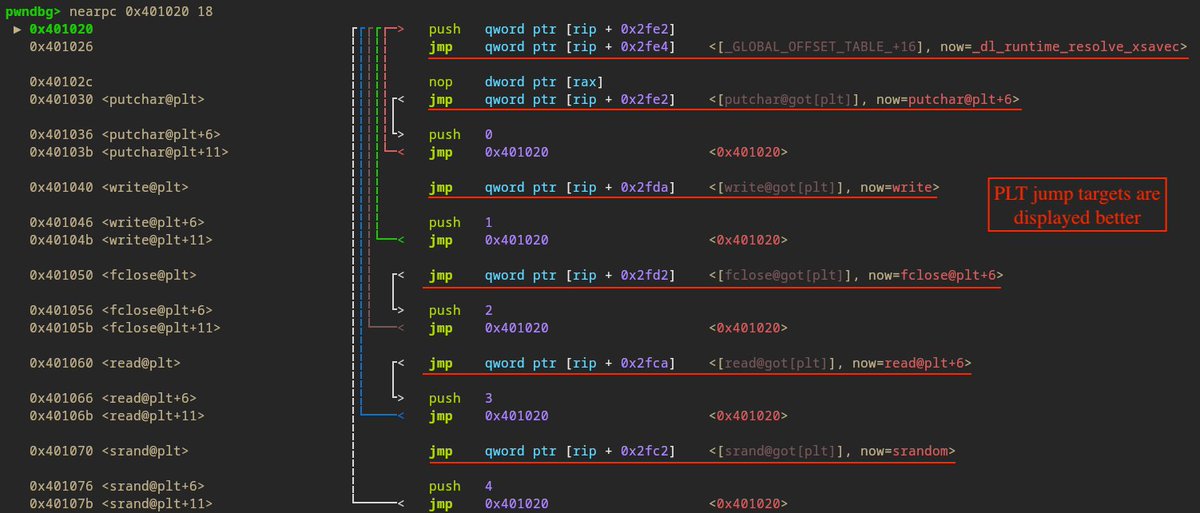
@ParkerRex "Functions that match the original byte for byte" is a measure that makes no sense. For it to be true offsets to plt stubs, rel jumps must be identical across two binaries, which is possible but not scalable since you'll need to write linkerscript entries for each function.
@ParkerRex Also optimisations produced by compilers today are different from optimisations used by compilers 20 years ago - same loop can be compiled to different assembly depending on compiler.
@sandniko3@Office2007_Word I'm not sure. I don't recommend being optimistic about it, since the last device this kind of bug worked on release around a decade ago.
But it _should_ be possible, if you reverse engineer the `aboot` partition.
@ChShersh it's cool but you lose cursor position and have pray to god C-o takes you back. I usually put the formatting into a command and bind something like <leader>-' to it.
In the mid 90's, viable remote exploits were plentiful if you knew how to write them or get them (e.g. subscribe to BUGTRAQ, beg over IRC, etc.). It didn't take all that much to wield a lot of power.
That insecurity status quo was in rough equilibrium until the year 2000 when Internet worms automated exploiting those vulnerabilities across the Internet at scale.
We are right now standing at the precipice of another change in equilibrium like that, but this time based on AI radically democratizing finding vulnerabilities, developing exploits, and using them operationally.
It's your choice whether to play around with p(doom) sophistry or get to work on solving the more realistic near-term problems that we will all face.
In my very first CTF, I didn't make it past the second step. Next year I did the exact same CTF and crushed most of it. I remember my first RE challenge where someone walked me through reading assembly. Unless you create your own model, bringing AI to a CTF makes me laugh at you.