We will make the new 𝕏 algorithm, including all code used to determine what organic and advertising posts are recommended to users, open source in 7 days.
This will be repeated every 4 weeks, with comprehensive developer notes, to help you understand what changed.
Yesterday a quasi-judicial body in Italy fined @Cloudflare $17 million for failing to go along with their scheme to censor the Internet. The scheme, which even the EU has called concerning, required us within a mere 30 minutes of notification to fully censor from the Internet any sites a shadowy cabal of European media elites deemed against their interests. No judicial oversight. No due process. No appeal. No transparency. It required us to not just remove customers, but also censor our 1.1.1.1 DNS resolver meaning it risked blacking out any site on the Internet. And it required us not just to censor the content in Italy but globally. In other words, Italy insists a shadowy, European media cabal should be able to dictate what is and is not allowed online.
That, of course, is DISGUSTING and even before yesterday’s fine we had multiple legal challenges pending against the underlying scheme. We, of course, will now fight the unjust fine. Not just because it’s wrong for us but because it is wrong for democratic values.
In addition, we are considering the following actions: 1) discontinuing the millions of dollars in pro bono cyber security services we are providing the upcoming Milano-Cortina Olympics; 2) discontinuing Cloudflare’s Free cyber security services for any Italy-based users; 3) removing all servers from Italian cities; and 4) terminating all plans to build an Italian Cloudflare office or make any investments in the country.
Play stupid games, win stupid prizes. While there are things I would handle differently than the current U.S. administration, I appreciate @JDVance taking a leadership role in recognizing this type of regulation is a fundamental unfair trade issue that also threatens democratic values. And in this case @ElonMusk is right: #FreeSpeech is critical and under attack from an out-of-touch cabal of very disturbed European policy makers.
I will be in DC first thing next week to discuss this with U.S. administration officials and I’ll be meeting with the IOC in Lausanne shortly after to outline the risk to the Olympic Games if @Cloudflare withdraws our cyber security protection.
In the meantime, we remain happy to discuss this with Italian government officials who, so far, have been unwilling to engage beyond issuing fines. We believe Italy, like all countries, has a right to regulate the content on networks inside its borders. But they must do so following the Rule of Law and principles of Due Process. And Italy certainly has no right to regulate what is and is not allowed on the Internet in the United States, the United Kingdom, Canada, China, Brazil, India or anywhere outside its borders.
THIS IS AN IMPORTANT FIGHT AND WE WILL WIN!!!
Now that ZKEVMs are at alpha stage (production-quality performance, remaining work is safety) and PeerDAS is live on mainnet, it's time to talk more about what this combination means for Ethereum.
These are not minor improvements; they are shifting Ethereum into being a fundamentally new and more powerful kind of decentralized network.
To see why, let's look at the two major types of p2p network so far:
BitTorrent (2000): huge total bandwidth, highly decentralized, no consensus
Bitcoin (2009): highly decentralized, consensus, but low bandwidth - because it’s not “distributed” in the sense of work being split up, it’s *replicated*
Now, Ethereum with PeerDAS (2025) and ZK-EVMs (expect small portions of the network using it in 2026), we get: decentralized, consensus and high bandwidth
The trilemma has been solved - not on paper, but with live running code, of which one half (data availability sampling) is *on mainnet today*, and the other half (ZK-EVMs) is *production-quality on performance today* - safety is what remains.
This was a 10-year journey (see the first commit of my original post on DAS here: https://t.co/Fa0jKFgObW , and ZK-EVM attempts started in ~2020), but it's finally here.
Over the next ~4 years, expect to see the full extent of this vision roll out:
* In 2026, large non-ZKEVM-dependent gas limit increases due to BALs and ePBS, and we'll see the first opportunities to run a ZKEVM node
* In 2026-28, gas repricings, changes to state structure, exec payload going into blobs, and other adjustments to make higher gas limits safe
* In 2027-30, large further gas limit increases, as ZKEVM becomes the primary way to validate blocks on the network
A third piece of this is distributed block building.
A long-term ideal holy grail is to get to a future where the full block is *never* constituted in one single place. This will not be necessary for a long time, but IMO it is worth striving for us at least have the capability to do that.
Even before that point, we want the meaningful authority in block building to be as distributed as possible. This can be done either in-protocol (eg. maybe we figure out how to expand FOCIL to make it a primary channel for txs), or out-of-protocol with distributed builder marketplaces. This reduces risk of centralized interference with real-time transaction inclusion, AND it creates a better environment for geographical fairness.
Onward.
I've never felt this much behind as a programmer. The profession is being dramatically refactored as the bits contributed by the programmer are increasingly sparse and between. I have a sense that I could be 10X more powerful if I just properly string together what has become available over the last ~year and a failure to claim the boost feels decidedly like skill issue. There's a new programmable layer of abstraction to master (in addition to the usual layers below) involving agents, subagents, their prompts, contexts, memory, modes, permissions, tools, plugins, skills, hooks, MCP, LSP, slash commands, workflows, IDE integrations, and a need to build an all-encompassing mental model for strengths and pitfalls of fundamentally stochastic, fallible, unintelligible and changing entities suddenly intermingled with what used to be good old fashioned engineering. Clearly some powerful alien tool was handed around except it comes with no manual and everyone has to figure out how to hold it and operate it, while the resulting magnitude 9 earthquake is rocking the profession. Roll up your sleeves to not fall behind.
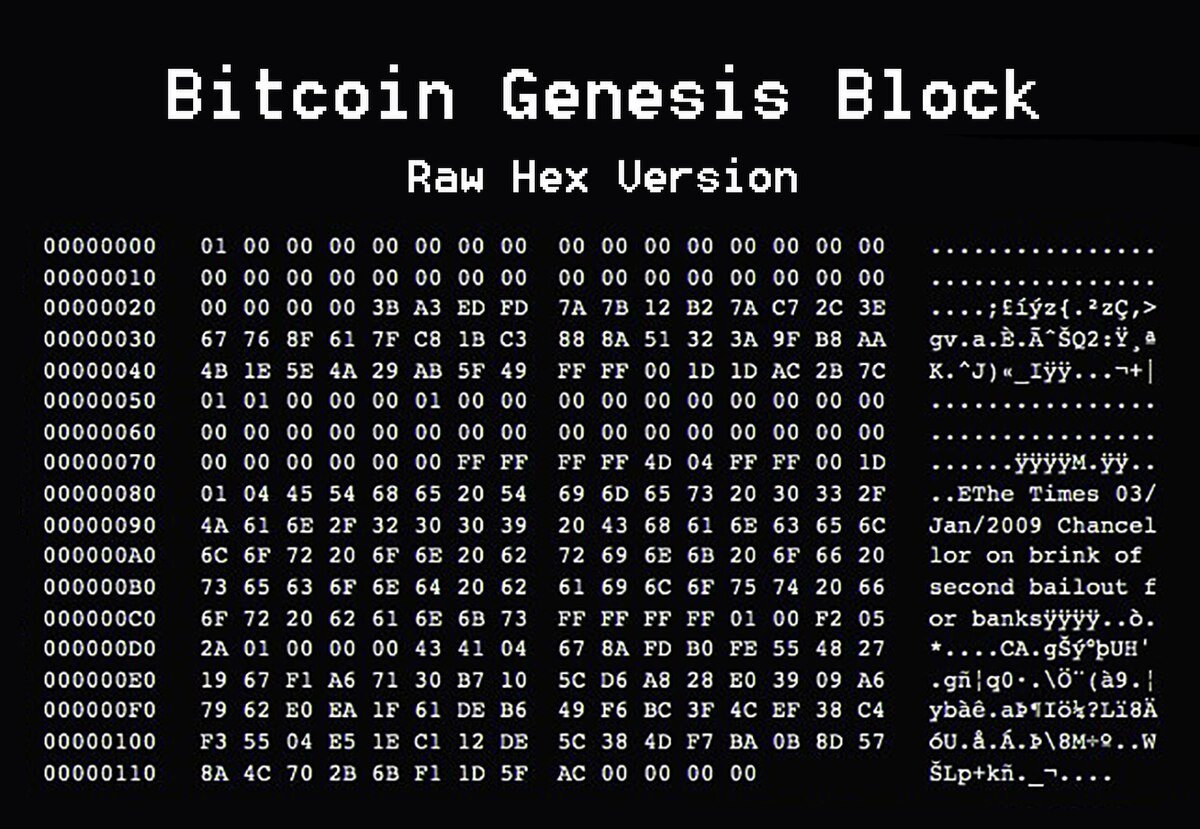
Bitcoin doesn't require a bank or military to protect it. It instead runs this SHA-256 hash function.
1,000,000,000,000,000,000,000 times per second by computers globally.
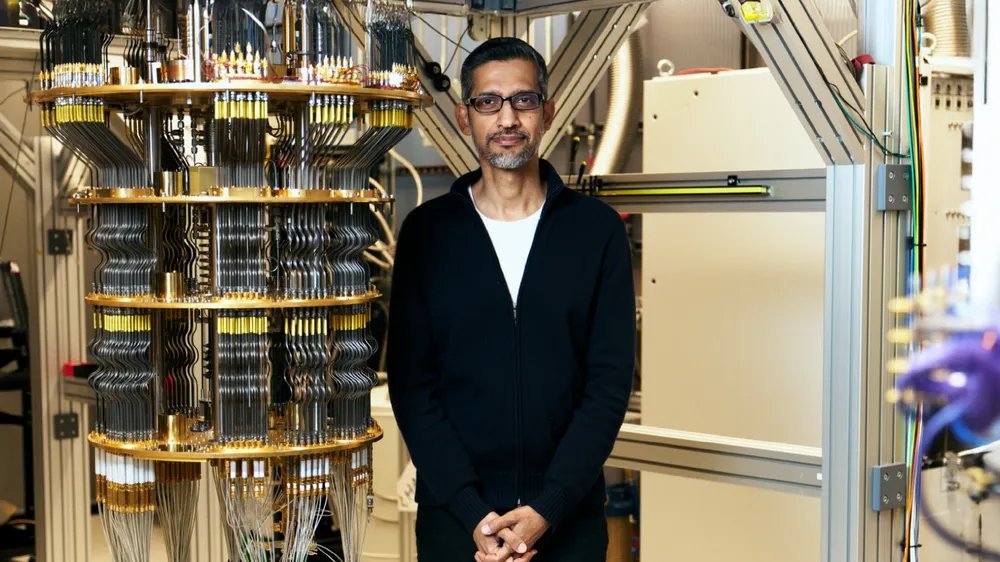
BREAKING: Google's quantum chip computed a 150-year problem in 2 hours—and proved it.
Nature confirmed today: Willow achieved verifiable quantum advantage, meaning physics validates its answers. At 13,000× classical speed with 99.9% fidelity across 105 qubits, it's not just calculating faster—it's perceiving molecular structures that were mathematically invisible until this morning.
We are excited to announce the launch of our new website! 🚀🌐 At Itaca Technologies, we have been immersed in a rebranding process. Now, we have modernized and simplified our site to present everything more clearly. 🔗 https://t.co/3EDXvnmY8S
Nature's 2024 tech watchlist highlights seven revolutionary fields, from protein engineering and 3D printing to deepfake detection.
https://t.co/DxdK135eZe
This approach, prioritizing the user interface and experience, led to Apple's massive success and influenced entire tech industry.
https://t.co/PrMlCNAdXj
Today CES 2024 finishes, one of the biggest events of technology in the world, take a look at some of the products and startups that appeared.
https://t.co/FmPRleSlhq
The new button, officially known as the Copilot key. This AI can assist with tasks like creating images, generating songs, and enhancing writing, as well as more routine tasks like adjusting PC settings. https://t.co/NKSDMuSQ53
"Digital car keys are the future! They let you control your car via phone, but face challenges in standardization, security, and battery life. #DigitalKeys#TechTrends#CarInnovation"
https://t.co/wzPy1KywoM
Patch Tuesday, Microsoft has released its final Patch Tuesday update for 2023, fixing 33 vulnerabilities, including 4 critical ones.
(https://t.co/cnCWKYkcal)
Australia is creating a highly secure cloud for intelligence data sharing, aiming to improve real-time information exchange and standardize operations within the "Five Eyes" alliance. This project emphasizes the role of AI in intelligence work. (https://t.co/1p7LQbSRpY)
EU's new Cyber Resilience Act sets strict security standards for tech products, spares open-source software. Recent breaches in OpenZFS, Chrome, Apple; Montana's TikTok ban blocked. Dollar Tree, Family Dollar data leak affects 2M. #CyberSecurity (https://t.co/N1g4pAgjmZ)