"Qui vere philosophari volunt, [...] primordia ac fundamenta doctrinae in Thoma Aquinate ponant. Eo neglecto, pronum esse in opinionum portenta delabi atque ipsa rationalismi peste sensim afflari, nimium jam res et facta testantur." (Leo XIII, Litter. ad Minist. Gener. OFM, 1898)
“Every Catholic knows and feels that the specific essence of the Catholic faith consists of that obedience to the Church, to the extent to which he knows and feels and takes pride in the fact that he is not merely a member in general, but also in the fullest sense of the word a child of the Catholic Church and honors her with all his heart as his Mother endowed with the authority of her heavenly Bridegroom and of His heavenly Father. This awareness, however, is lost to the degree that one listens, because of anti-Catholic external influences or because of one’s own pride, to the voice of the ancient serpent, which whispers to us that that childlike relation is on the one hand the undignified dependency of a free man, and on the other hand an oppressive tyranny, while the Savior teaches us: ‘Unless you become as little children, you shall not enter into the kingdom of heaven’ [Mt 18:3], and Saint Peter tells us: ‘As newborn babes, desire the rational milk without guile’ (1 Pet 2:2).
Through such liberal influences and dispositions one can already lose the spirit of the Catholic faith before one denies a single truth of the Church’s faith, and then it takes only an occasion in order to rebel explicitly too against ecclesial authority, as recent examples abundantly teach. This occasion is usually provided when one ought to sacrifice one’s own opinions or fancies that are opposed to an ecclesial judgment; and then one excuses one’s pride by saying that the sacrificium intellectus is a suicide of the mind, or that one can offer it, after all, to God alone and not to a man. But the Church demands the sacrifice not for herself and in her own name but for God and in God’s name; she is also only the priestess for this sacrifice, through whose hand it should be offered to God Himself. And since as Bride of the Eternal Truth she is at the same time the Mother of life, the sacrifice placed in her hand becomes a life-giving, transfiguring, and uplifting sacrifice, just as the obedience that one shows her is a free and liberating obedience.”
(Scheeben, Dogmatik 1.2, Ch. 6, §43, n. 769)
For Catholics to recognize the present Crisis in the Church let alone appreciate it, I would recommend the following (10) encyclicals to “get their bearings”, so to speak:
• Pope Benedict XIV - A Quo Primum (1751): On Jews and Christians living in the same place, witness doctrine and social restrictions
• Pope Gregory XVI - Mirari Vos (1832): Condemnation of liberalism, revolution and indifferentism
• Pope Pius IX - Quanta Cura and Syllabus (1864): Comprehensive and renewed condemnation of modern errors
• Pope Leo XIII - Immortale Dei (1885): Doctrinal exposition of Christian government
• Pope Leo XIII - Satis Cognitum (1896): Unity of the Church, authority of the Pope and subjection to him
• Pope Leo XIII - Testem Benevelolentiae Nostrae (1899): On Americanism, doctrinal compromise and opposing the spirit of the age
• Pope St. Pius X - Pascendi Dominici Gregis (1907): Condemnation of modernism, its conspiracy and its various forms: biblical, philosophical, historical, religious, etc.
• Pope St. Pius X – Notre Charge Apostolique (1910): Condemnation of social modernism and false democracy that undermines Church authority and supernatural charity
• Pope Pius XI - Mortalium Animos (1928): - Condemnation of false ecumenism and its animating spirit and principles
• Pope Pius XII (Humani Generis, 1951) - Condemnation of neo-modernism and its tendencies
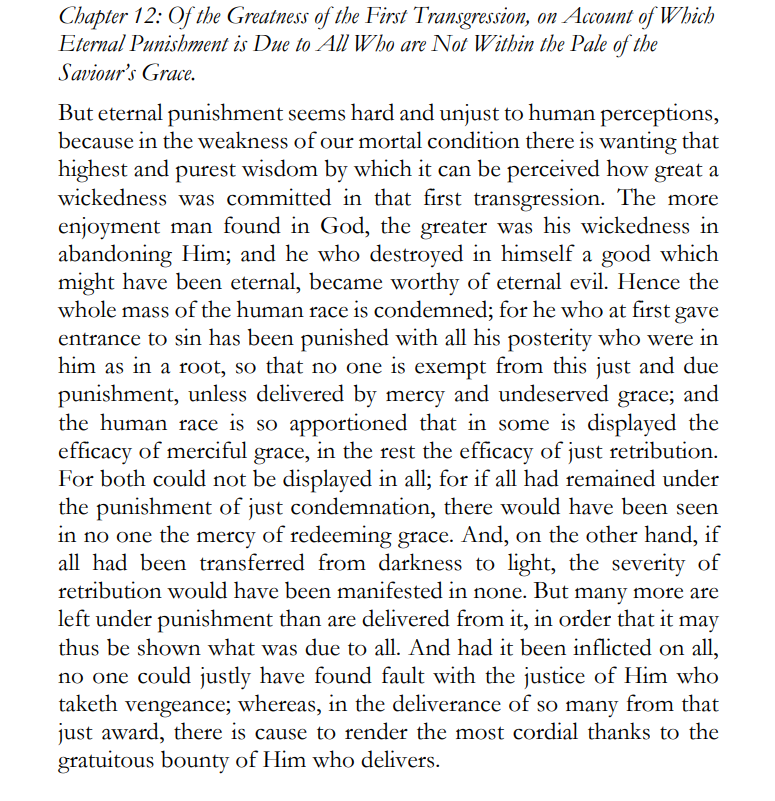
"We pray, therefore, not only for the unwilling, but also for the objecting and resisting. What, then, do we ask, but that from unwilling they may be made willing; from objecting, consenting; from resisting, loving?"
— St. Augustine (Contra Pelagianorum IV, 26)
@RomanoSace57080 I'm a member of the Confraternity of the FSSP, so have a strong affiliation with them, but alas wrt (Post)Conciliar Theology they are definitely like:
If we could see all He sees, we would unhesitatingly wish all He wishes. We would beg Him on bended knees for those afflictions we now ask Him to spare us." - St. Claude de la Colombiere
"If ever you have a fit of sadness or trouble, remember that it is because you are still attached to life, or health, or some comfort, or person, or thing that you ought to forget and despise that you may desire Jesus Christ only." - St. Claude de la Colombiere
@RomanoSace57080 Auch wenn er recht hat, ist diese Einlassung von P. Ramm FSSP in mehrerlei Hinsicht sehr unglücklich, und schadet der Sache womöglich mehr als sie nützt.
Pope Boniface VIII was one of the greatest Popes of all time.
He was willing to lay down his life before minimizing the Papal prerogatives in the slightest.
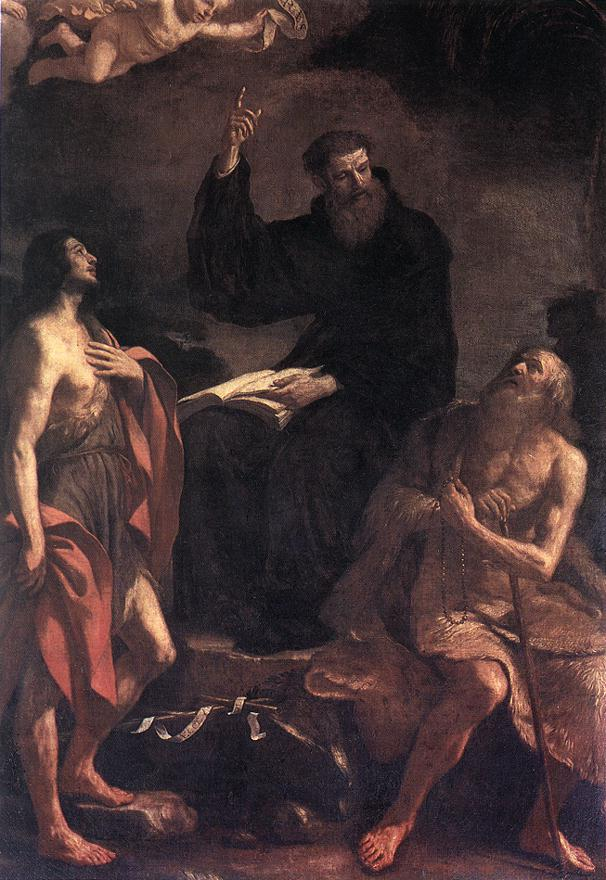
I will never cease to defend the honour and glory of St Augustine, the doctor of grace, and Church Father per excellence, at whose holy name heretics and schismatics tremble.
@WalmartThomist So even Francisco Marin-Sola, who was obviously a fan of Newman, much more than most other theologians of the schools around his time, is saying that he was not a great theologian or philosopher...





![DoorDashThomist's tweet photo. “Every Catholic knows and feels that the specific essence of the Catholic faith consists of that obedience to the Church, to the extent to which he knows and feels and takes pride in the fact that he is not merely a member in general, but also in the fullest sense of the word a child of the Catholic Church and honors her with all his heart as his Mother endowed with the authority of her heavenly Bridegroom and of His heavenly Father. This awareness, however, is lost to the degree that one listens, because of anti-Catholic external influences or because of one’s own pride, to the voice of the ancient serpent, which whispers to us that that childlike relation is on the one hand the undignified dependency of a free man, and on the other hand an oppressive tyranny, while the Savior teaches us: ‘Unless you become as little children, you shall not enter into the kingdom of heaven’ [Mt 18:3], and Saint Peter tells us: ‘As newborn babes, desire the rational milk without guile’ (1 Pet 2:2).
Through such liberal influences and dispositions one can already lose the spirit of the Catholic faith before one denies a single truth of the Church’s faith, and then it takes only an occasion in order to rebel explicitly too against ecclesial authority, as recent examples abundantly teach. This occasion is usually provided when one ought to sacrifice one’s own opinions or fancies that are opposed to an ecclesial judgment; and then one excuses one’s pride by saying that the sacrificium intellectus is a suicide of the mind, or that one can offer it, after all, to God alone and not to a man. But the Church demands the sacrifice not for herself and in her own name but for God and in God’s name; she is also only the priestess for this sacrifice, through whose hand it should be offered to God Himself. And since as Bride of the Eternal Truth she is at the same time the Mother of life, the sacrifice placed in her hand becomes a life-giving, transfiguring, and uplifting sacrifice, just as the obedience that one shows her is a free and liberating obedience.”
(Scheeben, Dogmatik 1.2, Ch. 6, §43, n. 769)](https://pbs.twimg.com/media/HIcMY6GW4AEnEsm.jpg)