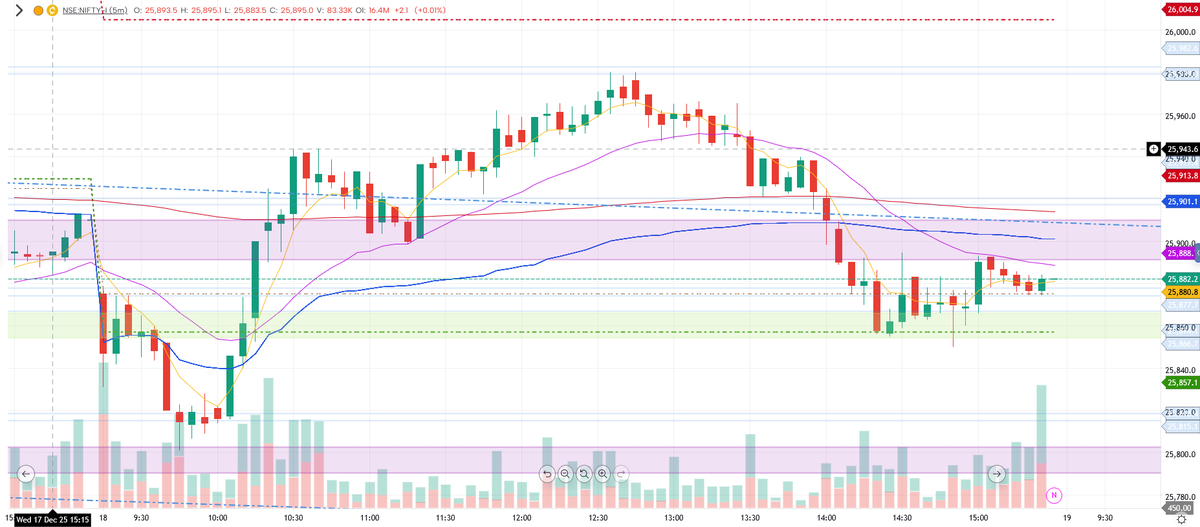
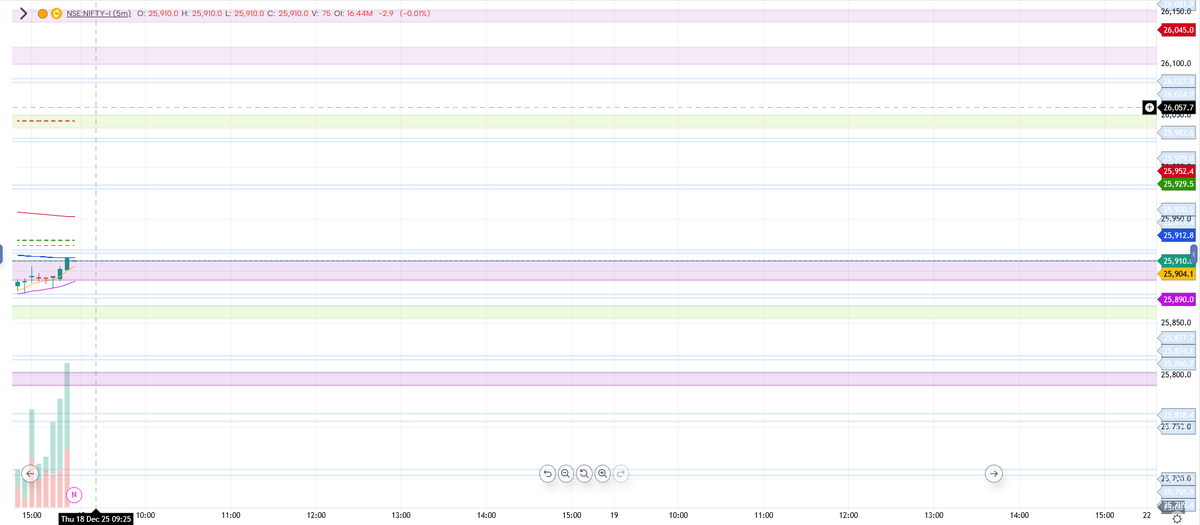
MOST TRADERS PAY FOR A JOURNALING APP. YOU DON'T NEED ONE.
1. Open any chart on TradingView
2. Mark your entry, stop and exit right on it
3. Add a note: why you took it, what you felt
4. Save it to a private layout
5. After the trade, reopen it and read your own reasoning back
That's a visual trade journal, free, on a tool you already use
What the hell is happening to the Indian stock market?
Dear @SEBI_India & @NSEIndia@BSEIndia
How many times do you expect traders to rebuild their entire business?
> December 2020 – 50% leverage removed
> March 2021 – 75% leverage removed
>September 2021 – 100% leverage removed
We adapted.
Yes, leverage is a double-edged sword. But thousands of genuine traders with smaller capital were affected. Still, we adapted.
> September 2023 – Bank Nifty expiry was shifted from Thursday to Wednesday, while BSE launched Sensex weekly expiry on Friday. Suddenly, we had expiries almost every trading day.
Many traders, especially algo and 0-DTE traders, redesigned their entire systems.
We adapted.
> November 2024 – Weekly expiries of FinNifty, Bank Nifty and other indices were removed. Only Nifty and Sensex weekly expiries remained.
Again, thousands of traders had to change their strategies.
We adapted.
> February 2025 – Expiry-day margin benefit was removed.
STBT traders were hit badly.
We adapted.
> 1st September 2025 – Nifty expiry shifted from Thursday to Tuesday.
Again...
We adapted.
> Jane Street reportedly made billions of dollars from Indian markets over the years. Later, regulatory action was taken, and subsequently trading restrictions were lifted after payment of regulatory dues/settlement.
How exactly did all of this benefit Indian retailers?
Meanwhile...
- Option STT has increased massively over the last few years.
- Bid-ask spreads have widened.
- Slippage has increased.
- Global volatility has increased.
- Transaction costs keep rising.
We adapted to everything.
And now...
Closing Auction Session (CAS).
Seriously?
Every few months there's another structural change.
Every few months traders are forced to rebuild their systems.
Every few months liquidity takes another hit.
You say these changes are for retail investor protection.
Then please show us the data.
Can you show even one report proving that retail trading losses have actually reduced because of all these interventions?
If not, then what exactly are these constant changes achieving?
Instead of making markets more efficient, you're making trading more expensive, more complicated, and pushing serious traders towards crypto and international markets.
As a full-time trader, my inner soul genuinely cries today seeing the direction our markets are heading.
We survived leverage removal.
We survived daily expiries.
We survived removal of daily expiries.
We survived expiry changes.
We survived removal of expiry margin benefits.
We survived higher STT.
We survived wider spreads and slippage.
Now we are expected to survive CAS as well?
Enough is enough.
I request SEBI and the exchanges to reconsider this rule.
Before implementing such major structural changes, consult the trading community. There should be proper communication, public discussion, and representation from active traders.
I also request every trader to raise their voice through the proper channels. If you genuinely believe these changes are hurting market participants, please send your feedback or complaint to SEBI through its official grievance mechanism. And if anyone from the industry has a direct channel to the exchanges or regulators, please help convey the concerns of the trading community.
Please Retweet this so our voice reaches the right people.
Enough of silent adaptation. It's time the trading community is heard.
@AnilSinghvi_@_anujsinghal@SarangSood@PRAFULKULKARN18@adigitalblogger@iarjuntandon@JayneshKasliwal@sunilgurjar01@piyushchaudhry@SantoshPasi@RakeshPujara1@TanmayKurtkoti@justnottamomma@AshishGupta325
Define CAS:
After 90 minutes of football match, regardless of the score, there will be a penalty shootout which doesn’t get broadcasted. After the penalty shoot out, the score, along with winning team name will be published. Result will be purely based on penalty shoot out score even if one team leads the the 90 minutes play with 10 - 0 score.
If anyone wants to manipulate price then before 3:15 it can be done.
There is no logic in implementing CAS to decide closing price.
Actually Exchange reduced trading time by 15 minutes.
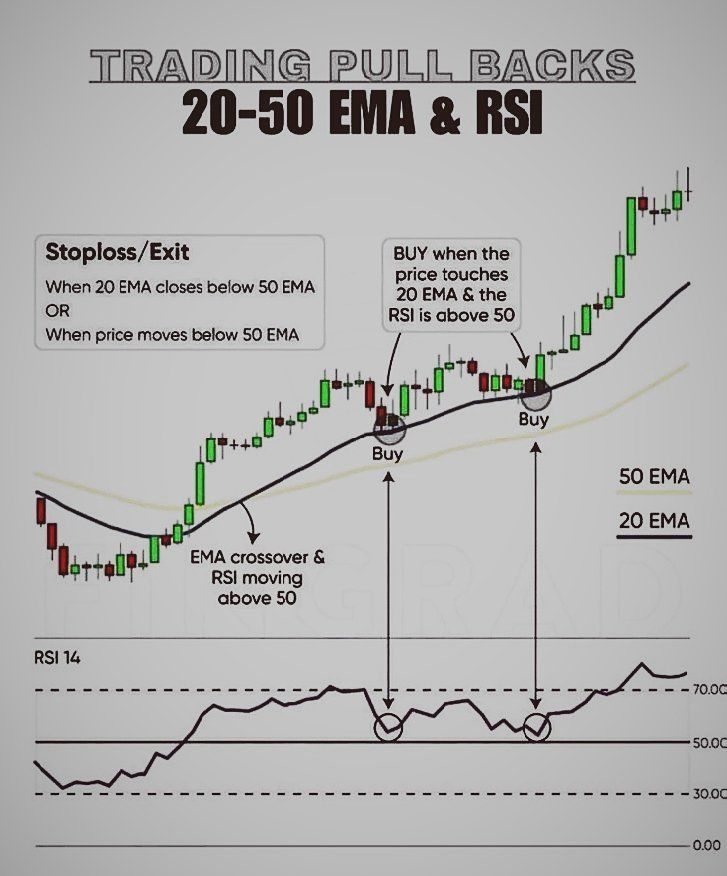
Entry (Buy) Rules:
Wait for the 20 EMA to cross above the 50 EMA.
Ensure RSI (14) is above 50.
Buy when the price touches the 20 EMA and RSI is still above 50.
Exit (Stoploss) Rules:
Exit if the 20 EMA crosses below the 50 EMA, or
If the price drops below the 50 EMA.
This strategy helps traders catch pullbacks in an uptrend with confirmation from the RSI.
#stocks #investing
When I began trading in 1983, the Dow hovered above 1,000.
Last week, it surpassed 50,000!
Back then, I was told the market was too high, that trading was gambling, and I should find a “real job.”
Today — 43 years later, with a nine-figure net worth — trading is still my real job, and the critics are still spreading the same tired fear.
Ignore the negatoilets.
Those who discourage lack courage — and they certainly don't have a track record worth emulating.
The stock market offers the greatest wealth-building opportunities on earth, every single day. Develop the right knowledge & skill, and it will pay you for a lifetime.
https://t.co/JXzFFTmMtn
https://t.co/FfBnR93ojq
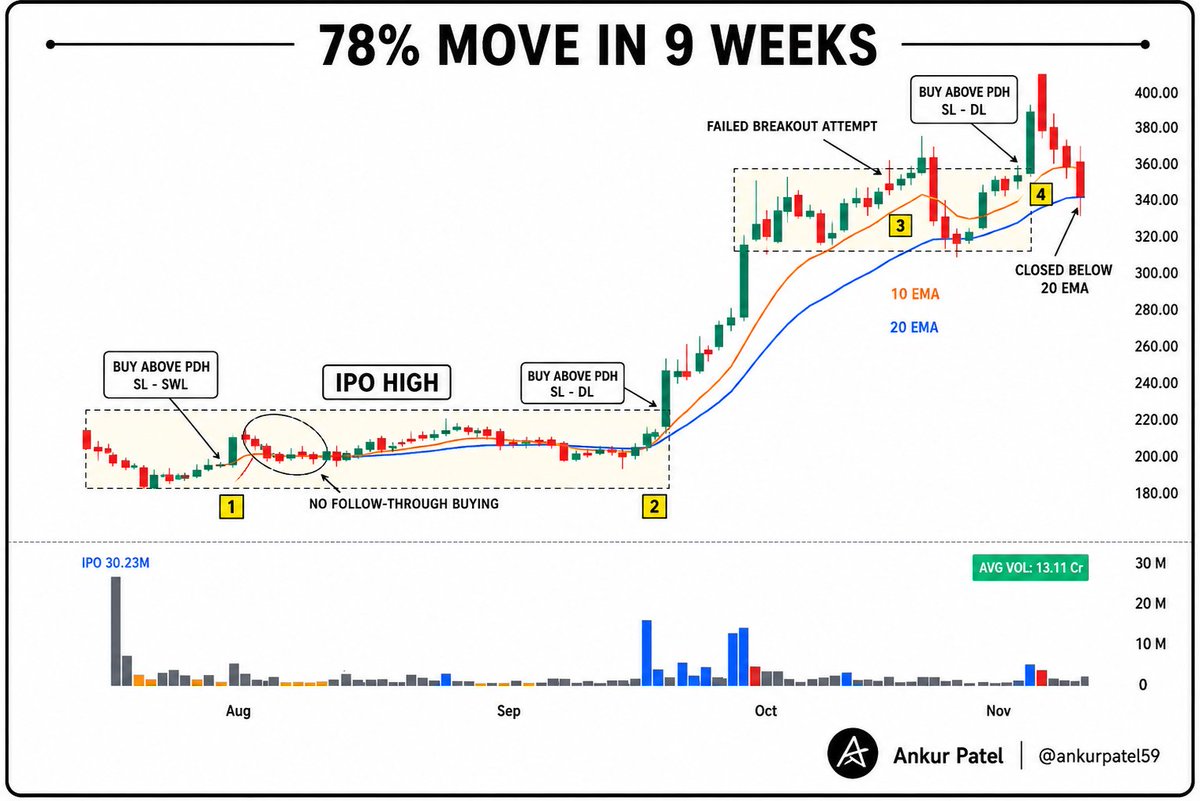
I like stocks that behave in an orderly manner.
What does orderliness look like?
✅ Smooth pullbacks
✅ Respects moving averages
✅ No violent shakeouts
✅ Clean consolidation
Choppy stocks = Unpredictable stops = Death by a thousand cuts.
Smooth stocks = Tradeable. Holdable. Profitable.
How to Identify good momentum burst and make millions by @PradeepBonde
Pradeep Bonde is a veteran trader who specializes in intermediate-term swing trading setups
Sharing Momentum Burst strategy framework & live example from Indian market👇
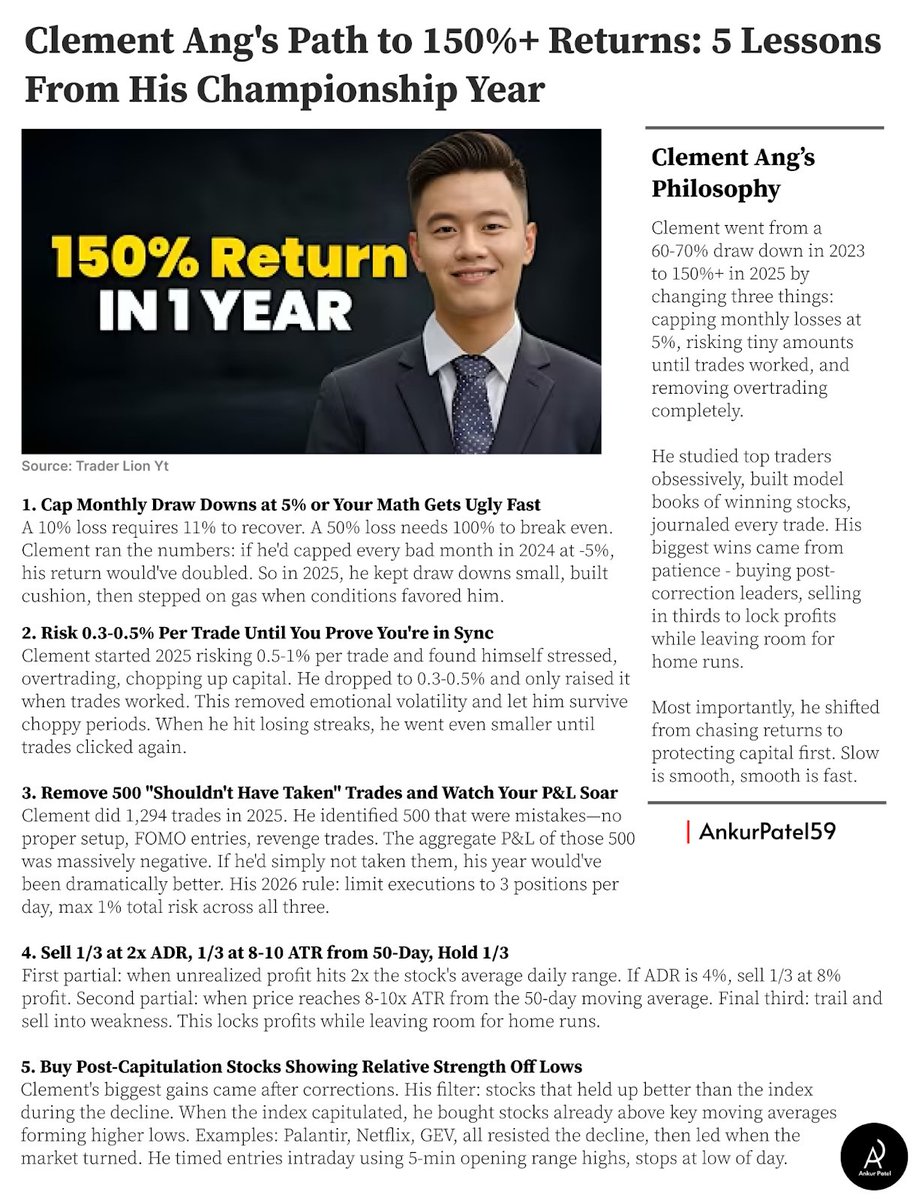
From 70% drawdowns to 150% returns in one year.
Clement Ang's turnaround came from 3 simple changes: capping losses at 5%, risking tiny amounts until proven right, and removing 500 "shouldn't have taken" trades.
His biggest insight: protect capital first, chase returns never.
5 actionable lessons from his championship year
How did Oliver Kell post a +941% return and win the U.S. Investing Championship? By following ten simple principles without exception.
This guide breaks them down: