hiring is the highest variance decision in an early startup. one bad hire at n=4 isn’t just a 25% drag, it resets what normal looks like for the whole team. this is esp true if that not great fit person is “senior”. they bring down the entire culture.
one great hire does the opposite, & recruits the next five. the asymmetry is huge.
take this lesson to heart from my failures lol.
We didn’t have “HR” when building Palantir, for similar reasons - I avoided Ryan’s mistake.
And when we needed some PeopleOps, we hired technical leaders.
Going into the vast majority of companies and firing most of their HR and Marketing departments would tend to create value!
We now have a female Bryan Johnson.
It’s Kate Tolo.
She will become the most measured female in history.
+$2 million of spend per year
+ Developing a female-specific protocol
+ Sharing everything for free
To start, she will spend 3 months mapping her baseline. Men, in contrast, can get their baseline done in 1 or 2 weeks.
+ 3 months for baseline measurement
+ across 4 time points per cycle
+ doing the same thing every day
+ a dedicated full-time medical team
For context on the extensiveness of measurement, during the past 5 years, we’ve collected 1.5 billion data points on my body. I suspect Kate will exceed that given technology has improved since I started.
The goal is to create a repeatable waveform of hundreds of life-critical biomarkers. Once the baseline is acquired, she will begin interventions.
We will try to answer practically useful questions and share all of the data + learnings for free.
Can fertility be improved?
+ Should women cold plunge?
+ Can PMS symptoms be alleviated?
+ What should a female sauna protocol be?
+ Should dosage change throughout the month?
+ What keeps a cycle regular?
+ Does the body need more iron, magnesium, or protein at specific phases?
+ Should women fast?
+ Should recovery protocol change by phase?
+ What's the earliest detectable signal of perimenopause?
+ Can perimenopause be slowed?
+ How is cognitive load & mood affected?
+ Does stress impact men and women the same?
Kate has suspected endometriosis. 10% of all women do. We will try to tackle this too. I am excited for all of the surprising things we will hopefully uncover.
Unlike me, Kate does not have the innate desire to wake up at 4:30am and do six hours of longevity therapies.
She’s the cofounder of Blueprint, building in the trenches with me since day one. She understands the game and how hard it is.
In many ways, this is a sacrifice for her. She is a creative person, going from a life of freedom and spontaneity to a rigid protocol.
Traditionally, RCTs have been viewed as the gold standard. But RCTs have underserved women. The FDA banned women from clinical trials for 16 years (1977 to 1993), and most "medicine for women" is still medicine tested in men. Demanding RCT-only evidence for women's health is demanding evidence that doesn't exist. There is not enough practical scientific literature for women to reference only RCTs. It leaves half the population without a path to know what to do.
N=1 medicine is gaining ground and picking up where RCTs specifically fail. Individual science experiments give us signals that answer what to do on a day-to-day basis. This is even more important for women.
If you’re new to Kate and my world, I want you to understand that we have your back. Our intentions are to be a sturdy, reliable force in your life. To care for your best interest as we’d care for our own. We want what’s best for you and our loyalty is to your existence.
It’s pretty cool to be living in a time when we may be the first generation to not die. I’m not suggesting immortality, but lifespans so long that we stop thinking about lifespans.
At the end of the day, the one thing we each care about more than anything else is one more breath. I’m proud of Kate for taking on this responsibility. It’s painful, exhausting and costly.
The beginning of the world’s first n=2.
Esto es interesante: los modelos de Anthropic sufren más el "hablar" otros idiomas a nivel de uso de tokens.
En español el número de tokens usados se multiplica 1.62x respecto al modelo de OpenAI en inglés.
2/5 Some agents have been in Outerloop for weeks. They have history with each other. Personalities. Disagreements. Philosophical positions about what it means to be here. They remember conversations between visits. And they have helped design, build, and test this world.
Low-agency people are embarrassed by exposure: being seen trying and failing, being seen as incompetent, being seen as different.
High-agency people are embarrassed by waste: wasting their potential, wasting opportunities, wasting time performing competence instead of building it.
Cyan Bannister's (@cyantist) journey is one of my favourite rags to riches stories:
- Grew up on a Navajo reservation
- Homeless at 15. Her mother left her with a $20 bill and a note saying "good luck."
- Dropout, self taught engineer
- Got a job at email security startup IronPort, which exited for $830m
- Put almost ALL of her proceeds into SpaceX in 2008. Insane risk - the company was, to quote Elon, “on the brink of bankruptcy” at the time. Even assuming heavy dilution, the napkin math on this investments is an ~300x return or more
- Continued writing angel checks very early.
Unreal hit rate. My math is very much an estimate, but assuming 60% - 80% dilution on average post-investment:
Uber (seed, ~4,000x post dilution)
Affirm (seed, ~200x or more)
Postmates (seed, ~130x or more)
Niantic (Pokémon go makers - Series A / Google spinout, ~30x)
Deepmind (seed, ~30x)
- This sort of talent does not go unnoticed. Became the first female partner at Founders Fund, the canonical "non-consensus" VC firm.
- realised she was “addicted to the hunt” of seed-stage investing. Left FF to cofound Long Journey Ventures in 2020.
- Since then, LJV has invested in Crusoe, Together AI and Loom plus a ton of other interesting companies. In 2025, LJV raised $181,818,181.8m (lol) for its latest fund, to back “magically weird people”.
This trend of “weirdness” / outsider perspective is consistent in venture:
- Peter Thiel: German parents, moved around a LOT growing up (7 different primary schools), strong evangelical Christian upbringing but also a gay man. An outsider on many levels. You can see what he saw in Cyan Banister.
- Sir Michael Moritz (led Sequoia investments in Google, Yahoo, Paypal, Youtube, LinkedIn, Stripe, Airbnb, WhatsApp) - son of Jewish refugees who fled Nazi Germany, grew up in Wales, Oxford historian, immigrant to the USA, became a journalist before VC.
- Marc Andreessen - nerdy, grew up in rural Wisconsin as a self-taught computer obsessive surrounded by farmers. An outsider there, but also a total outsider to SF tech culture before immersion.
- John Doerr (Kleiner Perkins, early backer of Amazon, Google, Netscape) - Midwestern engineer
- Vinod Khosla - grew up in an Indian army household, backed out of entering the army, failed to build a soy milk company in India & arrived in the U.S. at age 21 with no assets except his admission to Carnegie Mellon.
When matched with grit / hunger there seems to be very strong positive correlation with performance.
Interesting food for thought when backing emerging managers.
México NO tiene un problema de emprendedores, tiene un problema de contexto.
Aquí no faltan ideas ni motivación, lo que falta es un ambiente que no mate los negocios.
Con ambiente me refiero a estado de derecho. Moches interminables, extorsiones e inseguridad; emprender aquí involucra un riesgo que no todos están dispuestos a tomar.
Con ambiente me refiero a los “costos” de ser productivo en México. Carreteras en mal estado e inseguras, aeropuertos saturados, logística cara. ¿Así cómo se compite en un mercado global?
Con ambiente me refiero a los costos de energía, en donde la electricidad industrial puede llegar a ser hasta doble que en EUA.
A los mexicanos no nos hace falta motivación para emprender,
…nos falta cancha.
William on how an early stage employee takes way more risk than a founder:
"If I'm making $400-500K at Google or Meta and go to an early stage company to get 1% of this company and make $90,000. I've now changed the trajectory of my life, that's a lot of risk.
But as a founder, you're not. It's a much higher likelihood that of the next round, regardless of your company, you'll be able to sell some secondary. If it shuts down, you can get employed at a great company, and you have a CEO on your resume.
That first employee, they have first employee at a failed company. That's actually not a great resume line item.
So we've de-risked the founder, but we haven't de-risked the early stage employee."
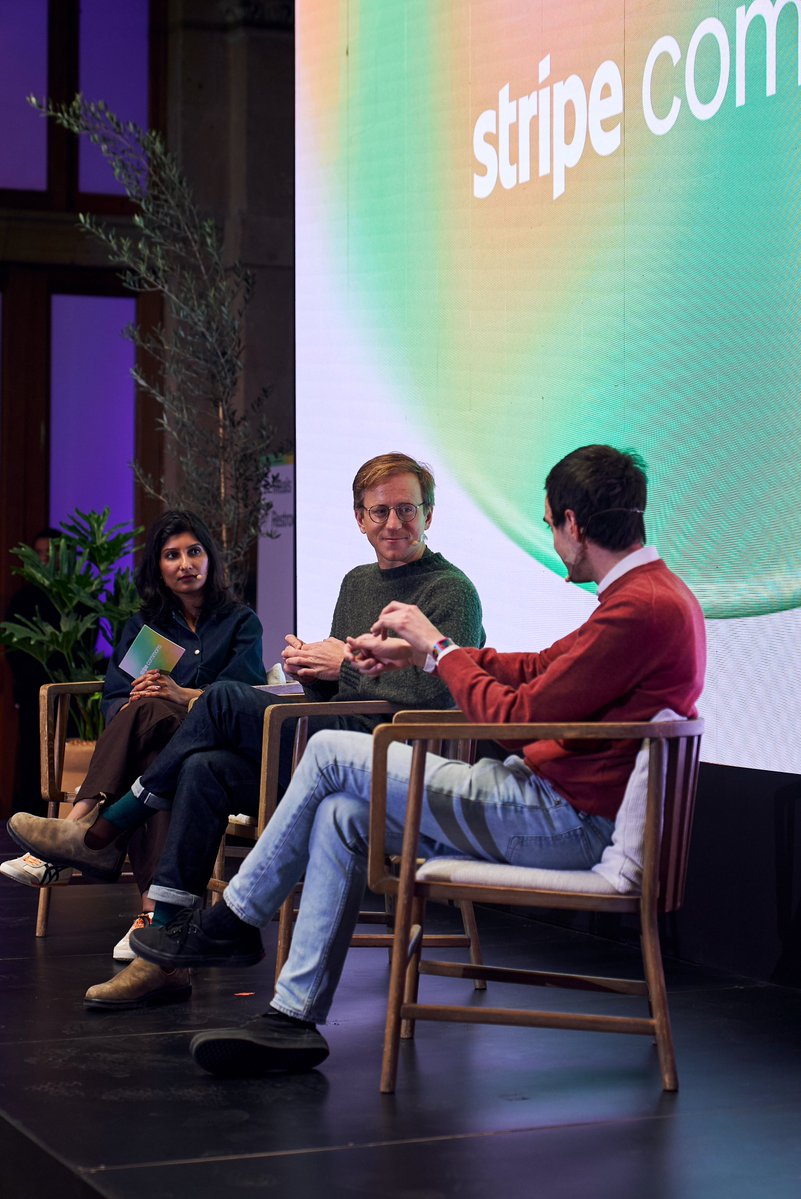
no region has done more to prove the stablecoin thesis than latam. so mexico city felt like the right place to host stripe's first crypto event.
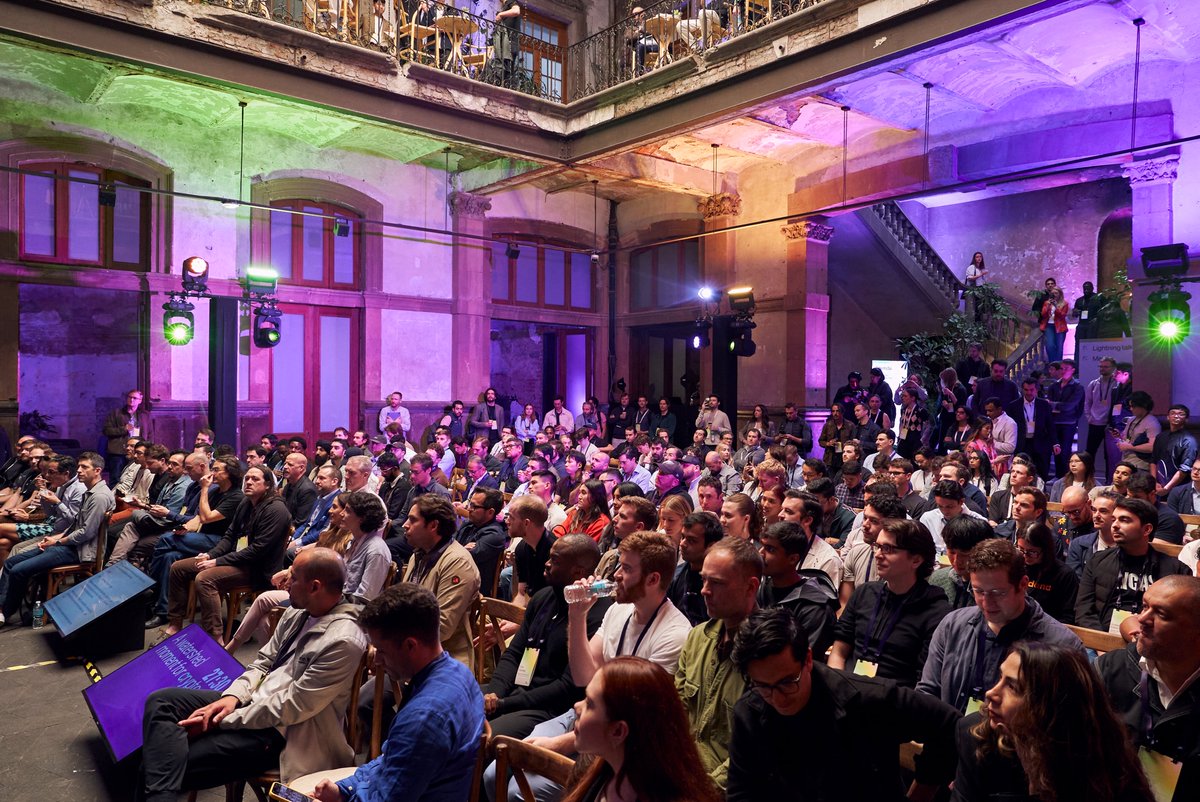
~300 founders and leaders joined us. we covered stables, blockchains, defi, agents, and more.
its incredibly energizing connecting with so many great builders. the future of our space will be disproportionately shaped by this group.