@LinkedInHelp@LinkedIn@LinkedIn@LinkedInHelp you have such a pathetic service it's been days I am trying to recover my deleted account but you people can't be able to do a simple task. My username was
https://t.co/zi4bN85dgD
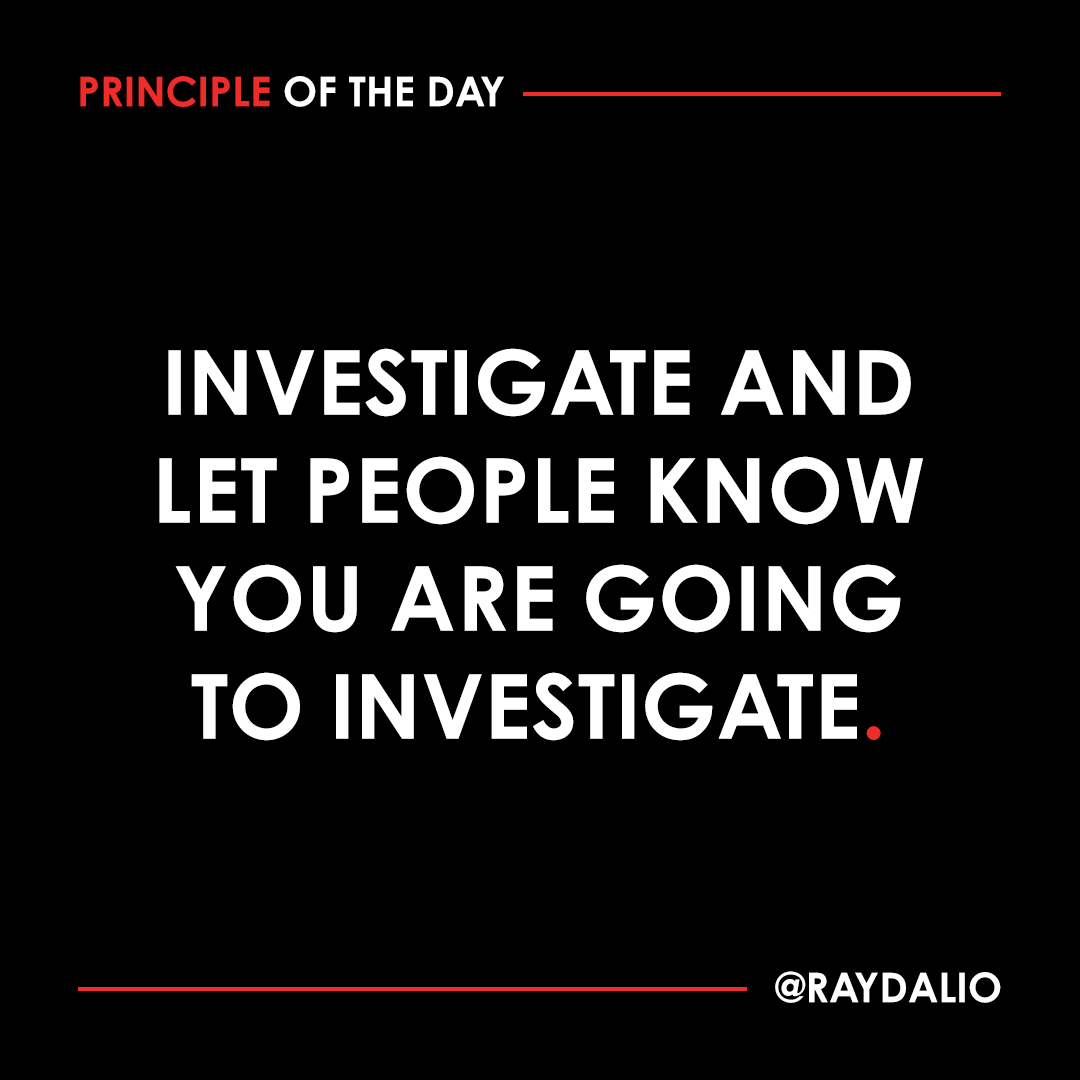
Investigate and explain to people that you are going to investigate so there are no surprises. Security controls should not be taken personally by the people being checked, just like a teller shouldn't view the bank counting the money in the drawer (rather than just accepting the teller's count) as an indication that the bank thinks the teller is dishonest. Explain that concept to employees so that they understand it.
But even the best controls will never be foolproof. For that reason (among many others), trustworthiness is a quality that should be appreciated. #principleoftheday
Avoid fixating on irrelevant details. You have to determine what's important and what's unimportant at each level. For example, imagine you are designing a house. First you need to start with the big picture: Your house will sit on a plot of land, and you have to think through where the water comes from, how the house gets hooked up to the power grid, and so on. Then you need to decide how many rooms it will have, where the doors will go, where you need windows, and so on. When designing the plan, you need to think about all of these things and connect them, but that doesn't mean that you actually need to go out and pick the hinges for the door yourself. You just need to know that you'll need a door with hinges and how it fits into the bigger picture of the house. #principleoftheday
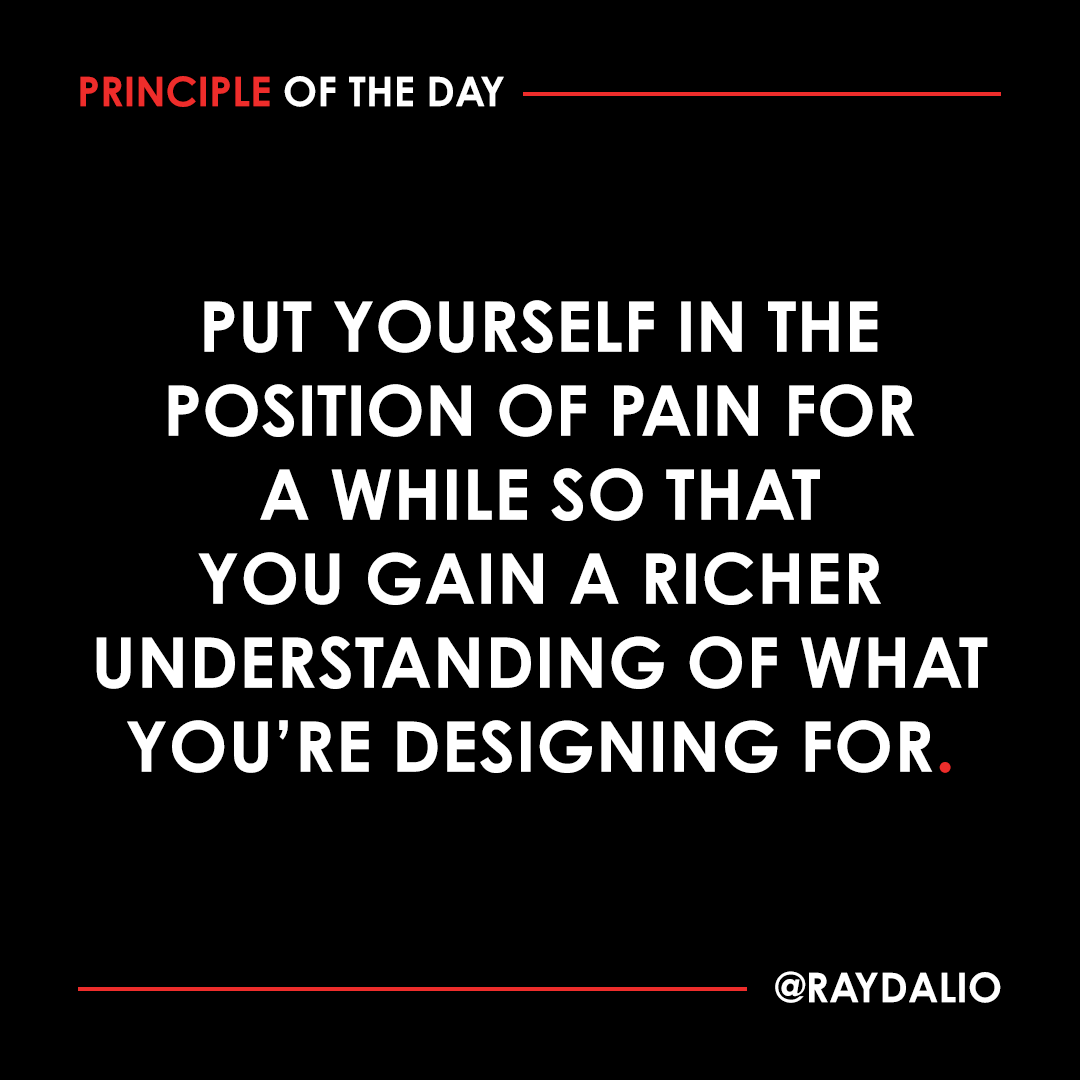
Either literally or vicariously (through reading reports, job descriptions, etc.), temporarily insert yourself into the workflow of the area you're looking at to gain a better understanding of what it is that you are dealing with. As you design, you'll be able to apply what you've learned, and revise the machine appropriately as a result. #principleoftheday
CEO of Alphabet Google 🇮🇳
CEO of Microsoft 🇮🇳
CEO of YouTube 🇮🇳
CEO of Adobe 🇮🇳
CEO of World Bank Group 🇮🇳
CEO of IBM 🇮🇳
CEO of Albertsons 🇮🇳
CEO of NetApp 🇮🇳
CEO of Palo Alto Networks 🇮🇳
CEO of Arista Networks 🇮🇳
CEO of Novartis 🇮🇳
CEO of Starbucks 🇮🇳
CEO of Micron Technology 🇮🇳
CEO of Honeywell 🇮🇳
CEO of Flex 🇮🇳
CEO of Wayfair 🇮🇳
CEO of Chanel 🇮🇳
CEO of OnlyFans 🇮🇳
CEO of Motorola Mobility 🇮🇳
CEO of Cognizant 🇮🇳
CEO of Vimeo 🇮🇳
Since publishing my book, Principles for the Changing World Order, a year and half ago, I’ve had a number of great conversations about the five big forces I identified and how they are continuing to shape the world today. I recently talked with New York Times columnist @tomfriedman at the @NYHistory about these forces and what they mean for where we are and where we’re headed. If you’re interested, you can hear the conversation here: https://t.co/NxZs7KGIuw
A good practice if you’re a business owner.
Put your friend in front of your computer, on your website and ask them to sign-up for your services or get a quote.
If it takes more than 2 minutes for you to get their information you are failing.
Make it easier.
Up’s opening scene is notoriously sad.
Pixar decided to rip your heart out in the first 4 minutes of the movie.
But what makes it such an effective hook? Why is it the perfect opening?
Here’s a quick breakdown: