Case Update from @FBIBaltimore : An #FBI Baltimore Complex Financial Crimes investigation resulted in the conviction of a Maryland man for defrauding private jet customers of $15 million.
A federal jury found Patrick Britton-Harr of Annapolis guilty of six counts of wire fraud in connection with a private-jet service scheme. Britton-Harr, who owned and operated a company that offered charter flights on private jets, defrauded customers by making false promises about how he planned to use their money.
Learn more: https://t.co/Ui7Dp3gJ58
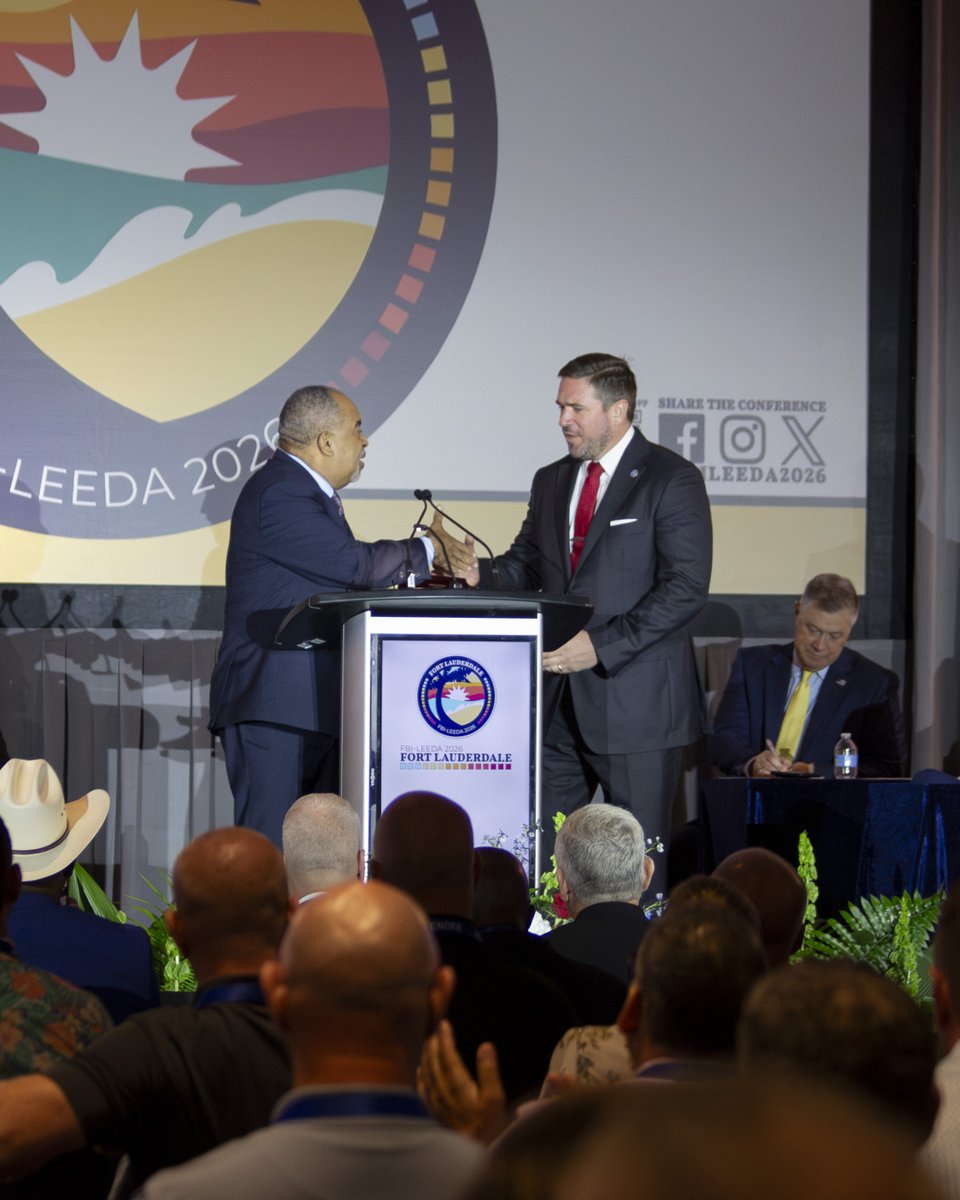
This week, Co-Deputy Director Andrew Bailey joined law enforcement leaders from across the country at the FBI-LEEDA 34th Annual Executive Training Conference to discuss leadership, partnership, and our shared mission of protecting the American people. Strong partnerships remain essential to addressing the evolving threats facing our communities and ensuring public safety across the nation.
7,000 people are already using AI to make UGC ads that look completely real.
Most creators still film themselves.
Here’s the 3-step workflow nobody is sharing:
Step 1: Generate a consistent AI model in nano banana pro. Natural lighting. Vertical. iPhone framing. Same face, every time.
Step 2: Same tool. Same model. Now holding your product. No reshoots. No talent fees. No contracts.
Step 3: Bring it into CleAN 2.6. Animate it. Lip sync it. Nothing that reads as AI.
That’s the full stack.
Month 1: you’re still testing outputs, getting consistency down.
Month 2: you’re producing 30 UGC variants a week without a camera.
Month 3: brands are asking where you find your “talent.”
The answer is 2 apps and an afternoon.
Every UGC agency charging $3,000 per video is running some version of this.
The difference between them and you is they started 8 months ago.
For full guides on AI workflows like this @NeuroClubAi has the playbook.
The camera is optional now.
A 20-year old makes $20,000/month from YouTube Shorts 0 seconds of face time.
1 video took him 30 minutes. It got 105 million views. It made $14,000.
Here’s the exact stack he’s running:
TikTok is the source. He finds viral streamer stories the ones already proven at 20M+ views. Then he strips the original captions with an AI tool, rebuilds the script in 2 minutes, drops in an AI voice, posts on YouTube.
The algorithm does the rest.
His Speed ex girlfriend clip: 28 million views.
3 months on the channel. $18,000 on a bad month.
The tools cost $80. The editing runs on autopilot. He hasn’t been on camera once.
Most people think YouTube requires a studio, a face, and 3 years of grinding.
He built a content factory instead.
The factory doesn’t sleep.
17-year old runs 12 YouTube Shorts channels and pulls $100,000+ a month.
He works 3 hours a day. AI agents run the rest.
No camera. No editing. No face.
12 channels. Each a different niche. Each printing $8,000-$15,000/month.
The stack:
Claude writes 30 ideas per channel per week.
ElevenLabs records the voiceover in 40 seconds.
CapCut assembles the video automatically.
A Python script uploads at peak RPM windows.
24 videos a day across 12 channels. Zero human touch.
Month 1: $0-$800.
Month 3: $4,000-$8,000.
Month 12: $100,000+.
1 laptop. 3 hours. The rest is agents.
The gap isn’t talent. It’s architecture.