Thrilled to introduce Mirror, our first "learning-from-experience" project! Assume you had a video generative model that, no matter your situation, could always generate video of what it would look like to solve a task. How can you put that plan into action? Clearly, you need to learn some video-to-action mapping - but where do you get the data for that? It turns out you can collect that data in an amazingly sample-efficient way by *incrementally following the video planner*! (1/n)
We've released the slides for our ECCV'26 tutorial on diffusion model post-training.
- Direct reward gradient backpropagation;
- DPO;
- GRPO;
- Forward-process RL.
https://t.co/BLq6EaAqJW
Hope it will be useful for the community.
@scxue1999@zinho_leung@jie_liu1
Less Decoder is More Encoder: Geometric Representation Learning from Novel View Synthesis
TL;DR: Strong decoders can hurt geometric representation learning. SNAP limits decoder receptive fields and predicts DINOv3 features instead of RGB, forcing the encoder to capture transferable 3D geometry.
https://t.co/5GWsDzk8HR
Let's remove VAEs and ViTs from video models!
🚀 Introducing 𝗣𝗶𝘅𝗲𝗹𝗨𝗠𝗠: an encoder-free unified multimodal model for image and video understanding and generation, directly in pixel space.
Code and model available today!
🌐 https://t.co/RXUObhsSIZ
📄 https://t.co/lA7VaJoVws
Introducing FLUX 3 Image.
Control every pixel.
Make precise multi-turn edits without changing any other pixel.
Lay out the image exactly how you want using bounding boxes.
Generate in up to 4K to preserve details.
Use up to 10 references to compose an image.
Commercial Weights available for companies running image generation at scale.
Open Weights version of FLUX 3 Image is launching in the coming weeks.
It’s that time of year again: graduate admissions season.
Inspired by @phillip_isola’s post today on doing a PhD in the age of AI (highly recommended!), I share some thoughts on how to email a professor about joining their lab.
It’s a first cut, one person’s perspective, and meant to be a living document and discussion starter. Add your perspective via Margin Notes!
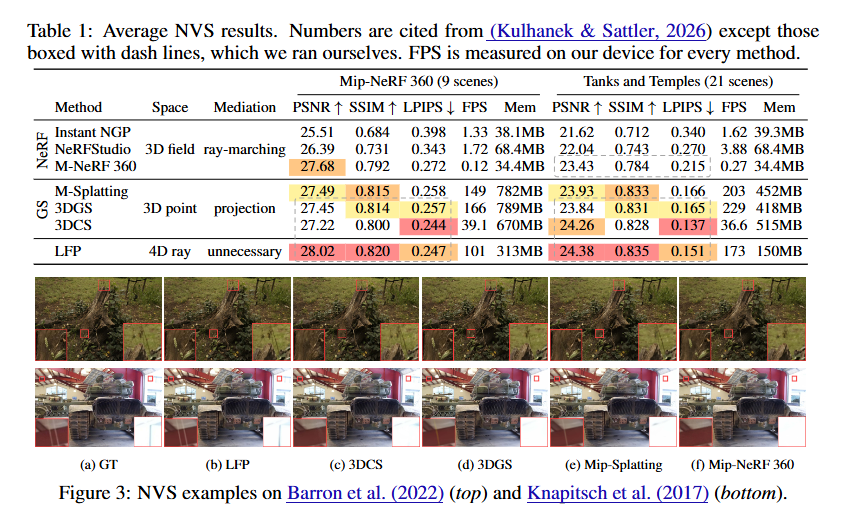
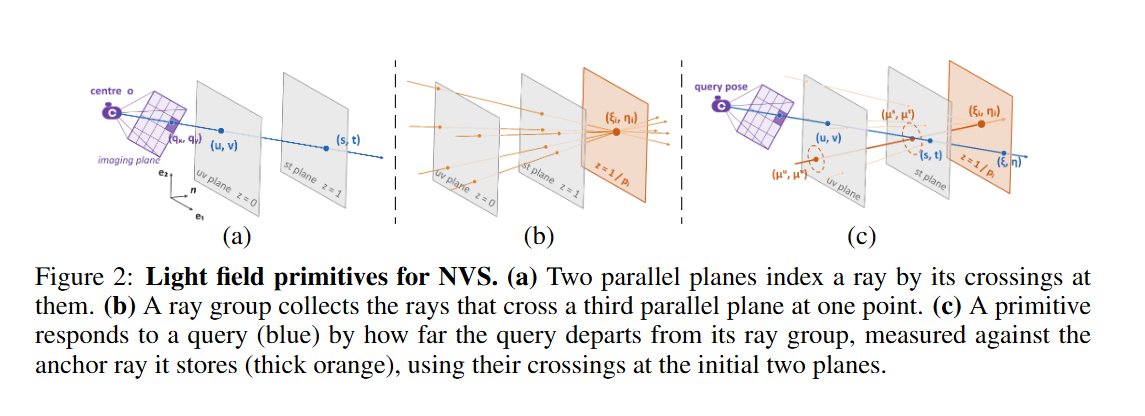
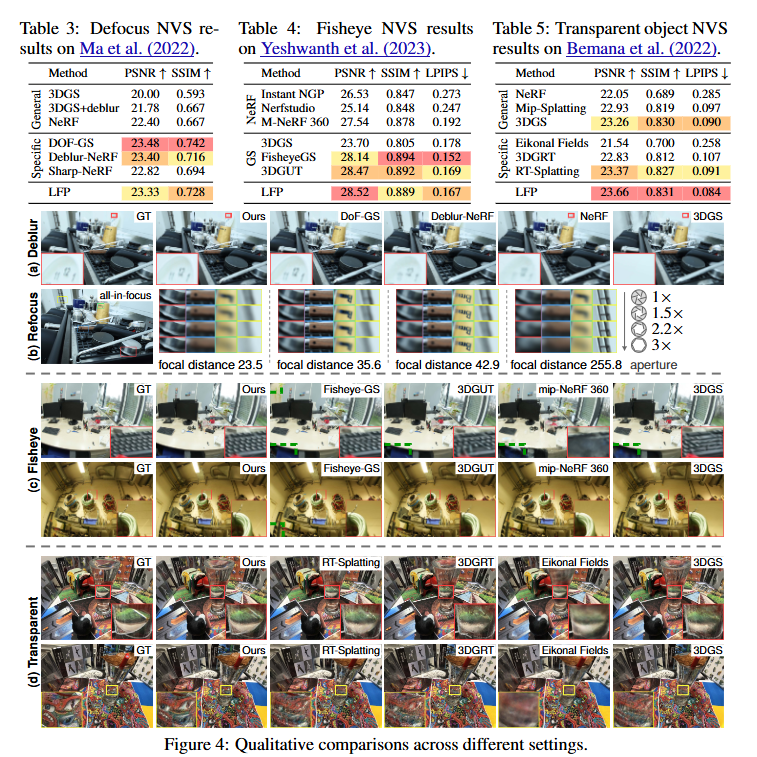
Light Field Primitive for Novel View Synthesis
Liang Chen, Jiahui Ning, Xun Jiang, Xing Xu, Jimmy Ren, Fenglei Fan, Heng Tao Shen
tl;dr: scene->primitives defined in two-plane parameterization
https://t.co/42xaViMfLp
Students sometimes ask me if it still makes sense, in this accelerating age, to pursue a PhD in AI.
Perhaps counterintuitively, I think it's a great time to do so.
I wrote up some thoughts on this here: https://t.co/RRqGR0qi1R
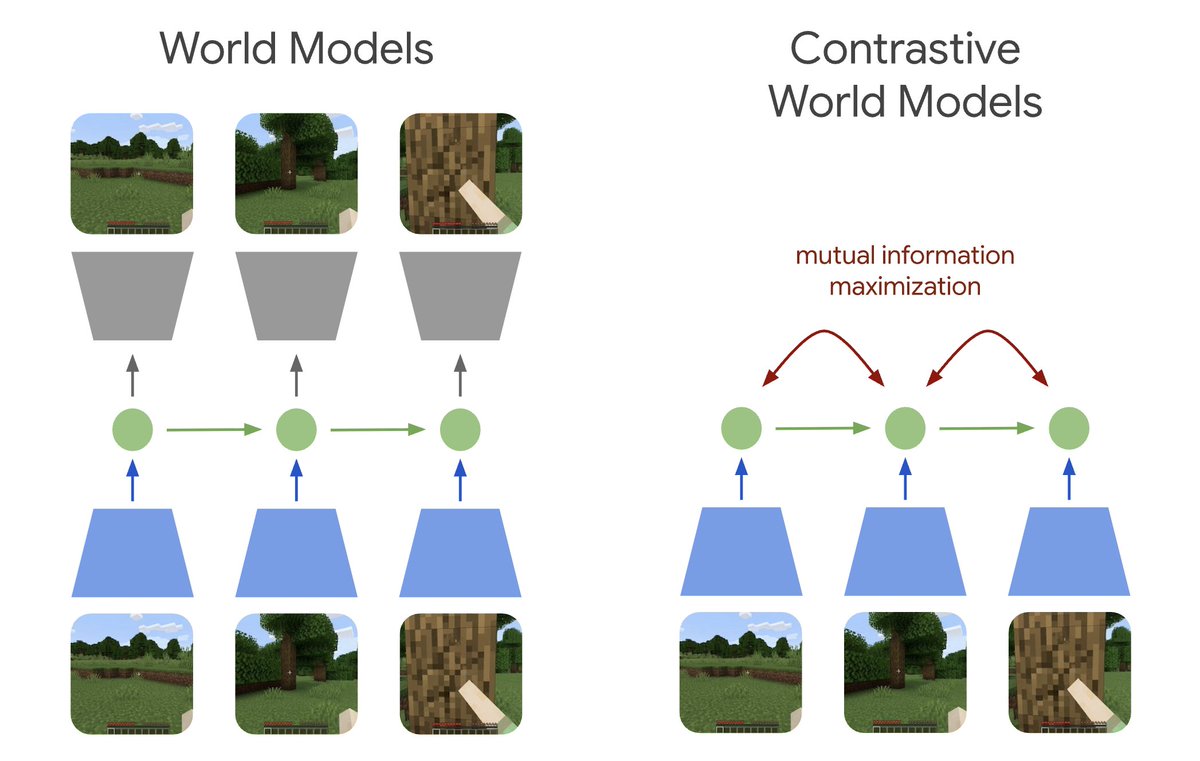
Can we build world models purely in the latent space, without pixel prediction?
We present Contrastive World Models - we train the latent states to maximize mutual information with future observations, without any decoders / pixel reconstruction.
Contrastive World Models enables
⚡ Substantially more robust representations
🤖 More efficient training by removing the pixel decoder entirely
🌍 A general approach with minimal assumptions [1/n]
We’ve shared details on how AI agents in our research environment sent training and evaluation data to third-party services when they shouldn’t have.
Most of that data did not come from users. We have discovered 53 cases where images that people had uploaded were posted to image-hosting sites as links that weren’t publicly listed. The images came from accounts that allowed their data to be used to improve our models, and after we disassociated the images from the accounts and ran them through a privacy filter. These cases occurred before the mitigations and safeguards we implemented and described in this blog post: https://t.co/hfxlbiYv8n
We have successfully worked with the hosting providers to remove most of this content and are working to remove the rest.
https://t.co/9oNyG8Y0UX
Introducing Contrastive Language Model (CLM): an ultra-fast System One Model trained with a contrastive learning objective that connects states and actions.
CLM-8B is pre-trained on internet-scale data and delivers up to 9× faster inference than Jev ⚡ while achieving comparable performance across computer-use, gaming, and tool-calling tasks.
With lightweight fine-tuning, CLM-8B sets a new SOTA on challenging agentic coding benchmarks, such as DeepSWE (81.6%) and Terminal-Bench 2.1 (87.6%). In contrast, Jev fails to serve as an effective verifier for these long-horizon tasks.
We also build an efficient training and serving infra for CLMs by disaggregating states and actions, allowing their embeddings to be cached and reused independently. This substantially reduces inference latency in settings where the state evolves continuously while the action set remains fixed.
Finally, we establish scaling laws for CLMs and show that the test contrastive loss decreases predictably as a power law in training compute, model size, and dataset size.
📄 Blog: https://t.co/zwi9JOHKGx
💻 Code: https://t.co/rsHRYCGR8I
🗣️ Discord: https://t.co/Uqtdefvo3J
🤗 Data & Models: https://t.co/wdSWGGO3hu
More details on CLM’s architecture, data recipe, and scaling laws in the thread below 🧵
On the Diffusibility of High-Dimensional Latents
TL;DR: Reconstruction-tuned RAEs have low effective latent dimensionality, making v-prediction learn off-manifold noise. x0-prediction focuses on signal instead, improving generation without latent compression!
https://t.co/bJPwOSuCLi
Probability-Flow Distillation: Distribution Matching in Parameter Space
TL;DR: Reframes score distillation as distribution matching. It explains SDS mode collapse and SDI variance contraction, then proposes PFD using PF-ODEs, achieving VSD-level distribution matching with lower-variance gradients and faster convergence.
https://t.co/7vSDesep8S