Thrilled to introduce Mirror, our first "learning-from-experience" project! Assume you had a video generative model that, no matter your situation, could always generate video of what it would look like to solve a task. How can you put that plan into action? Clearly, you need to learn some video-to-action mapping - but where do you get the data for that? It turns out you can collect that data in an amazingly sample-efficient way by *incrementally following the video planner*! (1/n)
If video models scale like LLMs, they'll soon generate a perfect video plan for any embodied task. Do we need anything else? Introducing Mirror, which learns to follow these plans just by practicing, and even crafts an iron pickaxe in Minecraft w/o rewards or action labels! (1/n)
We are typically interested in distilling models.
Our new work distills datasets.
Dataset Distillation via Drifting is a new method that can "summarize" an entire dataset into a handful of images.
The images look slightly unnatural, but this is by design: the entangle concepts from multiple real samples into one synthetic sample.
Models trained on these images perform well in downstream tasks, such as classification.
A fun artsy application: you can use our method to "summarize" an artist's work into one painting.
[Read our paper and George's thread for more details]
@GCazenavette@giannis_daras Oh my I missed @angelina_quan, who is an amazing UROP that has done great work on this project and I am sure will do more great work in my lab going forward!!
Very excited to share the work of George and team that won him an award at the ECCV 2026 Art Gallery! We ask: "Can we optimize a small set of images such that they optimally cover a dataset in a pre-trained feature space?"
This can be seen as a version of dataset distillation: We're trying to distill a whole dataset into a small set of images that share its essential properties.
George found that Drifting Generative Models as proposed by Minyang et al. can be coopted for this purpose.
The results are visually stunning but also set a new SOTA on dataset distillation benchmarks, achieving unprecedented classification accuracy (the objective: What is the set of N images such that a classifier trained on them achieves the highest possible test-set accuracy?)
Can use just 10 images to teach a model what a sea anemone looks like?
In our #neurips2026 paper, "Dataset Distillation via Drifting," we distill ImageNet's 1,300 images per class down to just 10, optimized from noise.
https://t.co/NBnFsVpkJ8
More info in thread! ⬇️
1/N
There is a lot more to this method and we are already investigating a number of cool applications - stay tuned and follow the brilliant @GCazenavette and @giannis_daras !!
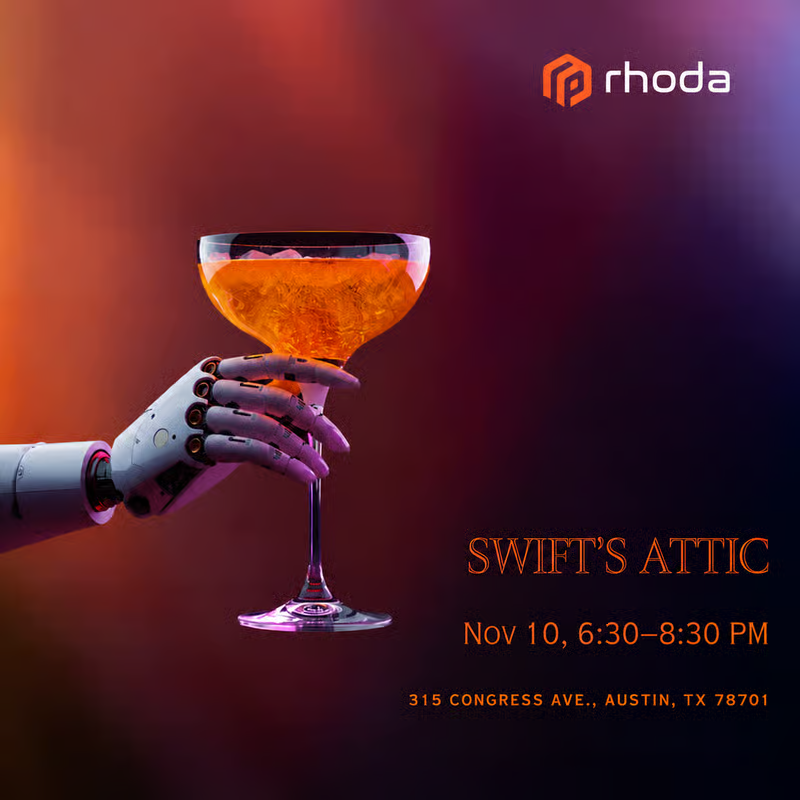
Rhoda will be at #CoRL2026 in Austin 🤖
🍸 Tue Nov 10, 6:30–8:30 PM: Video Models Meet Robotics reception at Swift's Attic. Invite-only, request a spot: https://t.co/xIXYGuSu2f
🎤 Thu Nov 12, 11:25 AM: Vincent Sitzmann @vincesitzmann speaks at the "Do Robots Need World Models?" workshop
https://t.co/8cxdELBfoM
We also made a WebGPU demo by porting our Python simulation to Javascript with coding agents! Fit a speech recording, watch the vocal tract move, and listen to the reconstruction, all in your browser. Try the example or record your own voice:
Can you reconstruct the shape of a human vocal tract just from hearing their voice? Crazily, the answer is yes!! Eric and Jin Woo built a "differentiable renderer" for the human voice! It reproduces well-known properties of human phonetics, such as the distribution of formants :) (1/n)
NeurIPS 2026 Spotlight! 🌟 Physics simulators like MuJoCo MJX are changing robotics. But for studying the sensorimotor learning of speech, there's no equivalent. We built diffTLM, a differentiable vocal tract simulator, to help close that gap. (1/6)
NeurIPS 2026 Spotlight! 🌟 Physics simulators like MuJoCo MJX are changing robotics. But for studying the sensorimotor learning of speech, there's no equivalent. We built diffTLM, a differentiable vocal tract simulator, to help close that gap. (1/6)
For the professors / lab leads, the killer feature of DeckWerk is the "headless server" mode. I run it on our lab server. Me and all my students collaborate on our presentations in real-time *directly on the server*.
As opposed to Google Slides, DeckWerk has stellar video support, native agent support (even on the headless server!), latex support, etc. In fact, DeckWerk's web app has the same exact features as the desktop app!
There is even tailscale-ID based access control, which means that you can keep presentations private or share them with other folks in the lab easily. The server has no open ports to the internet.
Besides the real-time collaboration, I never have to bug students for slides anymore - they're all right there on the server! And I share *my own* presentations with my students, so they can always build on top of my slides as well.
https://t.co/4AOWztVSFm
@voceses It's anchored to words: It first uses SyncTex to find a bounding box, but that's not precise enough. it then does a fuzzy search for the actual words you attached the comment to, and uses the match that is closest to the SyncTex bounding box to place the comment there.
New release of DeckWerk, the open-source, multi-platform, agent-enabled slide editor! Lots of improvements: Better UI, simplified agent support, better headless mode (=local Google Slides), support for code blocks, more shapes, more animations, better keynote import, ...
Download & install binary here:
https://t.co/UO4CZYCqQI