¿Sabías que 1 hectárea de manglar puede almacenar entre 3 y 5 veces más carbono que un bosque tropical terrestre? Protegerlos es clave en la lucha contra el cambio climático. ¿Quieres un hilo explicando cómo medimos el carbono azul? Comenta “Sí” 👇
#Manglares#CarbonoAzul#Panamá
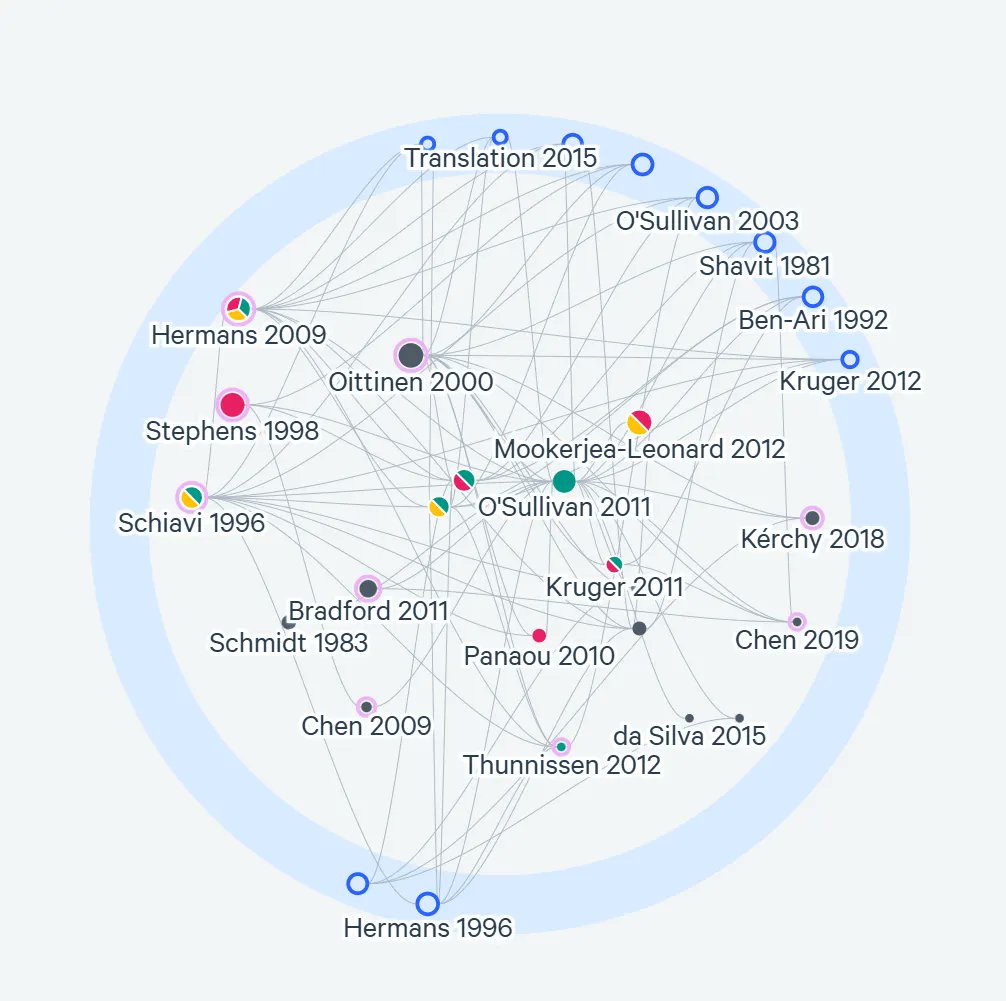
¿Ya exploraron ‘Open Knowledge Maps’? Una herramienta para buscar y conectar papers científicos, con excelentes funciones para mejorar la lectura. ¡Revolutionando la forma en que hacemos y entendemos la ciencia! #ciencia#tecnología
♾️ https://t.co/3SHuigeOA6
My review:
This book is definitely very useful and critical in these times where people tend to focus so much on that hypnotizing "shiny object" called AI that they tend to forget the absolute fundamental importance of data *and* easy access to data *and* insights discovery via data profiling & exploratory data analysis. I am a huge fan of SQL for data literacy, data fluency, and data-enabled business decisions & processes.
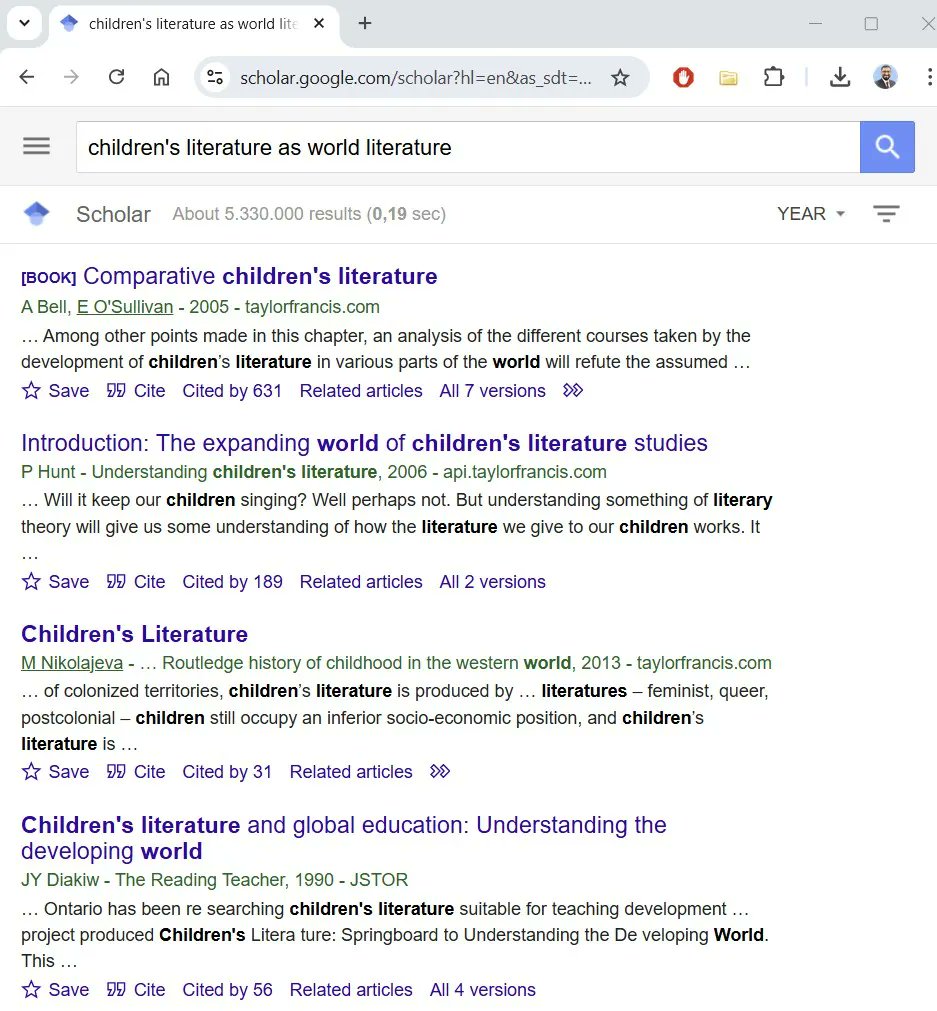
Google Scholar is a great tool. But it doesn't show how papers are connected with each other.
Here's how to fast-track your literature review with visual search using Google Scholar's database:
And export papers to Zotero, Mendeley, or EndNote.
You can learn this in 15 min:
AI Agents vs. Agentic AI
→ AI Agents react to prompts; Agentic AI initiates and coordinates tasks.
→ Agentic AI includes orchestrators and meta-agents to assign and oversee sub-agents.
🧵1/n
🧠 The Core Concepts
AI Agents and Agentic AI are often confused as interchangeable, but they represent different stages of autonomy and architectural complexity.
AI Agents are single-entity systems driven by large language models (LLMs). They are designed for task-specific execution: retrieving data, calling APIs, automating customer support, filtering emails, or summarizing documents. These agents use tools and perform reasoning through prompt chaining, but operate in isolation and react only when prompted.
Agentic AI refers to systems composed of multiple interacting agents, each responsible for a sub-task. These systems include orchestration, memory sharing, role assignments, and coordination.
Instead of one model handling everything, there are planners, retrievers, and evaluators communicating to achieve a shared goal. They exhibit persistent memory, adaptive planning, and multi-agent collaboration.
🏗️ Architectural Breakdown
AI Agents: Structured as a single model using LLMs. Equipped with external tools. Operates through a cycle of perception, reasoning, and action. Executes one task at a time with limited context continuity.
Agentic AI: Uses multiple LLM-driven agents. Supports task decomposition, role-based orchestration, and contextual memory sharing. Agents communicate via queues or buffers and learn from feedback across sessions.
🔧 How AI Agents Work
An AI Agent typically receives a user prompt, chooses the correct tool (e.g., search engine, database query), gets results, and then generates an output. It loops this with internal reasoning until the task is completed. Frameworks like LangChain and AutoGPT are built on this structure.
🤖 What Agentic AI Adds
Agentic AI introduces:
- Goal decomposition: breaking tasks into subtasks handled by specialized agents.
- Orchestration: a meta-agent (like a CEO) delegates and integrates.
- Memory systems: episodic, semantic, or vector-based for long-term context.
- Dynamic adaptation: agents can replan or reassign tasks based on outcomes.
Examples include CrewAI or AutoGen pipelines, where agents draft research papers or coordinate robots.
📢Join us at @SRICongress
🌎 Science Diplomacy in the Americas: The convergence of science, policy, and diplomacy to solve regional challenges #SRI2025
📅 19 June 2025
🕥 10:45–12:00
📍 Room: Ohio
🔗https://t.co/nWzIYN7ZoA
Mathematical Theory Of Deep Learning
This book will help you to build an understanding of fundamental mathematical concepts in deep learning.
Pages-> 255
🎉🏆Player Shop🧢👟 Campeón de la Liga de Sóftbol🥎 de la UTP, para administrativos, docentes, investigadores y egresados, al vencer en la gran final al equipo de los Mets🟠, por pizarra de 12 carreras por 6.
#utppanama
+info⤵️
https://t.co/x8TgK3MMmo