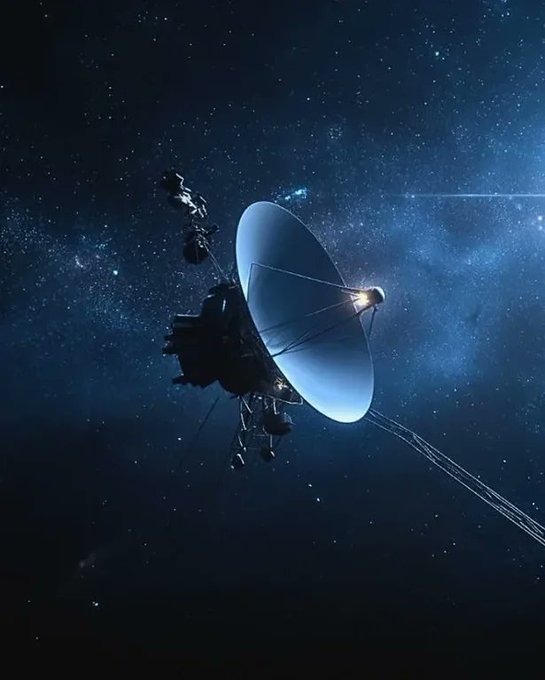
After nearly 50 years in space, NASA’s Voyager 1 is about to hit a historic milestone.
By November 15, 2026, it will be 16.1 billion miles (25.9 billion km) away, meaning a radio signal will take a full 24 hours — a full light-day — to reach it.
En el corazón del cúmulo de galaxias de Virgo, hay una hilera de galaxias popularmente conocida como la cadena de Markarian. En ella destacan, especialmente, estas dos galaxias, NGC 4438 (izquierda) y NGC 4435 que están interactuando gravitacionalmente. Están separadas por unos 100 000 años luz y a 50 millones de años luz de la Vía Láctea. #FelizFinde
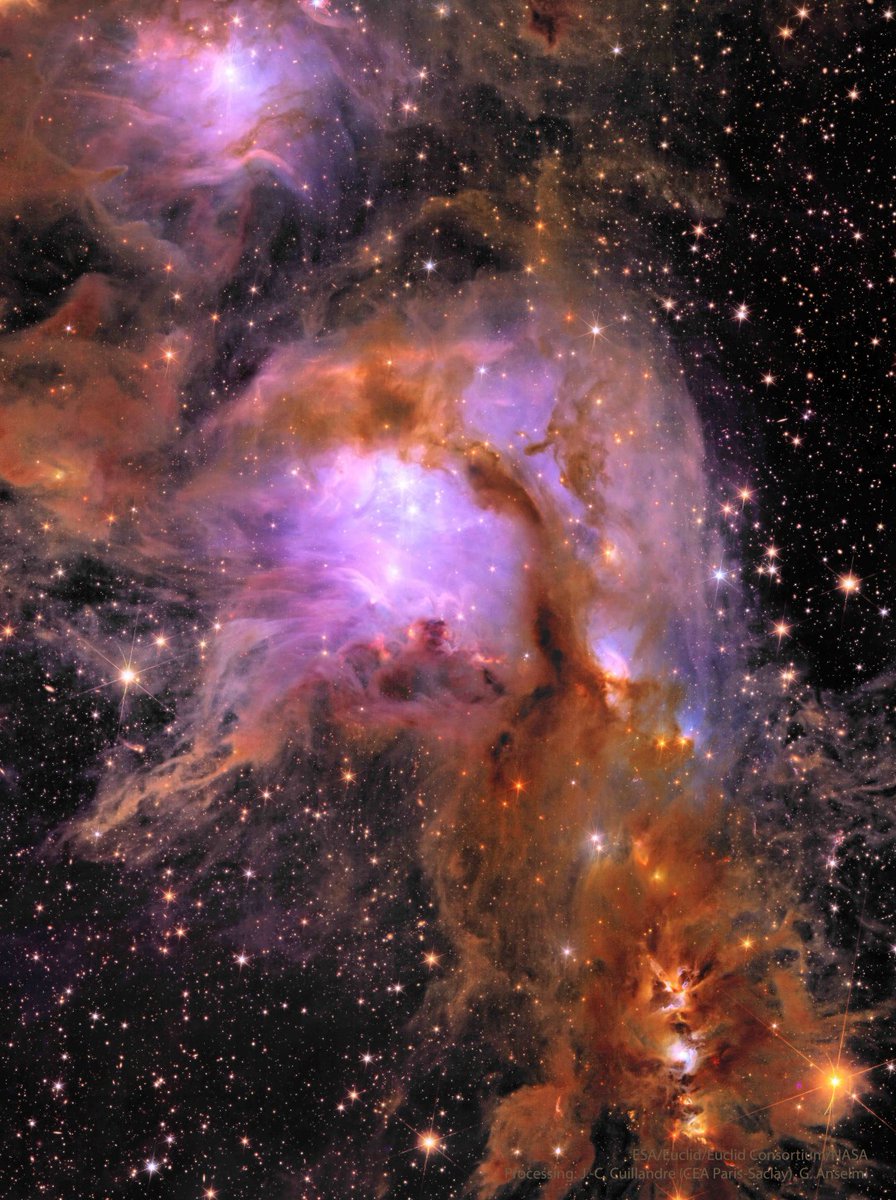
Este colorido paisaje es el de la nebulosa Messier 78, vista a través del telescopio Euclid, en los espectros visible e infrarrojo, permitiendo entender mejor como es el proceso de formación de estrellas. Messier 78 está a 1300 años luz del Sistema Solar. #FelizMiercoles
These galaxies are locked in.
The pair, known as ESO 550-2, is caught in a gravitational dance.
This interaction's already deformed one arm of the larger galaxy on the left, though star formation continues in it. Learn more: https://t.co/WLjjagEv1E
Gorgeous NGC 602, a young star cluster in the SMC, one of the Milky Way’s satellite galaxies, where astronomers have identified candidates that could be the first brown dwarfs ever found beyond our galaxy.
(Credit: ESA/Webb, NASA & CSA, P. Zeidler, E. Sabbi, A. Nota, M. Zamani)
Esta bonita galaxia espiral es NGC 2403, que se encuentra en la dirección de la constelación de Camelopardalis. Está a unos 10 millones de años luz de la Vía Láctea y mide 50 000 años luz (más o menos la mitad del tamaño de nuestra galaxia). Por su aspecto y abundancia de regiones de formación de estrellas (en tonos rojizos) recuerda a la galaxia del Triángulo. Crédito: L. Lbt, C. Malo, M. Martin, C. Daniel et al. #FelizDomingo
NASA has released one of the most detailed visualizations ever created of Earth’s ocean currents.
Using data from satellites and advanced ocean models, the map reveals massive rivers of moving water, swirling eddies hundreds of miles wide, and the powerful Gulf Stream carrying warm water from the Gulf of Mexico across the Atlantic.
Unlike most of images by Cassini, this one is completely different. In this image, Saturn is eclipsing the sun. At the center of the image is the body of the gas giant, which in itself is partially lit by the reflection of light from its ring system.
📸 NASA/JPL-Caltech
These iconic Pillars of Creation, located in the Eagle Nebula, are part of a vibrant stellar nursery, hiding young stars deep within their towering structures.
(Credit: NASA, ESA, CSA, STScI/Joseph DePasquale, Alyssa Pagan, Anton M. Koekemoer)
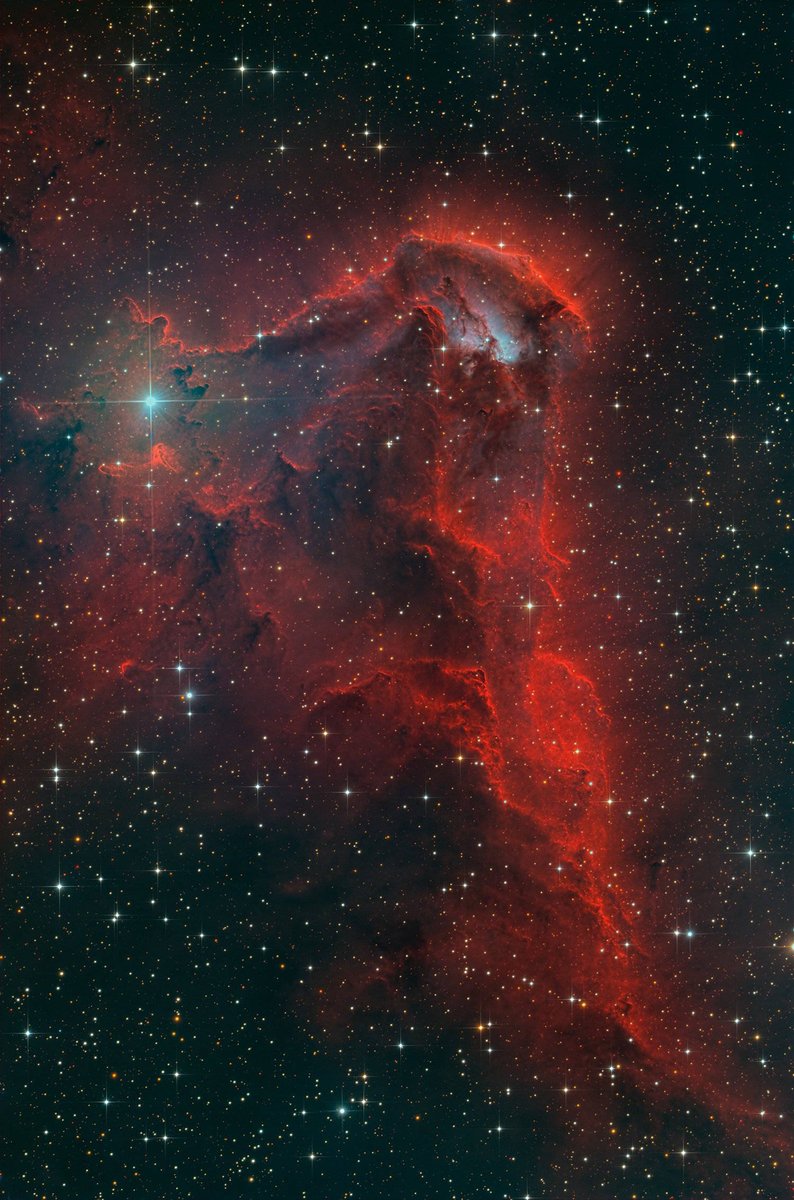
Esta es la nebulosa RCW 85. Es una nebulosa de emisión (se llama así a las que brillan por la emisión del hidrógeno que contienen) que está a 5000 años luz del Sistema Solar y que, popularmente, es conocida como la Torre del Diablo. Aproximadamente, mide 100 años luz. Crédito: M. Pugh #FelizJueves