Imagine trying to capture an entire 🌍 of diversity by 📸 only ~0.002% of it.
That's what I spent the last year working on with @JCornebise and @alkalait.
Excited to release the WorldStrat dataset.
Thanks to @esa's Φ-lab, @sentinel_hub and everyone who made it possible.
As believers of open research, we are disappointed to see Anthropic silently degrading Fable 5 for AI development
"Any topic related to building pretraining pipelines, distributed training infrastructure, or ML accelerator design... may have limited effectiveness through Claude via methods such as prompt modification, steering vectors, or parameter-efficient fine-tuning."
Not only do they get to decide what you use LLMs for in research, but this also enables them to silently intervene in your research without you knowing.
This sets a dangerous precedent. If a model refuses openly, users can understand the boundary. If a model falls back to another model, users can still evaluate the difference. But if a model silently modifies or weakens its own answers while still pretending to help, researchers lose the ability to know whether a failed result came from their own idea, their implementation, or an invisible intervention by the model provider.
That is not safety. Safety policies should be transparent, auditable, and user-visible.
On top of that, the people most harmed by this are not the largest labs with massive teams and proprietary infrastructure. It is the independent researchers, academic groups, startups, and open-source builders who rely on public tools to compete, innovate, and pioneer AI for everyone else.
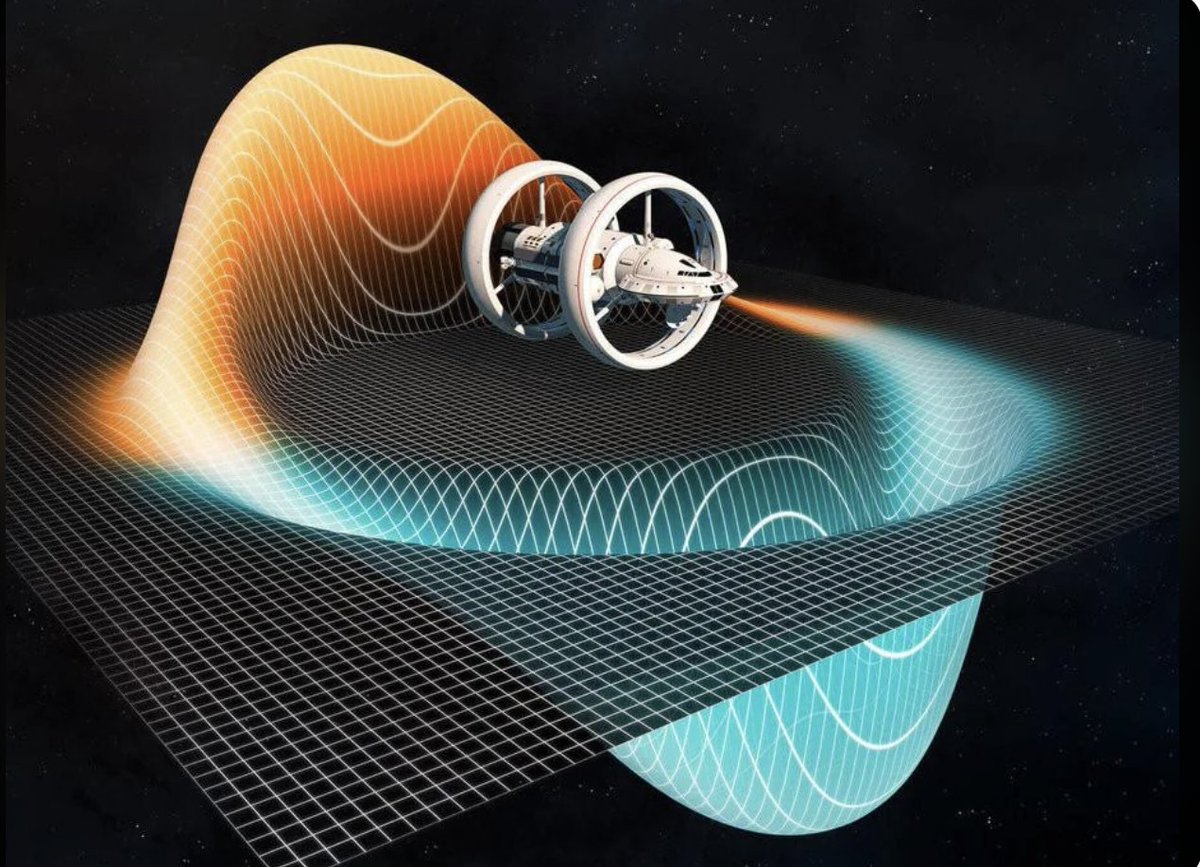
Could we tell whether anyone in our galaxy uses a warp drive?
This sounds like a crazy question, but it can be answered using numerical GR
(one of the fun highlights of the annual theory meeting presented by Katy Clough)
🧵1/7
Take thirty seconds and watch Europa and Io serenely sail by, massive Jupiter their background.
Imagine seeing this with your own eyes.
Envy those who, in the future, will.
📸 NASA/JPL-Caltech/SSI/CICLOPS/Kevin M. Gill
Have you ever done a dense grid search over neural network hyperparameters? Like a *really dense* grid search? It looks like this (!!). Blueish colors correspond to hyperparameters for which training converges, redish colors to hyperparameters for which training diverges.
A global open-source dataset of high-resolution free satellite images of Earth – the most extensive and detailed of its kind – has been developed by experts led by Dr @jcornebise@uclcs@UCLEngineering with @alkalait & @ivanorsolic, with data from @esa https://t.co/jUvjNva07p