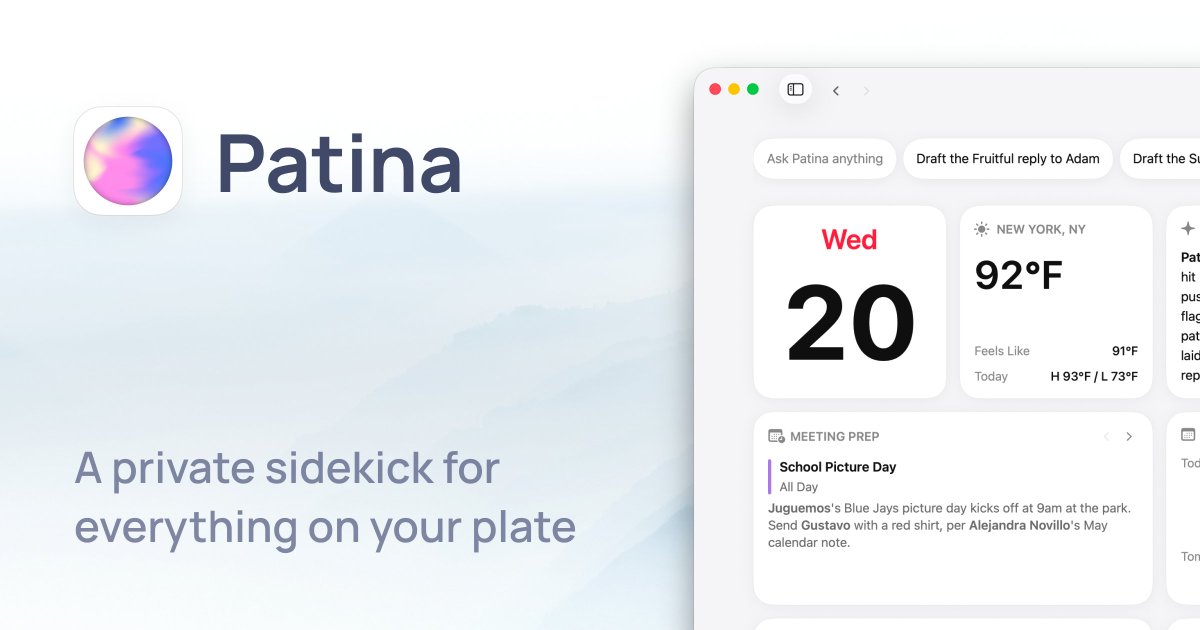
I've spent the last few months building Patina: a personal intelligence workspace that lives on your Mac.
It reads your iMessages, calendar, email and more. Knows your goals and helps you keep up with your people. All stored locally.
🌐👉 https://t.co/2RdcYGOZZc
In a recent batch talk, YC General Partner @t_blom broke down how to build a self-improving, AI-native company.
He walks through how to create recursive, self-improving AI loops, and why founders who get this right will run companies that improve while they sleep.
00:00 — Companies Are Roman Legions
00:54 — Copilots Are the Wrong Mental Model
01:55 — Extract the Domain Knowledge
02:24 — The Recursive Self-Improving Loop
04:12 — The Holy Shit Moment at YC
05:50 — Self-Optimizing Product and Support Loops
06:29 — Burn Tokens, Not Headcount
07:23 — Middle Management Is Over
08:05 — Make Everything Legible to AI
09:40 — Regenerating the YC User Manual
11:19 — Software Is Ephemeral, Context Is Valuable
12:18 — Where Humans Still Matter
woke up and my mentions are full of these
Both me and @davemorin tried to talk sense into Anthropic, best we managed was delaying this for a week.
Funny how timings match up, first they copy some popular features into their closed harness, then they lock out open source.
I will argue that the culprit is timing and substrate instability more than design or anything else.
We have simply not had successful consumer AI companies (besides OpenAI and maybe Claude - not Claude Code).
- Inference cost
- Jagged intelligence
- Rapidly changing frontier
- Free ChatGPT good enough for most normies
Intelligence is a new medium. Even there memory, personality, persistence, agent agency, long term planning are not really solved.
I have yet to see an agent harness/scaffolding that survives 6 months. Every new model makes half the bells and whistles unnecessary.
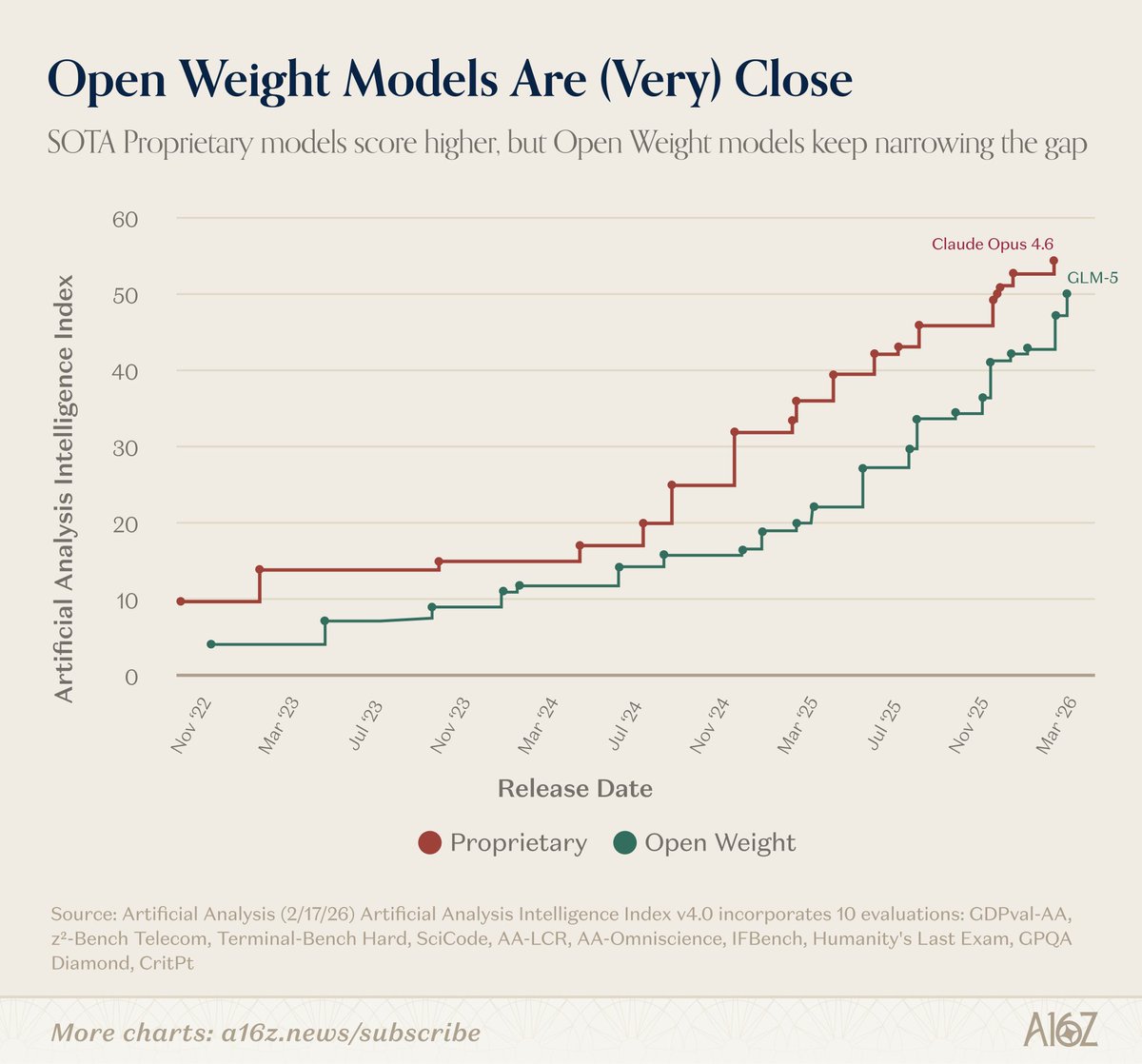
New model capabilities gave a shelf life of a few months before Open Source catches up. You can’t design great consumer UX on a platform that’s still being invented underneath you.
The tech has not settled yet for masses. Even early adopters can’t keep up. Things that have won are those that we had priors for - Chatbots, Coding.
Also don’t think designing for pixels is dead. We are very visual creatures. The shape of what we call “UI” needs to evolve along with a few computing constructs.
The shape of the container of intelligence will be varied and hyper personal.
We are in very very early innings. This is not the iPhone moment. This is pre-Macintosh moment.
All resonates.
What doesn't seem clear to me is how companies can compete with the frontier labs and Google.
Tuning an open weight model seems like a reasonable starting point but for all the reasons @jasoncwarner noted has it's limits.
However, training their own models on niche use cases (ex: legal) seems equally unlikely to work against the ever increasing capability of frontier models and corpus of training data Google and to a lesser extent the frontier labs already have.
Meet InterfaceKit, a design tool for working with agents.
Refine components live in your app → click to copy prompt.
Your agent gets the element data, Tailwind classes, and Motion animations it needs to make your changes in one shot. No more guess and check.