Almost 2 years, and I’m still trying to reach 5,000 folwers.
Running a Hindu id isn’t easy. Growth is slow, but I keep showing up.
If you support this journey, help me reach 5K. 🙏❤️
For Gen Zs who still think Manmohan Singh was true economist
Watch this Absolute BANGER video
BJP drops video exposing how UPA’s "OIL BONDS" kept bleeding India till 2026
2003: FRBM Act passed, stressing fiscal discipline & intergenerational equity.
2004: Crude ~$40/barrel, starting point of the oil-price escalation.
2005: Crude hits ~$60; oil-bond mechanism begins to compensate OMCs for under-recoveries.
2005–10: UPA issues ₹1.48 lakh Cr+ in oil bonds at 6.35–8.4% interest, with 15–20-year maturities.
2007: Crude reaches ~$90.
July 2008: Crude explodes to ~$144/barrel; India’s import bill surges.
2008: IOC, BPCL & HPCL face massive under-recoveries as domestic fuel prices remain below international costs.
2009: Lok Sabha election year; fuel prices remain politically sensitive as liabilities are deferred through bonds.
2010: Main oil-bond issuance ends at ~₹1.48 lakh Cr.
2004–14: Only ~₹13,764 Cr principal repaid during UPA;
As we celebrate Krishna Janamashtmi shocking to recall that in 1968 a government of independent India handed over 3 acres of the 13.37 acres Katra Keshadeva to Idgah party which had not established any claim to site in British courts
In 1992, Enron, a prominent U.S. company, planned to establish a power plant in Dabhol, Maharashtra, with a proposed investment of $2 billion. However, fierce local opposition stalled the project, leading Enron to file a $600 million compensation lawsuit against the Indian government.
Under the Vajpayee government, Harish Salve, a distinguished Indian lawyer, was appointed to defend India’s interests in this high-stakes international arbitration.
Shockingly, P. Chidambaram, a prominent Congress leader, served as Enron’s legal counsel, advocating against India’s interests.
When the UPA government came to power in 2004, with Chidambaram as Finance Minister, he could no longer directly represent Enron but continued to provide legal advice, reportedly favouring the company.
In a stunning move, the UPA government removed Harish Salve from the case and appointed Khawar Qureshi, a UK-based lawyer of Pakistani origin, to represent India.
The decision to entrust a sensitive case involving billions in taxpayer money to a foreign lawyer with ties to Pakistan raised serious questions about the Congress-led government’s judgment and priorities.
Despite India’s strong position in the arbitration, the questionable decisions - Chidambaram’s prior ties to Enron and the appointment of Qureshi led to a predictable outcome: India lost the case.
The government was forced to pay substantial settlements of $800 million to Bechtel & General Electric, who had acquired Enron’s stakes after its bankruptcy. Additionally, Qureshi was paid exorbitant legal fees, further burdening Indian taxpayers.
Notably, Khawar Qureshi later represented Pakistan in the Kulbhushan Jadhav case at the International Court of Justice, underscoring the irony of Congress’s choice.
And Guess who represented India - Harish Salve, who won the case and stayed the death sentence of Yadav, along with getting him consular access, only for a Fee of Rs 1.
This episode, often downplayed by the media, highlights a disturbing pattern of mismanagement and questionable loyalties under the Congress-led UPA.
Their handling of the Dabhol case reflects a legacy of decisions that prioritised foreign interests and compromised India’s sovereignty, leaving taxpayers to bear the cost of their failures.
The Real Balochistan
बलोचिस्तान में ॐ नमः शिवाय🙏
यह बलोच लड़की बलोचिस्तान की आजादी के लिए महादेव और हिंगलाज माता से पुकार कर रही है । 4 मिनिट के इस गीत के शब्द तो आपके पल्ले नहीं पड़ेंगे लेकिन आनन्द आ जाएगा सुनकर , ये पक्का है।
In 1790, Tipu Sultan slaughtered 700 Iyengar Brahmins on just one Diwali night. To this day, their children do not celebrate Diwali.
Today, offspring of Tipu are officially labelled by Indian state as the "oppressed" and they enjoy reservations.
But children of these slain Iyengars are banded as 'oppressors' and discriminated against at schools and jobs.
This is Indian reservation system in a nutshell.
Just watch this stand-up comic expose the “Are We Really Independent?” gang and then take on the Jantar Mantar kids😂
In a world full of Kunal Kamras and stand-up comics who think targeting a particular party or government is the easiest way to earn brownie points from a certain audience, this guy actually stands out.
He ate. And left absolutely no crumbs. Watch this piece.
Are we becoming a dumping ground for cheap electronics?
Something we learnt the hard way these past few months.
Customers started returning our UPS units, saying backup wasn't enough. We pulled every returned unit, charged it, loaded it up, and ran it down. Full backup, every single time. On our bench, nothing was wrong.
This went on for almost 3 months. Honestly, a wild goose chase. We suspected our design, our battery batches, everything except the actual problem.
The actual problem: The humble 12V 2A adapter powering the router. After about a year of use, even at a small 1A load, these adapters don't give 12V anymore. We measured 10.4V on some.
Our UPS sees 10.4V and thinks the power has gone. And switches to battery. Sits on battery the whole day while mains is perfectly fine. So when a real power cut comes, there's nothing left. Customer is right no backup. But the UPS was never the problem.
We thought fine, let's just source good adapters for our customers. Turns out most "Made in India" adapters are SKD kits — the cheapest possible design imported from China, assembled here. Nobody checks whether it still holds voltage after a year, because nobody's testing it after the return window closes.
So here we are, building our own 12V 2A adapter now. Yes, with Chinese components; that's just the reality of electronics today. But the design is ours. Stable voltage for years, low ripple, proper protections. Boring stuff nobody prints on the box.
A 200 rupee part quietly killing the devices around it, and the device maker takes the blame. And this isn't just our story; it's happening across categories.
We badly need stricter standards on what gets imported and assembled here. Otherwise we're just the last stop for the world's worst designs.
If you build hardware in India, I am sure most of you would have faced this too.
Chiquita is far more than a supernatural film. A Texas man doesn't merely "encounter" the Devi. He confronts a civilisation that refuses to fit into the West's categories of myth and reality.
The film also deserves credit for not erasing history. The shadow of the Dotbusters lingers as a reminder that the Indian diaspora carried not just memories of home, but also the burden of racial hatred. Against that backdrop, the Devi's presence feels almost restorative. Not a spectacle, but a reclamation.
In an era where the sacred is often reduced to metaphor or horror, Chiquita dares to treat it with reverence. That's rare. And worth celebrating.
Since Professor V Kamakoti has been nominated in the committee to overhaul our education system, he is being mocked by opposition leaders for his beliefs.
Today, I sat to check his academic credentials . Alongside serving as the Director of IIT Madras, his academic and professional accomplishments include:
• 250+ Research Papers and Patents: He has published over 250 research papers in leading international journals and conferences and holds numerous national and international patents.
• Development of the SHAKTI Microprocessor: He led the design and development of SHAKTI, India’s first indigenous, open-source microprocessor.
Microprocessor Development Programme (MDP): He heads this flagship initiative of the Ministry of Electronics and Information Technology (MeitY), aimed at strengthening India’s semiconductor and chip-design ecosystem.
• Record Patent Filings – “One Patent a Day”: As Director of IIT Madras, he introduced the vision of “One Patent a Day.” Under his leadership, the institute filed a record 417 patents during 2024–25.
• Role in the National Security Advisory Board (NSAB): As an NSAB member, he provides strategic advice to the Government of India on cybersecurity, telecommunications security, and digital infrastructure.
• Leadership of the AI Task Force: He chaired the Artificial Intelligence Task Force constituted by the Ministry of Commerce and Industry, helping shape India’s AI policy framework.
• Information Security Education and Awareness (ISEA): He oversees initiatives under the ISEA programme to build India’s cybersecurity workforce and promote public awareness of information security.
• Research in VLSI and Hardware Security: His primary academic contributions lie in VLSI design, algorithms, and strengthening cryptographic security at the silicon hardware level.
• Institutional Reforms at IIT Madras: Since assuming office as Director in 2022, he has helped IIT Madras retain its top position in the NIRF rankings while launching new online degree programmes and expanding the institute’s startup ecosystem.
In recognition of his outstanding contributions to science and technology, he has been awarded the Padma Shri (2026), the DRDO Academic Excellence Award, and the IBM Faculty Award.
Here is in his native village, moving on roads in a Prabhat Feri invoking the Grama Devta.
For centuries, Leprosy (Hansen's Disease) was treated as an incurable curse. Even after antibiotics were introduced, treatment required yrs of heavy drug regimens & nerve damage often persisted.
In the late 1970s, an Indian biochemist developed the world's very 1st immunotherapeutic vaccine for leprosy, using a harmless, non-pathogenic soil bacterium to awaken the human immune system.
While global pharma labs focused exclusively on developing chemical antibiotics to kill Mycobacterium leprae, . Dr. Gursaran Pran (G.P.) Talwar at the National Institute of Immunology (which he founded) in New Delhi realized that the real problem was immune paralysis. In severe lepromatous leprosy, the patient's T-cells completely fail to recognize the pathogen.
Talwar screened dozens of soil mycobacteria & identified a specific, non-pathogenic strain named Mycobacterium w (Mw, now classified as Mycobacterium indicus pranii).
He discovered that when killed Mw bacteria were injected into leprosy patients alongside standard multi-drug therapy (MDT):
- It re-energized the patient's dormant cell-mediated immunity.
- It accelerated bacterial clearance from the skin & nerves by up to 50%.
- It significantly reduced the incidence of debilitating painful immune flare-ups (erythema nodosum leprosum).
The Mw vaccine became the world's 1st scientifically proven immunotherapeutic agent for leprosy, later found to also boost host immunity against drug-resistant tuberculosis & certain types of tumors.
Global health agencies spent decades searching for complex synthetic molecules, an Indian biochemist looked into the dirt under our feet and found a harmless soil microbe that taught the human immune system how to conquer 1 of the oldest afflictions in human history.
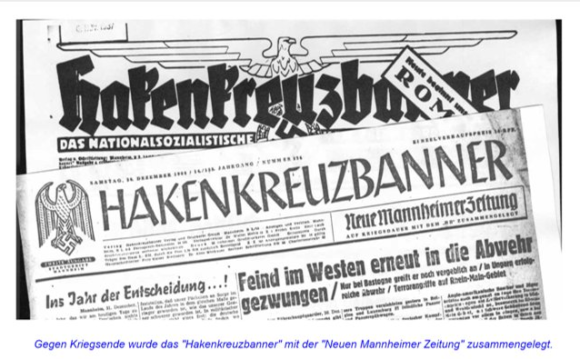
This is inaccurate and incomplete. The Nazi’s called their symbol the Hakenkreuz, (German for Hooked Cross), NOT the Swastika. As avid propagandists, they even published a newspaper titled “HakenkreuzBanner.”
Hitler never referred to his hate symbol as a Swastika either. Even in the Mein Kampf, when Hitler describes the creation of his hateful symbol—he calls it the Hakenkreuz—no reference to Swastika!
Western Press reporting on the rise of Hitler in the 1920s similarly called his symbol the Hakenkreuz and even termed Hitler’s followers as “Hakenkreuzlers.”
Swastika is an ancient Sanskrit word meaning “to be auspicious” and it is sacred to 2 billion Hindus, Buddhists and Jains across the world.
The symbol being discussed is certainly ancient. We find it in use globally across multiple cultures - Hellenic Greece, Native American tribes, India, Ethiopia, Germany, Syria, Japan, Southeast Asia, medieval Europe.... BUT called varying names such as Whirling Log, Swastika, Manji, Gammadion, Hakenkreuz, Fylfot and more.
This distinction is important for accuracy and correct representation.
https://t.co/176M0CvmRZ
As a leading platform for fact-based discussions, we ask @triggerpod to review the information provided -we are happy to explain and educate so that truth may prevail. @James1940
#Swastika is not #Hakenkreuz.
If you actually want to understand what Punjab terrorism was like - in raw honesty & nuance - brutality of Khalistanis & excesses of police with ordinary Punjabi stuck in middle - watch this one interview. I believe it’s a great feat in Indian journalism.
Meet Sanjay Chitkara, Director of LG Electronics.
- Survivor of the 1989 Khalistani terror attack at Thapar Engineering College, Patiala
- He was hit by five bullets and survived. He still has one bullet in his body
- Khalistani terrorists stormed the hostel and killed 19 non-Sikh students from different states
- Attack took place two hours before Rajiv Gandhi's visit to Chandigarh, yet he made no public statement on it.
You won't see this in Satluj because it doesn't fit its one-sided narrative.
In a land with supposedly minority oppressing Hindu govt, Hindus need this level of armed protection every single year to just go to their temple.
That's how the game is played.
The travails of being a Hindu in Pakistan. From carrying their own water glasses, to paying to be able to celebrate their festivals and dealing with the omnipresent threat of seeing their young women kidnapped raped, forcibly converted with help from Pakistani institutions.
Institutions that should help just shrug and stand by.
https://t.co/IPmMpu7VmW
Pakistani Cricketers, delegation, team members like Shoaib Akhter & Md. Asif used to traffic drugs into India whenever they used to come to India, there is a reported case when they panicked & self-confessed
Their coach Bob who called out this drug trafficking was killed under mysterious conditions
30% of terror attacks at that time were being funded by this drug money, to this day ISI sends drugs to border states like Punjab, J&K to kill the young youth slowly & cripple them