Chair Adams Memorial Commission, President Adams Memorial Foundation, Author, Speaker, CFA Charterholder, Board Member, Enthusiastic Tennis Player, Mom and Wife
Joined @Newsmax to celebrate the opening of the @TRPresLibrary. Theodore Roosevelt came to Medora to heal after personal tragedy, and the Badlands helped shape the leader, conservationist, and president he became. It’s only fitting America now honors his legacy right where it began.
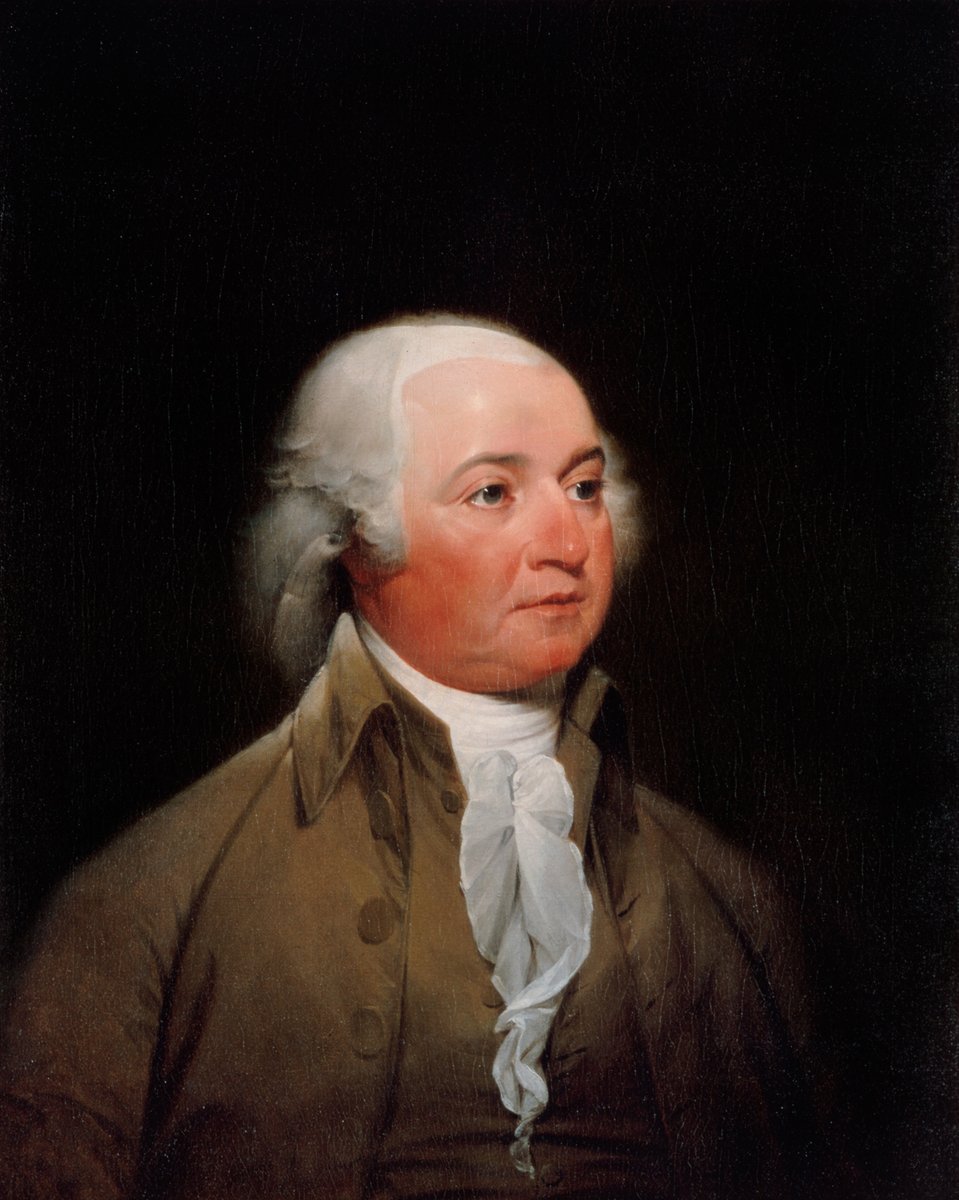
As America continues to mark its 250th birthday, it joins a tradition imagined by John Adams in 1776 and carried forward by generations of presidents and citizens.
Each milestone anniversary has offered an opportunity to reflect on the nation's founding ideals, measure how far the country has come, and consider the challenges that lie ahead.
More in @USATodayOpinion by @WHHistoryPres Stewart McLaurin. https://t.co/6EmiSpXfqC
Image credit: WHHA/White House Collection
My favorite line from any Founding Father.
250 years ago, John Adams described exactly how we would be celebrating the Fourth of July today. He got every bit of it right.
"It ought to be solemnized with pomp and parade, with shows, games, sports, guns, bells, bonfires, and illuminations, from one end of this continent to the other, from this time forward forever more."
🚨#BREAKING: A German soccer fan who flew to the USA but was fearful about coming because of news about criminals and people being mean...
...breaks down into TEARS, live on air saying he has FALLEN IN LOVE with America after a random man named "Bob" in Boston gave him a ride home after he was stuck at a game with no way back to his hotel
The German soccer fan's name is Sebastian, he said after meeting Bob, he extended his entire trip.
He said leaving America will hurt worse than watching Germany get knocked out of the World Cup.
"I fall in love with America. I'm sorry, it's just so emotional. Americans are not rude... if we are together, we can achieve great things."
THIS IS THE AMERICA I KNOW!!!!!! 🇺🇸🇺🇸🇺🇸
John Quincy Adams, when he discovered that both his father, John Adams, and Thomas Jefferson had died on the 50th anniversary of independence on July 4, 1826, he believed it to be a palpable mark of divine grace.
“The time, the manner, the coincidence with the decease of Jefferson, are visible and palpable marks of divine favour, for which I would humble myself in grateful and silent adoration before the Ruler of the Universe—For myself all that I dare to ask is that I may live the remnant of my days in a manner worthy of him.”
The great John Adams in a letter to his wife on July 3, 1776:
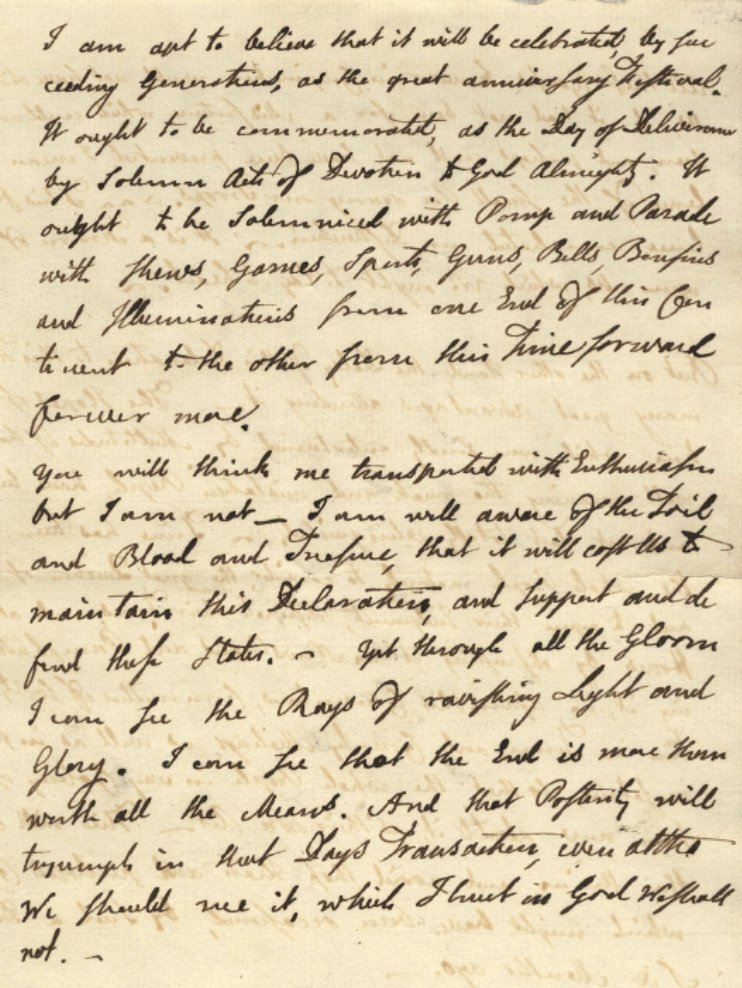
“I am apt to believe that it will be celebrated, by succeeding Generations, as the great anniversary Festival. It ought to be commemorated, as the Day of Deliverance by solemn Acts of Devotion to God Almighty. It ought to be solemnized with Pomp and Parade, with Shews, Games, Sports, Guns, Bells, Bonfires and Illuminations from one End of this Continent to the other from this Time forward forever more.
You will think me transported with Enthusiasm but I am not. -- I am well aware of the Toil and Blood and Treasure, that it will cost Us to maintain this Declaration, and support and defend these States. -- Yet through all the Gloom I can see the Rays of ravishing Light and Glory. I can see that the End is more than worth all the Means. And that Posterity will tryumph in that Days Transaction, even altho We should rue it, which I trust in God We shall not.”
Adams “rays of ravishing light and glory” continue 250 years later. What a blessing
Today, America wakes 250 years later as a beacon of hope, a republic entrusted to its people, an idea that changed the world.
A nation worth preserving. A dream worth pursuing. A freedom defended by every generation.
Happy 250th, America! 🇺🇸
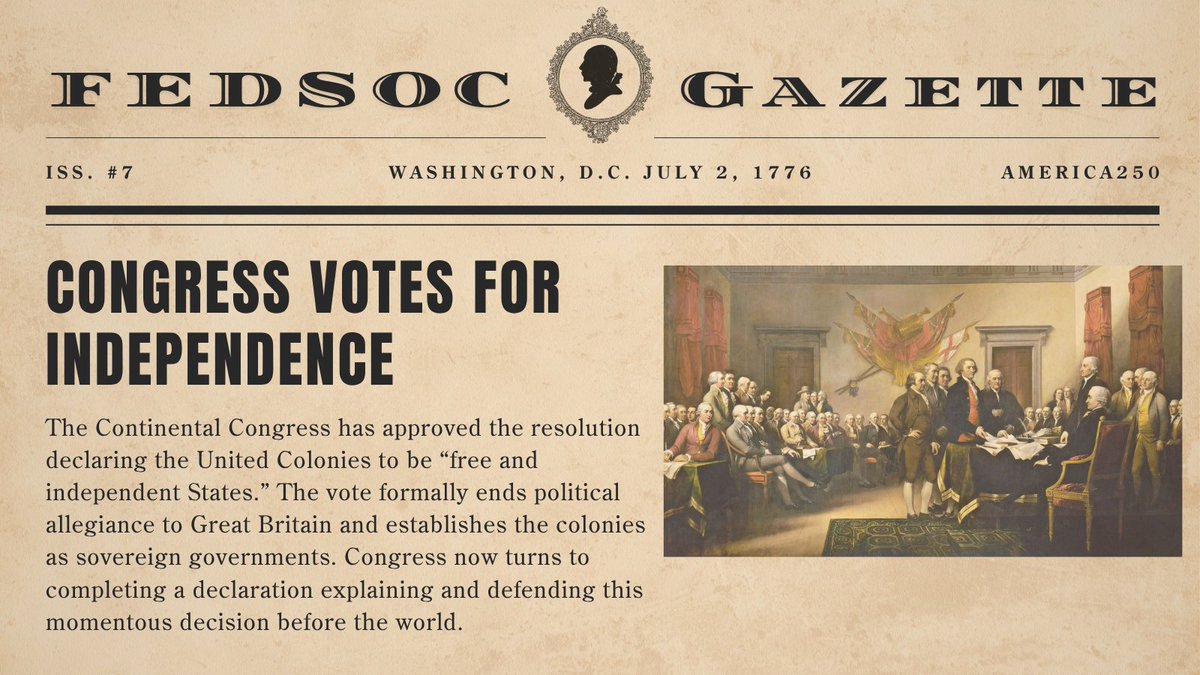
On July 2, 1776, the Continental Congress approved the resolution declaring that the United Colonies “are, and of right ought to be, free and independent States.” After months of war and debate, the vote formally severs political ties with Great Britain and establishes the colonies as sovereign governments. Members now turn to finalizing a declaration explaining the principles and grievances underlying the decision.
Our Nation’s first Vice President thought that today, the Second Day of July, would be the day remembered and celebrated in history since on that day the Continental Congress voted to approve a Resolution officially declaring America's independence from Great Britain.
In a letter dated July 3, 1776 to his beloved wife Abigail, John Adams wrote,
“Yesterday, the greatest question was decided, which ever was debated in America, and a greater, perhaps, never was nor will be decided among men. A resolution was passed without one dissenting colony, ‘that these United Colonies are, and of right ought to be, free and independent States, and as such they have, and of right ought to have, full power to make war, conclude peace, establish commerce, and to do all other acts and things which other States may rightfully do.’ You will see in a few days a Declaration setting forth the causes which have impelled us to this mighty revolution, and the reasons which will justify it in the sight of God and man.”🇺🇸
So my fellow Americans, go ahead and fire up the grill and get out the sparklers today! John Adams will be smiling in glory! #America250
The next day — July 3rd — Adams wrote a letter to his wife, Abigail, discussing the Declaration and its significance. In part, Adams wrote: "The Second Day of July 1776, will be the most memorable Epocha, in the History of America. I am apt to believe that it will be celebrated, by succeeding Generations, as the great anniversary Festival. It ought to be commemorated, as the Day of Deliverance by solemn Acts of Devotion to God Almighty. It ought to be solemnized with Pomp and Parade, with Shews, Games, Sports, Guns, Bells, Bonfires and Illuminations from one End of this Continent to the other from this Time forward forever more".
One vote stood between America and independence. The man who had to cast it was 80 miles away, battling cancer, as a violent thunderstorm raged. His name was Caesar Rodney.
A lesser-known founder of the American Revolution, Rodney rode overnight on horseback from Delaware to Philadelphia, arriving just in time to cast the deciding vote for independence and sign the Declaration of Independence. 🇺🇲
As we prepare for tomorrow’s 250th anniversary, it is worth remembering the 50th anniversary of American independence, in 1826.
John Adams and Thomas Jefferson had been bitter political rivals but later developed a friendship through letter exchanges.
Laying on his deathbed on July 4, 1826, Adams’ last words were, “Thomas Jefferson still survives.” In reality, Jefferson had passed away a few hours earlier.
Two prominent American founders both passing away on America’s 50th anniversary — how providential is that?
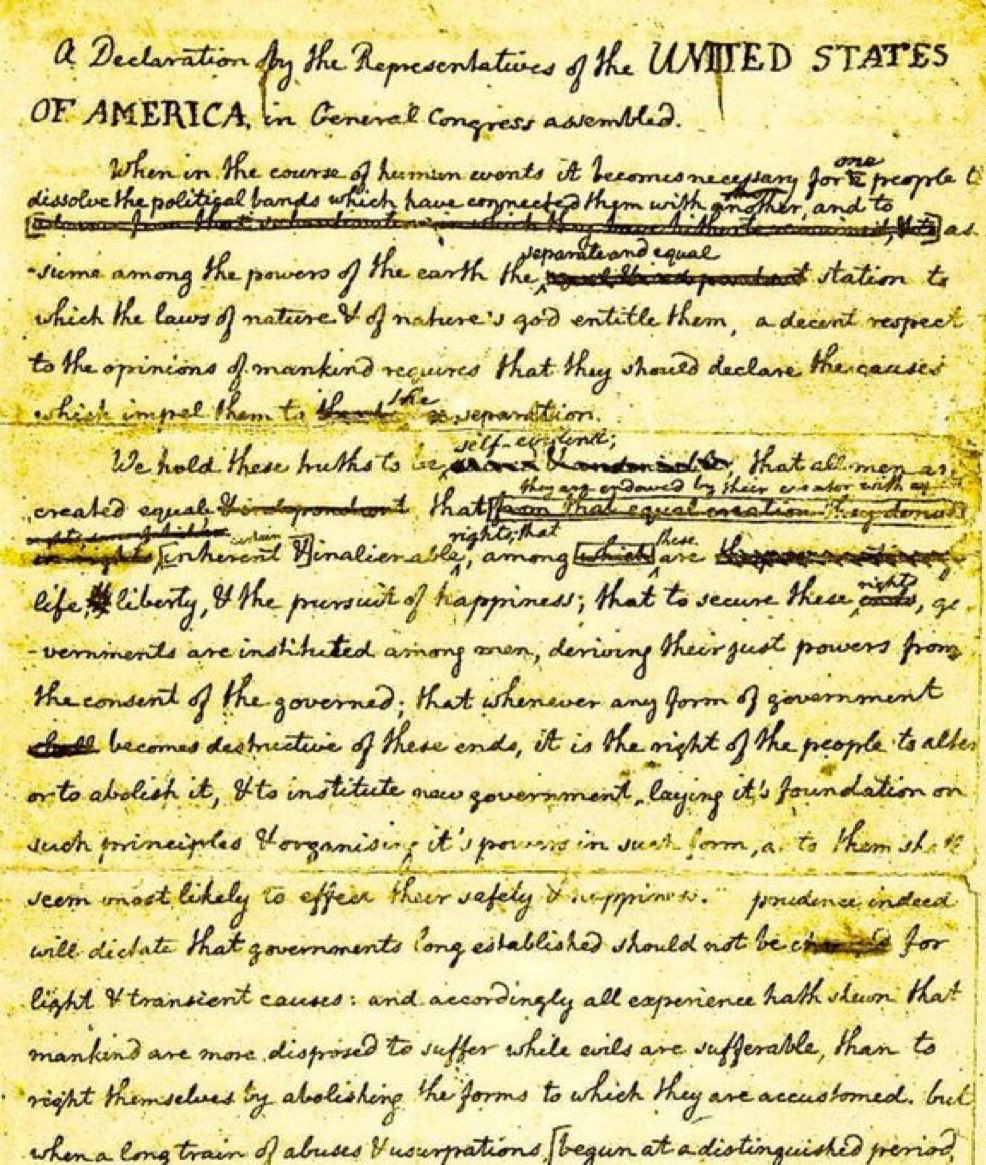
July 3, 1776 — With independence approved, Congress turned to Thomas Jefferson’s Declaration of Independence, spending nearly the entire day revising the document line by line.
John Adams, writing to Abigail, about the Continental Congress' vote in favor of independence on July 2, 1776:
"The Second Day of July 1776, will be the most memorable Epocha, in the History of America. I am apt to believe that it will be celebrated, by succeeding Generations, as the great anniversary Festival. It ought to be commemorated, as the Day of Deliverance by solemn Acts of Devotion to God Almighty. It ought to be solemnized with Pomp and Parade, with Shews, Games, Sports, Guns, Bells, Bonfires and Illuminations from one End of this Continent to the other from this Time forward forever more. You will think me transported with Enthusiasm but I am not. -- I am well aware of the Toil and Blood and Treasure, that it will cost Us to maintain this Declaration, and support and defend these States. -- Yet through all the Gloom I can see the Rays of ravishing Light and Glory. I can see that the End is more than worth all the Means. And that Posterity will tryumph in that Days Transaction, even altho We should rue it, which I trust in God We shall not."
America at 250.
July 2 is one of my favorite dates because of John Adams.
July 2, 1786, the delegates are exhausted, the debates have dragged on for weeks, and the weight of history presses down like the summer humidity.
On this very day, July 2, 1776, Adams and his allies push the Continental Congress to vote for independence from Great Britain. The resolution passes. The colonies are no longer subjects; they are free, or at least determined to become so.
Adams writes to his beloved Abigail that day: “The Second Day of July 1776, will be the most memorable Epocha, in the History of America… It ought to be solemnized with Pomp and Parade, with Shews, Games, Sports, Guns, Bells, Bonfires and Illuminations from one End of this Continent to the other from this Time forward forever more.”
He was off by two days. July 4 would get the glory when the Declaration was formally adopted, but he nailed the spirit.
As we race toward America 250 in 2026, this moment feels electric. Two hundred fifty years ago, a group of imperfect but courageous people bet everything on the radical idea that governments derive their power from the consent of the governed. They chose hope over fear, unity over division, and liberty over submission.
Today is all about John Adams!
🇺🇸 July 2nd — The U.S.’s Almost Independence Day🇺🇸
During the American Revolution, the legal separation of the thirteen colonies from Great Britain in 1776 actually occurred on July 2, when the Second Continental Congress voted to approve a resolution of independence that had been proposed in June by Richard Henry Lee of Virginia.
The resolution declared the United States independent from Great Britain's rule. After voting for independence, Congress turned its attention to the Declaration of Independence, a statement explaining this decision.
One day earlier, John Adams had written to his wife Abigail:
“The second day of July 1776, will be the most memorable epoch in the history of America. I am apt to believe that it will be celebrated by succeeding generations as the great anniversary festival. It ought to be commemorated as the day of deliverance, by solemn acts of devotion to God Almighty. It ought to be solemnized with pomp and parade, with shows, games, sports, guns, bells, bonfires, and illuminations, from one end of this continent to the other, from this time forward forever more.”
On this day in 1776, the United States was actually born. Not July 4. July 2. That's the day the Continental Congress voted to break from Britain, and John Adams was so certain of it that he predicted July 2 would be the great American holiday forever. He nailed everything except the date.
The vote came down to the wire, and one man had to ride through the night to save it. Delaware's delegation was split, one for independence, one against, which meant the colony's vote canceled itself out. The tie-breaker, Caesar Rodney, was 80 miles away in Delaware. He got word that he was needed and rode all night through a summer thunderstorm, sick and in pain, boots and spurs still on, and made it into Philadelphia just in time to cast Delaware's vote for independence.
The other holdouts fell into place too. In Pennsylvania, the men most opposed, including John Dickinson, deliberately stayed away from the chamber so their colony could swing to yes. South Carolina came around for the sake of a united front. When the roll was called, twelve colonies voted for independence and not a single one voted against. New York simply abstained, waiting on permission from home.
And so, on July 2, 1776, it was done. The colonies had legally, officially declared themselves free. The next day Adams wrote to his wife Abigail that this day "will be celebrated by succeeding generations as the great anniversary festival," with "pomp and parade, with shows, games, sports, guns, bells, bonfires, and illuminations." Fireworks and all. He was describing the Fourth of July two days early.
So why do we celebrate the 4th? Because that's the day Congress approved the final wording of the document explaining the decision, the Declaration of Independence. The vote to be free happened on the 2nd. The paperwork got finished on the 4th, and history remembered the paperwork.
The country was actually born in a rainstorm and a roll call on July 2, thanks in part to one sick man who refused to let a tie decide the fate of a nation.