This is a red herring. Science journals - including Science - have been publishing - nay featuring - conceptual and algorithmic slop for decades. This is where you end up if you prioritize papers over progress, the appearance of innovation over things that are actually innovative, and CV decoration over durable contributions. Science publishers are no neither interested in nor capable of being guardians of the literature. The only path forward is to throw the entire publishing paradigm of modern science out the window and rebuild something that actually prioritizes the things that matter.
Preprint from my PhD is up! So proud of this work. We made a hippocampal snRNA-seq atlas across activity conditions and circadian times. Each cell in our dataset was registered to the ABC taxonomy to make findings as reproducible as possible. Take a look! https://t.co/cUIzqTDPQ3
@mbeisen Part of the issue is that we don’t use a ���manhattan project” approach for much of our funding. Where the US has applied concerted big science efforts (genome project, BICCN), it has paid dividends. Agreeing on consensus priorities and then being monomaniacal in pursuing them >>
@1stworldrefuge@StevenSalzberg1 Why would the issue of new awards drop to 2% of what it was in the same period the year prior? Why would this happen for any other reason than a policy change?
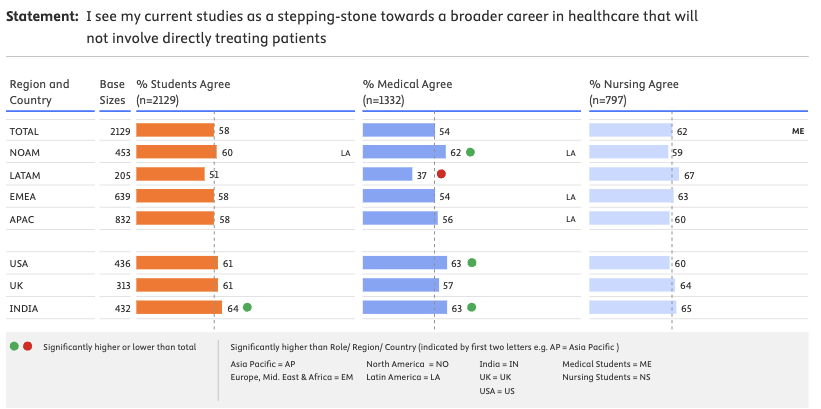
@RepGregMurphy This felt like a BS statistic to me, so I looked it up. @RepGregMurphy is correct that a high percent of med students don't want to directly treat patients; but the percentage is much higher—63% for US students—than the number he reported. I'm astonished and very bummed out.
@RepGregMurphy This felt like a BS statistic to me, so I looked it up. @RepGregMurphy is correct that a high percent of med students don't want to directly treat patients; but the percentage is much higher—63% for US students—than the number he reported. I'm astonished and very bummed out.
@leah_pierson@DGlaucomflecken https://t.co/n3wtQaCurr
I think this can be squared with the AAMC survey results just by dint of specific wording. Seems trivial that unlicensed med grads "plan to participate [in patient care" during their career per the AAMC item. The Elsevier item paints a darker picture...
@leah_pierson@DGlaucomflecken Hi Leah, I found this 2023 student survey by Elsevier Health that reports 63% of US med students agree with the statement: "I see my current studies as a stepping-stone towards a broader career in healthcare that will not involve directly treating patients."
@RepGregMurphy While it's not true this is the "#1 reason" for the doctor shortage (as I understand it, the main driver of shortage is stagnant congressional funding of residency slots), this is a big problem. Med schools must fix their admissions practices. The culture of medicine must change.
@RepGregMurphy This felt like a BS statistic to me, so I looked it up. @RepGregMurphy is correct that a high percent of med students don't want to directly treat patients; but the percentage is much higher—63% for US students—than the number he reported. I'm astonished and very bummed out.
@MicTott When I first learned about using CaMKII promoter for excitatory specificity, even the rationale didn’t make sense. This is a POSTsynaptic molecule at excitatory synapses. Interneurons have excitatory inputs, so they should have CaMKII. Am I missing something?