New in @AmJPsychiatry — personally I think this is my best paper so far. Highest statistical rigor, strongest causal inference (via a series of natural experiments), and multiple clinical applications.
Thanks @KJBinSTL and team tagged below.
https://t.co/l5gyWQ7XSt
Our new paper is out in Brain Stimulation @brainstimj
"Pulsed inhibition of corticospinal excitability by the thalamocortical sleep spindle"
With an amazing team @tobergmann, @ulfziemann1@czrenner @ Prince Okyere & @ Milad Amini
https://t.co/387zbr0R8D
1/10 We need better ways to measure brain excitability in psychiatric disorders. The prefrontal cortex—key target for brain stimulation treatments—is particularly hard to assess. Our new studies tackle this with systematic mapping! https://t.co/hLJa4B1ml7 &https://t.co/TwhvcvUEia
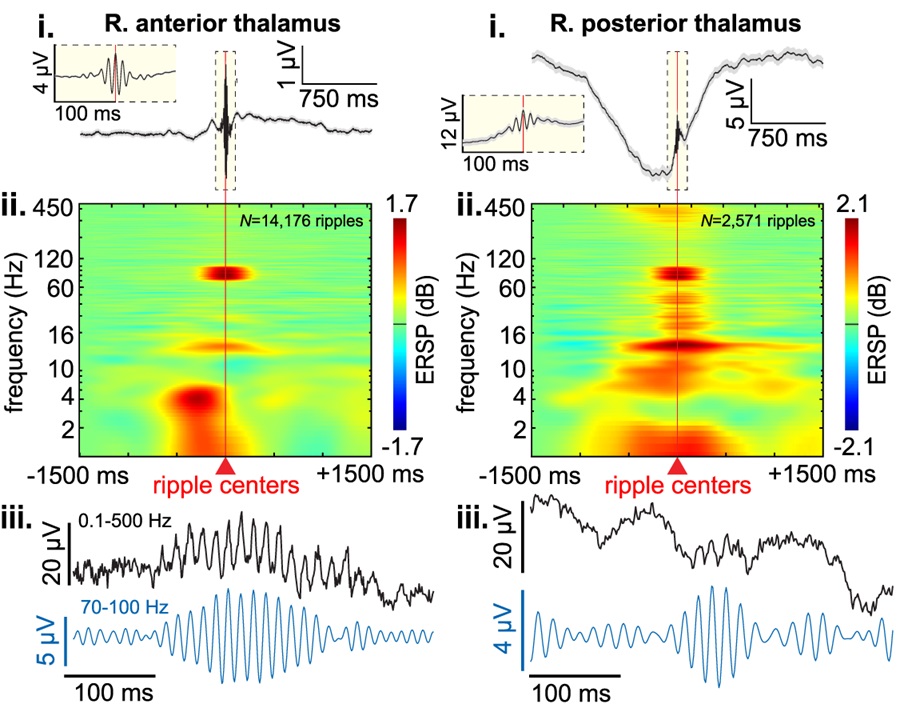
1/5 Excited to share our new paper where we used a rare selection of direct recordings from the human thalamus to understand its role in coordinating high frequency oscillations, called ripples, in the cortex and hippocampus during sleep. https://t.co/QMCwXT93Km
The #thalamus syncs spindles & Up states in cortex for memory, but what about co-ripples in #hippocampus & neocortex? @cdickey_ &co show that during human sleep, thalamic spindles & Up states sync networks that regulate #memory consolidation #PLOSBiology https://t.co/OgH63uwdl9
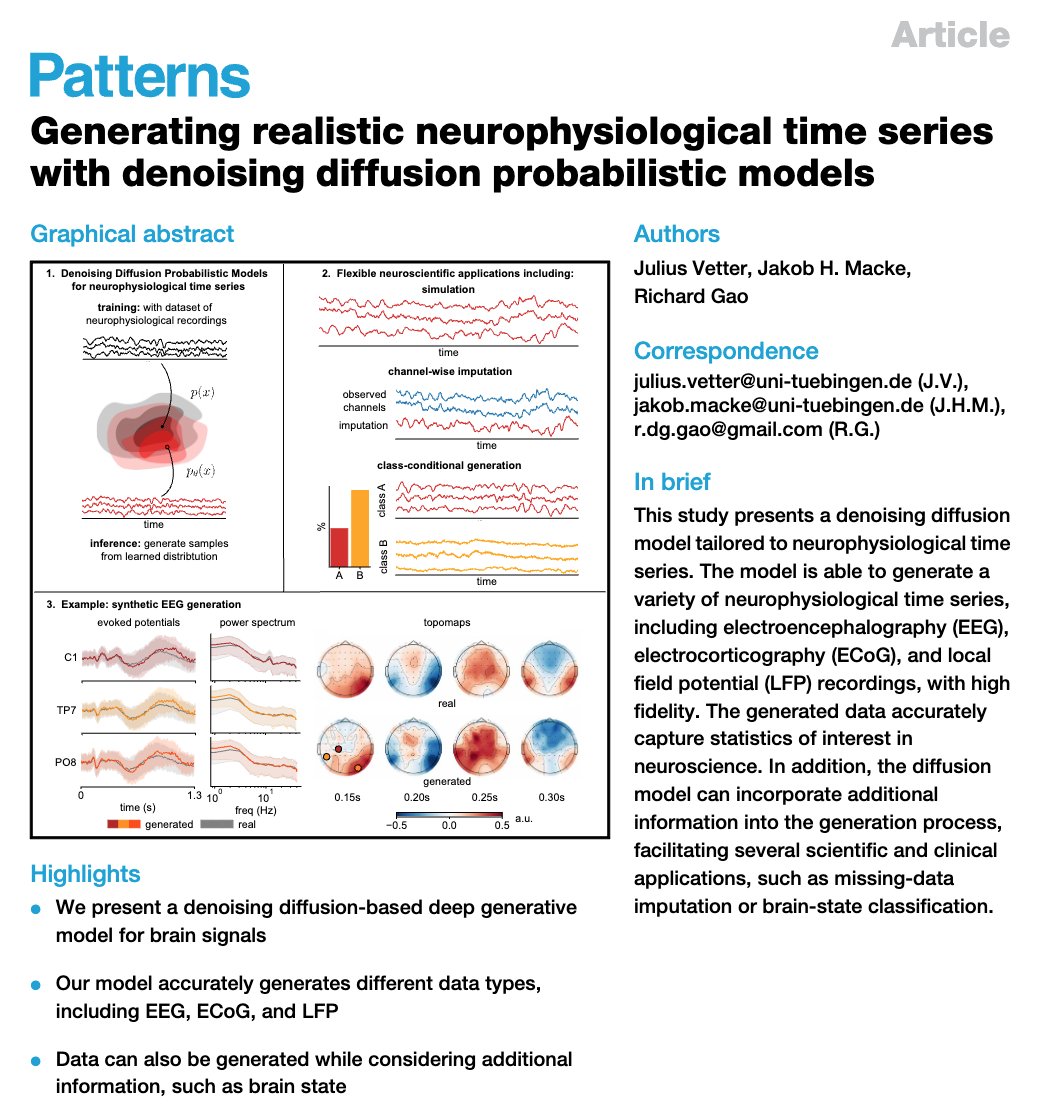
Want a tool that uses ML to generate REALLY good fake brain recordings?
You're getting one. Julius' paper on diffusion models for brain data is published!
Works with all kinds of densely sampled, multichannel continuous signals (LFP, EEG, etc.)
https://t.co/CG7aD3uLAu
2/2 Using high-density cortical surface microgrid recordings, we show fine-scale organization of language processing in the human superior temporal gyrus. Thanks to everyone involved in this exciting collaboration across UCSD, OHSU, and MGH!
Theta-burst stim (TBS) is used to treat depression, but how does it work? I dug into this question in my research yr with @DrCoreyKeller@ACPaulk, now out in @NatureComms, finding that TBS can produce plasticity-like changes in just minutes of stim. https://t.co/hDCFvqwsxJ
We spent hundreds of hours recording neural activity from sleep and arousal-related cell types in the deep brain, all while delivering variant focused ultrasound pulsing schemes to gain insight into one of the most daunting questions in the field: 'What are the parameters?'.
Ethan A. Solomon et al. found that TMS directed at the DLPFC resulted in iEEG low-frequency increases in frontolimbic cortices and high-frequency decreases in frontotemporal areas, including the hippocampus. More interesting findings can be found here:
https://t.co/IGv1B4Fbor