I have a guest essay in @nytimes today about autonomous vehicle safety. I wrote it because I’m tired of seeing children die. Done right, we can eliminate car crashes as a leading cause of death in the United States
@Waymo recently released data covering nearly 100 million driverless miles. I spent weeks analyzing it because the results seemed too good to be true. 91% fewer serious-injury crashes. 92% less pedestrians hit. 96% fewer injury crashes at intersections. The list goes on.
39,000 Americans died in crashes last year. More than homicide, plane crashes, and natural disasters combined. The #2 killer of children and young adults. The #1 cause of spinal cord injury. We’ve accepted this as the price of mobility.
We don’t have to.
In medicine, when a treatment shows this level of benefit, we stop the trial early. Continuing to give patients the placebo becomes unethical. When an intervention works this clearly, you change what you do.
In driving, we’re all the control group.
Cities like DC and Boston are blocking deployment. And cities are not the only forces mobilizing to slow this progress.
It’s time we stop treating this like a tech moonshot and start treating it like a public health intervention that will save lives.
Link to article below.
👀 this video of Waymo cars evading crashes with people and vehicles. I especially note the ones that require it having a 360° view.
My sincere thanks to Alex Ellerbeck and @acsifferlin for their wisdom and sure hand in editing this piece.
Going rider-only in five new cities in the coming weeks, with Miami starting today, followed by Dallas, Houston, San Antonio, and Orlando! That will make ten cities with fully autonomous operations, and this is just the beginning of our scaling acceleration.
I took a close look at the 38 most serious crashes Waymo experienced between July 2024 and February 2025. Almost all of them involved a Waymo following the rules and a human-driven car... not doing that.
Speed matters. A @Waymo vehicle was driving in a 25mph zone in LA when an oncoming car swerved into our lane while speeding up to over 70mph… 3x the speed means 9x the destructive energy. Good to see the Waymo Driver react early and safely to make room.
OpenAI just dropped o3-mini and it’s insane!
It's their fastest, smartest, and most cost-effective reasoning model yet and people are going absolutely crazy over it.
10 wild examples:
1. "create a snake game, where snakes compete with each other"
Safety is more than numbers — it’s getting people where they're going safely each day. I'm excited to discuss with @EdLudlow how we plan to expand this impact as @Waymo continues responsibly scaling the #WaymoDriver at tonight's @CTATech event at @CES.
if you could press a button that cures your child’s brain tumor in exchange for ending your life immediately, every parent would hesitate for zero seconds before fighting to be the first to press it
the cruelest thing is that no such button exists.
but there is always a move 👇
We recently began serving riders in Austin, and it’s great to see the safety benefits of the @Waymo Driver already playing out for both our riders and other road users.
Waymo's market share is now equal to Lyft within SF. Incredible.
Network effects is one of the best sources of defensibility. But it's proven to be not that important in ridesharing.
You need a minimum network size, but once you have that, there are diminishing returns. In each geo, Uber and Lyft need enough drivers to have reasonable wait times. Once wait times hit that acceptable threshold, the incremental driver doesn't improve the rider experience (eg if my Uber ride is coming in 2-4 minutes, I don't really care about the wait times getting faster).
When Waymo launched in August 2023, Uber and Lyft were at 66% and 34% share in SF.
15 months later in November 2024, Waymo is at 22% - the same as Lyft - with Uber at 55%.
Both Uber and Lyft lost low double digit % pts of market share, but it's more painful for Lyft. Lyft gave up ~1/3 of their share. Uber lost ~1/6.
This is just when comparing all rides with pickups and dropoffs inside Waymo’s SF operating boundary (ie excludes any ride to / from the airport).
Anecdotally, Waymo's wait times are longer than Uber and Lyft because they don't have enough cars on the road. But they are close enough to that acceptable threshold, that their superior product (clean, nice cars, quiet drivers, etc) tips the riders in their direction.
It's possible when Waymo puts more cars on the road and reduces wait times to be in line with Uber and Lyft, their share could climb even faster.
Soon, @Waymo will serve riders coast to coast, adding Miami to our map. No matter which Waymo One city you’re in, you'll get the same trusted driver and consistent Waymo One experience—every single time, in every single city.
Waymo - the safest and most friendly driver is available to everyone in LA! Another step that shows generalizability of the Waymo driver as we continue to scale.
Whether you're in LA, Phoenix, or SF, everyone can enjoy the same safe, consistent ride, all thanks to the generalizable Waymo Driver, and we’re only just starting to realize its full potential.
While our vehicles are autonomous, the work is not. Cheers to the team who continues driving us forward!
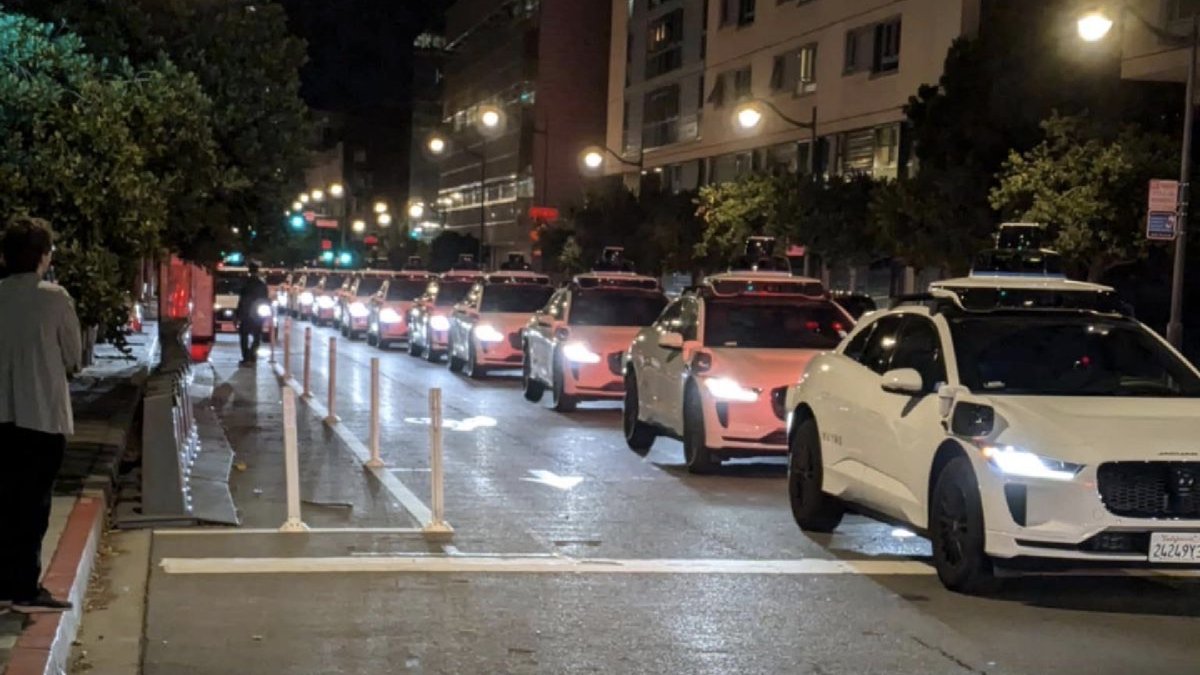
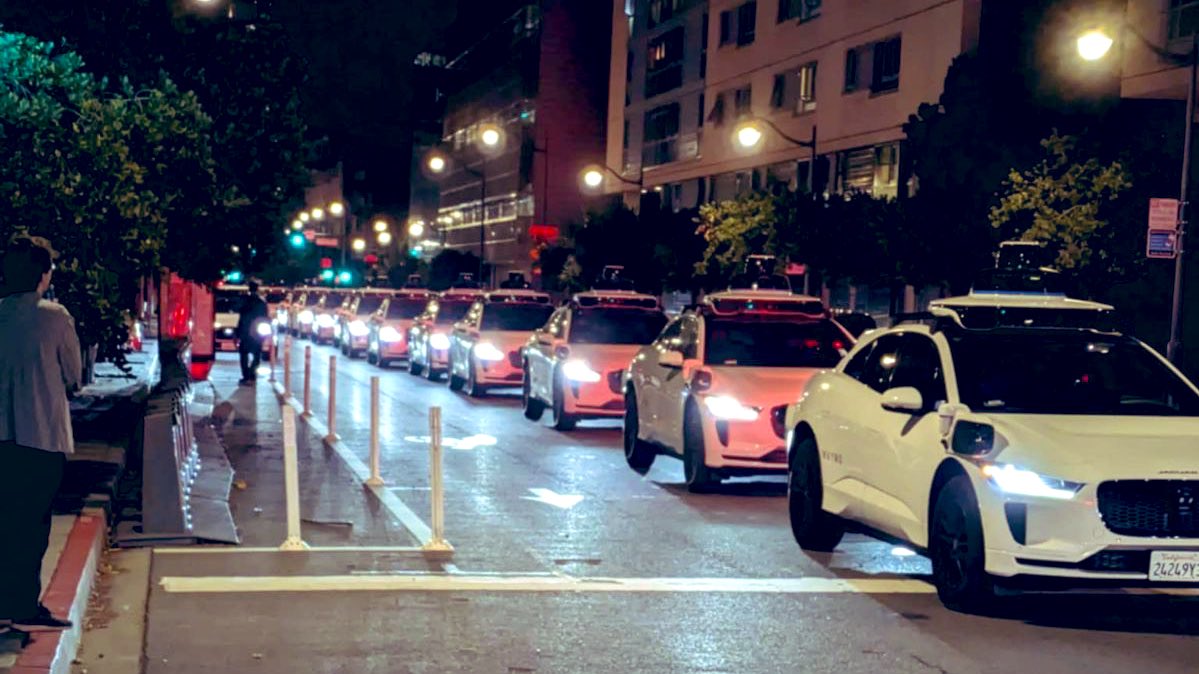
6/ Last but not least: @Waymo’s doing really well - 1M fully autonomous miles and 150K paid rides / week, plus partnerships with Uber + Hyundai, 6th-gen Waymo Driver, growing commercial opportunity. Here’s a photo after a recent concert in SF - Waymo after Waymo picking people up!
Proud to share that we’re driving over 1M miles and providing over 150k paid trips each week to riders in SF, PHX and LA. Congrats to the entire team @waymo, and thank you to our riders for trusting us to get you there safely.
It's not just that driverless Waymo vehicles get into far fewer serious crashes than human-driven ones. The crashes that do happen are overwhelmingly the fault of the other driver. Lots of human drivers rear-ending Waymos and running red lights. https://t.co/UpCZdcZyOR
I'm happy to see @Waymo open-source our miles driven and crash data (with severity) compared to human benchmarks. AFAIK we're the only company that has done this. We also commit to regularly update this site. Of course, the numbers are impressive too! https://t.co/GQiNVRpDdO