New Paper Alert: Why does cell-to-cell variability in gene expression matter, and how can we analyze it beyond mean expression?
@Nature_NPJ by Gatlin et al - "Exploring cell-to-cell variability and functional insights through differentially variable gene analysis" #SingleCell
QuantumXCT: Learning Interaction-Induced State Transformation in Cell-Cell Communication via Quantum Entanglement and Generative Modeling
Selim Romero, Shreyan Gupta, …
https://t.co/b4pHlUjwij [𝚌𝚜.𝙴𝚃 𝚙𝚑𝚢𝚜𝚒𝚌𝚜.𝚋𝚒𝚘-𝚙𝚑 𝚙𝚑𝚢𝚜𝚒𝚌𝚜.𝚍𝚊𝚝𝚊-𝚊𝚗 𝚚-𝚋𝚒𝚘.𝙶𝙽]
While gene expression is regulated at the cell level, transcriptome-wide association studies (TWAS) linking GWAS hits to causal genes are largely pursued at the tissue level due to lack of well-powered single-cell eQTL datasets.
S-MiXcan is a method allowing the use of bulk tissue-level eQTLs and single-cell RNAseq data from different datasets (both pubicly available for many tissues) to infer single-cell level TWAS estimates.
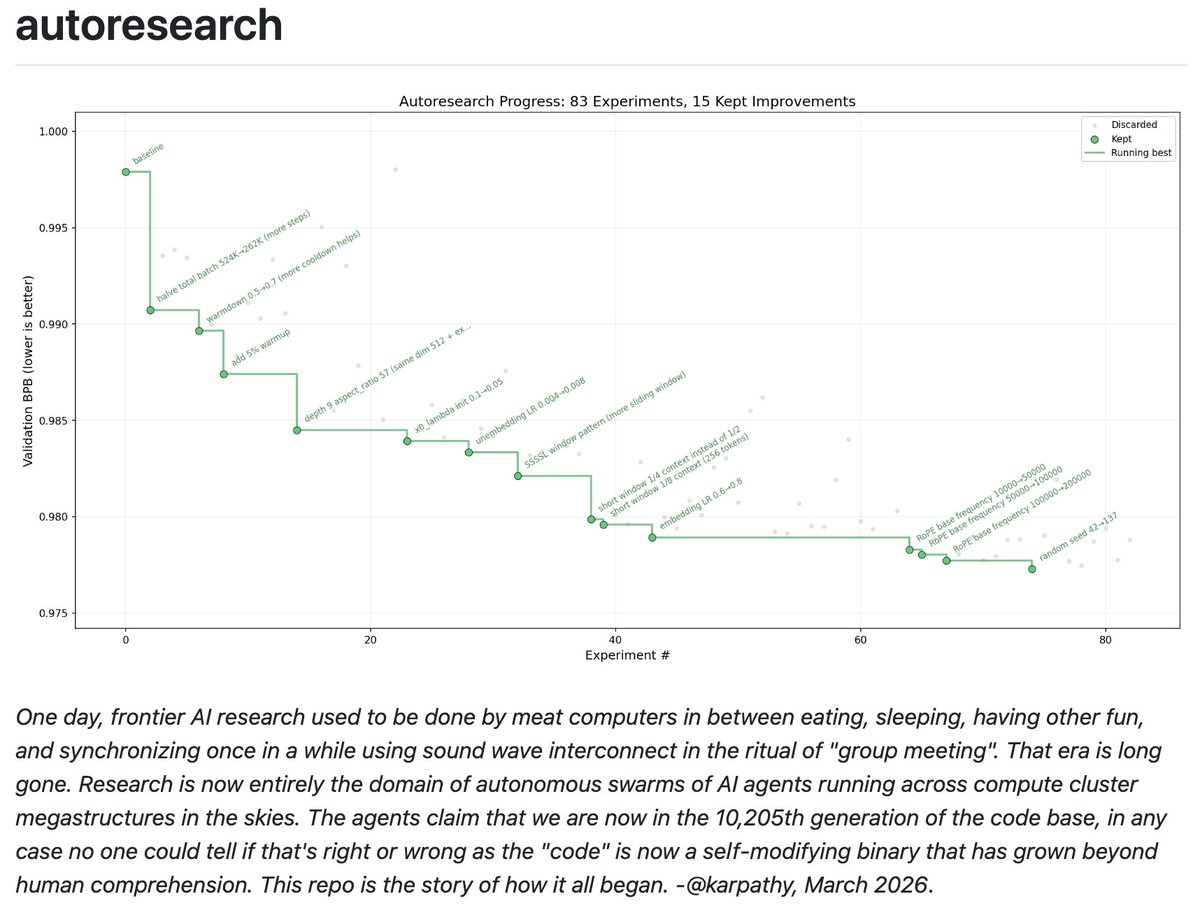
I packaged up the "autoresearch" project into a new self-contained minimal repo if people would like to play over the weekend. It's basically nanochat LLM training core stripped down to a single-GPU, one file version of ~630 lines of code, then:
- the human iterates on the prompt (.md)
- the AI agent iterates on the training code (.py)
The goal is to engineer your agents to make the fastest research progress indefinitely and without any of your own involvement. In the image, every dot is a complete LLM training run that lasts exactly 5 minutes. The agent works in an autonomous loop on a git feature branch and accumulates git commits to the training script as it finds better settings (of lower validation loss by the end) of the neural network architecture, the optimizer, all the hyperparameters, etc. You can imagine comparing the research progress of different prompts, different agents, etc.
https://t.co/YCvOwwjOzF
Part code, part sci-fi, and a pinch of psychosis :)
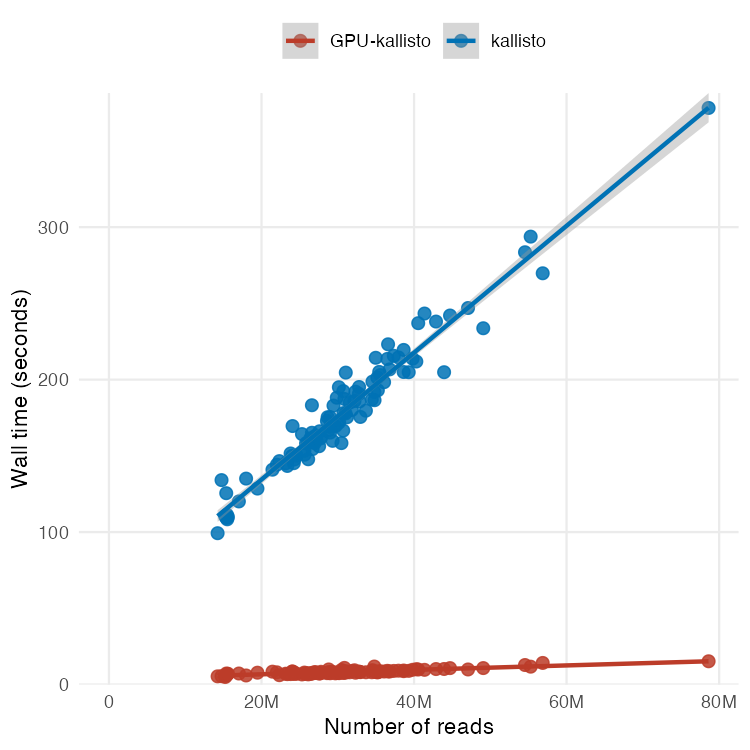
Excited to share this preprint that describes my latest work on using GPUs to accelerate processing of RNA-seq data.
The title says it all: "RNA-seq analysis in seconds using GPUs" now on biorxiv https://t.co/2JrOfsxNFV
Figure 1 shows they key result
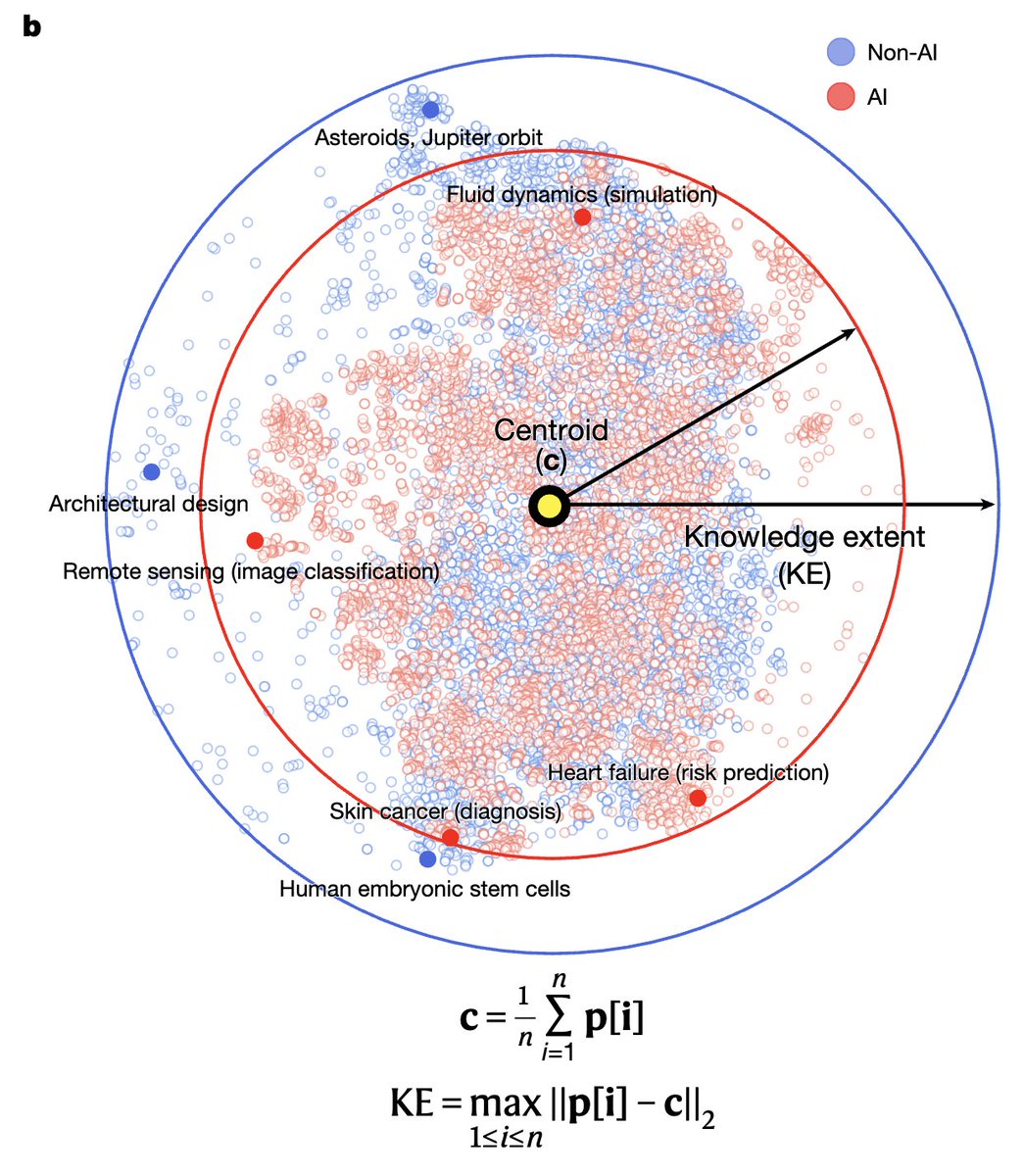
My artisanal take on the claim that AI tools expand scientists' impact but contract science's focus (Fig. 3b from https://t.co/6gkSj8saoB):
t-SNE is not quantitative and the plot is senseless. Even AI could have told them that (chatGPT tears it apart in a 6 point takedown).
At MIT, the only course I ever dropped was signal processing. The DFT math was too intimidating. It’s so easy to just type fft() in MATLAB and move on. Years later, I finally did DFT by hand. ✍️ If you are also afraid of DFT, I hope this helps! ⬇️ Download: https://t.co/nNbIF6pn2Z
New preprint alert: we use sign errors as a test of how well TWAS works.
Very worryingly we find that TWAS gets the sign wrong around 1/3 of the time (compared to 50% for pure guessing). You can read more about our analysis here, and what we think is going on 👇
Mapping Gene Impact on Single-cell Transcriptomic Networks via Perturbation Response Scanning https://t.co/GVDmsh8YsA by @gupta_shreyan@romero_selim@jamescai
We just finished writing up this beautiful story on how transcription factors can generate pulses by using chromatin (led by Cece & @ECosta173 ): Bifunctional transcriptional effector domains control gene expression pulses in an occupancy-dependent manner https://t.co/E9Lf6howKE
unfortunately, some can just repeat "OpenAI killed your startup" phrase blindly. 🫠
Let me share the concept of "modularity" in software.
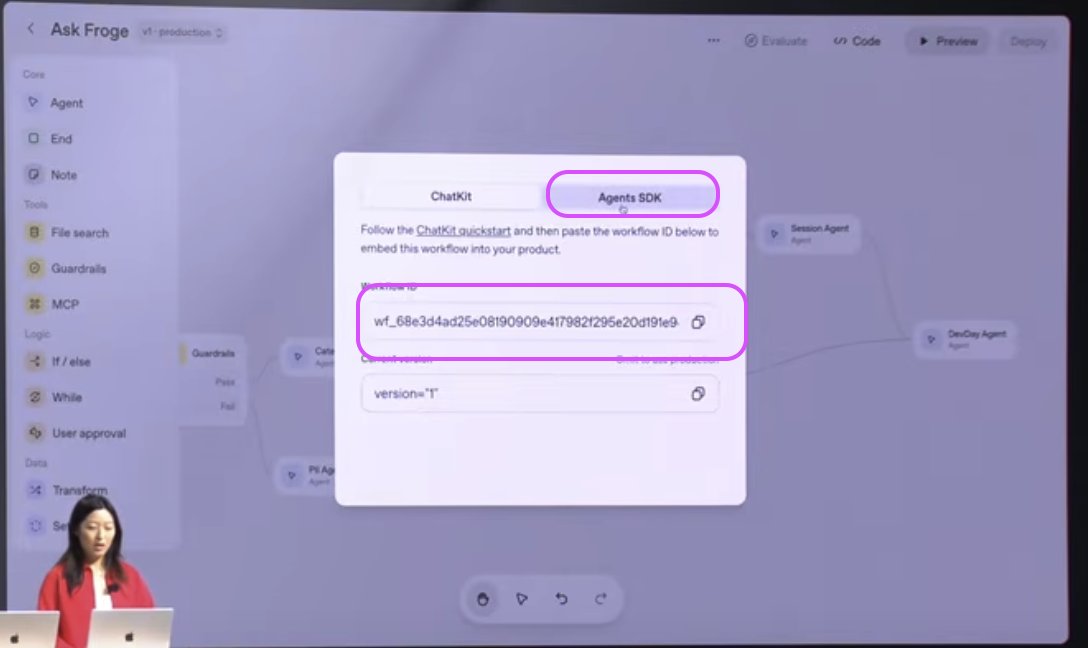
1. Agent Builder provides no-code platform to use @OpenAIDevs APIs, which is already familiar with developers. Now non-devs can use it too.
2. The strong moat for @OpenAI Agent Builder is seamless integration with ChatKit/AgentSDK. You can extract workflow ID and just copy/paste it into @reactjs Chat Widget on websites.
you can just re-publish workflows without updating the code itself!
I believe a lot of startups expect this moves, and they can integrate their product to their "MCP".
New Preprint Alert! 🧬
We introduce a new framework using Chatterjee's rank correlation to infer GRNs from scRNA-seq. Our method is non-parametric, scalable, and can infer directional regulation.
👉 https://t.co/eBfOKRBMSE
Check out the preprint!
#Bioinformatics#scRNAseq#GRN
Harmony, as a batch integration method, the paper has been cited for 6500+ times, but I still don't understand what it can do to your single-cell data.
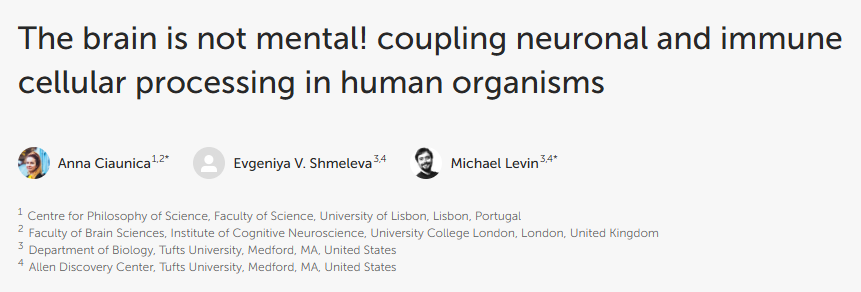
These findings are from a paper in @FrontNeurosci which argues that a promising way forward in understanding the nature of human cognition is to zoom out from the prevailing picture focusing on its neural basis. https://t.co/vIa66QZf9W 2/10








![ETN's tweet photo. QuantumXCT: Learning Interaction-Induced State Transformation in Cell-Cell Communication via Quantum Entanglement and Generative Modeling
Selim Romero, Shreyan Gupta, …
https://t.co/b4pHlUjwij [𝚌𝚜.𝙴𝚃 𝚙𝚑𝚢𝚜𝚒𝚌𝚜.𝚋𝚒𝚘-𝚙𝚑 𝚙𝚑𝚢𝚜𝚒𝚌𝚜.𝚍𝚊𝚝𝚊-𝚊𝚗 𝚚-𝚋𝚒𝚘.𝙶𝙽] https://t.co/tAmlDL8cFb](https://pbs.twimg.com/media/HE9HQghWAAAjTNS.png)