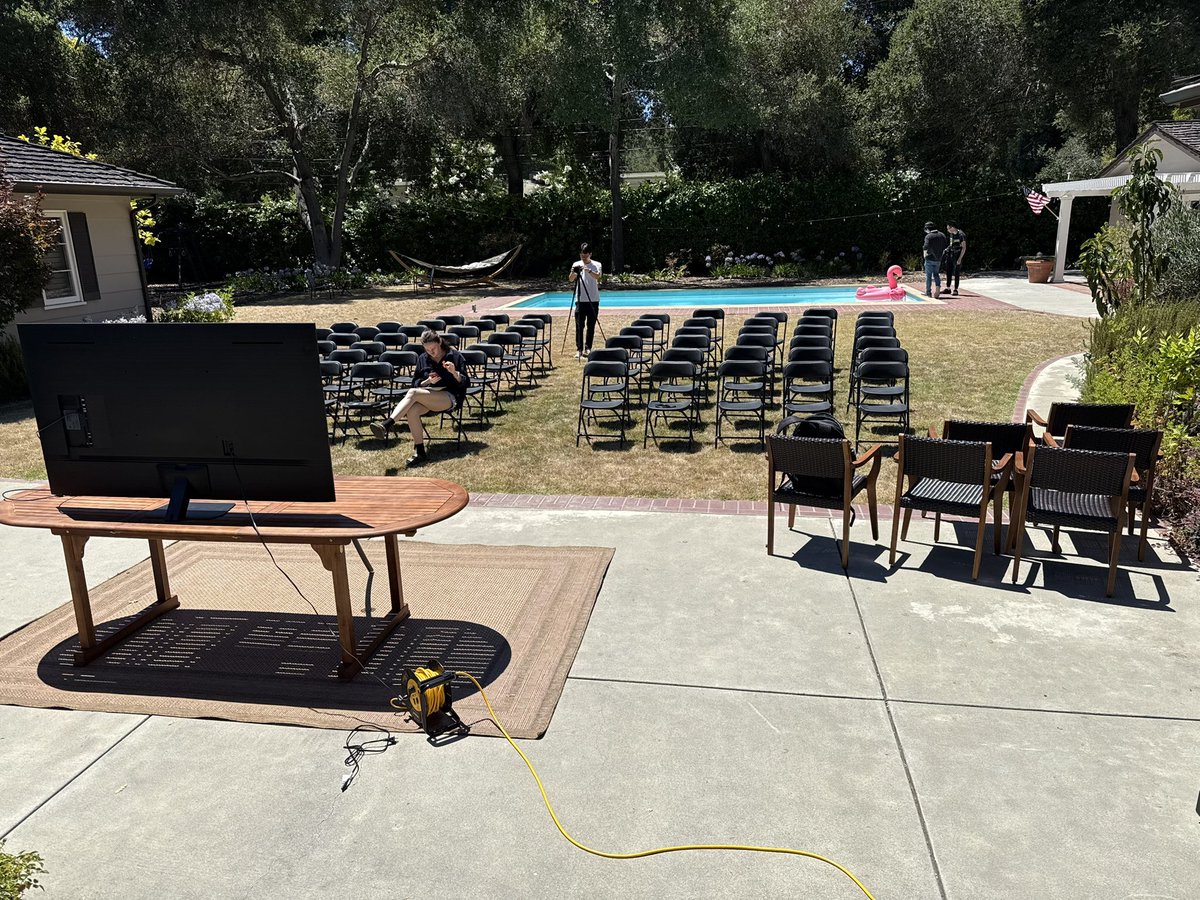
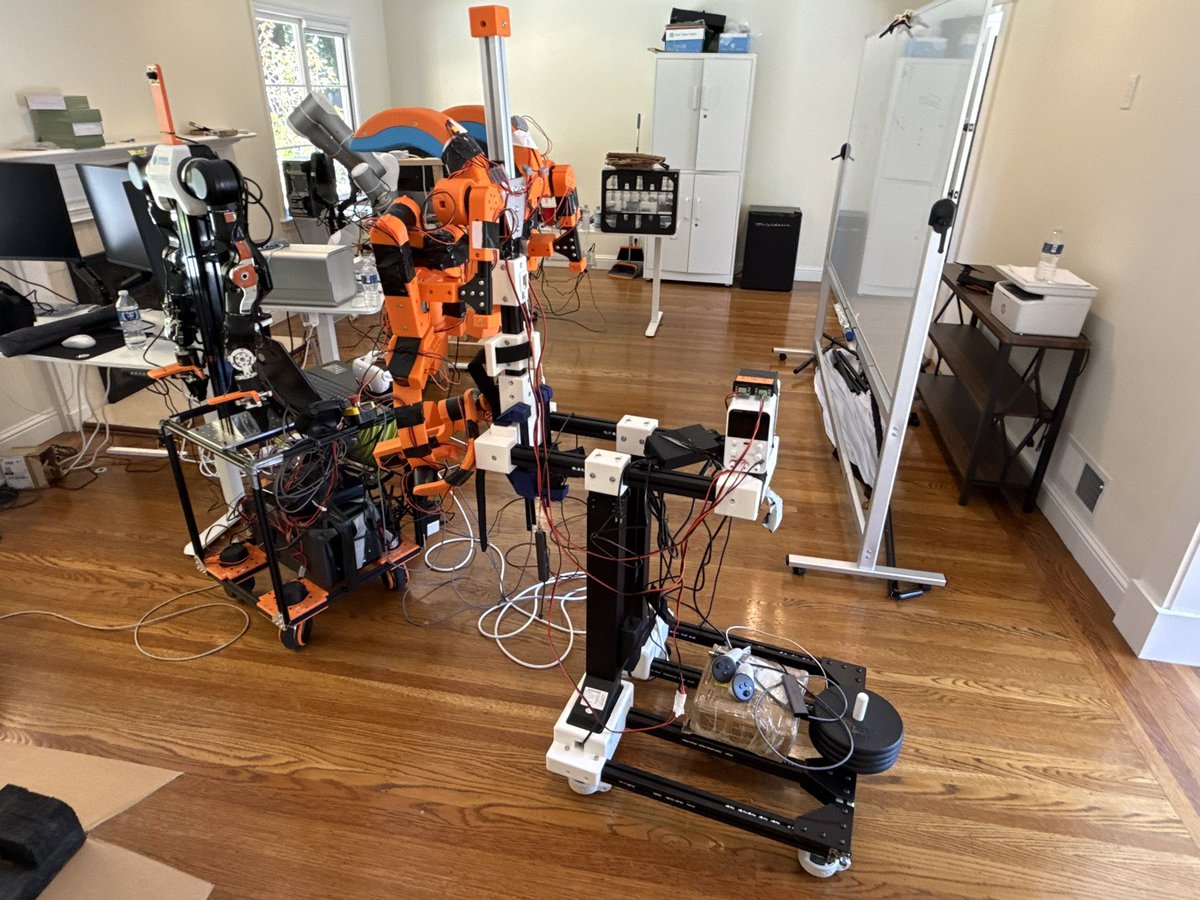
A huge thank you to everyone who joined
@SundaeRobotics 03! 🤖🍨 Special thanks to @binghao_huang for an outstanding talk on the future of flexible tactile skin for dexterous manipulation.
🤖🍨 Next Sundae (https://t.co/WqKLdxQag1), we're excited to host @kaiwynd, a Ph.D. student at Columbia University advised by Prof. Yunzhu Li, for a talk on engineering robotic simulators for evaluation, data generation, and sim-to-real robot learning.
Thanks to @angelajiazhang@thejonohart@menemazarakis @drjingxi @litian_liang@Joshuabrowder
great first Sundae Robotics 🙃 thanks @drjingxi for speaking on his work with UME - we’ll be doing this every Sunday and also starting a Boston series. rsvp to next sunday’s in comments; reach out if you’re working on robotics and interested!
@EdmondIsARobot@menemazarakis
OmniTacTune won the Best Paper Award at the Tactile Sensing for Robotic Foundation Models Workshop at RSS 2026! (https://t.co/N3pNabWg5K)
Huge thanks to the coauthors @HaodeZ47056 and @HanYunhai, and our advisors @h_ravichandar and @RuohanGao1.
🤖🍨 Sharing the first Sundae Robotics event, a new series bringing together a tight-knit group of robotics researchers, founders, and builders for frontier talks, technical discussions, and sundaes.
The inaugural session features one of the main authors behind the recent Universal Manipulation Exoskeleton (UME) paper.
"Computer Vision is a Robotics problem, but Robotics is not a Computer Vision problem." - I learned this from Professor @SongShuran's lecture in 2024 at @Stanford.
The box pushing task in our recent work UME is yet another demonstration of this point: https://t.co/eQOqNCgQzV uses torque feedback to give the robot model direct input to determine if a box is pushed to the end of a constrained, visually occluded environment.
This task is designed by @drjingxi to kill vision only robot policies, and he's done it.
In fact, I frequently bring up how I think this task is so brilliantly designed and my favorite task among the 4 autonomous model experiment we did. So I might as well do it here on https://t.co/UpfxMK3uun.
A great experiment is not one that shows existing method can not solve a hard problem, but can not solve a simple one, one that we did not realize it can't do.
Looks so simple yet so hard. That's why it's so great.
This low-cost exoskeleton could make robot training 10x faster:
A low-cost exoskeleton that provides real-time haptic torque feedback, allowing a human teleoperator to feel and control a robot’s forces during complex manipulation tasks while capturing data for autonomous policies.
Demonstrations include a blindfolded user unsheathing a sword via the mirrored robot arm and autonomous robots performing force-sensitive tasks like retrieving a drink from a fridge side holder or navigating tight spaces in a kitchen.
The system uses bidirectional kinematics and dynamics retargeting for compatibility with different robots.
Enabling rapid data collection, overnight training, and next-day autonomy for whole-body, occluded, and long-horizon mobile manipulation.
Thanks for sharing this great work, @litian_liang!
📌 https://t.co/S3XJKXI3NF
——
Weekly robotics and AI insights.
Subscribe free: https://t.co/9Nm01QUcw3
Thanks Sholto for sharing our work and your thoughts! I’m very much on board with what you’re saying. Also really looking forward to what @AnthropicAI’s newly formed robotics team will do.
As the humanoid supply chain develops it’ll unlock ready player one style force feedback exoskeletons - big opportunity to build something cool here in the next few years.
Of course - likely humanoids will outbid VR for every marginal motor until 2030+, but see you in VR Skyrim then 😎
Thanks, Yixuan! Things have been moving very fast, so there may have already been some iterations since your visit. You’re always very welcome to come by again and try it in person!