@elonmusk@elonmusk Fast-power lead in Oklahoma: Liberty Energy’s LAET/LPI facility in El Reno appears to have dozens of staged, containerized ~4-MW generator units. If available, that could represent 100+ MW of rapidly deployable capacity for xAI. Worth having your energy team verify.
@alexwg We've a front row seat to the commoditization of code! where the ability to coordinate agents becomes THE premium labor. Seems providers of the API / MCP layer take center stage while the UI (andSaaS providers) are replaced by persistent autonomous agents, memry, and UI on demand
@EdwardT20625607@latinedisce This quote is attributed to the massacre at Beziers in 1209 where crusaders killed French Catholics along with French Cathars because they couldn't tell the heretics from the faithful.
Two thousand years ago, Ephesus was one of the richest cities in the Roman Empire. People traveled across the Mediterranean just to see it.
Around 52 AD a Jewish preacher arrived in the city. His name was Paul the Apostle. He began teaching in synagogues and public halls about a crucified man from Judea whom he called Lord.
At first it sounded like one more philosophical voice in a city full of competing ideas.
But something unusual started happening.
According to the Acts of the Apostles, Paul stayed in Ephesus nearly three years. People listened. Some converted. Others burned books of magic and abandoned old rituals. Slowly the new faith began to disrupt the city’s economy.
Because Ephesus was built on religion.
Thousands of craftsmen made statues of Artemis. Pilgrims bought charms and silver idols. The cult of Artemis was belief and business.
Then a silversmith named Demetrius realized what was happening.
If this new religion kept spreading, people would stop buying the statues.
So he gathered the craftsmen and gave a speech that ignited one of the most dramatic scenes in early Christian history. He warned them that Paul’s message threatened not only their trade but the honor of Artemis herself.
The result was chaos.
A mob flooded the massive theater of Ephesus. Up to twenty thousand people filled the seats shouting the same phrase over and over.
“Great is Artemis of the Ephesians!”
For two hours the city roared in defense of its goddess.
That moment reveals something important about early Christianity.
It was not born in peaceful monasteries. It emerged inside cities where religion, politics, and money collided.
Ephesus became one of the first major battlegrounds between the old pagan world and the rising Christian one.
The city later became tied to another towering figure in Christian tradition: John the Apostle.
Early sources claim John spent his later years guiding the Christian community there. The ruins of the Basilica of St John still stand above the city. For centuries pilgrims climbed that hill believing one of Jesus’s closest companions lay buried beneath it.
But Ephesus shaped Christian history in an even deeper way.
In 431 AD bishops from across the empire gathered there for the Council of Ephesus. They debated a fierce theological question about the nature of Christ and the role of Mary.
The council declared Mary to be Theotokos, the “God-bearer.” That decision still shapes doctrine in Catholic and Orthodox Christianity today.
Think about that for a moment.
The city that once shook with chants to Artemis later hosted one of the most important councils of Christian theology.
And today?
The temple of Artemis is gone. Only a single column stands where one of the greatest sanctuaries of the ancient world once rose.
But the writings of the small Christian community in Ephesus still circulate across the globe. Millions still read the Epistle to the Ephesians every week.
The goddess that once ruled the city vanished.
The faith once hunted there outlived the empire.
That is why Ephesus matters.
It shows how quickly the spiritual map of the world can change.
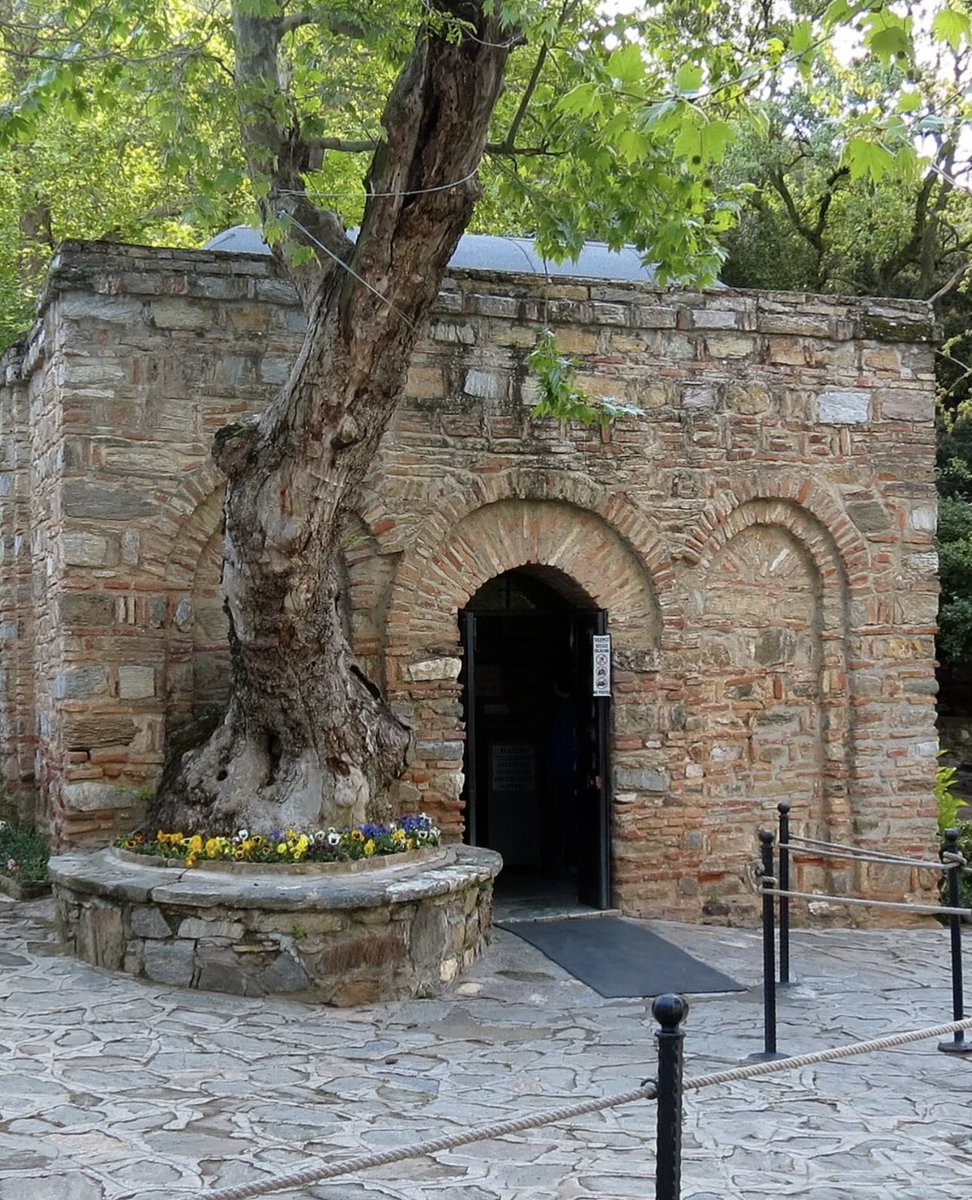
Image below: House of Virgin Mary in Ephesus, Turkey
This is the Gospel.
We love because we once hated the only One worthy of love, yet He loved us perfectly.
We forgive because we have sinned against a holy God, yet He forgave us completely.
We lift up the name of Jesus because He lifts the lowly and strengthens the weary.
Thank you, Erika.
#gospeltruth #forgiveness #jesusislord
"Over 20 years, the percentage of seniors getting flu shots increased sharply from 15% to 65%. It stands to reason that flu deaths among the elderly should have taken a dramatic dip."
@BonSi35115@elonmusk@X (sp.) nickel. If you can't do something small like spell 'nickle' correctly, why should we trust your statement about more complex issues?