We caught a supply-chain attack on Microsoft’s agent-framework PyPI package six minutes after it went live.
Our full write-up covers what the credential stealer targets, how it works, and what to do if you’re affected: https://t.co/06IZvQmWO0
Elastic is aware of CVE-2026-114938 (Java4Shell), an OpenJDK remote code execution (RCE) vulnerability. Elasticsearch 7.17.3+ is affected, but only on x86-64 hosts with AVX512_VBMI. ARM and older x86 are not. Guidance: https://t.co/6FMVlBPuRB
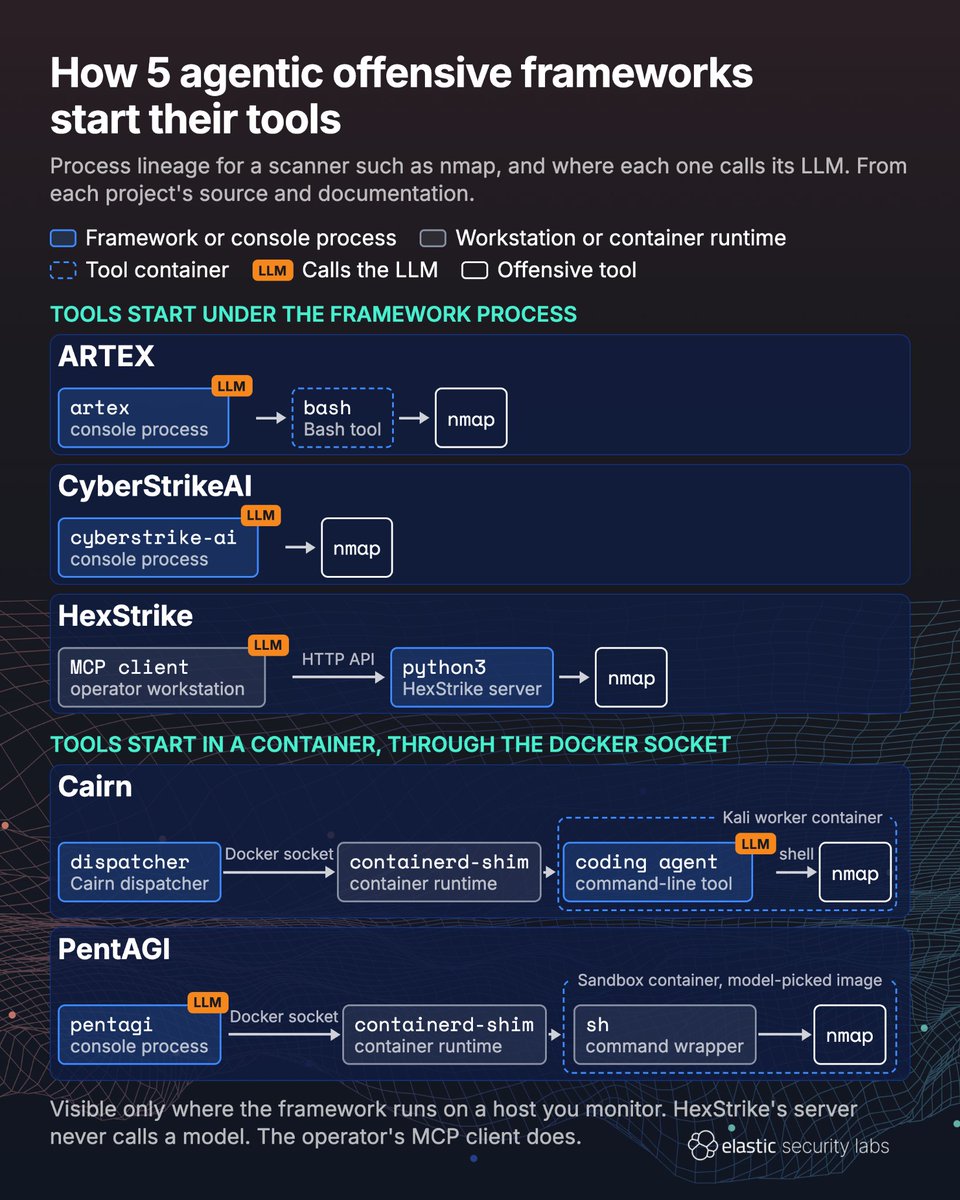
5 agentic offensive frameworks skip in-code authorization by default.
ARTEX, CyberStrikeAI, Cairn, PentAGI, and HexStrike put an LLM in the planning loop around familiar scanners, shells, and cloud CLIs, and GTIG observed ARTEX acting in bursts of roughly 2 to 25 seconds.
All 5 have already turned up in real intrusions, across reporting from GTIG, Mandiant, Microsoft, and our own research.
We read their source and the public incident reporting to work out what reaches defender telemetry. Research by @stryker0x: https://t.co/PPBzAI94hF
• Why IOC and User-Agent detections go stale while behavior-based rules hold up
• Tempo and sequence signals per identity for short bursts and long campaigns
• An ES|QL hunt for tool-family bursts across web, proxy, and cloud audit logs
• Why blocking a source IP must be paired with credential/session revocation
Every action these frameworks take still has to land in telemetry you already collect.
Attackers are using legitimate AI coding assistants to execute malicious commands on compromised endpoints.
In two confirmed intrusions, Elastic Threat Command observed adversaries operating cyber attacks through Claude Code on Windows and the ChatGPT desktop app on macOS. Both involved trusted applications being used to carry out malicious activity.
@_xDeJesus principal security research engineer at Elastic Threat Command, walks through the findings and what security teams should be looking for: https://t.co/Kd3MqH08c5
The findings highlight a detection challenge: These applications are signed and authorized to execute commands, making it difficult to distinguish legitimate activity from attacker behavior.
The speed of these attacks is another concern. Elastic researchers observed an average of just eight minutes between ClickFix/infostealer infection and attackers logging in with stolen credentials.
In the latest threats, etc quarterly report, Elastic Threat Command documents these intrusions and examines the implications for endpoint visibility, behavioral detection, and threat hunting.
Full report: https://t.co/7MiNCbJyuJ
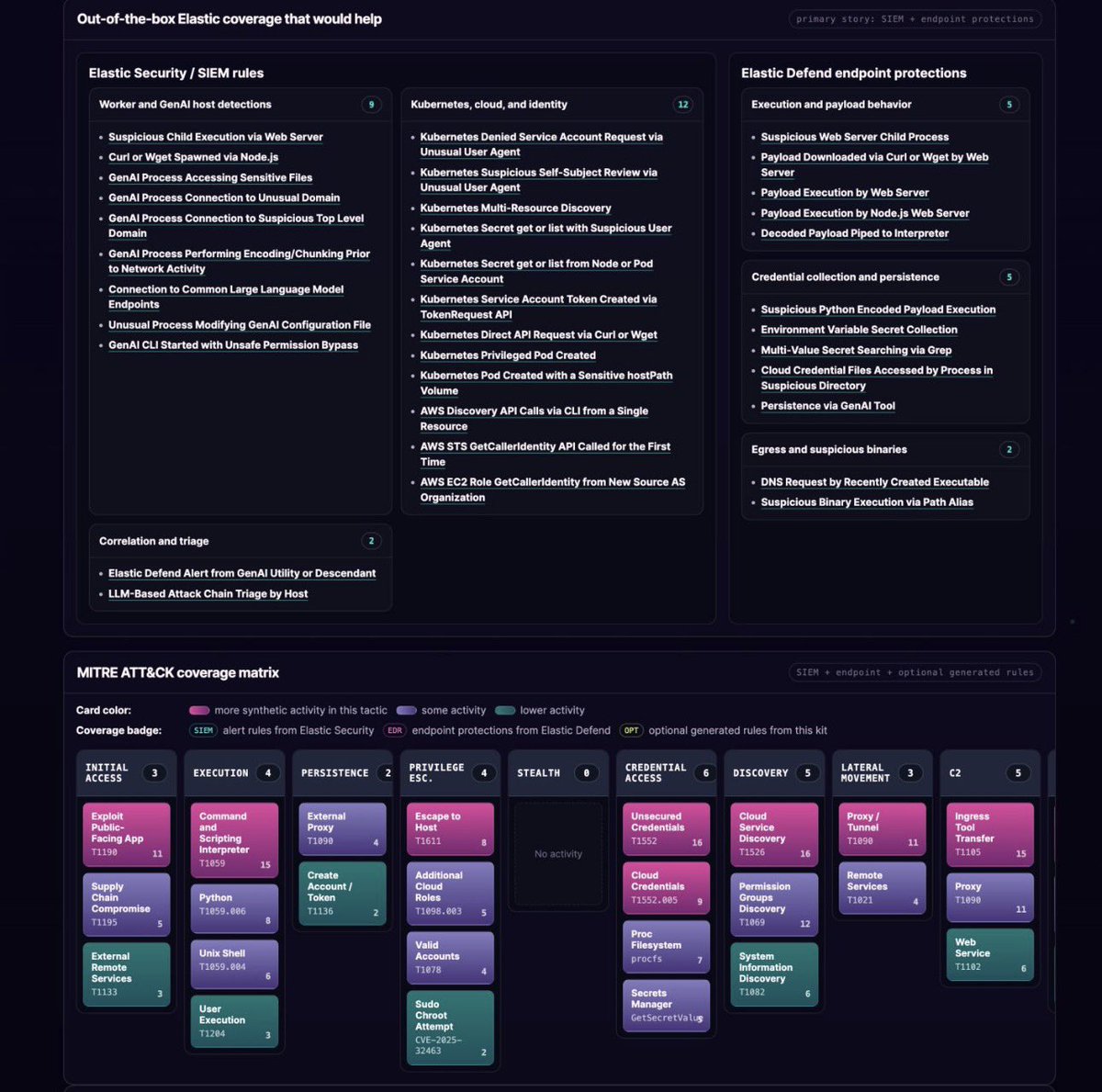
🚀 161 new Elastic Security detection rules in 2 months!
From AI security and RMM & ClickFix to Kubernetes parity, ESXi, cloud identity, Linux, macOS and network threats.
Huge effort from our TRADE team. Proud of what we've achieved! 👏
https://t.co/oDW5XQUMqi
‼️ ok, this might be the first publicly documented, validated PHP2Shell RCE in the wild.
my agent did the analysis, published here: https://t.co/aga0piDFur
@StanHoppe@elasticseclabs@elastic Not directly (to start), but you can use whatever models you prefer. Decision models will be leveraged at some point for sure.
I wasn’t there in person, but I had a blast building this.
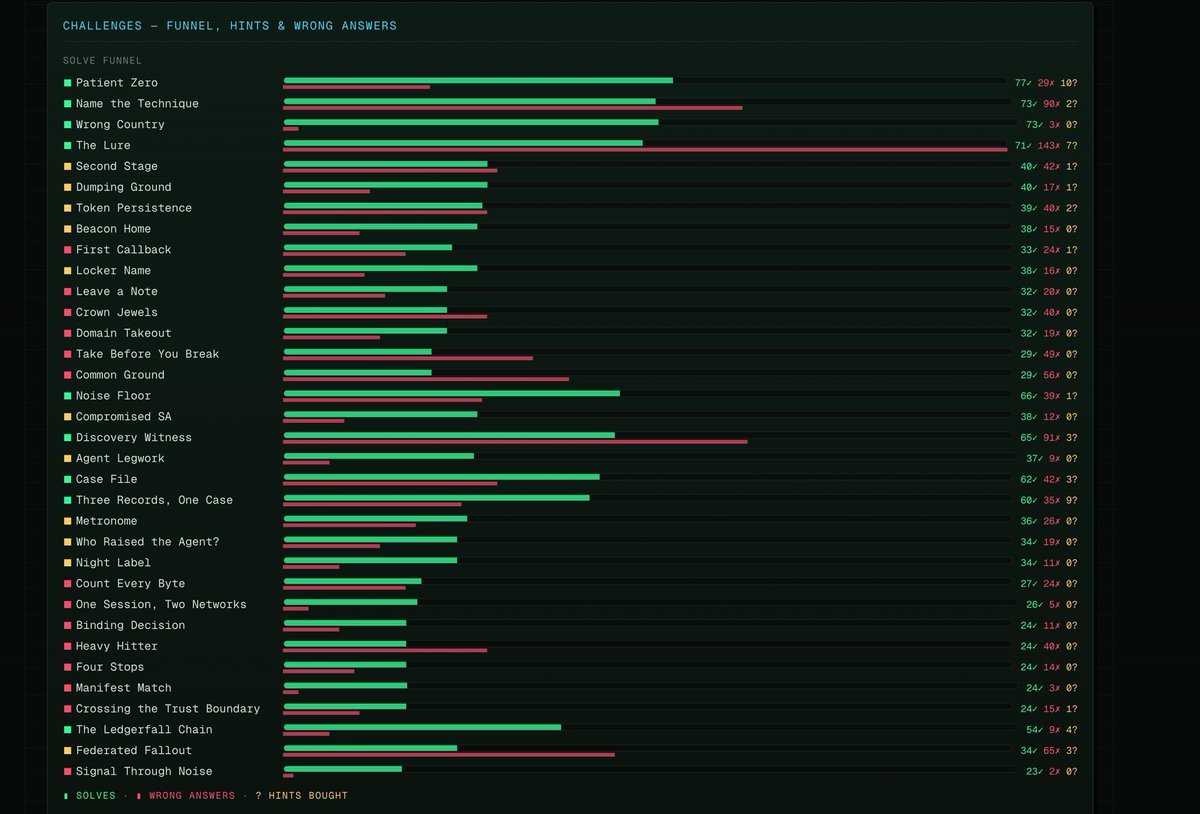
Thanks everyone who participated in the @elastic BTV CTF at DEFCON.
And “spames-jiteri”, thank you, you made my day 😂😂😂
The @huggingface team did an incredible job with this write up and the incident replay. The detail was excellent, nothing was spared. Thank you for setting a (hopefully) new standard on these reports here!
https://t.co/Veb3LlGdTb
https://t.co/w40JtzZxED
It inspired me enough to take the detail they provided and create a script to emulate the behaviors and events for anyone wishing to replay them in @elastic security. Also highlighted which detections/preventions would have helped here, as well as some examples of other detections too.
More details below:
https://t.co/Tun8otAOjm
https://t.co/wlQFrciYty
Have fun, and please feel free to contribute in the repo!
Thank you again, Hugging Face, for the reports and detail!
wp2shell PoCs went public within hours of disclosure, and we are seeing active exploitation.
Pre-auth RCE in WordPress Core. No plugins required.
CVE-2026-63030 and CVE-2026-60137.
We ran the Icex0 PoC end-to-end with Elastic Defend.
On the host, every run ends the same way.
The web server writes PHP under wp-content/plugins/, then spawns a shell.
4 rules caught it:
- Payload Execution by Web Server: EDR, kills the shell on launch
- PHP File Creation in WordPress Plugin Directory: catches the drop before execution
- Suspicious Command Execution via Web Server: flags discovery commands from the web parent
- Unusual Command Execution via Web Server: alerts on command lines the host has never run
The PoC self-cleans after running.
A missing plugin folder doesn't mean a clean host.
Patch to 7.0.2 or 6.9.5. Hunt the IOCs while tooling is still stock.
Full rule walkthrough, process lineage, and Attack Discovery correlation: https://t.co/OZ1pYzUiXw
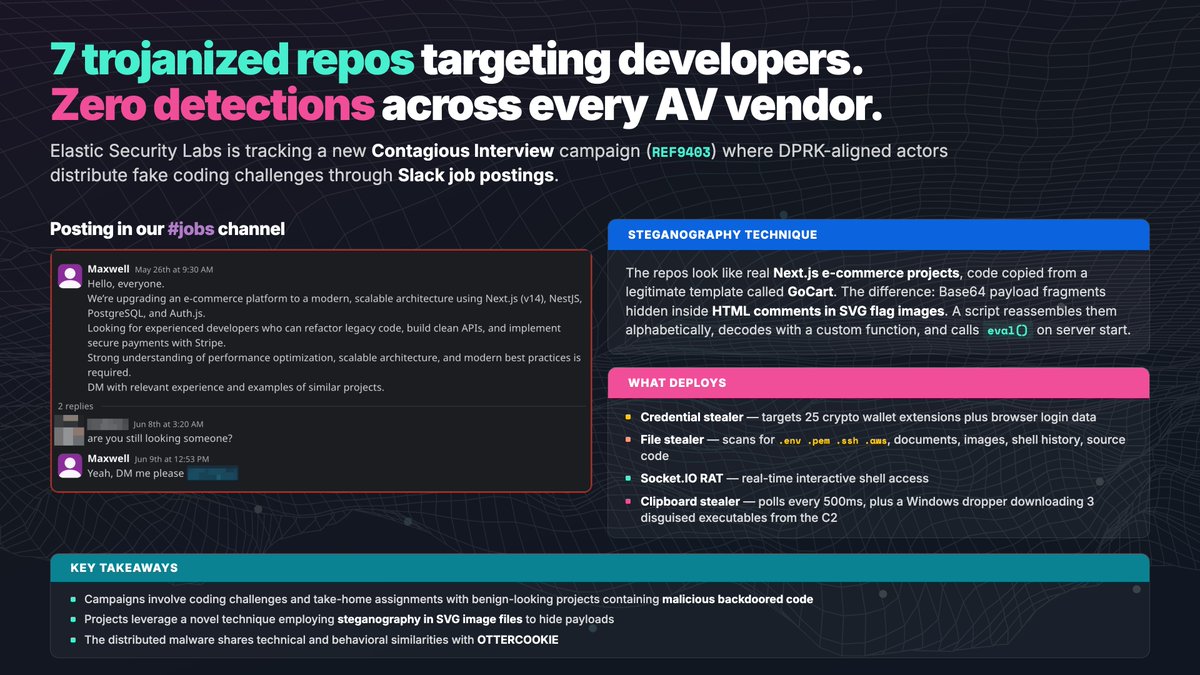
7 trojanized repos targeting developers. Zero detections across every AV vendor.
Elastic Security Labs is tracking a new Contagious Interview campaign (REF9403) where DPRK-aligned actors distribute fake coding challenges through Slack job postings.
The repos masquerade as real Next.js e-commerce projects. The code was copied from a legitimate template called GoCart. The difference is steganography.
Base64 payload fragments are hidden inside HTML comments in SVG flag images. A script reassembles them alphabetically, decodes with a custom function, and runs on server start.
What deploys:
- Credential stealer targeting 25 crypto wallet extensions plus browser login data
- File stealer scanning for .env, .pem, .ssh, .aws, documents, images, shell history, and source code
- Socket. IO RAT providing real-time interactive shell access
- Clipboard stealer polling every 500ms, plus a Windows dropper downloading 3 disguised executables from the C2
Full analysis from Elastic Security Labs by @danielstepanic : https://t.co/EetHfm7lXu
We tracked a new activity cluster targeting Mexican banking customers.
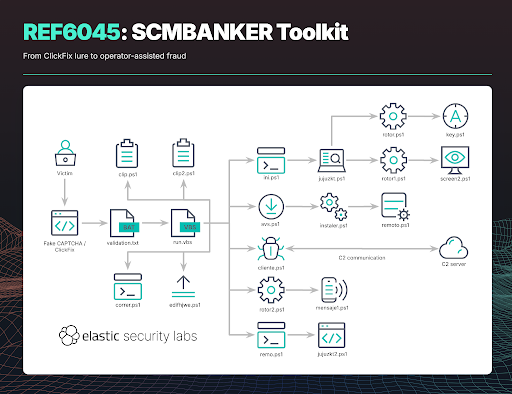
Elastic Security Labs discovered REF6045, an operator-assisted banking fraud campaign targeting customers of Mexican banks, fintechs, and cryptocurrency platforms through ClickFix fake-CAPTCHA lures.
The operation exhibits a reliance on AI-generated code and suffers from significant operational security (OPSEC) failures that exposed their infrastructure and their toolkit.
The toolkit gives operators a full fraud workflow from:
•Vishing overlay: lock the screen behind a fake bank warning
•Browser redirect: paste a phishing URL via automated keystrokes
•Clipboard swap: replace CLABE or card numbers mid-transfer
•Remote access: install Remote Utilities for hands-on takeover
Research by @k33b0i and @soolidsnakee.
Full analysis from Elastic Security Labs: https://t.co/a1mxxU6N1m
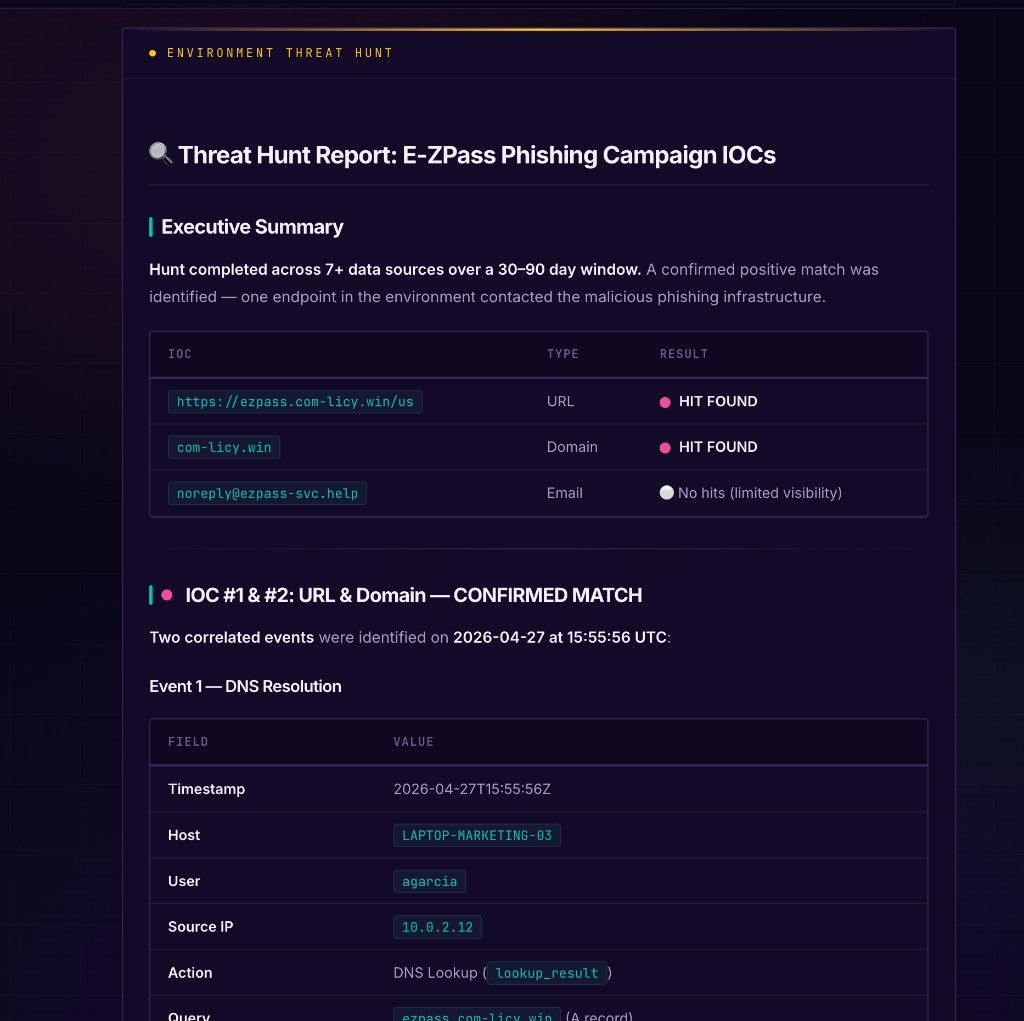
Built something new to showcase what's possible with @elastic's Workflow and Agent Builder capabilities in 9.4.
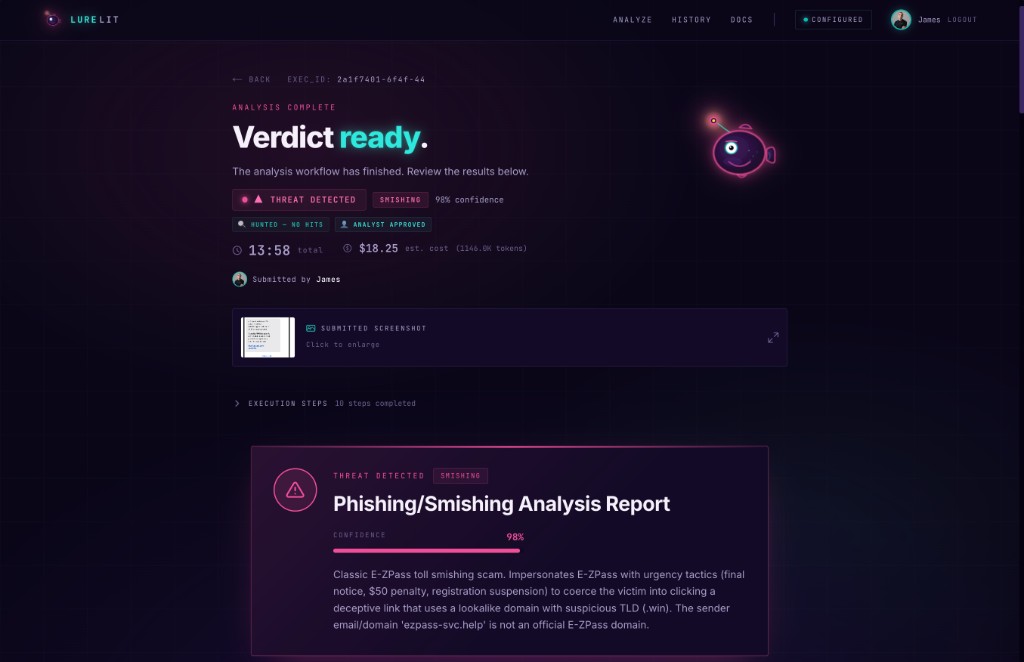
Lurelit - an agentic screenshot analyzer for phishing and smishing attempts. Entirely powered by an Elastic workflow, end-to-end.
Upload a screenshot of a suspicious message. The workflow handles the rest:
AI vision analysis extracts IOCs and classifies the threat
VirusTotal and https://t.co/yOB3RwOskF enrich every URL and domain
Automated ES|QL hunting across your Elastic environment
Human-in-the-loop gates before proceeding with hunts
Token consumption tracking with per-model cost breakdowns
It demonstrates Workflows GA, Agent Builder's new skills framework, the connector framework, the consumption API, and human-in-the-loop steps with conditional triggers.
The workflow is 700+ lines of configuration. I didn't write a single line. The natural language workflow authoring skill built the entire thing.
Code, docs, bootstrapping UI, and sample data included.
https://t.co/ZnpV9ZKFjM | https://t.co/xmdVMnH9ha
Agent Builder in Elastic 9.4 cuts token costs by up to 40%.
Not by truncating context, but by enabling agents to manage it independently.
Four mechanisms do the work:
• Dynamic skill loading: instructions load only when needed, not all at once
• Conversation context store: large result sets stay out of the prompt until required
• Selective compaction: long conversations compress without losing what matters
• OAuth connectors: query Google Drive, Salesforce, Slack without copying data
In internal testing, dynamic skills alone cut input token usage by 21 to 39%.
Top snippets retrieval added another 27 to 34% reduction.
Context window stays stable past 30 turns.
Without this, it balloons to max size by turn twelve.
Elastic 9.4 is now available, bringing new advancements across the Elasticsearch Platform.
Key new features:
• Elastic Workflows GA, scripted automation and agentic reasoning enable AI agents to act on their findings
• Elastic Agent Builder enhancements optimize context, transforming agents from open-ended prompts into controlled, action-driven systems
• Native Prometheus and PromQL support, with significant TSDB efficiency improvements, position Elastic Observability as a compelling alternative to competing metrics solutions and enable a single platform across logs, metrics, and traces
Transform data into answers, actions, and outcomes.
Learn more: https://t.co/ja8HiIOrFY
@HackingDave I honestly hate that Cursor took away the usage indicator below the agent window. Now the only way I find out is when the Amex notifications start blowing my phone up 🥹🥹🥹