Ukraine sits on some of the most fertile soil on earth, the deep black earth that made it the breadbasket of Europe. In 1932 and 1933, on that very soil, close to four million of its people were starved to death. The soil was as rich as ever. The famine was a decision.
The decision was collectivisation. Stalin set out to abolish the independent farmer altogether, to end private land and private animals and drive every peasant onto a state-run collective farm. The man who owned a little, a few cattle, a horse, a plot worked by his own family, was branded a kulak, an enemy of the people, and marked for destruction. Stalin's instruction was to liquidate them as a class.
The peasants saw what was coming, and many made a terrible choice. Rather than surrender their animals to the state, they killed them. Across the Soviet Union the herds simply collapsed. Around half the cattle, gone. Nearly half the horses that pulled the ploughs. Two-thirds of the sheep and goats. Tens of millions of animals slaughtered in a few seasons, a loss so total that the country did not rebuild its livestock to the old levels until the 1980s. A people who had fed themselves for a thousand years destroyed their own herds rather than hand them over, and the state called it sabotage.
Then came the grain. The quotas were set impossibly high, and when the villages could not meet them, brigades went from house to house and took everything. The harvest. The seed saved for next spring. The last food in the pantry. And when the countryside had been stripped bare, the people were forbidden to leave in search of bread, sealed inside their own dying villages.
So it was that in one of the richest farming regions on the planet, the men and women who actually grew the food lay down in the lanes and died of hunger, in their millions. Some, at the very end, ate things no human being should ever have to eat.
Here is the lesson, and it is worth carving somewhere it cannot be forgotten. A man who owns his land and his animals can feed his family whoever sits in the palace. A man who depends on the state for his bread can be starved the day he steps out of line. That is why the independent farmer is always the first enemy of absolute power. Take his herds, take his fields, and you have taken the one thing that let him stand on his own.
A population that cannot feed itself will, in the end, do as it is told.
Destroy the farmer, and you hold the whole nation by the throat.
Every February, the biggest forced migration of livestock on the planet rolls across America on the backs of lorries. The cargo is bees, and a great many arrive dead.
- Around 70% of America's commercial honeybees, nearly two million hives, are loaded onto flatbeds and hauled to one valley in California
- They pollinate the almonds, because that valley grows 80% of the world's supply and cannot pollinate a single tree itself
- The blossom lasts three weeks. The rest of the year is bare, sprayed dirt, so the bees are kept alive on sugar syrup like patients on a drip
- They arrive drenched in fungicide and stacked four high, swapping diseases at the most crowded bee gathering on earth
- In the year to spring 2025, commercial keepers lost about 62% of their colonies, near 1.7 million hives. Boxes strong in autumn stood silent by February. The worst on record
Almond milk is sold as the gentle, cruelty-free sip for people who would rather not trouble an animal. It is poured from the deadliest pollination event human beings have ever staged.
@mattvanswol I’m not.
I believe Epstein and the rape gang stories are two heads of the same hydra, which is systematically dismantling the West—for a reason. Either we wake up en masse—NOW—or the kind of suffering those girls experienced will be visited on the rest of us in short order.
A country that cannot stop talking about food security has found a way to tax it at the graveside.
From this April, the unlimited relief that let a farm pass whole from one generation to the next is gone. Ministers will tell you the threshold is generous. The first £2.5 million of agricultural property is spared, £5 million for a couple, and they recite those figures like a defence. Then go and value a real farm. A few hundred acres, before the sheds and the machinery are even counted, clears the first threshold on the land alone. A working arable farm of five hundred acres or more sails past the couple's five million without trying. The number was built to sound like a mansion. It describes a medium family farm.
That is the part they would rather you missed. The tax scales with the land, and the land is how you grow the food. The more a farm feeds the country, the more acreage it needs, and the harder this falls on it. They sold it as a levy on wealthy men sheltering money in fields they never walk. It lands instead on the family that has walked those fields for a century, rich on paper and skint in the bank, clearing barely a wage from millions they cannot eat.
So when the farmer dies, the heirs meet a bill they can only pay by selling the very ground that grew the food. The asset is the farm. The income is a rounding error. Whatever sits above the threshold is taxed at twenty percent, half the normal rate, offered up as though a smaller knife were a kindness.
It got darker during the protests. A shadow minister said families had begun openly discussing whether they could afford for elderly relatives to live past April, because surviving into the new tax year might hand the next generation a bill that ended the farm. Believe it or not as you like. The fact it could be said out loud at all tells you exactly where we have arrived.
Tractors in Whitehall. Pensioners doing inheritance arithmetic against their own heartbeat. Banners reading no farmers, no food.
But food security is the priority. They say so in every speech.
A small public service announcement from the Department of Things That You Should Know…
It has not “peeked” your interest.
Nor has it “peaked” your interest.
…It has piqued your interest.
You are not “phased” by something.
You are fazed by it.
If you’ve had a long day, you are weary.
If you suspect someone is an idiot, you are wary.
It is “due course”, not “do course”.
“Per se”, not “per say”.
And while we’re here, it’s “could have”, not “could of”, but that particular battle may already be lost.
Thank you for your attention during this brief outbreak of grammatical housekeeping.
This has been a @LairdofthManor announcement.🎩💙
After watching the viral LA men's choir video, Heather Heying has a simple question:
What are they not going to take?
@HeatherEHeying genuinely wants to know -- "I'm not trying to be mean. I don't feel like it's a mean question. I actually really, truly wonder what it is that they think they don't yet have that they want."
The case of Angela Perryman is a fascinating one. She was on the MV Hondius cruise ship with the hantavirus outbreak. She was exposed but has no symptoms and has consistently tested negative.
She and others were taken to a federal quarantine facility in Nebraska. Others were freed because their states agreed to 24/7 monitored quarantine at home. Florida refused to do that, thus triggering a federal refusal to let her leave. She remains there now, protesting that it is like a prison sentence.
RFK agrees with this quarantine and I suspect the reason comes down to a belief that a targeted quarantine makes better public health sense because it blocks a more general lockdown such as we saw during Covid. An exposed hantavirus suspect on the loose could, maybe, might, generated public anxiety and provide fodder for such a lockdown.
I see the point but, in the end, we are talking about taking away a person's rights for mere exposure and many negative tests. That seems inconsistent with freedom. You cannot violate one person's rights in the name of protecting freedom for all. That's a dangerous trajectory.
The federal quarantine power, granted only for the first time in 1942, is itself inconsistent with the American ideal. Perryman should have been allowed to go home if she so desired and Florida was correct to refuse to put her under house arrest.
I say this not to rap RFK on the knuckles but just as a warning and heads up. The administration wishes that Perryman had just quietly complied but Americans are a funny breed. They believe they have rights.
The whole model of quarantine AND lockdown need to be rethought.
Warner Mendenhall @MendenhallFirm was a good friend and a great man. His brilliance in using the law to advance medical freedom and protect public health integrity was remarkable, and his creativity was unmatched. He left us far too soon. May God rest his soul, and may we honor his memory by continuing this important work.
The year is 1949.
The Nobel Prize in Medicine has just gone to the man who invented the lobotomy. Your doctor suggests one for your sister, who has not been herself since the baby came. It is the most celebrated advance in psychiatry of the age, and he is simply current. By the time the prize curdles into an embarrassment, close to twenty thousand Americans have had the operation, and proportionally more here in Britain.
The year is 1956.
Lay the baby down on his front, the doctor says. So does the most trusted childcare book ever written, the one on every new mother's shelf. On his back he might choke, the reasoning goes. Millions obey. The advice holds for nearly thirty years, long after the evidence has quietly turned, and a generation of cot deaths is counted before anyone thinks to roll the babies over.
The year is 1966.
A bestselling book informs your wife that menopause is a disease, that she is, in the author's word, a castrate, and that a small daily pill will keep her youthful and tolerable to live with. Her doctor agrees. The drug becomes one of the most prescribed in the country. Nobody mentions that the author sat on the payroll of the company that made it. That detail surfaces decades later, in the same year the landmark trial is halted early for raising rates of breast cancer, stroke and clots.
The year is 1979.
Your ulcer is caused by stress and sharp food, the doctor explains. Calm down, drink milk, take the antacid that happens to be the best-selling medicine on earth. Two Australians are about to prove that most ulcers are caused by a bacterium and cured by a fortnight of antibiotics. The profession laughs. One of them eventually drinks a beaker of the stuff to settle the matter. The establishment takes the better part of twenty years to stop laughing. The Nobel lands in 2005.
The year is 1985.
Butter is dangerous, the doctor says. Switch to margarine, it is modern, it is heart-healthy, the experts are united. The spread he nudges you toward is loaded with trans fats, which the next decade will identify as the genuinely dangerous one, and which will eventually be banned outright. The butter goes quietly back in the fridge. No correction is ever printed at the volume of the original warning.
The year is 1992.
There is a pyramid on the surgery wall, and the very same one in your grandchild's classroom. Bread, cereal, rice and pasta form the broad virtuous base, up to eleven servings a day. Fat is exiled to the tiny tip. The chart was reportedly held back a year while the relevant industries had their say. It is wrong at the bottom and wrong at the top.
Now it is today.
Your doctor has new guidelines, new studies, a fresh consensus, delivered with precisely the steady confidence of every guideline above. He believes it, and he has good reason to. So did every doctor in this thread. None of them were villains. Each was sincere, most were kind, and all were certain, reading from a map that somebody else had drawn and handed them. That is the part worth sitting with.
So when the man in the white coat tells you what to eat, what to fear, and what to swallow every morning for the rest of your life, you are allowed to ask. Who paid for the study. What the evidence says beneath the headline. What he was just as certain about thirty years ago, and where that advice sits now.
Then make up your own mind. Call it scepticism, or call it whatever your grandmother called it when she ignored the advert, kept the butter where it was, and lived to ninety-one.
It has outlasted every consensus on this list. It will outlast this one too.
Sheryl. Your article exemplifies the biased reporting we have come to expect from you and @nytimes. It was unfair, inimical, and inaccurate. All one needs to refute your argument is to glance at my publicly available calendar and to review my unprecedented list of accomplishments on a wide range of issues, all of which I drove. You evidently never undertook these foundational due diligences. Why let facts obscure a good story?
You fault me for missing a couple of monthly counselor meetings. However, I meet one-on-one with my counselors every day to decide policy and strategy. We schedule the monthly meetings to give the divisions a chance to keep each other informed about HHS-wide policies with which I’m already intimately familiar. Had you read my calendar, you would have seen that I have back-to-back meetings all day, every day, with both career and political staff, with my counselors and with outside stakeholders, interspersed with press conferences and other policy announcements.
I am knowledgeable and active on every issue in every division of my department, and I always make the final decisions. I meet with the principals at FDA, NIH, CDC, and my senior counselor every morning, something, I’m told, is unprecedented in HHS history. I try to get out of the office between 4:30 and 6:00 PM, so that I can spend three hours, in quiet, responding to emails. I normally work until 11 PM every night, mostly on phone calls to staff.
In order to prove your preconceived case for my disengagement, you quote anonymous employees, some of whom I fired or who quit to avoid being fired. You also deceptively quote HHS employees without identifying whether they were among those I fired, thereby depriving your readers of the opportunity to make an independent judgment about their credibility.
I came into this job to change the culture of a broken agency that has presided over the worst decline in public health in American history. Of course I fired people—lots of them! It's an easy task for even the laziest journalist, to comb that flotsam and jetsam for malevolence toward the Trump administration. And of course, this species of journalist will always be able to find disgruntled individuals among the 70,000 employees of the Department from whom to cherry pick "facts" to flesh out a preordained hit piece. All that is required for this brand of journalism is the ethical elasticity that you seem to have in spades. You had a preconceived thesis, and you set out to prove it. This is a widely accepted technique in journalism today, but I grew up in an era when it would not have been tolerated by the New York Times.
Ultimately, God puts us all on this earth to search for existential truths. I've tried to instill this mission at HHS by implementing gold standard research to end the regime of politicized science that COVID exposed to the American public. There was a time that journalists were proud to be the fearless and uncompromising champions of truth. Standards have devolved, and journalism is dead. The Times now employs propagandists. Your capitulation to partisanship further compounds your journalistic challenges; since we all are aware of your predictable bias, we at HHS are unwilling to talk to you about the topics that are important. The fact that you have minimal access to decision makers leaves you covering trivia and relying on your own capacity for invention.
Btw. When I took this job, the building was empty. About 90% of the employees were not coming to work. I changed that, but your newspaper never covers my reforms. Nor did you cover the fact that my predecessor almost never showed up for work here during his four years in office. When we came in, there were still artifacts from the first Trump administration in many of our office drawers because no one showed up for work during the Biden years. Just as Rochelle Walensky spent her entire term as CDC Director in Cambridge, Xavier Becerra reportedly spent most of his term as HHS Secretary in California. (I live in California, but I’ve only been there once in fifteen months).
His only notable accomplishments here were losing 300,000 children, referred to HHS for custody and care, to human traffickers and drug runners, encouraging transgender surgeries, and disabling the entire program-integrity apparatus, allowing hundreds of billions of dollars of theft from my agency. I have set out to find the children Becerra lost. He is now the front-runner for the governor of California. These are not invented stories; they are genuine scandals that the Times will never cover, presumably, because the malefactors are Democrats.
Finally, you criticize me for spending time with the Indian tribes in Alaska. I consider that part of my job. I run the Indian Health Services, and I’ve had unprecedented success in transforming IHS from a backwater to a top priority for this department. I’ve made more trips to Indian country and to Indian health clinics and hospitals than any HHS secretary in history, and I’ve brought Indians into high positions on the sixth floor for the first time in agency history. This is another success story that the Times will never cover.
His name was Roddie Edmonds.
Most people had never heard of him.
A quiet Methodist from Knoxville, Tennessee. A husband. A father. A churchgoing man who came home from World War II, raised his family, and never once bragged about what he had done.
The world almost lost his story completely.
December 1944.
The Battle of the Bulge.
Roddie Edmonds had been on the Western Front less than a week when his unit was surrounded by German forces. Thousands of American soldiers were captured during Hitler’s final major offensive.
Edmonds became one of them.
What followed was brutal.
A forced march through freezing snow.
Men collapsing from exhaustion.
Packed into rail cars with almost no food or water.
Days of starvation and cold before arriving at Stalag IX-A, a German prison camp.
As the highest-ranking American noncommissioned officer there, Edmonds was responsible for 1,292 prisoners.
Then came the order.
All Jewish soldiers were to report separately the next morning.
Everyone understood what that meant.
Separation was not administration.
It was a death sentence.
That night, Edmonds gathered his men and gave a simple instruction:
“All of you. Every American. Outside in formation tomorrow morning.”
The next day, the German commandant arrived expecting a small group.
Instead, he found 1,292 American prisoners standing shoulder to shoulder.
Furious, he shouted:
“They cannot all be Jews!”
Roddie Edmonds answered with four words that would echo across history:
“We are all Jews here.”
The commandant pulled out a pistol and pressed it against Edmonds’s forehead.
He threatened to shoot him if he did not identify the Jewish soldiers immediately.
Edmonds never moved.
Instead, he calmly reminded the officer that under the Geneva Convention, prisoners only had to give their name, rank, and serial number.
Then he said this:
“If you shoot, you’ll have to shoot all of us. And when this war is over — which it nearly is — you’ll be tried as a war criminal.”
The commandant lowered the gun.
Turned around.
And walked away.
About 200 Jewish-American soldiers were saved that morning because one man refused to divide his men into categories worth protecting and categories worth surrendering.
But Edmonds wasn’t finished.
Weeks later, the Germans ordered the prisoners onto another forced march through the snow.
Edmonds knew many would die.
So he secretly told his men to make themselves appear too sick to travel — eat dirt, grass, whatever it took.
When the Germans came, the Americans stayed behind.
Nearly all the prisoners forced onto the march died.
Edmonds’s men survived to be liberated by General Patton’s forces in March 1945.
And then?
Roddie Edmonds came home and said almost nothing about it.
No speeches.
No interviews.
No book deals.
He worked. Went to church. Raised his children.
He died in 1985.
His family knew he had been a POW.
They had no idea he had saved hundreds of lives.
The truth only resurfaced decades later after his son discovered his wartime diary and began contacting survivors whose names were written inside.
Again and again, they told the same story.
The same frozen morning.
The same pistol.
The same four words.
“We are all Jews here.”
In 2015, Yad Vashem recognized Roddie Edmonds as “Righteous Among the Nations” — the first American soldier ever to receive the honor.
And in 2026, more than 80 years after that moment in the prison yard, his son accepted the Medal of Honor on his behalf.
No battlefield charge.
No dramatic explosion.
Just moral courage.
A man staring down a loaded gun and refusing to hand over his soldiers.
One survivor later said:
“That such people can exist gives you hope for humanity.”
They do exist.
Roddie Edmonds was one of them.
This forest plot compares COVID-19 treatments and their costs.
Drugs circled in red were included in COVID-19 treatment guidelines — they also just happen to be expensive patented drugs.
Cheap, effective generic drugs need not apply. In fact, the COVID Cartel sabotaged and suppressed these options.
It's no surprise that trust in Big Pharma and the medical establishment has eroded.
Federal prosecutors just charged an NIH virologist with smuggling biological materials into the United States.
His name is Vincent Munster. He's not a minor scientist. He runs the Virus Ecology Section at one of the government's premier BSL-4 labs.
This is bigger than a customs charge. Thread 🧵
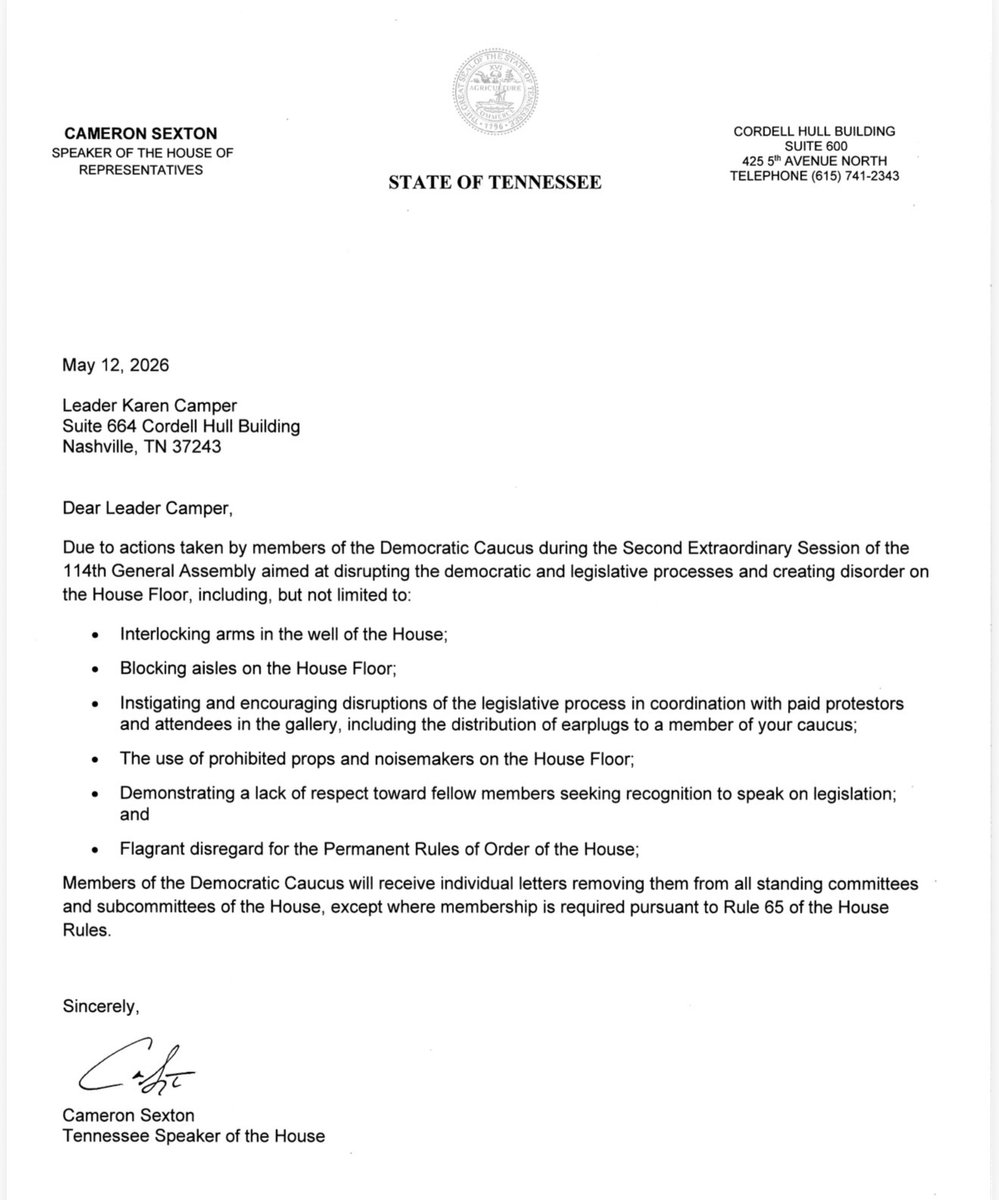
BREAKING: Notice has just been given to Democrats in the Tennessee House that all members of the Democrat Caucus are being removed from all standing committees and subcommittees as a result of their behavior in the statehouse during the redistricting debates last week, which included setting fires inside the Capitol and attacking law enforcement.
In the state of Tennessee, political terrorism will not be tolerated. National Republicans take note that this is how you exercise power.