They put scars on women’s faces for a job interview experiment… then secretly removed them.
The women went in believing they had visible disfigurements — and came out reporting massive discrimination, with interviewers supposedly referencing their “scars.”
Konstantin Kisin used this study to make a powerful point: constantly telling people they’re oppressed or disadvantaged primes them to see discrimination everywhere, even when it isn’t there.
It’s the same psychological effect as buying a new car and suddenly noticing that model on every street.
The ideology of victimhood doesn’t just describe reality — it actively shapes it.
We should be teaching young people they’re strong and capable of overcoming adversity, not training them to see themselves as permanent victims.
What’s one way you’ve seen this “victimhood mindset” play out in real life?
@japan_nobunaga If you are ever in Lexington KY (again?) please contact me. I would like to take you to dinner. I speak conversational Japanese and lived in Japan for almost 8 years in the 1980s.
We tax cigarettes to reduce smoking.
We tax alcohol to reduce drinking.
We tax fuel to reduce driving.
What do you think happens when you tax employing people and running a business?
Bjorn Lomborg – 'An Inconvenient Truth' 20 Years Later | Signal Contributor, The Santa Clarita Valley Signal
Twenty years ago, Al Gore’s “An Inconvenient Truth” hit theaters and rewrote the climate conversation overnight. The film won an Oscar, helped earn Gore a Nobel Prize, and convinced young Americans that civilization was teetering on the brink.
Two decades is long enough to check the receipts. The policy playbook the movie inspired has cost U.S. taxpayers and consumers dearly while barely moving the needle on global emissions — and many of its most alarming predictions haven’t come to pass.
The film’s core narrative was that climate change is driving ever-worsening disasters, such as floods, droughts, storms and wildfires.
Yet, over the past century, even as global population quadrupled, deaths from these climate-related disasters have plummeted. In the 1920s, an average of nearly half a million people died annually from such events. Today, that number is under 10,000 — a decline of 97%. Richer, smarter societies have made us dramatically safer, proving adaptation and resilience work far better than alarmism suggests.
The film claimed we would see more frequent and stronger hurricanes because of climate change, with the movie poster literally showing a hurricane emerging from a smokestack. Global data show a slight decline in hurricane frequency and total energy since comprehensive satellite data began in 1980.
Wildfires follow a similar pattern. Globally, annual burned area has decreased by more than 25% over the last quarter-century, according to NASA data. While recent years have seen large U.S. fires because of forest mismanagement, the 1930s Dust Bowl era was five times worse. Fires are down on all other continents.
The film famously highlighted polar bears as a symbol of impending ecological collapse, suggesting they were drowning due to melting ice. In reality, polar bear populations have more than doubled from around 12,000 in the 1960s to more than 26,000 today. The primary historical threat was hunting, not climate change, and Gore’s claims, now 20 years later, have turned out to be wrong.
Gore’s call to action spurred expensive emissions reductions. Yet fossil fuel consumption continues to rise because cheap, reliable power drives growth, and global emissions have set records nearly every year since 2006.
We’re nowhere near a green transition. In 2006, the world got 82.6% of its total energy (not just electricity) from fossil fuels, according to the International Energy Agency. In 2023, the last year for which global data are available, the share was 81.1%. At this slow rate, it will take six centuries to reach zero.
Yet, Gore’s message was explicit: Climate solutions were already at hand, needing only political will from rich nations to implement them swiftly and decisively.
Although solar and wind technologies have become dramatically cheaper, they remain intermittent: they generate power only when the sun shines or the wind blows. Modern societies require reliable, 24/7 electricity, which necessitates substantial backup systems — typically fossil-fuel plants. People think batteries can play a large role, but almost everywhere, we have battery backup for less than tens of minutes.
The result is that we end up paying twice: once for renewables and again for reliable backup infrastructure. The film’s willfully naïve framing ignored these engineering and economic realities.
The cost of climate policies since 2006 has exceeded $16 trillion globally. In the United States, the Inflation Reduction Act poured hundreds of billions into green tech. Yet emissions climb because the rich world’s efforts ignore the reality that developing nations require cheap and reliable energy to reduce poverty.
Rich nations account for 13% of the remaining 21st-century emissions. Emerging giants such as China, India and Africa drive the rest. Even if all rich countries achieved net-zero by mid-century, it would avert less than 0.2 degrees Fahrenheit of warming by 2100, according to the United Nations climate panel’s own model.
Gore’s apocalyptic climate predictions have aged poorly. While climate change is a real problem, the best evidence suggests warming might shave 2 to 3% off global GDP by 2100. Context matters: the U.N. estimates that by the century’s end, the average person will be 450% as rich as today. With climate effects, they would be “only” 435% as rich. We’re talking about being vastly better off, just slightly less so.
The film’s deepest failure was selling Americans on fear instead of innovation. The smarter path is hiding in plain sight: fund green innovation — advanced nuclear, next-generation batteries, fusion, geothermal — so that clean energy can finally undercut fossil fuels on price. Invest in adaptation that saves lives at a fraction of the cost, from sea walls to drought-tolerant crops to early warning systems. And help poor countries grow richer, because prosperity is the most reliable form of resilience.
The real lesson of “An Inconvenient Truth” is that panic makes for lousy policy. Trading the doomsday script for innovation, adaptation and development would save trillions — and do far more for people and the planet.
https://t.co/KDZ9Es8bkX
Ai: If you've ever built a company that develops software you eventually learned about Brook's Law. It is clear that Ai is solving it, but it is also clear that it is making developers MORE (not less) vital to the process than ever before.
https://t.co/q487bMZhYA
OMG, this suspended 3 meter stainless steel sheet so belongs in a recording studio that makes movie soundtracks. Foley artists should go crazy after seeing this.
Open borders, "homelessness," trans, DEI, and other issues appear to have nothing in common, but they do. Each undermines a core pillar of civilization (i.e., law & order, child protection, meritocracy) in the name of compassion. Put them together & you have the end of the West.
Ro Khanna is asking whether dismantling USAID led to 4.5 million deaths.
Elon Musk and @MikeBenzCyber are focused on the lives lost, money wasted, and failures caused by USAID itself.
But USAID wasn't just an aid agency. It was a mechanism for building regime change infrastructure.
And many of the same methods have now appeared at home.
Once you recognize the pattern, you start seeing it everywhere... even in the USA. Especially in the USA.
Read my latest.
Brazilian court jails parents because their homeschool curriculum didn't include gay DEI stuff | Not The Bee
You can homeschool your kids in Brazil.
You just have to teach them gay stuff.
Seriously, a court in São Paulo, Brazil, has sentenced Audato and Ieda Denardi to 50 days in prison for the horrific "offense" of leaving out the gay, gender, and diversity curriculum the government apparently wants them to teach.
The judge ruled that the family's homeschool curriculum failed to include the sacred state-approved teachings on "gender and sex education" and "tolerance and diversity." In his written decision, he accused the parents of "using their daughters as pawns in an ideological struggle."
Gaslighting 101 right there, folks!
The parents are the ones using the kids as pawns in an ideological struggle!
This is beyond parody:
The court also cited the girls' musical tastes as evidence of cultural neglect. Because neither daughter expressed a liking for 'trap,' an American hip-hop sub-genre popular in Brazil, or 'sertanejo,' a Brazilian folk genre, the judge concluded the parents had failed to provide adequate cultural education.
Both of the girls are accomplished pianists and speak multiple languages, in case you need to see how idiotic this judge is. In fact, this might be the most braindead judge of all time.
Shockingly, the prosecutor in the case actually recommended acquittal. Witnesses testified, and an independent educational psychologist found zero signs of neglect, and the girls themselves spoke to their rigorous daily education.
The judge convicted them anyway!
Ieda Denardi put it perfectly: She "could not conceive a more dictatorial state than the one that wants me in jail because I chose to exercise my right to direct the education and upbringing of my daughters."
The Denardis' sentence will be suspended while they appeal to the 7ª Câmara Criminal do Tribunal de Justiça do Estado de São Paulo, the highest criminal court in São Paulo state.
Let this be a reminder that the State doesn't like it when parents — especially Christian ones — opt out of the mandatory cultural programming.
Proceed with caution, but protect your kids.
https://t.co/qRLI5iqcNx
John Lennon wrote a beautiful song about socialism.
“Imagine no possessions” he told us.
He also:
– helped write his band’s anti-tax anthem, Taxman
– incorporated his IP holdings
– moved to a lower-tax country
– fiercely protected his royalties
- drove two Rolls Royce’s and had multiple luxury homes.
– made sure even the royalty cheques for Imagine were kept safe for his estate so his family would remain wealthy in perpetuity.
If he believed it, he’d have lived it. The trouble with socialism is that even the people who love the idea won’t run the experiment on themselves.
John Lennon writing Imagine while owning two Rolls Royce Phantoms and later having a law suit to protect his royalties tells you all you need to know about socialism in practice.
It doesn’t work outside of the imagination.
Take note of @Lily4Liberty's father's experience. Under communism and socialism government bureaucrats decide your needs and abilities, and woe to those who beg to differ. Only you can prevent your state from becoming another People's Republic of Kalifornia.
My Dad, My Hero: A Father’s Day Tribute
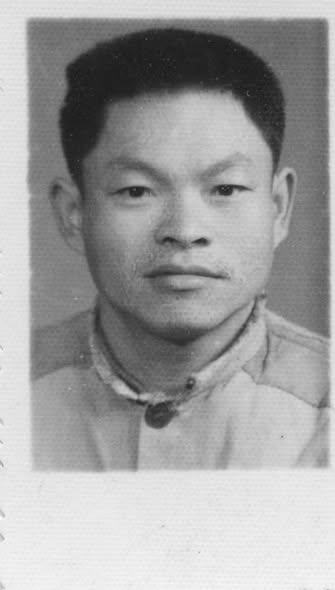
My father was born in 1936, in a village in Sichuan, China, to an intelligent but poor and sickly father whose death left his impoverished mother to fend for herself.
Fate was not kind to her, as the struggle of being poor and raising six children was compounded when she developed a severe infection from a dog bite. Treatment cost her what little she had, and my father was orphaned at the age of six.
The life of an orphan in China was unforgiving, but thankfully my father’s uncle adopted him. As a man of little means, he needed my father to work on the farm; education was expensive and out of the question, but he could earn his keep as a farmhand.
These experiences shaped my father into the man he would become: powerful, steadfast, and honorable—a true fighter. One that not even the local bullies would challenge.
As a teenager, he earned a reputation as a hard worker. During Chairman Mao’s Great Leap Forward campaign, my father was recruited to work for a vast state-owned steel enterprise in Chongqing. This was idyllic considering that the fate suffered by some 40 million Chinese who starved as a result of central planning gone awry.
After several years he was transferred to Chengdu, where he met my mother and fell in love. They were married after obtaining their respective work unit leaders’ permission. I was their first child, one of three, born two years before the terror of the Cultural Revolution ensued.
My memories began in an employer-provided eight-family row house. Our family of five shared two small rooms with dirt floors and an outdoor kitchen. There was no plumbing or heating, and we had to share a single water pump and “bathroom” (a hole in the ground) with eight other families. My parents worked tirelessly, but their positions were lowly, and our food rations were limited as a result.
I always remember my father as a hard worker, waking early each morning to take the bus to work. Public transportation was crowded and the competition to obtain a seat was so fierce that fights would break out. One day, after nearly being run over in a scuffle to get a seat, my father refused to degrade himself any further and bought a used bike to ride to work.
Dad was a prodigious worker and popular amongst his colleagues. His Communist minders thought he was trouble, and he was. His pride denied him submission to their corrupt authoritarianism, and he fought their tyranny at every turn. Honor, however, comes at a price.
They conspired to get rid of him by relocating him to a work site nineteen hours away. He refused to leave my mother- a sickly woman- and his three children, despite the commonality of family separations in communist China.
His refusal to relocate earned him a permanent “early retirement” in his late forties. He refused to accept this. And so, he illegally fixed bikes on the roadside without government license (he could not get one because he was "retired"), served as a tricycle taxi at night. He had his bike confiscated by the police on multiple occasions and was robbed even more frequently. When seized, he would buy another used one, and when robbed, he would fight back.
My father certainly could have made our lives easier, but it would have required obedience and submission to his immoral masters. Instead, he persevered honorably so that we could survive the brutality of communism. If he had chosen dishonor, perhaps I would not be the person I am today. Because of my father’s unwavering moral code, I fought back against a life of slavery in China.
After escaping communist China and becoming an American citizen, I brought my parents to the United States, where my father worked in a local Chinese restaurant for a few years. He became a U.S. citizen in 2005 and was later baptized a Christian, something that would have never happened in China.
My father is a man of integrity, honor, and dignity: a small man who cast a large shadow and stood defiantly against the evils of communism. He never asked for much, just the freedom to work, and provide for us.
I am so grateful for his love, sacrifice, perseverance, and hard work. He knew he was a man of little means and social status, but in the best way possible, he taught me how to live with dignity in defiance of evil.
My dad is very proud of me running for Congress in New Hampshire to serve the people. He even came to Grante State in 2023 to speak at my campaign opening rally last cycle and urge the people to support me.
Despite the harsh lens through which he judges his own achievements, my dad was and is my hero. I love him deeply and pray for God to bless him with longevity.
Happy Father’s Day to my father and all the fathers who carry a lot on their shoulders quietly, working tirelessly to provide for their families, protecting their children and fighting for them!
https://t.co/OYeWRTYaou
My Dad, My Hero: A Father’s Day Tribute
My father was born in 1936, in a village in Sichuan, China, to an intelligent but poor and sickly father whose death left his impoverished mother to fend for herself.
Fate was not kind to her, as the struggle of being poor and raising six children was compounded when she developed a severe infection from a dog bite. Treatment cost her what little she had, and my father was orphaned at the age of six.
The life of an orphan in China was unforgiving, but thankfully my father’s uncle adopted him. As a man of little means, he needed my father to work on the farm; education was expensive and out of the question, but he could earn his keep as a farmhand.
These experiences shaped my father into the man he would become: powerful, steadfast, and honorable—a true fighter. One that not even the local bullies would challenge.
As a teenager, he earned a reputation as a hard worker. During Chairman Mao’s Great Leap Forward campaign, my father was recruited to work for a vast state-owned steel enterprise in Chongqing. This was idyllic considering that the fate suffered by some 40 million Chinese who starved as a result of central planning gone awry.
After several years he was transferred to Chengdu, where he met my mother and fell in love. They were married after obtaining their respective work unit leaders’ permission. I was their first child, one of three, born two years before the terror of the Cultural Revolution ensued.
My memories began in an employer-provided eight-family row house. Our family of five shared two small rooms with dirt floors and an outdoor kitchen. There was no plumbing or heating, and we had to share a single water pump and “bathroom” (a hole in the ground) with eight other families. My parents worked tirelessly, but their positions were lowly, and our food rations were limited as a result.
I always remember my father as a hard worker, waking early each morning to take the bus to work. Public transportation was crowded and the competition to obtain a seat was so fierce that fights would break out. One day, after nearly being run over in a scuffle to get a seat, my father refused to degrade himself any further and bought a used bike to ride to work.
Dad was a prodigious worker and popular amongst his colleagues. His Communist minders thought he was trouble, and he was. His pride denied him submission to their corrupt authoritarianism, and he fought their tyranny at every turn. Honor, however, comes at a price.
They conspired to get rid of him by relocating him to a work site nineteen hours away. He refused to leave my mother- a sickly woman- and his three children, despite the commonality of family separations in communist China.
His refusal to relocate earned him a permanent “early retirement” in his late forties. He refused to accept this. And so, he illegally fixed bikes on the roadside without government license (he could not get one because he was "retired"), served as a tricycle taxi at night. He had his bike confiscated by the police on multiple occasions and was robbed even more frequently. When seized, he would buy another used one, and when robbed, he would fight back.
My father certainly could have made our lives easier, but it would have required obedience and submission to his immoral masters. Instead, he persevered honorably so that we could survive the brutality of communism. If he had chosen dishonor, perhaps I would not be the person I am today. Because of my father’s unwavering moral code, I fought back against a life of slavery in China.
After escaping communist China and becoming an American citizen, I brought my parents to the United States, where my father worked in a local Chinese restaurant for a few years. He became a U.S. citizen in 2005 and was later baptized a Christian, something that would have never happened in China.
My father is a man of integrity, honor, and dignity: a small man who cast a large shadow and stood defiantly against the evils of communism. He never asked for much, just the freedom to work, and provide for us.
I am so grateful for his love, sacrifice, perseverance, and hard work. He knew he was a man of little means and social status, but in the best way possible, he taught me how to live with dignity in defiance of evil.
My dad is very proud of me running for Congress in New Hampshire to serve the people. He even came to Grante State in 2023 to speak at my campaign opening rally last cycle and urge the people to support me.
Despite the harsh lens through which he judges his own achievements, my dad was and is my hero. I love him deeply and pray for God to bless him with longevity.
Happy Father’s Day to my father and all the fathers who carry a lot on their shoulders quietly, working tirelessly to provide for their families, protecting their children and fighting for them!
https://t.co/OYeWRTYaou
Adobe Acrobat is cooked.
Someone built a free, open-source PDF editor that runs entirely on your own machine and never uploads a single file.
It's called Stirling-PDF.
Every time you edit a PDF online, your file gets uploaded to someone else's server. Your NDA. Your bank statement. Your scanned passport. Stirling-PDF processes all of it locally and deletes it the second the task is done.
→ 50+ PDF tools in one clean interface
→ Merge, split, compress, convert, rotate, reorder
→ Built-in OCR to make scanned PDFs searchable
→ Add passwords, watermarks, signatures, redactions
→ Full REST API for automation
→ Runs in Docker on your own hardware
Adobe charges $239/year for Acrobat Pro. This does the same work for $0.
81k stars on GitHub. 25M+ downloads. The #1 PDF app on the platform.
100% open source.
https://t.co/7qashuNPzj