Look at the post below.
Yesterday, we reported that Europe’s four biggest mobile operators 🇩🇪🇫🇷🇪🇸🇬🇧are exploring a joint bid to take on Starlink: phones connected straight to satellites, no tower needed.
The replies came on cue: “Europe can’t launch. Europe has no satellites. Europe has no money. SpaceX has no competition. Period.”
We hear this every time Europe talks about tech independence. But are they right? 👇
❌ “Europe can’t launch.”
✅ True, SpaceX launches far more: 165 Falcon 9 flights in 2025. That gap is real.
But even Amazon booked 24 launches on Europe’s Ariane 6 for its own Starlink rival.
Ariane 6 has already put 100 of its satellites in orbit.
In September, @isaraerospace, a German 🇩🇪 startup, reached orbit. At the same time, Europe’s first reusable rocket prototype is on its pad in Sweden 🇸🇪.
And the @esa has put €900M+ behind a new generation of rockets. That’s more than twice the ~$400M NASA gave SpaceX to develop Falcon 9 and its Dragon capsule.
What will happen to American launchers once these are operational?
❌ “Europe doesn’t build satellites.”
✅ Galileo, Europe’s GPS, is the most precise satellite navigation system in the world. Over 4.5 billion devices use it. Probably yours too.
Finland’s 🇫🇮 @iceye_global runs the world’s largest fleet of radar satellites, which see through clouds and at night.
@Thales_Alenia_S, in Turin, Italy 🇮🇹, built over half of the International Space Station’s living space. It also built the current satellites of Iridium, the American satellite-phone network.
@AirbusSpace, @ThalesAerospace and @LDO_Space are merging their space businesses into one 25,000-strong champion. And IRIS², the EU’s own 348-satellite network, is moving to full deployment of its governments and defence infrastructure.
If Europe has “nothing”, why are NASA’s astronauts living in it and your phone navigating with it?
❌ “Europe doesn’t have the money.”
✅ EU households keep €12 trillion in cash and bank deposits. That’s more than Nvidia and Apple, the world’s two most valuable companies, combined. Enough to buy SpaceX five times over.
On top of that, Europeans hold $8 trillion in US stocks and bonds. For now.
Because something has changed. Every year, €300bn of European savings leaves the EU. Europe is done watching it go: it has started building a single market for savings and investment, so that European money grows European companies.
Some, like Danish 🇩🇰 pension funds, have already started dumping US government bonds.
What will happen the day Europe offers a real alternative to American financial markets?
❌ “Europe is years behind on innovation.”
✅ 3 of the last 4 Nobel laureates in physics were born in Europe 🇬🇧🇫🇷🇧🇪. All three did their prize-winning work at American universities.
The world’s first microprocessor, the chip that became the brain of every computer, was designed at Intel by an Italian 🇮🇹: Federico Faggin. Google’s AI lab, DeepMind, was born in London 🇬🇧. OpenAI was co-founded by scientists born in Poland 🇵🇱 and Slovakia 🇸🇰.
Now Washington is cutting research funding, and applications from US-based scientists to the European Research Council have more than doubled. The EU has proposed doubling its budget too.
Europe’s red tape can be cut with a vote.
Can America win back the trust it has destroyed by threatening, humiliating and insulting its allies?
❌ “Europe needs America more than America needs Europe.”
✅ Look closer.
In April, NASA flew astronauts around the Moon for the first time in over 50 years.
The module that powered their spacecraft, pushed it to the Moon and kept them alive was European, assembled in Bremen, Germany 🇩🇪.
NASA’s Webb telescope launched on a European Ariane 5, so precisely that its fuel should last about 20 years instead of 10.
And the world’s most advanced AI chips can only be made with machines from one company: ASML, in the Netherlands 🇳🇱.
We’ve seen this film before.
In 1970, American planemakers ruled the skies. Europeans pooled their strengths and built Airbus. Airbus has out-delivered Boeing every year since 2019.
The US just turned 250.
The University of Bologna, in Italy, was founded in 1088, 938 years ago. Europe has been written off many times.
Those trying to convince Europeans we can’t stand on our own forget who gave the world the Renaissance, the scientific revolution, the welfare state and the World Wide Web, born at CERN in Geneva 🇨🇭.
Betting against Europe isn’t analysis - it’s hubris.
And that arrogance is pushing European public opinion towards one conclusion: we’re done with America.
One day, those repeating “weak, dependent Europe” will wake up to a Europe running on its own rockets, satellites, capital and talent.
That day is closer than they think. 🇪🇺
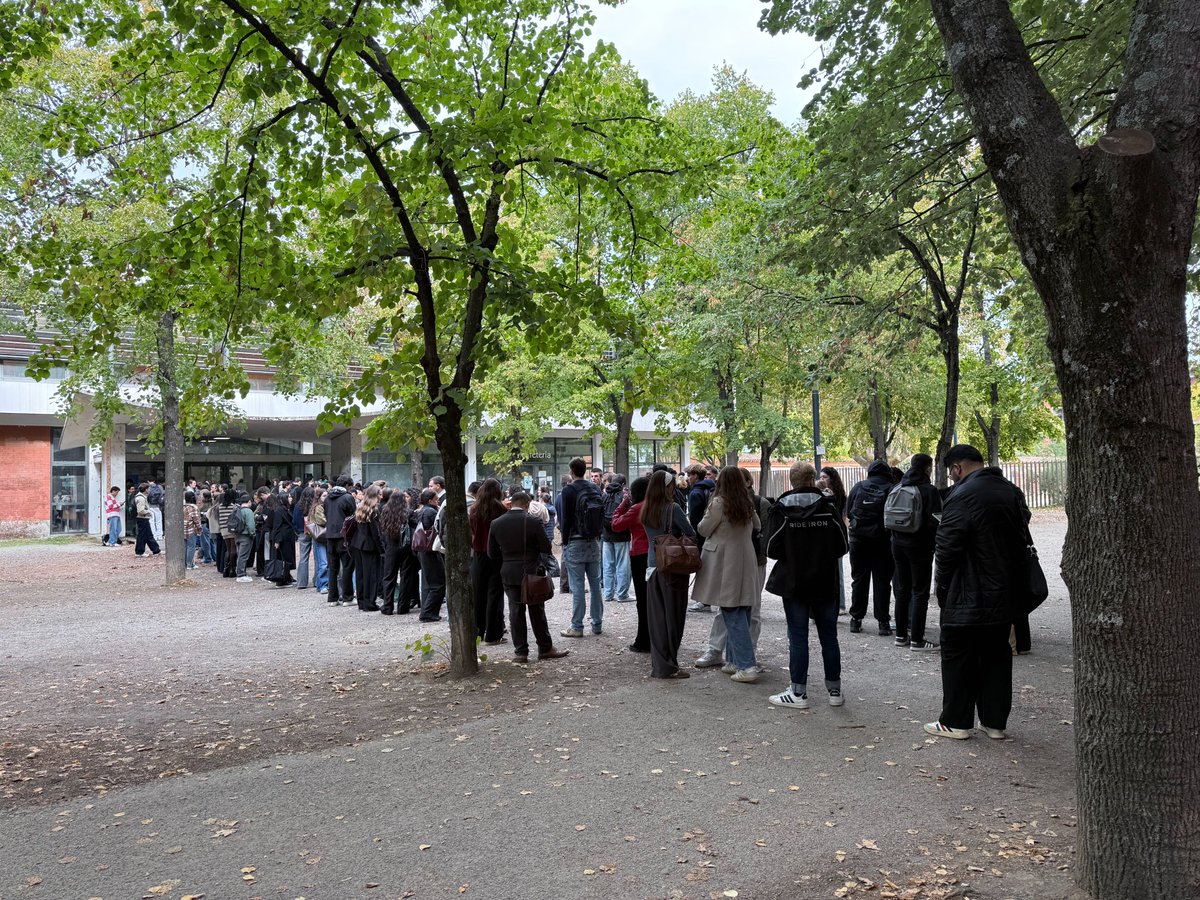
Why are French university students lining up for lunch at 11am when the cafeteria opens at noon?
I took this picture on my way to work this morning because it is a good lesson in “shadow prices.”
In May, France extended €1 university meals to all students. Previously, those not eligible for assistance paid €3.30.
The result was not cheaper meals, but shortages.
Demand surged, and students now queue an hour or more in advance to secure their lunch. What they used to pay with money, they now pay with time.
And this is a lesson in shadow prices. It tells us that students are willing to sacrifice an additional hour to save €2.30, so they are implicitly valuing their time at €2.30 an hour or less.
That's awful. 11 am is one of the best times to study. You are alert, but not yet tired. Even if a fraction of them studied at this time, there could be more value than the one saved by the “cheaper” meal.
While the government did provide €50 million in additional funding for 2026, for a system serving more than 3 million higher-education students (about 8 cents per student per day), the problem illustrates something deeper about France.
Don't get me wrong. I love living here, and I work hard every day to contribute to this country. But too many French institutions operate as though people's time were free.
It is a system where enormous resources flow through the state, and simple transactions are replaced by forms, permissions, and waiting. People grow accustomed to this dependency, sometimes even demanding more of it.
The implicit message of the system is that your time is cheap, your initiative is unwelcome, and your ability to decide for yourself is something to be managed.
It is a sad situation because I genuinely believe France can be one of the best places in the world to live.
But people are tired. And I'm not talking about those who looted sporting goods stores and vandalized public buildings over the weekend. I'm talking about the butchers, bakers, and produce sellers I meet every week at the market. The small antique dealers who worry that a mob could destroy the little capital they have. I talked to many of them yesterday. They are scared and they know there is nothing for them to do other than hide.
A country that values its people should value their time.
Vive la France!
El 81,6% de los hogares españoles con nacionales españoles vive en una vivienda de su propiedad. Muy pocos países europeos tienen porcentajes mayores y todos son más pobres que España. En este grupo prácticamente todos ven la vivienda como un activo de ahorro y un activo que dejar en herencia. Lo último que quieren es una vivienda que pierda valor.
Cualquier reforma que pueda hacer que su vivienda pierda valor es una reforma que no le gusta. Por supuesto eso es una parte de la decisión de voto, pero no es la menos importante.
Los inmigrantes (aprox 15%) no votan. Son los más perjudicados por los precios de la vivienda, pero a los partidos, mientras no voten, poco les importan.
Los jóvenes, sobrepresentados en el problema de la vivienda, están infrarepresentados en el voto porque su participación electoral es más baja. Y a la vista de encuestas y resultados recientes, no parece que la mayoría tenga la vivienda entre sus prioridades a la hora de decidir el voto.
Teniendo en cuenta esos datos...
qué partido político tiene interés en una reforma en profundidad de la política de vivienda que cambie realmente las cosas?
o dicho de una manera más cruda: qué partido ganaría más de lo que perdería con una reforma profunda, que hiciera caer los precios de la vivienda, generara oferta masivamente y penalizara al rentista y a los grandes tenedores?
Me parece que ninguno. Y hacerse trampas al solitario no es una buena receta para entender algo y mucho menos para empezar a ponerle remedio.
ps: los datos son de Eurostat...
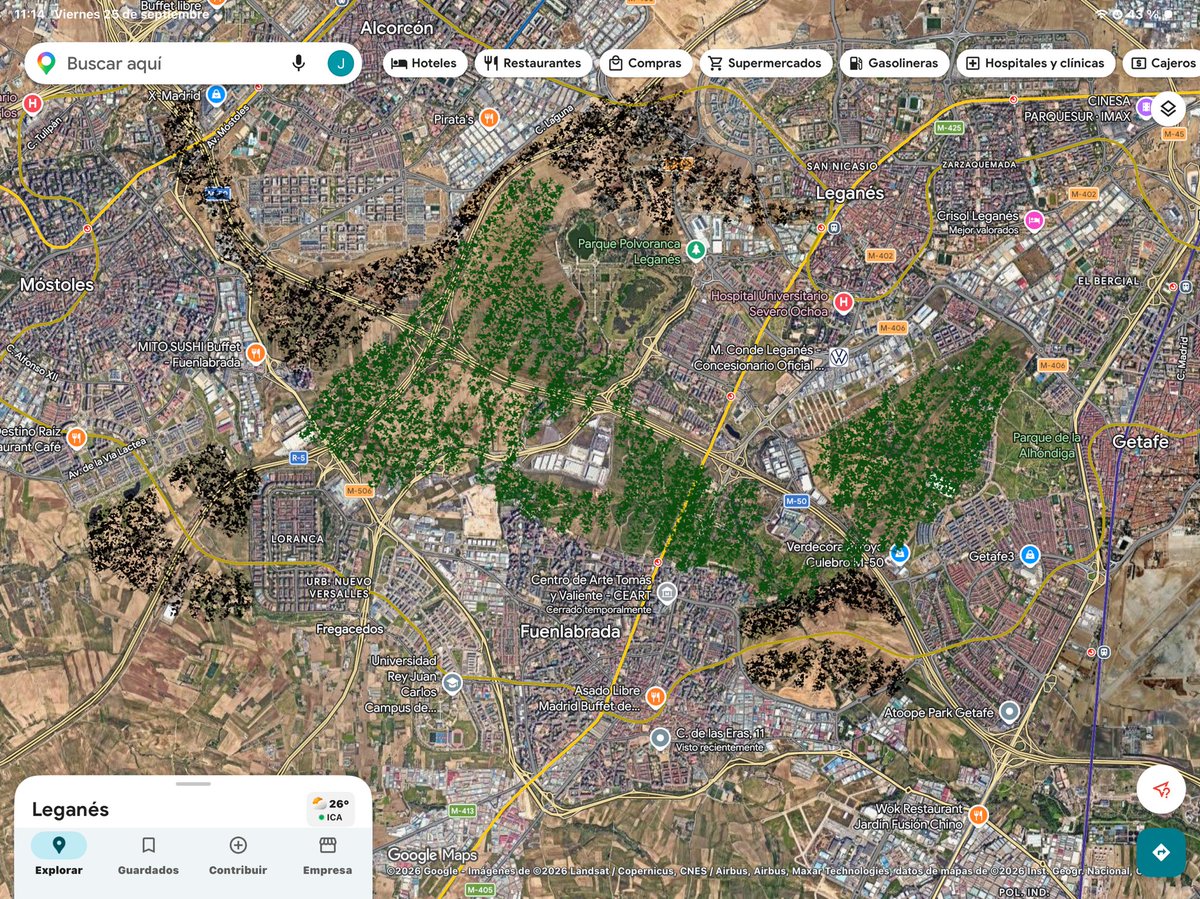
-Leganés, Alcorcón, Móstoles, Getafe y Fuenlabrada están a nada de ser un todo, sin embargo cada uno va “a lo suyo”.
-¿Porqué no una unión continua de los 5 creando un sistema policéntrico de 1 millón de personas?
-Y podría estar unido por un gran parque verde.
#gransur
@giraldeo https://t.co/pdu18hryR0 Otro enfoque, red de transporte y mix de residencial+oficinas, se puede apuntar a más eficiencia y menos islas de hormigón rodeando pistas de padel. Además de coordinación metropolitana, cada ayuntamiento va por libre y luego se cose con vías rápidas.
4.000 viviendas a 2,5 habitantes por hogar (es la media española actual) son, como máximo, 10.000 personas que podrán vivir ahí.
Es una cifra ridícula para el problema de vivienda que existe, el tamaño del terreno y su localización.
Estamos quemando suelo como si nos sobrase.
Instead of ramping up pressure on Morocco, many EU partners turned on Madrid.
The migration panic is fuel for those trying to blackmail Europe.
The Spanish people won't forget this lack of solidarity.
My take @derspiegel
https://t.co/aeqoKeq9aP
Ayer publicaba El Confidencial una larga entrevista con Feijóo:
https://t.co/snZN4J8Nwp
A menudo es más informativo comprobar de qué no habló Feijóo:
1) La palabra “pensiones” (o variaciones como “seguridad social”) no aparece nunca.
2) La palabra “fecundidad” (o variaciones) no aparece nunca.
3) La palabra “productividad” (o variaciones) no aparece nunca.
4) La expresión “déficit público” solo aparece una vez, al explicar por qué Rajoy se encontró en una situación complicada al llegar al gobierno.
5) Sobre vivienda solo dijo “¿Voy a derogar la legislación intervencionista de vivienda? Por supuesto.” y “Construimos un millón de viviendas. No tenga usted ninguna duda.”
6) Sobre inmigración, solo dijo: “¿Voy a derogar la política inmigratoria del Gobierno, desordenada, precipitada, que da derechos a lo que es ilegal? Por supuesto.”
Distintos lectores pueden ordenar estos seis problemas estructurales de España (pensiones, fecundidad, productividad, cuentas públicas, vivienda e inmigración) de manera diferente, pero es difícil argumentar que no sean los seis problemas fundamentales a los que nos enfrentamos a largo plazo. Sobre cuatro de ellos, Feijóo no dijo absolutamente nada. Sobre dos de ellos, dijo obviedades vacías.
Esta entrevista puede interpretarse de dos maneras.
Primera, que ya cerca de la Moncloa, Feijóo es reacio a dar armas al adversario explicando las reformas que quiere implementar.
Segunda, que Feijóo no piensa hacer nada serio con respecto a estos seis problemas.
Yo le doy mucha más probabilidad a la segunda interpretación. ¿Por qué? Porque el votante mediano del PP, relativamente mayor y con vivienda en propiedad, no quiere realmente que cambie nada:
1) En materia de pensiones, el votante mediano del PP quiere que el sistema se mantenga como está, porque es el principal beneficiario.
2) En fecundidad, al votante mediano del PP le importa poco el futuro demográfico de España, pues ya se habrá muerto cuando empiece a ser catastrófico.
3) En productividad, el votante mediano del PP pierde más con los costes de ajuste de la liberalización de mercados o las reformas estructurales en el corto plazo de lo que gana en bienestar en el largo plazo.
4) En déficit público, el votante mediano del PP pierde más con cualquier ajuste serio de las cuentas públicas (no, “cortar el despilfarro”, aun siendo necesario, no da para tanto; no se haga usted las cuentas del Gran Capitán que veo constantemente en X).
5) En vivienda, el votante mediano del PP es propietario de vivienda, y que esta suba de precio es su principal ganancia de riqueza. De hecho, “la legislación intervencionista” es un guiño para eliminar controles de alquileres, que, aun siendo una medida necesaria desde mi perspectiva, beneficia indudablemente a los propietarios.
6) En inmigración, el votante mediano del PP sale beneficiado gracias al flujo de caja fiscal positivo que generan los inmigrantes en el corto plazo, aunque su flujo de caja fiscal total sea negativo a largo plazo. Y muchos votantes del PP (pequeños y medianos empresarios) ganan con la presión a la baja de los salarios y el incremento del precio de la vivienda causados por la inmigración.
A fin de cuentas, el votante mediano del PP quiere la misma política económica que ha seguido el PSOE (y el PP en iteraciones anteriores), quizás con impuestos sobre la renta ligeramente más bajos y menos corrupción “de los otros” (la corrupción de “los nuestros” siempre es lawfare).
Es particularmente revelador que en la entrevista le pregunten a Feijóo si no hará como Rajoy y, al final, no cambiará nada. Feijóo, que debía venir preparado para esta pregunta, responde que Rajoy llegaba en una situación de emergencia. Esta explicación se cae por sí sola: Montoro no presentó el presupuesto hasta después de las elecciones andaluzas del 25 de marzo de 2012. Para eso sí que había tiempo.
Como llevo insistiendo últimamente: la política es siempre sin romance. El gobierno del PP no cambiará nada sustancial porque el votante mediano del PP no quiere que nada sustancial cambie. Por eso el PP ha elegido como líder a Feijóo. Y por eso cosas como cambiar la ley electoral, el bálsamo de Fierabrás de muchos, no servirán para nada. El problema de España es que los políticos llevan 30 años siguiendo a la perfección lo que quiere el votante mediano.
@nachomdeo Europa cometió el error de creer que una estructura pensada para una realidad acabada hace casi cuatro décadas podría durar para siempre. Nos guste o no EEUU ya está actuando en función de sus nuevos intereses. Tuvimos tiempo de sobra para hacer los deberes.
@sahouraxo Yes, but at the same time their party has rejected any increase in Spain’s military spending, even demanding its reduction. On one hand it calls for confronting and leaving NATO; on the other, it rejects policies that guarantee national security. You can’t have it all at once
Esto ya no va de izquierda o derecha. Va de estética autoritaria, despliegue del miedo y normalización de prácticas que creíamos superadas. No tengo ninguna duda de qué lado de la barrera eligen los verdaderos patriotas.
Border Patrol chief Greg Bovino marches through Minneapolis surrounded by federal agents, shouting at American citizens.
This isn’t about deporting “the worst of the worst.” It’s about deliberately sowing fear and chaos in cities that oppose the Trump regime
🚨 La redistribución de recursos debe considerar la renta y riqueza (entre otras) de las personas, no su edad.
Recordemos algunos datos:
➡️ Mayores de 75 años son el grupo con más patrimonio.
➡️ Mayores de 65 tienen 5 veces más riqueza que las de 35.
➡️ El grupo con mayor riesgo de pobreza son los menores de 16 años.
Los partidos políticos prefieren legislar para el electorado que les da más votos (personas mayores de 55 años) aunque signifique abandonar al grupo más vulnerable, la juventud.
Está situación no puede seguir así, pues pone en peligro el sistema del bienestar e incluso el futuro de las pensiones.
Hay que atreverse a cambiar la situación, por el bien de tod@s.
Medidas necesarias, pero no es una buena noticia. También es necesario revisar el sistema incluyendo su legislación, es necesario un consenso social, es necesario dejar de confundir Gobierno con partido.