🌐I write about activist stocks on https://t.co/Mlmg6CKRsn
🖋️I write in English and translate some content into Japanese on X.
🇯🇵 サブスタックでアクティビスト銘柄について書いています。
🔤 英語で執筆し、Xでは一部のコンテンツを日本語に翻訳しています。
https://t.co/Mlmg6CKRsn
David Einhorn says the hedge fund industry is only about $2.5-3 trillion while mutual funds are more than 10x larger - and as trillions moved from active managers into passive funds, he thinks value investing got effectively wiped out: “the value investing industry... is defeated, so to speak”
this is him explaining why cheap stocks can now stay cheap for years. the investors who used to buy them got redeemed, research teams disappeared, and index flows kept pushing more money toward the biggest and most expensive companies instead
Einhorn says Greenlight had to adapt by going from paying 10–11x earnings for undervalued companies to looking for stocks at 4–5x earnings with 15–20% cash-flow yields and aggressive buybacks - because he can no longer assume another active manager will eventually show up and rerate the stock
full interview below
What I fear about Mercari is Oasis pushing management to buy back its stake at a discount to the latest close. The campaign is certainly long in the tooth.
Rohto Pharmceutical: Podcast on Activist Intelligence
Update: Rohto reported a knockout 1Q with forex tailwind, positive impact from earlier price hike. The firm also raise full year OP guidance to 45 billion yen from 43.8 billion yen previously.
https://t.co/oZj3afHjGo
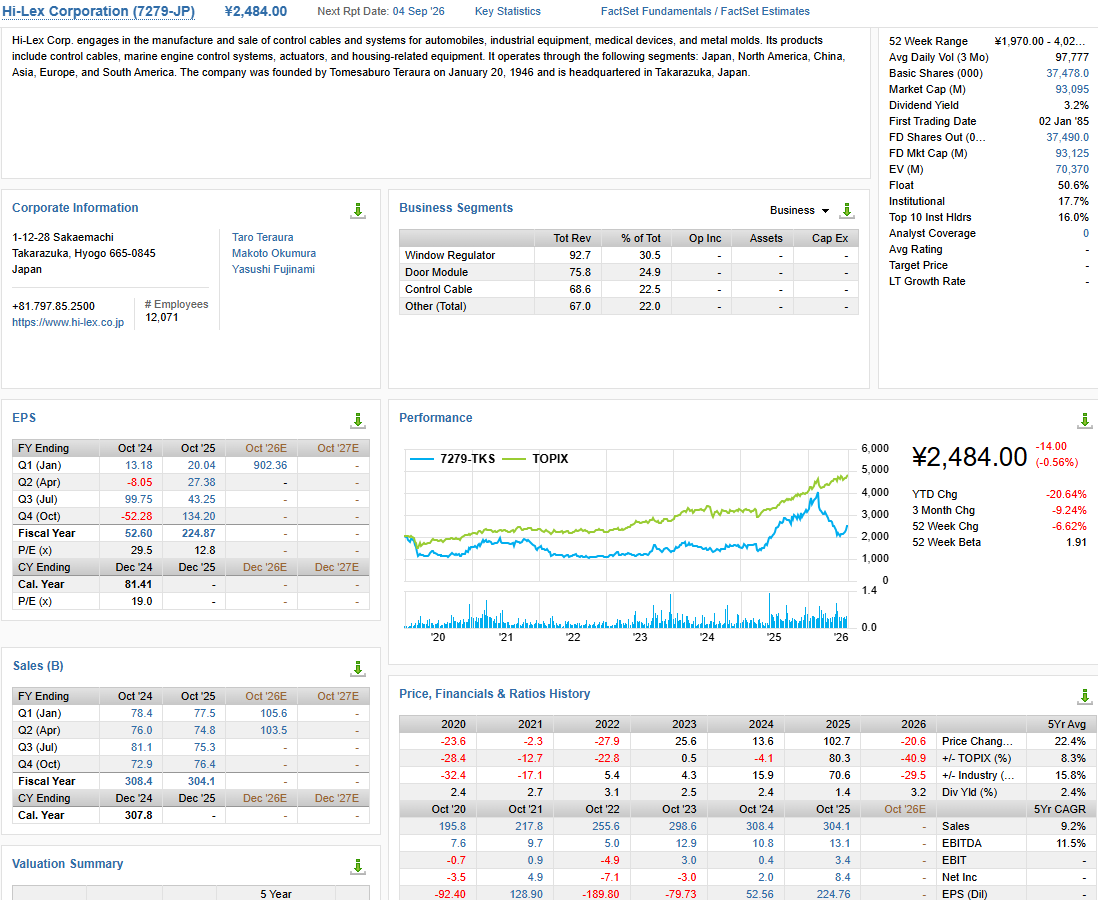
Hi-Lex Corporation (7279, ~US$600m market cap) is an interesting activist case study.
Three activist / engagement firms have been engaged with the company in recent times - Lim Advisors, Japan Catalyst (Monex), and most recently Zennor.
The company historically had a strong position in auto control cables with high global market shares (mechanical cables for auto transmissions, popping your trunk, pulling on the park brake).
This business is rapidly dying as everything goes electric.
The company has pivoted into the equivalent electrics, but it does not have the same market positions, it is up against stronger competitors such as Aisin, and as a result this business has not generated much in the way of profitability.
The market cap is basically covered by the net cash and listed equity holdings on the balance sheet, in companies such as Honda Motor and Asahi Intecc.
Theoretically, the company does not have to listen to the activists. The shareholder register is 43-45% controlled by the founding family and other aligned shareholders.
This is an unassailable voting bloc.
That said, perhaps in response to public activist pressure - or perhaps due to business realities, the company has in recent times sold half its Asahi Intecc stake, and has announced it will focus more on profitability - including restructuring its factory footprint.
This is a messy situation. Obviously cheap, uncertain business prospects, an entrenched management that can only be influenced - not pushed.
From the management's perspective, they need to pivot to continue as a going concern, and this requires investment.
From shareholders' perspective, why waste another dollar of investment on a business that does not, and may not ever realise an economic return, when your own stock trades at 0.4x book?
Such a valuation implies that any $1 invested, immediately loses 60% of its value.
For me, this situation is too hard.
We like plenty of liquid assets, which Hi-Lex has in droves - as well as a cheap valuation relative to book equity and on adjusted EV / EBITDA.
But, we also want positive and stable cash flows, low risk of business disruption, and a shareholder register composition that means management cannot ignore outside shareholders.
What do you think - would you buy this stock?
After all, it is trading for only around the value of the cash and investment securities on its balance sheet!
Haw Par is a S'porean company known for
1) #TigerBalm
2) its UOB shares worth about S$2.6 billion, most of its market cap.
It has a fascinating heritage sharing name with a theme park with depictions of Hell.
#tigerbalmgardens#hellsmuseum
Full note:
https://t.co/IIhF9QlyCi
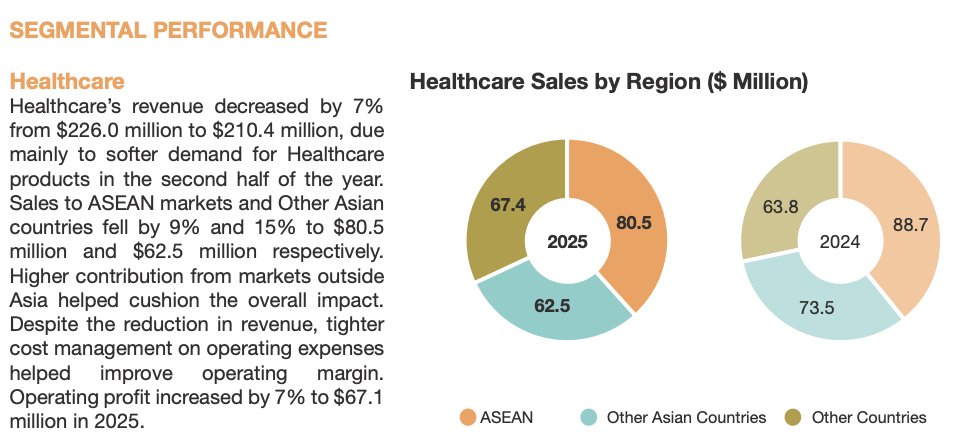
Haw Par, potential #activiststock in SG, discloses the following healthcare sales split which is largely #TigerBalm. It's a decent business, we calculated some values. Recall that JP OTC drug and skincare firm JP's Rohto bought Eu Yan Sang, another SG healthcare name, for $800m!
Big news in the Japan shareholder activist and Australian asset management landscape that has likely flown under the radar.
Ian Macoun's ASX-listed Pinnacle Investment Management (@ASX_PNI, A$4.2bn market cap) has acquired Asset Value Investors - one of the mid-sized Japan activists, and operator of the AJOT UK listed investment trust, via PNI's subsidiary Pacific Asset Management.
This adds to Pinnacle's existing exposure to Japan via its stake in and distribution relationship with PE firm Advantage Partners. Advantage also operates a public-markets business, where it takes stakes in companies via mechanisms such as convertible bond issuance and seeks to help the companies improve corporate value (this has the added benefit to the companies of providing protection against activists under the cover of acting in shareholder interests - despite the implied dilution).
Why is this relevant?
Pinnacle is a global distribution powerhouse that has scaled many successful boutique asset managers to tens of billions of dollars of AUM - for example, Antipodes Partners and Hyperion Asset Management.
It has evolved from its boutique-seeder / GP-staker origins, to now manage $229bn (at 100% of affiliate AUM) across fully and partially owned subsidiaries and affiliates.
In Australia alone, Pinnacle has more than 50 distribution people covering retail, wholesale, and institutional.
Globally, they have close to 100.
Pinnacle has already been educating the Australian market on the opportunity in Japan due to the Advantage relationship.
Many more Australian investors / allocators are likely to be learning a lot more about the opportunities in Japanese shareholder activism in the near future!
Changed the opening for the latest idea to discuss a bit about Haw Par Villa, a theme park in Singapore that depicts Hell.
Enjoy!
Haw Par, Singapore's Potential Activist Name After UOI and GE: Activist Intelligence #5 https://t.co/ehqzP8SrXk
Haw Par is a Singapore company known for two things.
First it sells the iconic Tiger Balm brand pain relief patches and lotions.
Second, its strategic investment holdings disclosed at S$3.4 billion is almost its entire market cap.
https://t.co/yNQwzUciIR
Activists have honed their skills pull some or all of the levers below to drive changes:
1. Strategic business advice such as divestment of non-core assets
2. Driving metric improvement (for OPM, ROIC etc.)
3. Requesting for more shareholder returns
4. Changing management