I am attending #CVPR2026 in Denver this week!
Happy to chat about my work Skyfall-GS (satellite imagery → explorable, real-time 3D urban scenes). Or if you just want to say hi, grab a coffee, or talk about anything 3DGS/diffusion/life. DMs open, let’s grab a coffee ☕
🛰️ Excited to share Skyfall-GS - the FIRST method to create real-time navigable 3D cities from satellite imagery alone!
We transform multi-view satellite images into immersive 3D scenes you can freely fly through! 🚁✨
🌐 Project Page: https://t.co/QsLVaD7mAg
1/5
𝗜𝗻𝘁𝗿𝗼𝗱𝘂𝗰𝗶𝗻𝗴 𝗚𝗲𝗻𝗲𝗿𝗮𝘁𝗶𝘃𝗲 𝗪𝗼𝗿𝗹𝗱 𝗥𝗲𝗻𝗱𝗲𝗿𝗲𝗿
A new toolkit, dataset, and baseline for world-scale rendering:
- collect G-buffers from AAA games
- scale data for rendering complex world scenes
- improve rendering performance
- enable game effect editing
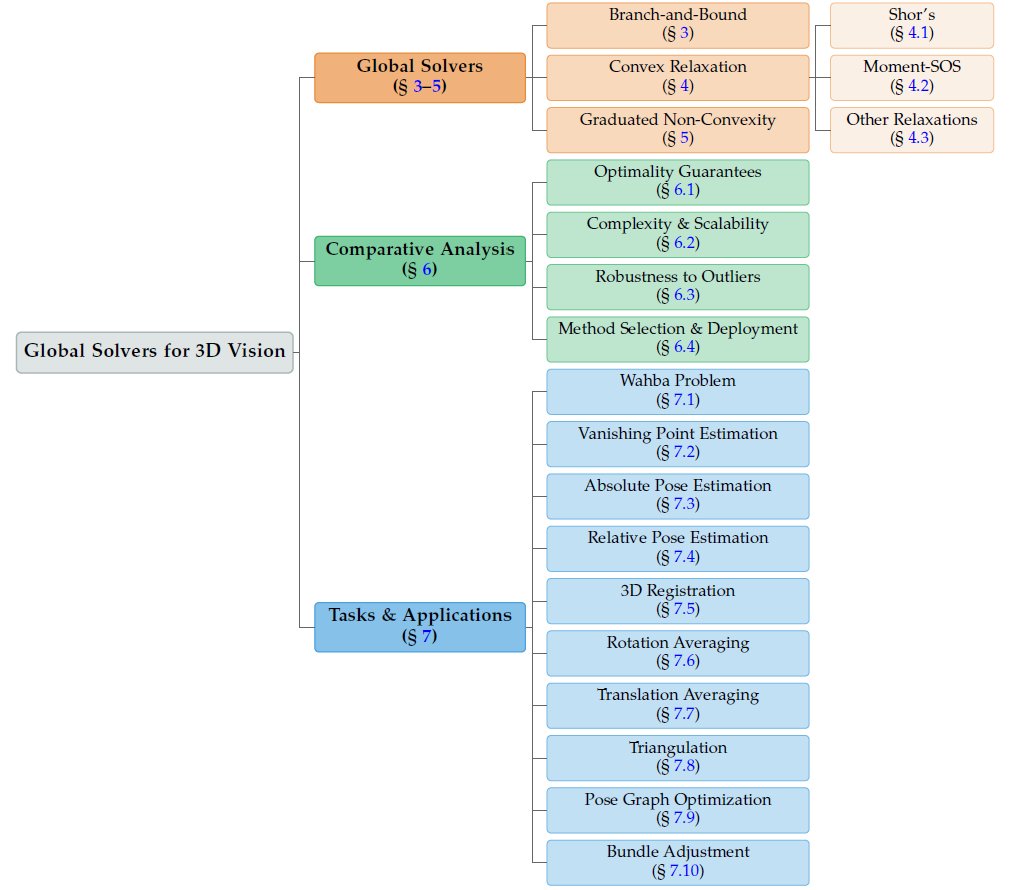
🚀 Thrilled to share our survey paper:
Advances in Global Solvers for 3D Vision
The FIRST systematic survey unifying global optimization for 3D vision, covering 400+ papers across 60+ years (1960–2025)
3 paradigms × 10 tasks × global solutions
📄 Paper: https://t.co/ekCMMeNHe0
💻 Paper List & Tutorial Code : https://t.co/WZzEImwpav
1/7
🎉 Thrilled to share our ICLR 2026 paper:
🔹 NPC
Neural Predictor-Corrector: Solving Homotopy Problems with Reinforcement Learning
🚀 The first unified framework that reveals robust optimization, global optimization, polynomial root-finding, and sampling all share a common predictor-corrector structure
📄 Paper: https://t.co/7r23CkVlt0
💻 Code: [Coming soon]
1/
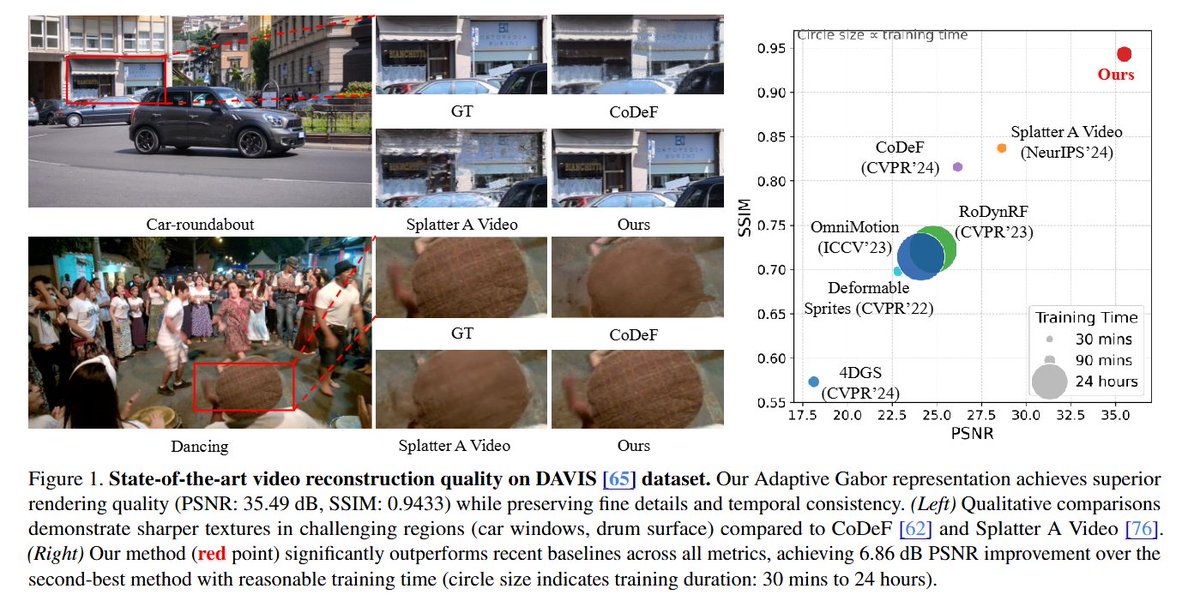
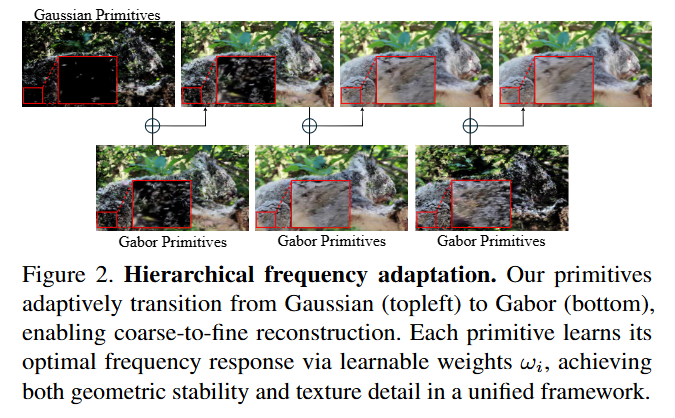
AdaGaR: Adaptive Gabor Representation for Dynamic Scene Reconstruction
@JiewenChan, @zhenjun_zhao, @YuLunLiu790407
tl;dr: extend Gaussians to frequency domain->hybrid Gabor & Gaussian->novel video representation->adaptive high & low-frequency balance
https://t.co/CBhv3fzWZw
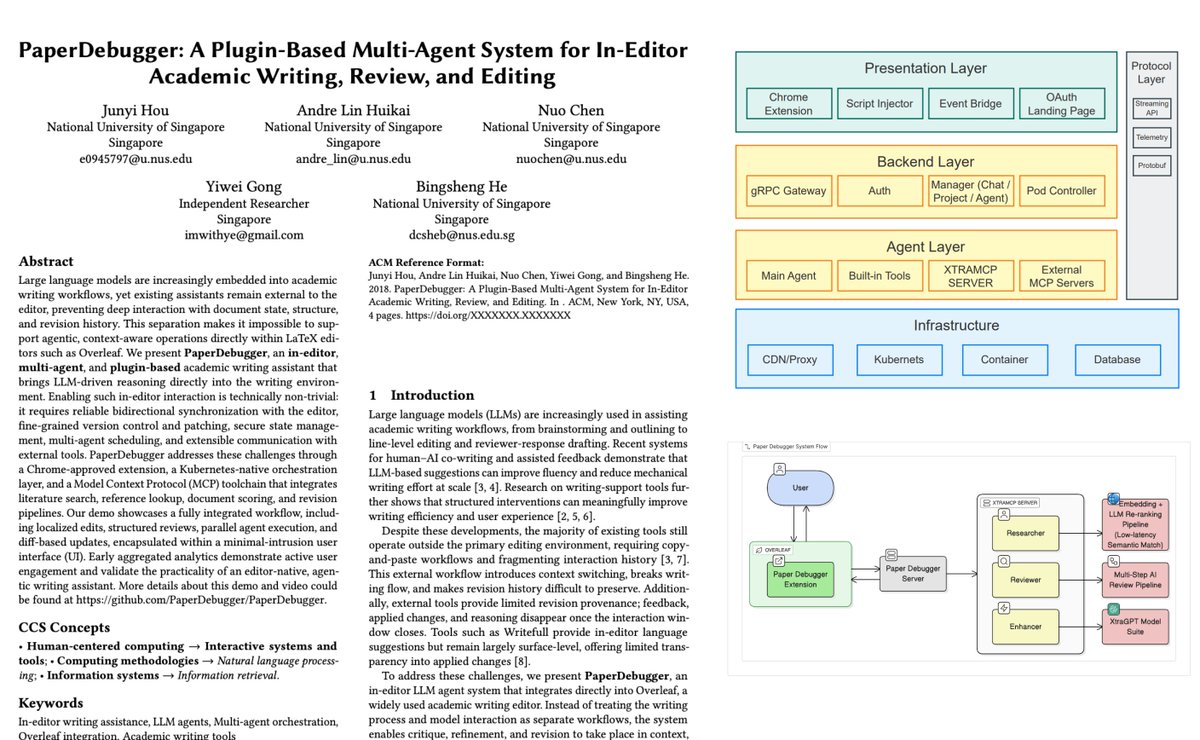
Holy shit… this might be the most unreal academic-writing upgrade I’ve ever seen 🤯
A team from NUS just dropped PaperDebugger an in-editor, multi-agent system that lives inside Overleaf and rewrites your paper with you in real time.
Not copy-paste. Not a sidebar chatbot.
Actual agentic editing inside your LaTeX editor.
Here’s why this is insane 👇
→ You highlight a messy paragraph, and it launches a full critique + rewrite pipeline
→ Returns clean before–after diffs like Git, then patches your document instantly
→ Runs Reviewer, Enhancer, Scoring, and Researcher agents in parallel
→ Uses Kubernetes pods to scale multi-agent reasoning inside the editor
→ Taps an MCP toolchain for literature search, reference lookup, and section-level enhancement
Deep research mode is even crazier:
It pulls relevant arXiv papers, summarizes them, compares your method against them, and generates citation-ready tables… all inline while you're writing.
It’s basically a mini committee of reviewers embedded in your document rewriting, critiquing, sourcing, and polishing without ever breaking flow.
If this scales, Overleaf stops being an editor… and becomes a full AI-assisted research environment.
@mkturkcan@janusch_patas Oh great! We are using appearance embedding, so it is needed to fuse the embedding into actual SH color.
Yes, it should be okay to directly run save_fused_ply after training, will add this to training scripts and README.
Thanks again for playing around!
@mkturkcan@janusch_patas Hi @mkturkcan ! I am the author of this project. Thanks for your interest of our project. I wonder is it possible to share your Columbia datasets, I am very curious why the output looks over saturated. Also, our method requires z-axis to be perpendicular to the ground plane.
@takeyourmedsnow@ChiehHubertLin@YuLunLiu790407 Hi!
We haven't test our method on non-urban envs, but we did reconstruct a suburb residential area, you can check it here, https://t.co/dn97LhchVn, and I think our method built this scene quite well!
We will try to reconstruct some non-urban scenes in the future for sure.
🛰️ Excited to share Skyfall-GS - the FIRST method to create real-time navigable 3D cities from satellite imagery alone!
We transform multi-view satellite images into immersive 3D scenes you can freely fly through! 🚁✨
🌐 Project Page: https://t.co/QsLVaD7mAg
1/5
So these researchers figured out you can basically hallucinate 3D cities into existence using just satellite photos & a diffusion model.
The problem's pretty straightforward: satellites only see rooftops. Building facades? Invisible. Street-level detail? Doesn't exist. But people want flyable 3D environments, which means you need all that occluded geometry.
When I worked on google maps photogrammetry, we could only use satellite-based 3D for isolated stuff like the pyramids - anything city-scale required airplane flyovers. Which is fine until you hit aerial-denied regions where you literally can't fly. Huge chunks of the world just unavailable.
Their trick is honestly kind of beautiful. They train gaussian splats on satellite views, but as it descends toward ground level, the renders turn to absolute garbage - artifacts everywhere. Instead of fighting this, they just treat those nightmare renders as the input to a diffusion model. Basically - "hey FLUX, fix this mess."
Then here's where it gets clever: they generate multiple diffusion samples per view instead of committing to one. Because any single denoising path is probably wrong in 3D space, but if you generate a couple and let the GS optimization find consensus across them, you get actual geometric consistency.
They do this in episodes, curriculum style - start high, gradually descend (hence the name Skyfall-GS!). With each iteration the ground-level views get less fucked. By the end you've got real-time flyable cities that look surprisingly real, and the geometry still matches the satellite input.
No 3D training data. No street-level photos. Just satellites + diffusion doing what it does best - filling in the blanks. It's like neural scene completion but actually practical, and it unlocks basically the entire world.
Skyfall-GS: Synthesizing Immersive 3D Urban Scenes from Satellite Imagery
TL;DR: Skyfall-GS converts satellite images to explorable 3D urban scenes using diffusion models, with real-time rendering performance.
Contributions:
• We introduce Skyfall-GS, the first method to synthesize immersive, real-time, free-flight navigable 3D urban scenes solely from multi-view satellite imagery using generative refinement.
• An open-domain refinement approach leverages pre-trained text-to-image diffusion models without domain-specific training.
• A curriculum-learning-based iterative refinement strategy progressively enhances reconstruction quality from higher to lower viewpoints, significantly improving visual fidelity in occluded areas.
📚 Resources:
📄 Paper: https://t.co/YOmF9QF2df
🌐 Project Page: https://t.co/QsLVaD7mAg
⌨️ Code: https://t.co/bKWIiMKkUN
🤗 Hugging Face: https://t.co/FdyvTpSYkM
⭐️ Star the repo if you find it useful!
💬 Questions? DMs open!
Huge thanks to @ChiehHubertLin and @YuLunLiu790407
🎯 Why this matters:
Skyfall-GS enables SCALABLE 3D city generation with applications in:
- AR/VR experiences
- Autonomous driving simulation
- Robotics training
- Virtual entertainment
Real-time rendering makes it practical for deployment! 🚀
4/5
Q: How many seconds will have passed this year by the end of today, after exactly 6 weeks of the year has passed?
A: 10!
= 6 weeks
= 6×7 days
= 6×7×24 hours
= 6×7×24×60 mins
= 6×7×24×60×60 seconds
= 6×7×(8×3)×(3×10×2)×(5×4×3) seconds
= 10×9×8×7×6×5×4×3×2 seconds
= 10! seconds








![zhenjun_zhao's tweet photo. 🎉 Thrilled to share our ICLR 2026 paper:
🔹 NPC
Neural Predictor-Corrector: Solving Homotopy Problems with Reinforcement Learning
🚀 The first unified framework that reveals robust optimization, global optimization, polynomial root-finding, and sampling all share a common predictor-corrector structure
📄 Paper: https://t.co/7r23CkVlt0
💻 Code: [Coming soon]
1/](https://pbs.twimg.com/media/HAUbFJwXYAE-MVG.jpg)