Out now in @PNASNews
We present a new metabolism-weighted brain connectome that incorporates each region’s energy expenditure into the mapping of brain connectivity.
https://t.co/fULHi3QJqG
🧠🍇 Los polifenoles podrían proteger la salud cerebral. Revisión de 2026 encontró que compuestos presentes en cacao y frutos rojos ayudan a reducir el estrés oxidativo, modular la neuroinflamación, favorecer la neuroplasticidad y aumentar los niveles de BDNF.
What diet best promotes longevity?
In mice, a low-protein, mostly plant-based diet modeled after traditional Mediterranean and Okinawan eating patterns—supplemented with methionine—reduced frailty, lowered body fat, improved cardiometabolic health, and boosted beneficial hormones including GLP-1 and FGF21.
Supporting human data from >200,000 adults showed that the highest animal protein intake was associated with nearly double the prevalence of type 2 diabetes.
https://t.co/Q619AWjOLH
#Longevity #HealthyAging #Nutrition #MediterraneanDiet #OkinawaDiet #FGF21 #GLP1 #MetabolicHealth
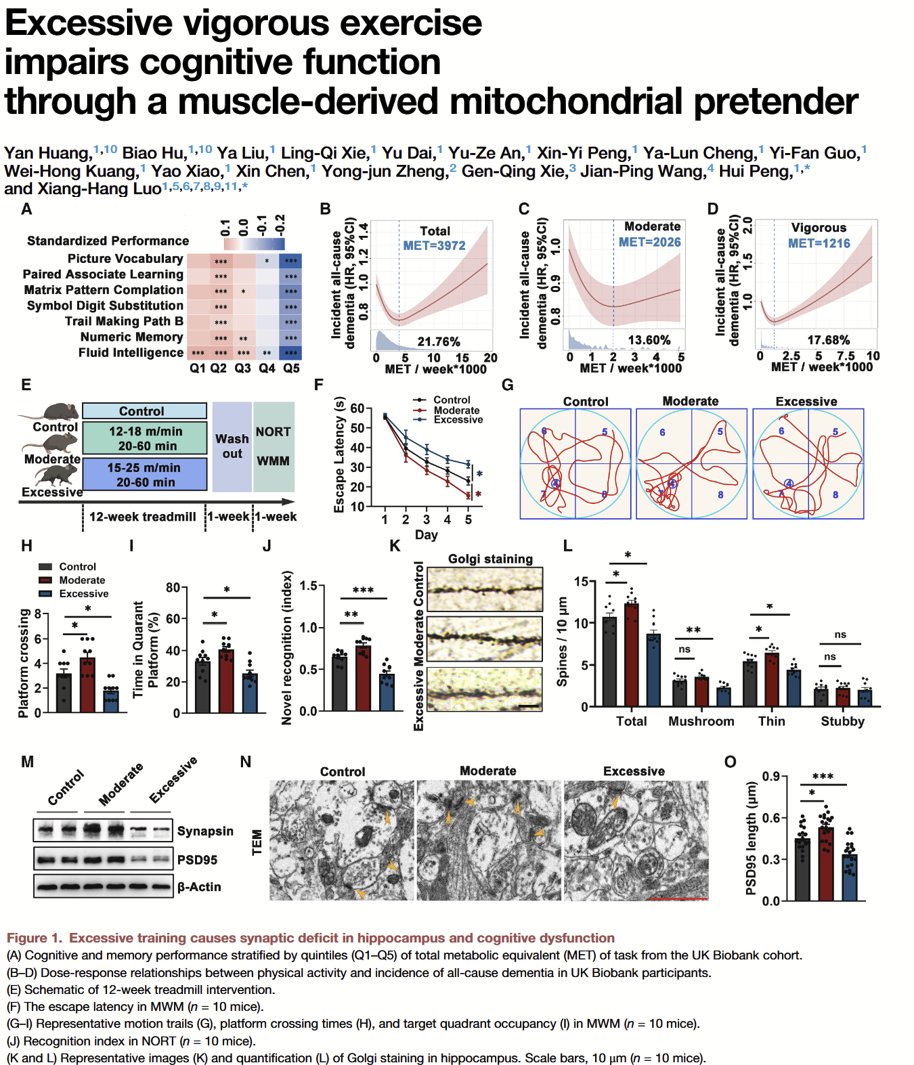
Can too much exercise harm the brain?
This study suggests that excessive vigorous exercise triggers muscle-derived mitochondrial vesicles that travel to the hippocampus, disrupt synaptic energy supply, and impair cognition.
The findings reveal a surprising muscle-to-brain pathway linking overtraining to memory and cognitive decline—and suggest that more exercise isn't always better. #Overtraining #Mitochondria #Cognition @WuTsaiAlliance
https://t.co/u6wnOCDT5g
Early research suggests that some mental health conditions could stem from metabolic disorders. If so, the findings could change how we treat mental illness
https://t.co/hUUyHjtazy
During endurance exercise, amino acids contribute surprisingly little to energy production—just ~1–6% of total energy needs. Women also tend to rely more on fat and less on carbohydrates and amino acids than men, highlighting important sex differences in exercise metabolism. 🏃♀️🏃♂️ #ExerciseScience #Metabolism #EnduranceTraining @WuTsaiAlliance
https://t.co/GlXqjOziOc
Higher meat intake was associated with less cognitive decline and lower dementia risk in APOE e4 carriers, a group at higher risk of Alzheimer's disease and dementia.
Those who ate ~2 servings of meat per day had a better 10-year cognitive trajectory and a 55% lower dementia risk compared to people eating less than a half a serving per day.
That pattern wasn't seen in the non-APOE e4 carriers and was NOT observed for processed meat. Unprocessed red meat alone was also linked to lower dementia risk in APOE e4 carriers.
My take is not “everyone should eat more meat.”
But a few servings per day of unprocessed meat (as observed in this study) is perfectly healthy for most people.
Your muscle rebuilds in about three months. Your tendons and cartilage take roughly a year and a half. Your bone, up to two years. Adding 40 grams of whey daily for two weeks doesn't change any of those timelines.
That's the finding from a study published last month in the American Journal of Clinical Nutrition. The team measured rebuild rates across more than a dozen knee tissues in living older adults using a safe heavy-water tracer. Half the participants kept their habitual diet. Half added 40 grams of whey daily for 14 days. At the end, the rebuild rates of every tissue were the same in both groups.
Muscle rebuilt at about 1.2 percent per day. At that rate, your quadriceps theoretically turn over in roughly three months. The patellar tendon, the femoral cartilage, and the menisci all rebuilt at 0.18 to 0.21 percent per day, putting their full-pool turnover at roughly 1.3 to 1.5 years. Bone rebuilt at 0.12 to 0.21 percent per day across five sites, with the slowest taking up to 2.3 years for a complete cycle.
It does not say protein doesn't build connective tissue. It does. Every tissue in your body depends on dietary amino acids as substrate. What the study shows is that for these older adults on their normal diets, adding 40 grams of whey on top for two weeks did not accelerate the rebuild rate of any tissue measured.
Protein supplementation is a tool for closing intake gaps and for hitting the per-meal threshold that maximizes muscle protein synthesis after training. It's effective at those goals.
Cartilage damage from running mileage, tendon overuse injuries, bone density loss in postmenopausal women, ACL rehabilitation timelines: none of these can be hurried with whey.
The reality is that your body runs many tissue clocks at very different speeds. Muscle is the fast one. Most of what we call "tissue building" outside of muscle takes 1 to 2 years per cycle, not days.
Muscle responds to protein on a short timescale. Everything else responds on a long one. The two are not interchangeable.
citation:
Houtvast et al., Am J Clin Nutr, 2026
One of the largest (and most important) aging studies ever run: 60,542 people, 7,000+ blood proteins, 40+ cell types, 15 years of follow-up.
Your organs age at different speeds, and lifestyle moves it. Extreme muscle aging meant 12.7x ALS risk. Extreme astrocyte aging predicted Alzheimer's as strongly as APOE4.
Obesity doesn't just affect the waistline—it reshapes the brain. Emerging evidence suggests chronic metabolic overload disrupts neurovascular coupling, blood–brain barrier integrity, cerebrospinal fluid dynamics, and myelination, creating conditions that may accelerate neurodegeneration. As obesity and neurological disorders rise in parallel, understanding these interconnected pathways could reveal new strategies to protect brain health across the lifespan. #Neuroscience #Obesity #BrainHealth
https://t.co/jb4TtNV1xu
🏃♀️🧠 El ejercicio no solo fortalece músculos, también pone a tus órganos a “conversar” con el cerebro: músculo, hígado, grasa y corazón liberan señales que podrían favorecer plasticidad, energía cerebral y neuroprotección 🛡️
https://t.co/8SSrhGHFBY
Our new special issue on 'Exercise as Medicine' is now live!
Read the introductory Editorial from Guest Editors Ronan Berg, Colleen Deane, Jill Barnes and Harry Rossiter here:
📖 https://t.co/4ulB7tN2oq
Read the full issue here:
📖 https://t.co/q8AZPccdyn
Barbacid ocultó sus intereses empresariales cuando anunció una supuesta 'curación' del cáncer de páncreas, como revelamos en EL PAÍS el 6 de febrero. La Academia de Ciencias de EE UU acaba de retractar su estudio por esa turbia maniobra:
https://t.co/ToMju4YGEl Por @Nunodomin
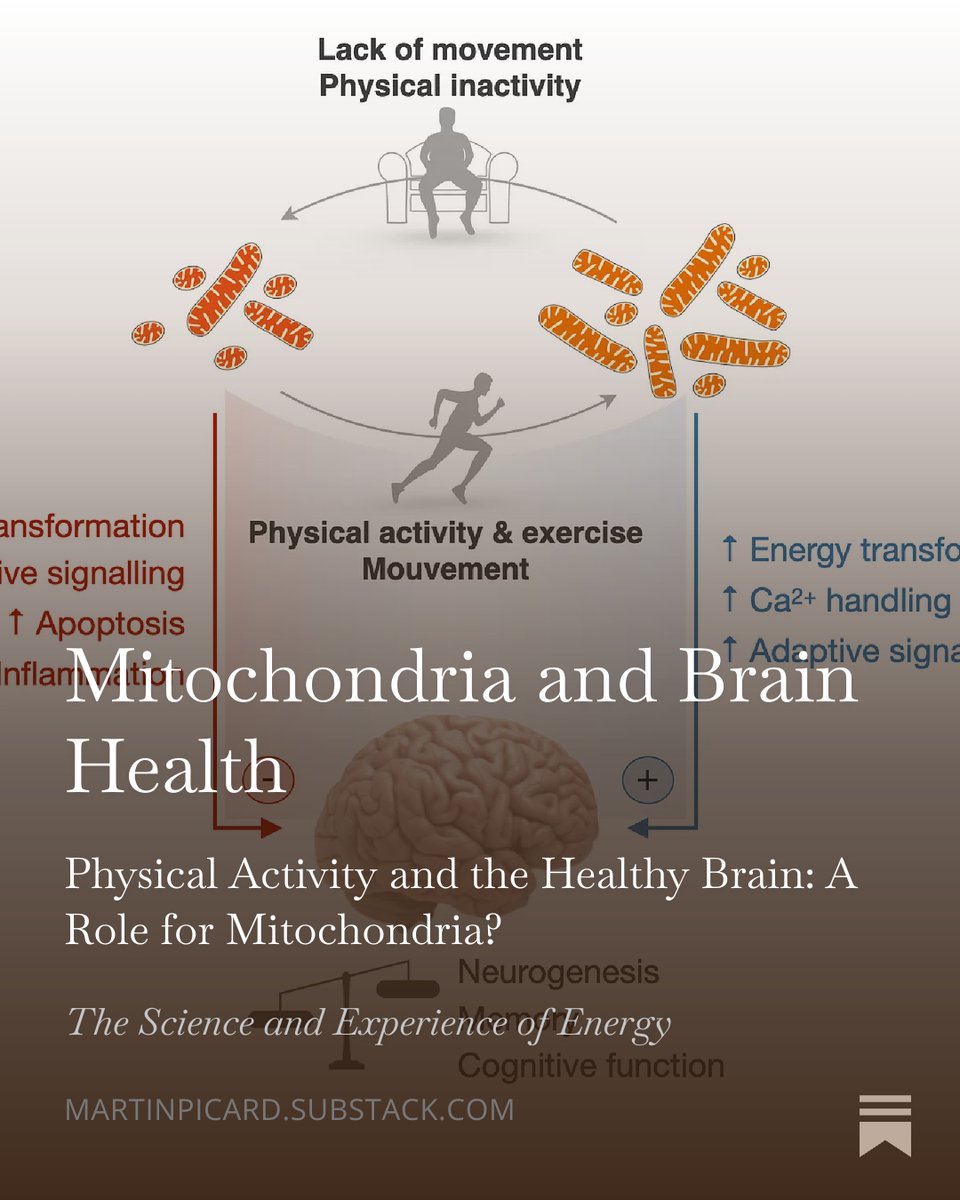
Exercise is good for the brain. But why?
This morning in The Science and Experience of Energy we explore the effects of exercise on brain mitochondrial. And why making more mitochondria might in part be why moving keeps our brain healthy.
https://t.co/TQjRODQpsS
1/
Big update in exercise science: ACSM has revised its resistance training Position Stand for the first time since 2009. That is a 17-year gap, and a lot has changed. 🧵https://t.co/Vk3yQj3Rmp
Los datos de mortalidad 2025 del DEIS revelan realidades distintas según género, lo que nos permite orientar mejor nuestras estrategias de prevención. 🏥
Conoce más información ->https://t.co/2kXhYp7QYO
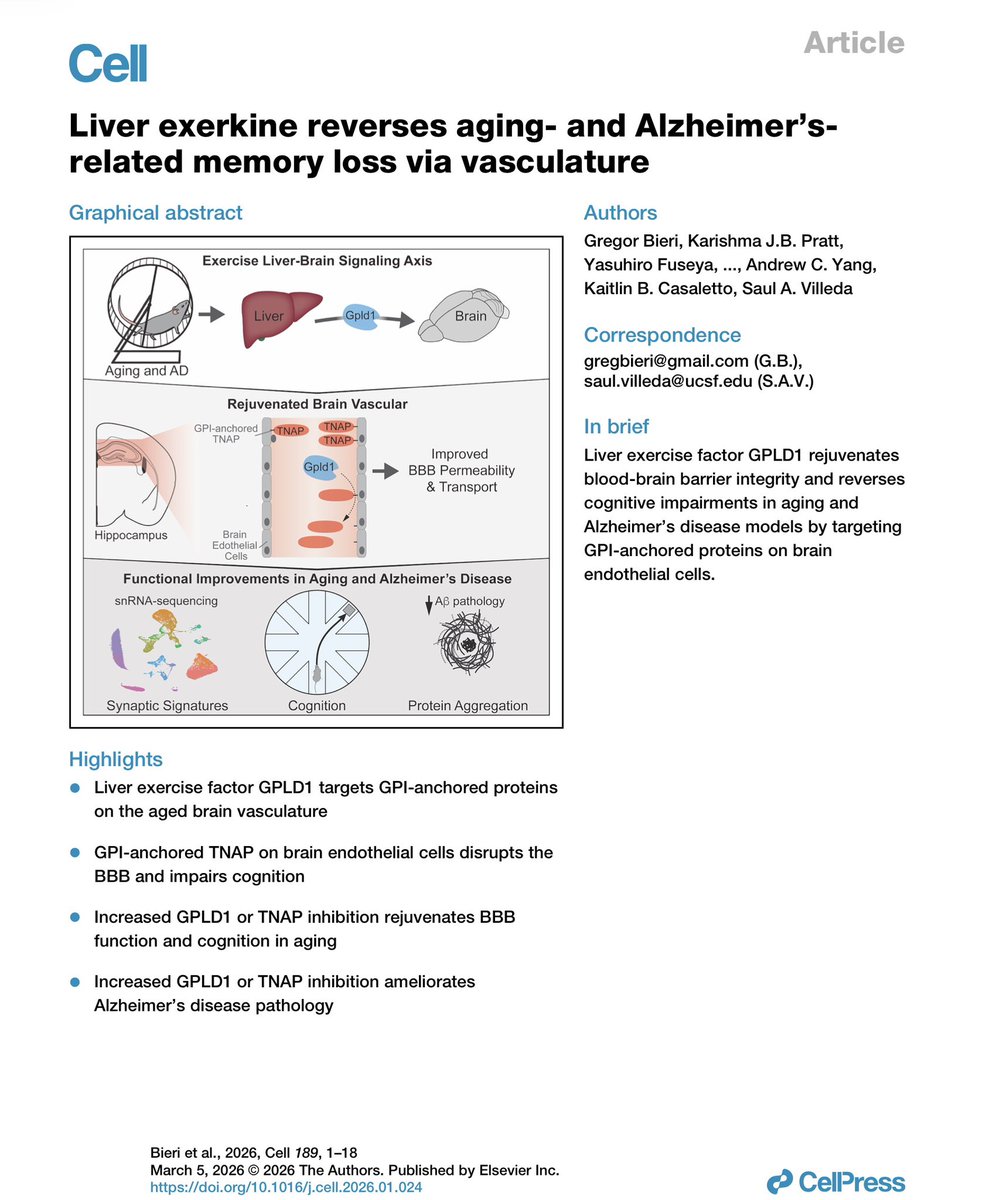
🧠 Can exercise “talk” to the brain through the liver?
A new Cell paper (Bieri et al., 2026) reports something fascinating: an exercise-induced liver enzyme, GPLD1, may reverse aspects of aging- and Alzheimer’s-related memory decline — at least in mice.
https://t.co/Gqu1BT22Tt
Impacto metabólico del ejercicio de resistencia extremo: @LeTour.
.
El esfuerzo excesivo provoca una alteración del 43% de los metabolitos por una reducción de nutrientes
.
Existen variaciones químicas con la percepción subjetiva de fatiga
.
Full text: https://t.co/rryjuOKxgc