📷
"C++23 - The Complete Guide" is out
I am happy to announce that my new book in the "The Complete Guide" series is out now as a draft ebook with 330 pages so far.
Current content: https://t.co/k5U96NEQY3
Order the book at https://t.co/FnOgWGR1xu
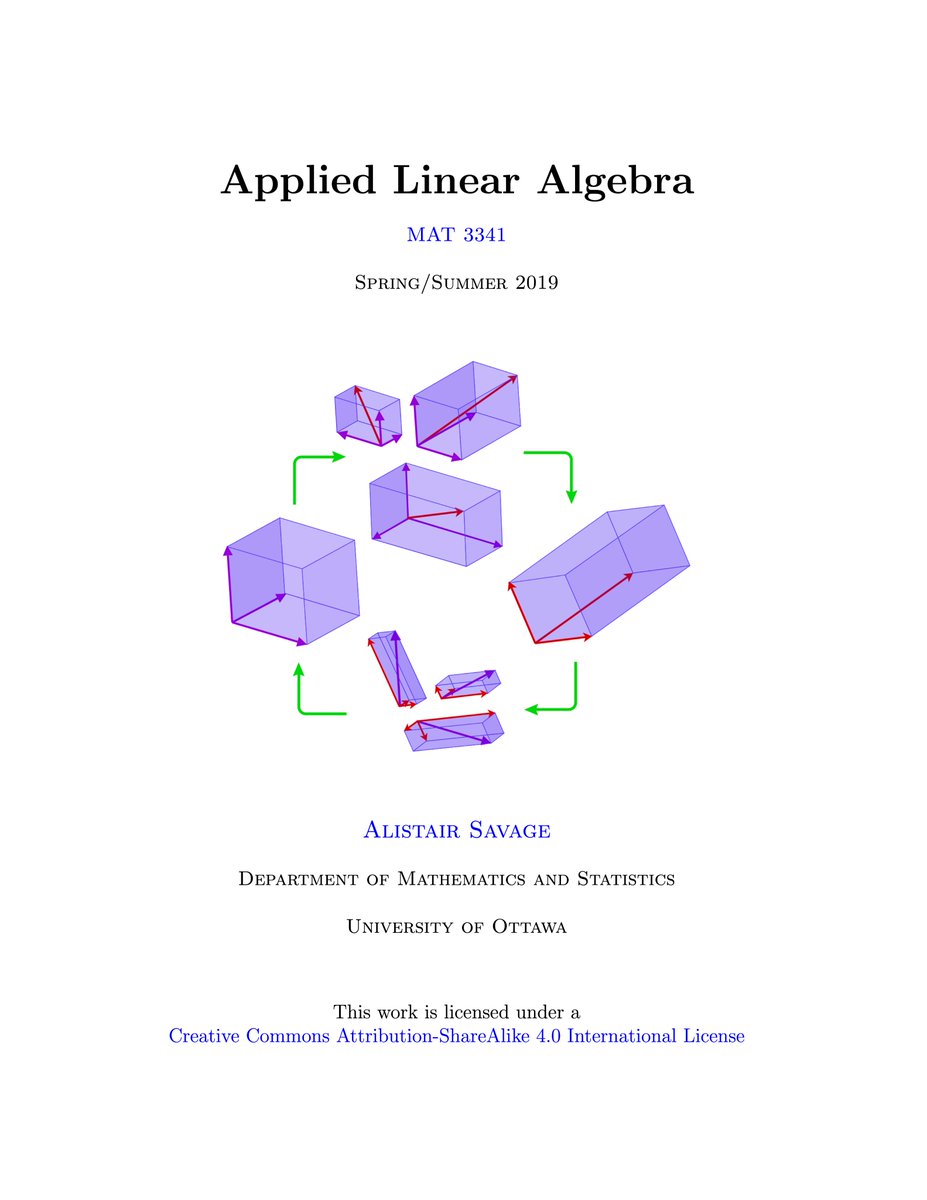
A reset button for rotation could change how we control them all.
Is it possible to cancel out a complicated spin without painstakingly reversing every single move? Surprisingly, the answer is yes.
Mathematicians Jean-Pierre Eckmann (University of Geneva) and Tsvi Tlusty (UNIST, South Korea) recently proved that almost any object—whether it’s a spinning top, a tumbling satellite, a twisted protein, or even a scrambled Rubik’s Cube—has a hidden “reset button” for its orientation.
Instead of undoing the motion step by step in reverse order, you can take the entire original sequence of rotations, scale it by a certain constant factor (make every turn bigger or smaller by the same proportion), perform that scaled version once, then do it again—and the object snaps perfectly back to its starting orientation. Two scaled copies of the same motion are enough to erase it completely.
It feels deeply counterintuitive. We’re used to thinking that rotations in 3D space don’t commute and that the only safe way to return home is to retrace your path exactly backward. Yet this new result reveals a previously unknown geometric symmetry: certain scaling factors turn the rotation group into something that has a kind of built-in “double and cancel” feature.
The discovery applies to any rigid body moving in three dimensions and may simplify algorithms in robotics (for reorienting a robot arm without tracking every prior move), computer graphics, molecular dynamics simulations, spacecraft attitude control, and even some problems in quantum mechanics.
In short, nature has been hiding a remarkably simple trick: sometimes the fastest way to undo a complex dance of spins isn’t to moonwalk backward through every step; it’s to perform an enlarged (or shrunken) version of the same dance twice.
["Walks in Rotation Spaces Return Home when Doubled and Scaled." Physical Review Letters, 2025]
FFmpeg makes extensive use of hand-written assembly code for huge (10-50x) speed increases and so we are providing assembly lessons to teach a new generation of assembly language programmers.
Learn more here:
https://t.co/u6MKBb4v0S
Slides from my SIGGRAPH 2025 / CEDEC 2025 talks “Fast as Hell: idTech 8 Global Illumination”, are now publicly available through the Advances in Real-Time Rendering in Games course. Lecture recordings will be available soon on the course's YouTube channel.
https://t.co/G2YJgFY2cL
Course notes and slides for this year's edition of the SIGGRAPH Physically Based Shading course are online now; there's a ton of really cool stuff in there!
https://t.co/v3aUS327Ia
'High-Dimensional Probability' - Roman Vershynin (2nd Edition, 2025): https://t.co/SAvZcrDp7S
See §5.3 for one of the most elegant & practically important results: the Johnson-Lindenstrauss Lemma. The subgaussian version exercise makes for a proper workout.
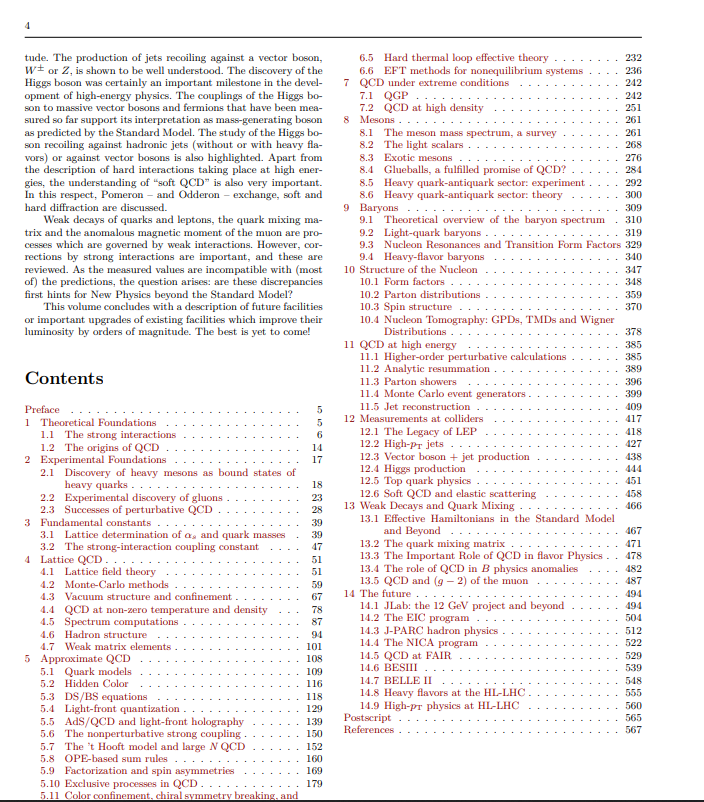
''50 years of Quantum Chromodynamics'' is a ''comprehensive review of both theory and experimental success'' of QCD.
Get the 700+ pages pdf on arxiv, check the comments for the link


![Rainmaker1973's tweet photo. A reset button for rotation could change how we control them all.
Is it possible to cancel out a complicated spin without painstakingly reversing every single move? Surprisingly, the answer is yes.
Mathematicians Jean-Pierre Eckmann (University of Geneva) and Tsvi Tlusty (UNIST, South Korea) recently proved that almost any object—whether it’s a spinning top, a tumbling satellite, a twisted protein, or even a scrambled Rubik’s Cube—has a hidden “reset button” for its orientation.
Instead of undoing the motion step by step in reverse order, you can take the entire original sequence of rotations, scale it by a certain constant factor (make every turn bigger or smaller by the same proportion), perform that scaled version once, then do it again—and the object snaps perfectly back to its starting orientation. Two scaled copies of the same motion are enough to erase it completely.
It feels deeply counterintuitive. We’re used to thinking that rotations in 3D space don’t commute and that the only safe way to return home is to retrace your path exactly backward. Yet this new result reveals a previously unknown geometric symmetry: certain scaling factors turn the rotation group into something that has a kind of built-in “double and cancel” feature.
The discovery applies to any rigid body moving in three dimensions and may simplify algorithms in robotics (for reorienting a robot arm without tracking every prior move), computer graphics, molecular dynamics simulations, spacecraft attitude control, and even some problems in quantum mechanics.
In short, nature has been hiding a remarkably simple trick: sometimes the fastest way to undo a complex dance of spins isn’t to moonwalk backward through every step; it’s to perform an enlarged (or shrunken) version of the same dance twice.
["Walks in Rotation Spaces Return Home when Doubled and Scaled." Physical Review Letters, 2025]](https://pbs.twimg.com/media/G7V5AsFXEAEFeMc.png)