1/ 📢 Excited to share our new research published in #TheCryosphere on snow depth estimation in the Canadian Arctic Archipelago using #Cryo2Ice satellite data! 🛰️ Here's a thread on what we found and why it matters. 🧵👇
https://t.co/5qt0pL3ZGv
We're lucky to have received support from several grants to complete this work, mainly the @ESA_EO@esa_cryosat Polar+ Snow on Sea Ice Project. Please share your comments on the paper! @carmenjulianab @isolde_glis @RobbieMallett @rmfredensborg@micheltsamados
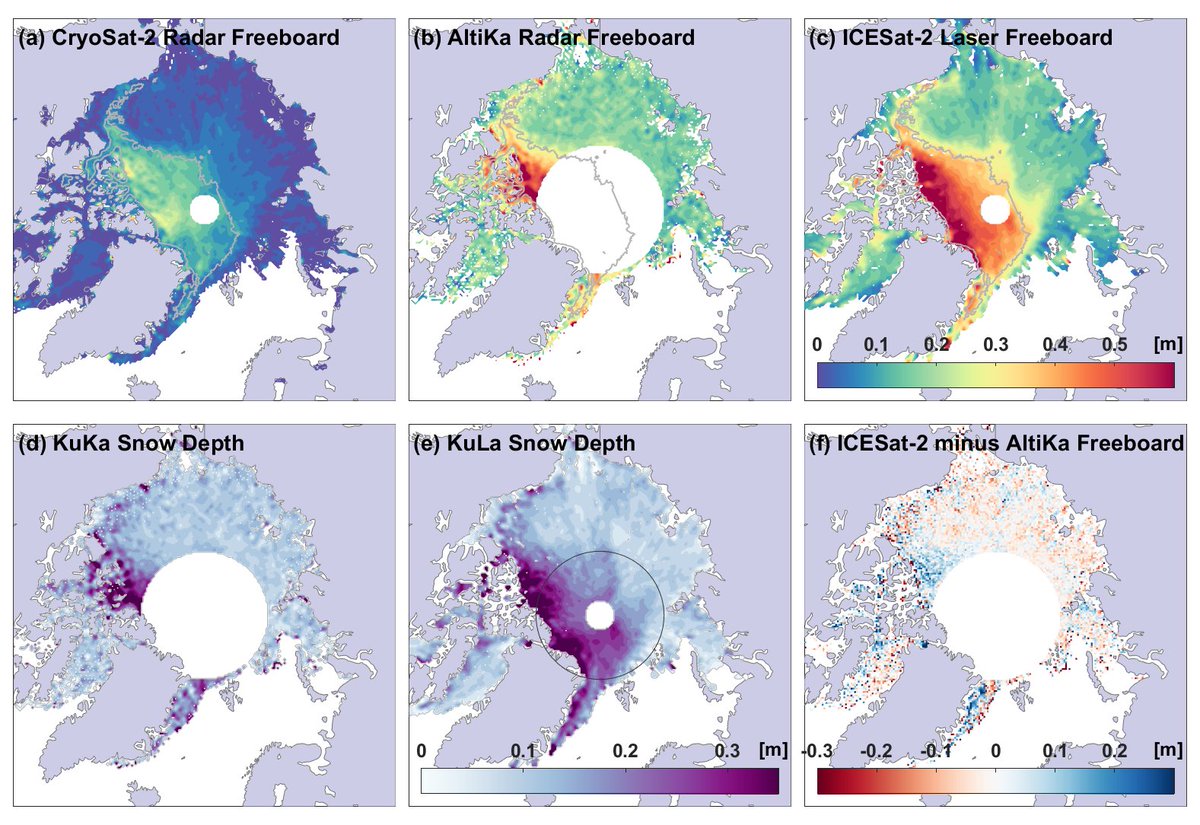
We investigate some of the reasons why snow and sea ice freeboards measured by three different satellite missions match or don't in the Arctic... Takeaways: surface roughness and the seasonal variation of snow and ice properties really matter!
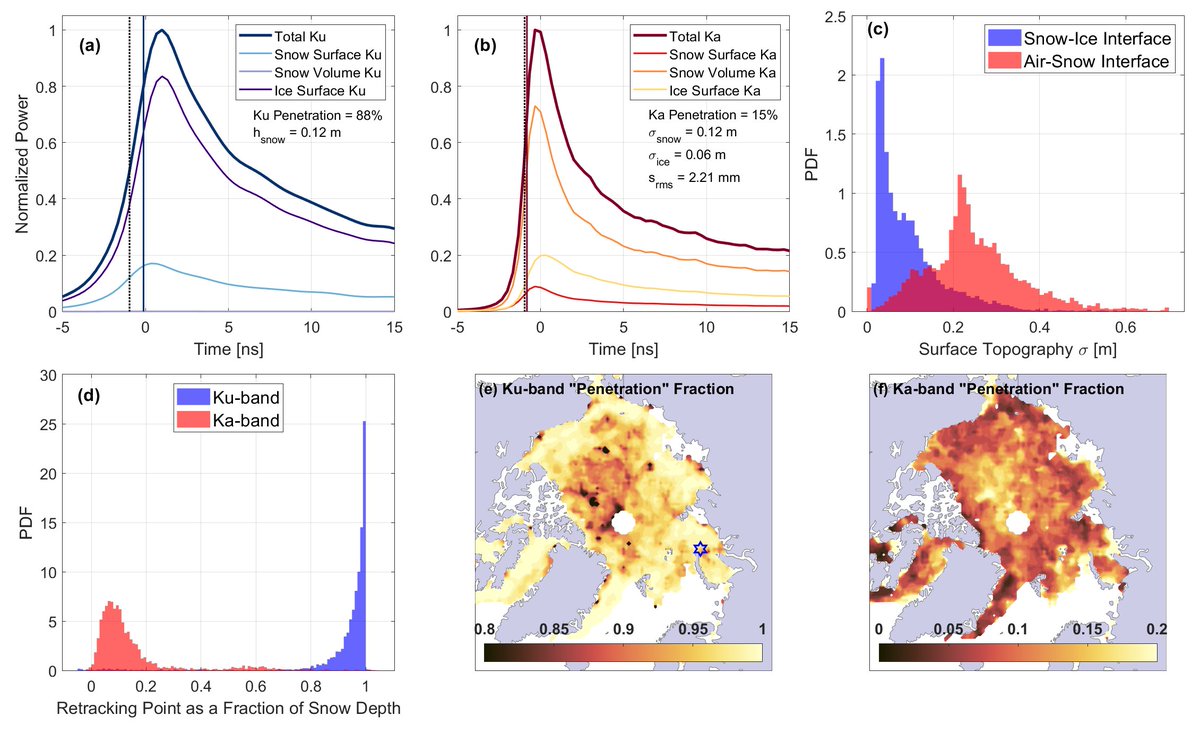
Some model simulations of CRISTAL Ku- and Ka-band waveforms in the expected DD-SAR sea ice mode highlight geographic variations in the mean fraction of the snow depth "penetrated" by the twin radars
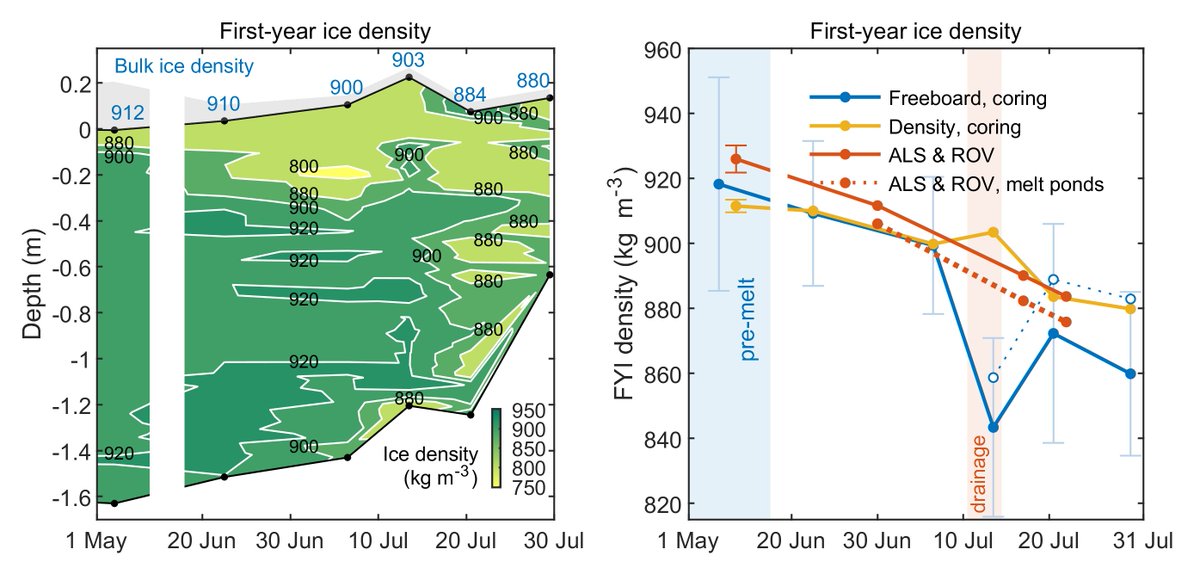
Our work with Odile Crabeck, @HutterNils and @jclandy about the rapid decrease of sea-ice density in summer leading to non-decreasing ice freeboard during 0.6 m ice thickness loss:
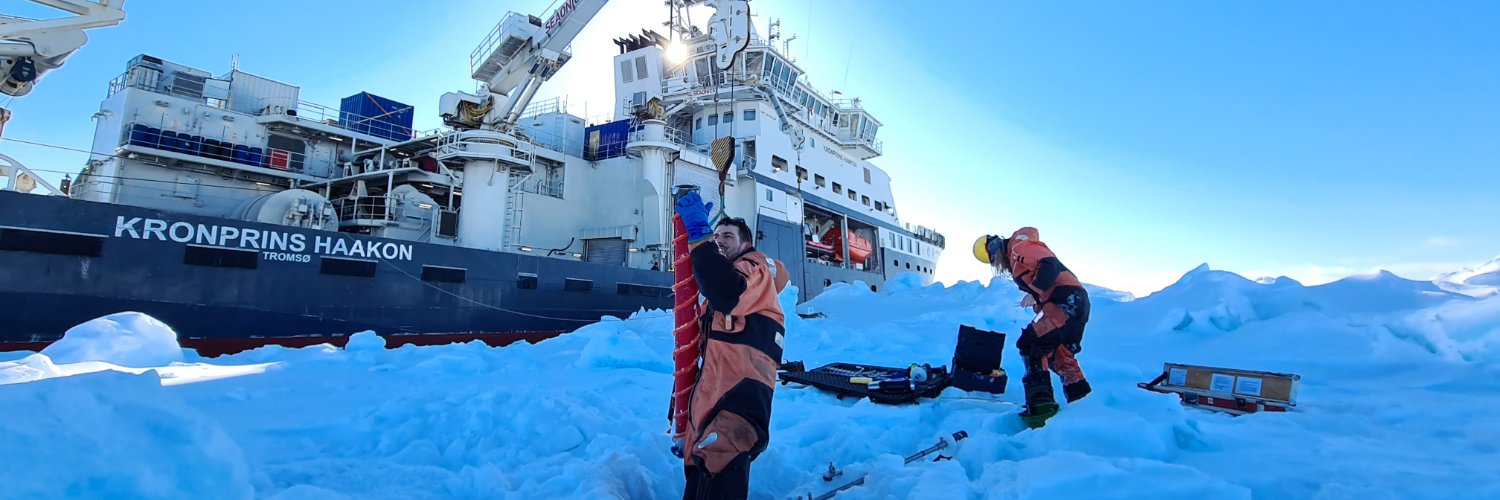
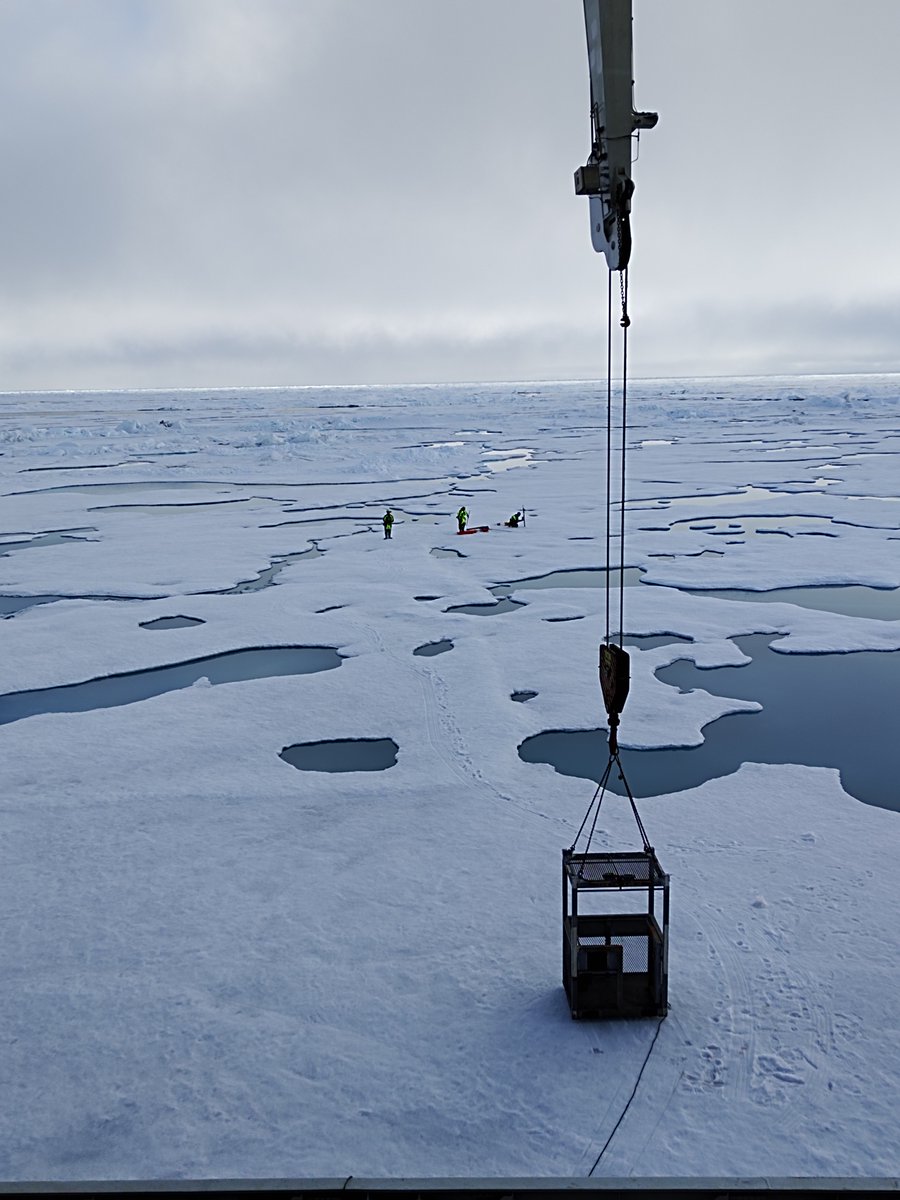
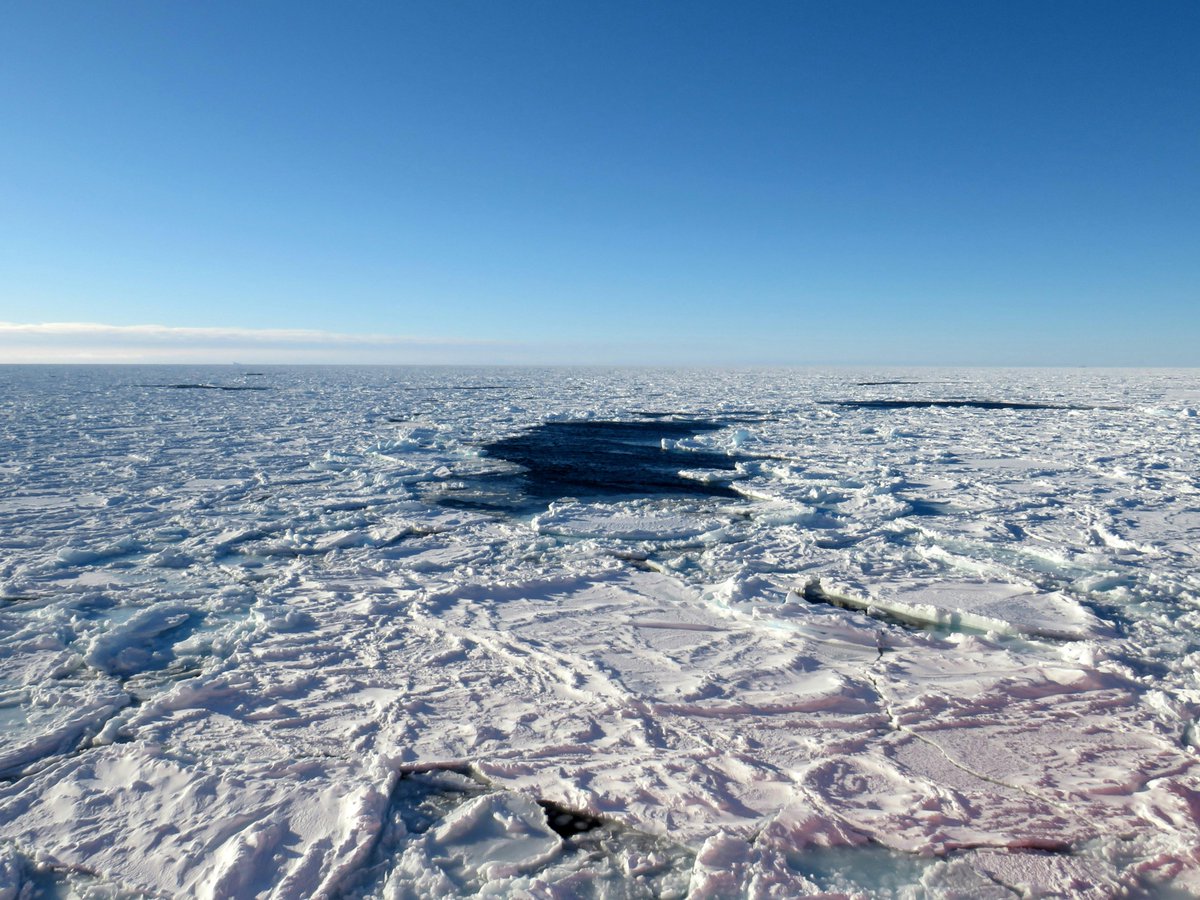
At 87.5N, 15.5W we made quick stop to deploy an @UiTNorgesarktis weather station and and an @arctic_passion ice mass balance buoy. Fingers crossed they survive the drift towards Fram Strait and gather some valuable data. #NPIArcticOceanCruise#SUDARCO#Arctic
Great work from Claude preparing and defending his thesis on a really challenging but important topic! Check out his paper on sources of ku-band radar backscatter over snow covered sea ice https://t.co/ZtVnpjzo26
☀️🧊 Great news! 🧊☀️ Cryo-TEMPO gets a new Summer Sea Ice product!
#CryoSat’s remarkable 1⃣4⃣-year record of global ice and sea levels got another upgrade 📈
☀️ Summer sea ice
🇦🇶 Southern Ocean data in Winter Sea Ice product
⏰ Near-real time functionality
🗺️ Extended coverage for Coastal Oceans & Inland Waters
➕more!
👉https://t.co/g1jglB3fch
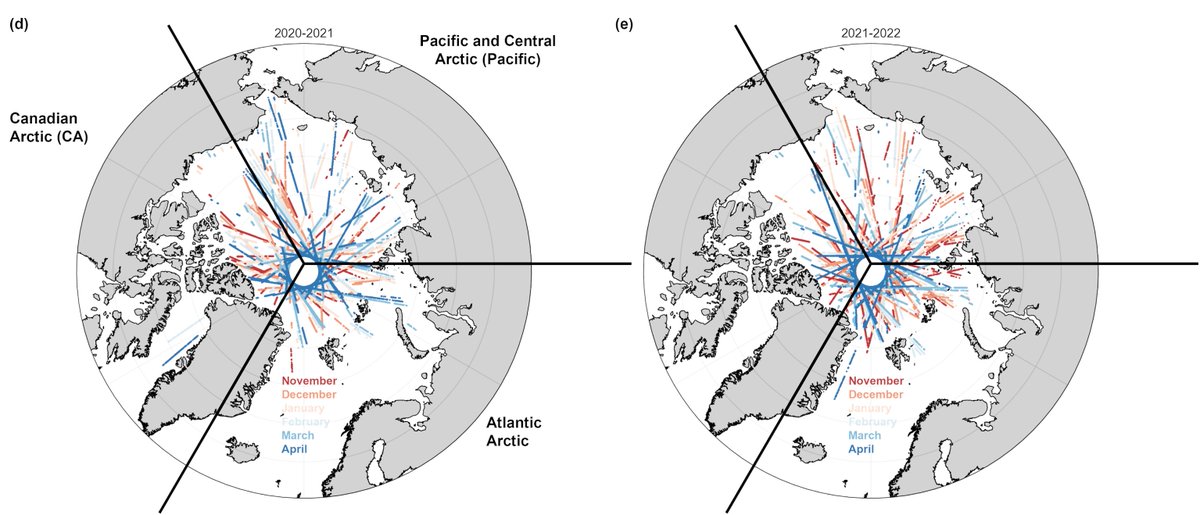
❗️❗️❗️Are you as excited about the upcoming #ESA#CRISTAL mission and estimating snow depth from dual-frequency altimetry along the orbits as us? We've evaluated this possiblity - albeit from laser and radar - from Arctic #CRYO2ICE orbits for 2020-2022! ➡️https://t.co/Jfgehu4nSm
Sea ice thickness estimates derived from #CryoSat measurements are used in the @metoffice global ocean–sea ice forecasting system 🌊🧊🗺️🔮
A new @ESSOpenArchive preprint tests the sensitivity of short-range forecasts to the snow depth, radar freeboard product and assumed radar penetration through the snowpack
🗞️ @CPOM_news @carmenjulianab @JulienneStroeve@jclandy@micheltsamados
🔗https://t.co/5tUsuhwkn3
📉 #Arctic sea ice is declining due to #GlobalWarming
🔮 Accurate forecasting of sea ice is important to understand impact of changes
🆕 A new preprint uses #CryoSat summer sea ice data to reduce short term forecast error & benefit long-term forecasts
👉https://t.co/SgR905Tk23
Anne Braakmann-Folgmann @UiTNorgesarktis and @DavidBrockley & Lin Gilbert at @MSSLSpaceLab have been working hard to prepare for a NEAR REAL TIME @esa_cryosat summer sea ice freeboard dataset to support such forecasting applications 🧊🛰 Out this summer!!