London architecture and history never fail to amaze me
What do you mean there's a perfectly straight road that goes from outer London right up to Hyde Park
Announcing Amazon S3 Files.
The first and only cloud object store with fully-featured, high-performance file system access.
Learn more here. https://t.co/rNuWa5Rsi2
Let me explain exactly why Apple still uses drag-to-install in 2026, because the joke here accidentally proves Apple right.
A macOS .app is a single self-contained folder disguised as a file. Every dependency, every framework, every resource lives inside it. Drag it to Applications, it works. Drag it to Trash, it's gone. No registry entries. No leftover DLLs. No uninstaller that misses half the files.
Windows installers scatter fragments across Program Files, AppData, the registry, system32, and a dozen temp directories. Uninstalling a Windows app is an archaeological dig. Five years later you're still finding config files from software you forgot you owned.
Linux is worse. Dependency hell is so common they named it. Entire package managers exist to solve the problem of "I installed something and now nothing else works." Flatpak and Snap were invented specifically to copy what macOS bundles already did natively.
The macOS bundle architecture came from NeXTSTEP in 1989. Steve Jobs brought it to OS X in 2001. The core design hasn't changed because the core design was correct. An app is a folder. Installation is a copy. Removal is a delete. Three operations that map perfectly to how humans already think about files.
The drag-to-install window with the arrow isn't lazy UX. It's the entire thesis of the system made visible. You are literally just moving a folder. There is no "installation" step because there's nothing to install. The app is already complete.
Every other OS eventually tried to get here. Windows got MSIX. Linux got Flatpak. Mobile figured it out from day one because phones shipped after Apple proved the model. The pattern everyone else converged toward is the pattern this tweet is calling outdated.
The funniest part: the app being dragged in that screenshot is Claude. An AI that can write code, analyze documents, and reason about complex systems. And the most advanced step in getting it onto your machine is holding down a mouse button and moving your wrist two inches to the right.
That's not a design failure. That's a 37-year-old architecture so good that the most sophisticated software on earth still ships inside it.
@BarryPierce Maughan Library. Part of the King's College London campus. A beautiful building with an abundance of quiet study space. Not sure visitors can visit though
Finance types worship at the altar of the Bloomberg terminal. So when AI evangelists recently declared it “cooked,” it was war. 🔗 https://t.co/TN9QE6teUt
Good piece on Bloomberg Intelligence and for those with HELIUM exposure.
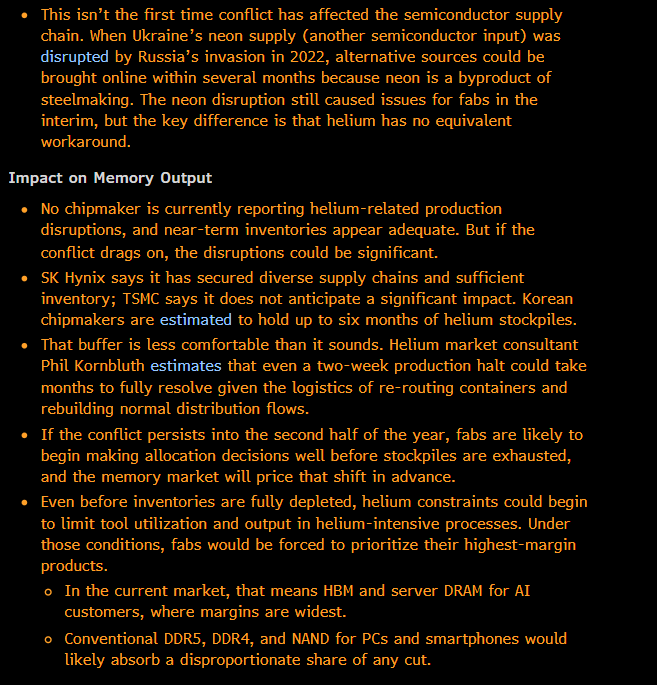
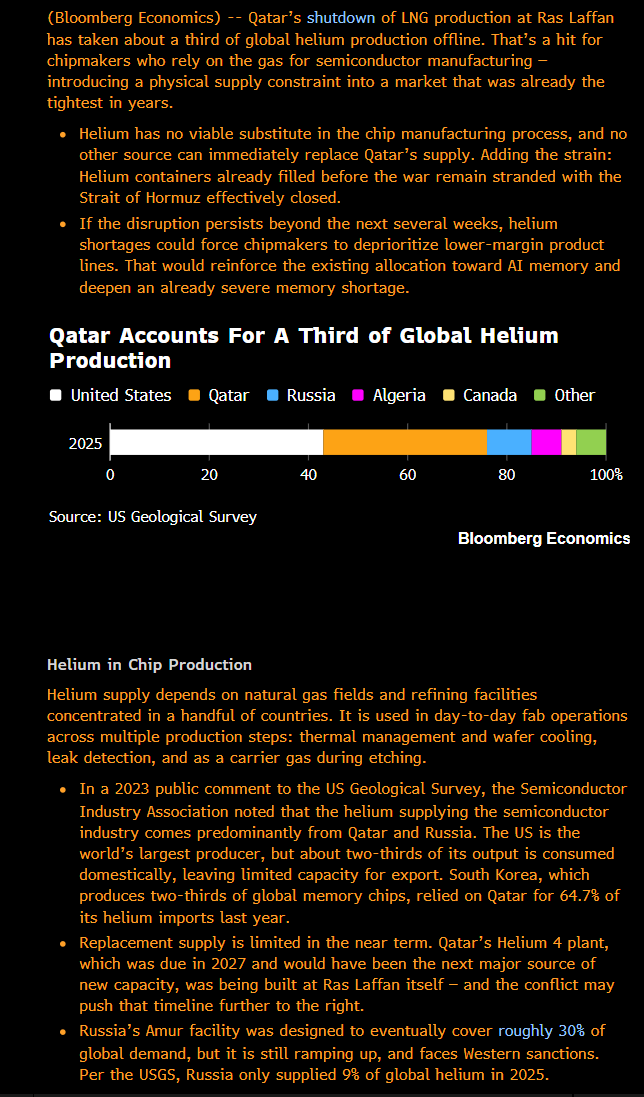
• Qatar’s shutdown of LNG production has taken about a third of global helium production offline, affecting chipmakers who rely on helium for semiconductor manufacturing.
• Helium has no viable substitute in the chip manufacturing process, and no other source can immediately replace Qatar's supply, with helium containers already filled before the war remaining stranded
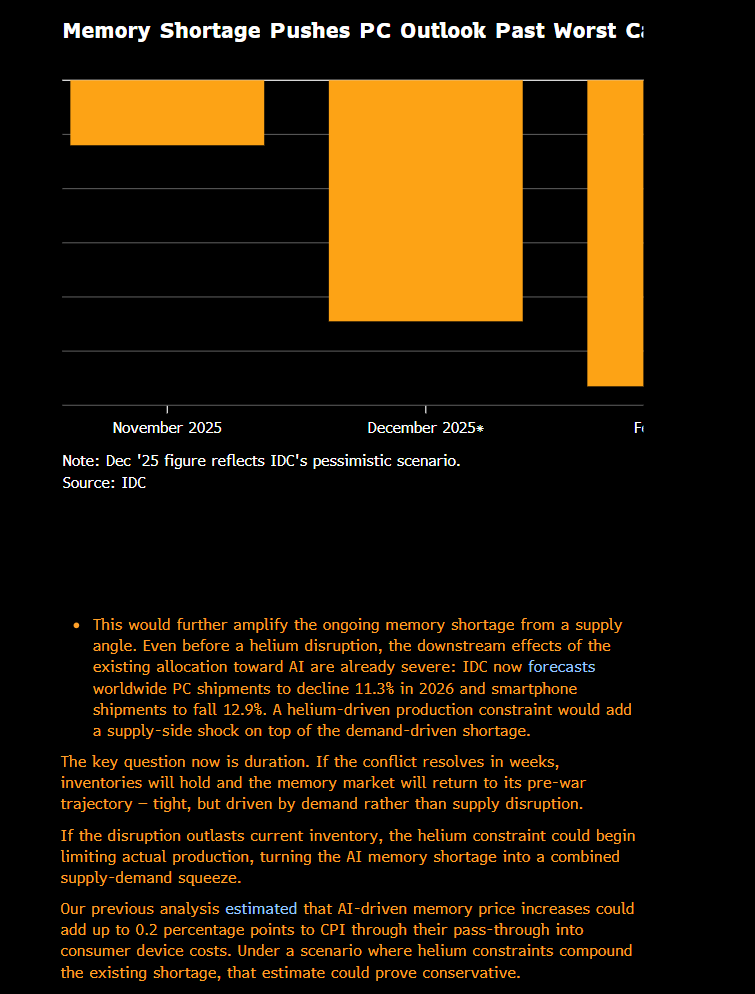
• If the disruption persists, helium shortages could force chipmakers to deprioritise lower-margin product lines, reinforcing the existing allocation toward AI memory and deepening an already severe memory shortage