This was a long time, quietly and patiently, in the works. Kinda can't believe that it's out, but it's ready, and we are ready to help develop the practice of responsibly building the social internet. https://t.co/1Alvb5472l
For vetted academic and civil society #researchers, obtaining access to #platform data under the #DSA can be hard – but understanding and using those complex data once they're available is even harder.
Our new report "Platform #Datasets: Challenges, Insights, and Examples for Researchers under #Article40 of the DSA" by @jeff4llen@MattMotyl@GurleySpencer aims to equip researchers with the understanding + tools necessary to best utilize their #dataaccess for the public good.
Specifically, the report shows:
✔️ What data #VLOPSEs collect, use, and store
✔️ How those data are structured
✔️ How to query such data
✔️ What specific variables are theoretically available via VLOPSE #APIs
✔️ How those variables may map to delegated harms
👉 Read more and please share this new resource with researchers in your network: https://t.co/9bHmrNKKhy
IST also co-hosted a happy hour with @Integrity_Inst on the sidelines of the conference, bringing together T&S practitioners for a fun night of sharing takeaways from the conference and discussing our ongoing projects. Thanks to all who joined us!
Are you a Trust & Safety researcher, academic, or professional attending @stanfordio’s Trust and Safety Research Conference? Join IST and @Integrity_Inst for a happy hour this Thursday, September 26, from 7-9pm at @barebottle in Menlo Park. We hope to see you there!
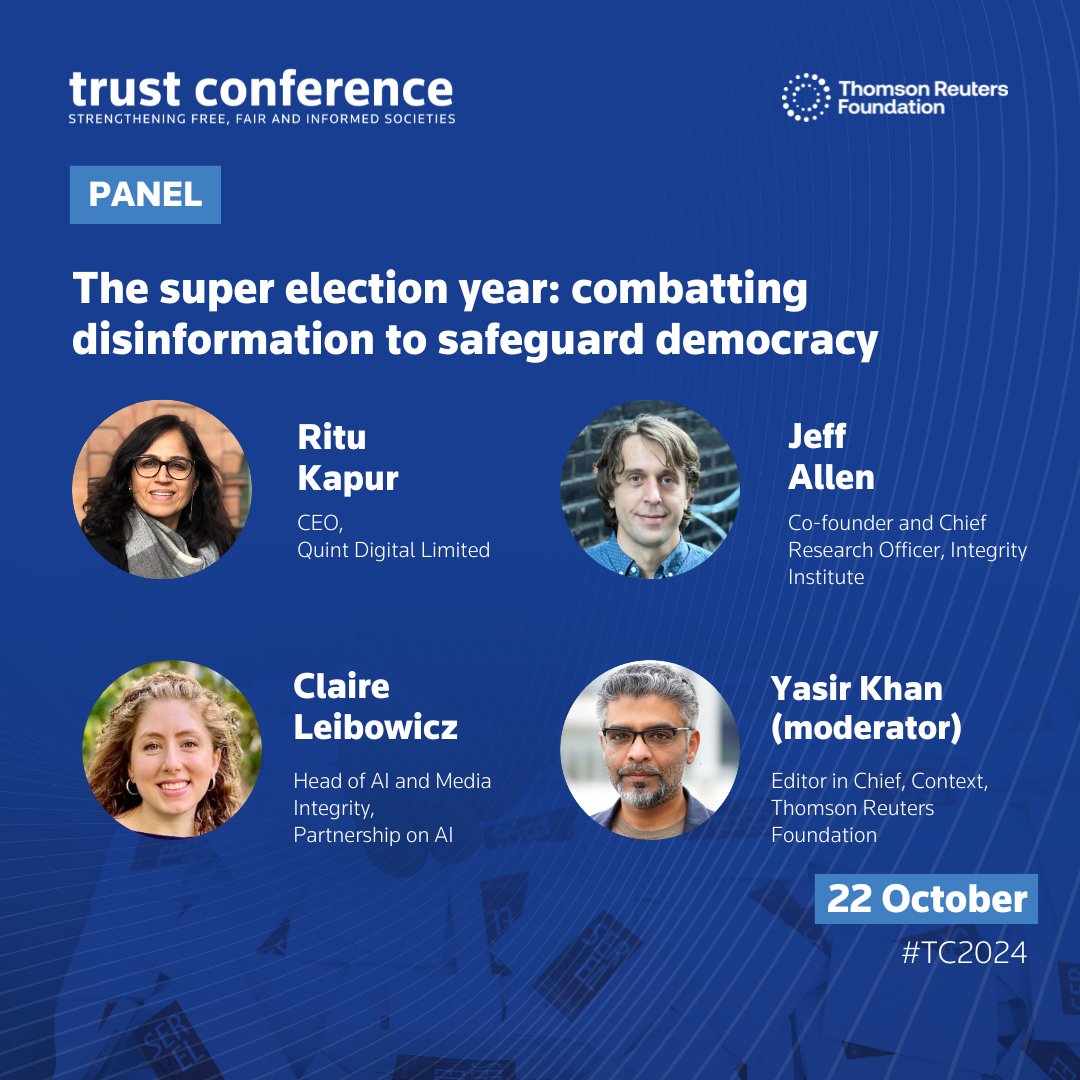
🗳️ Countries representing nearly half of the world’s population will hold elections this year. But how can we combat disinformation to maintain electoral integrity and restore democracy?
Register for #TC2024 to hear experts share their thoughts. ⤵️ https://t.co/Z6NBnhoN6K
IST’s Chief Strategy Officer @meganstifel has joined @Integrity_Inst as a board member! @Integrity_Inst focuses on a critical element of digital sustainability: advancing the theory and practice of protecting the social internet. Congratulations Megan!
https://t.co/QHmVZahHtn
It was a pleasure to formally launch the Transparency Initiatives Portal last week alongside the @Integrity_Inst's excellent new overview resource for online social platform transparency.
If you missed the event, you can watch a recording here: https://t.co/sjd9zl8D8R
Such an amazing panel, and useful live thread. Thanks @Integrity_Inst ! We'll be following up with a live recording and summary document shortly. Check out the @AC_Transparency Transparency Initiatives Panel and the Integrity Institute's report below https://t.co/YcsncFi3Pm
2. Optimising for values other than “engagement”
Platforms algorithms should prioritise relevance and credibility of the recommended content, e.g.:
👉legitimate, credible, transparent sources
👉content appreciated by diverse users
#RecSys#VLOPs
While browsing the internet and using social apps, we all deserve to be *SAFE BY DEFAULT*.
It would take *5 tectonic changes* to improve the health of our digital spaces.
Number 1 should be adopted ASAP in order saveguard the upcoming #EUelections2024. 👇
https://t.co/SLlEDgPuKd
Exciting news: @Youtube's Jess Hemerly will join our online panel event with @Integrity_Inst on tech transparency this week, bringing insights from over a decade's experience in transparency reporting at @Google & @YouTube.
Register your spot now: https://t.co/NstgcLrfV3
In the newser this week, a look at where Americans get their voting information from the folks at @BPC_Bipartisan@statesunited and @Integrity_Inst. That, plus so much for election news and information: https://t.co/pgngurSUvt
An important new poll out from @BPC_Bipartisan, @Integrity_Inst, and @statesunited conducted by @MorningConsult looking at where Americans turn for election-related information.
https://t.co/czv5qElWYT
"Violating content classifiers are always backwards looking, only trained on the harms that have already existed long enough for the platform to detect them, label them as violating, and retrain the classifier" https://t.co/0aArRj4T3C #ethics#socialmedia#contentmoderation#tech
This. This is why endless discussions of content moderation and platform "harms" will not be sufficient. Without a positive vision for what a platform *should* do, it will always end up doing the wrong thing.
https://t.co/J4nPO2zrAY
Everyone has heard that there are serious problems with optimizing for engagement. But what are the alternatives?
New paper: we gathered folks from eight platforms for an off-the-record chat to share best practices -- and document them from public sources.
https://t.co/atM0kNurec
So, while I do think it is for the best that Instagram disable search for sensitive topics, given the current state of it, I am still sad and disappointed. Instagram could be a useful tool for people recovering from mental disorders. But we won't see that Instagram anytime soon.
Why is Instagram search so much more harmful than Google search?
New article from me on Instagram's decision to completely block searches for sensitive topics, on the @Integrity_Inst blog.
https://t.co/uaLRR7O34k
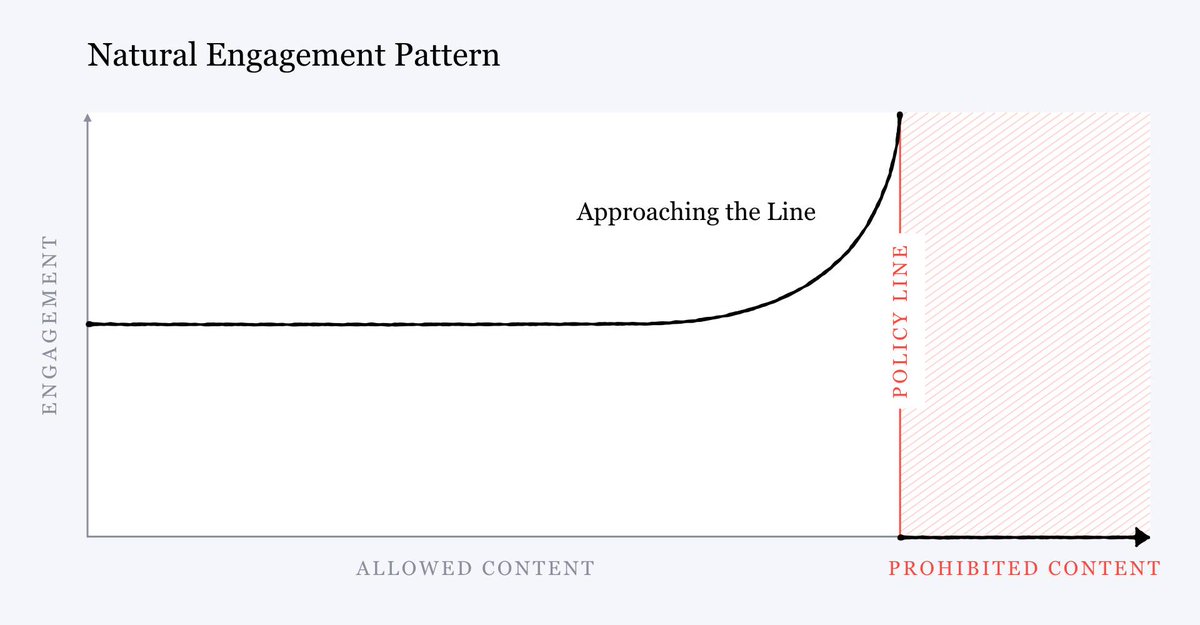
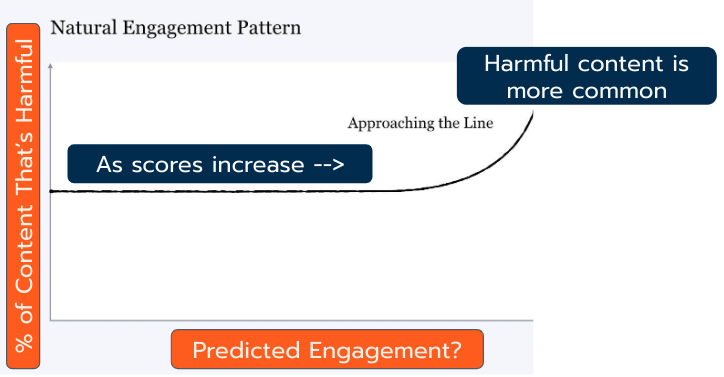
This all traces back to Instagram's heavy reliance on engagement based ranking. Engagement based ranking is always bad, but using it for searches on sensitive topics is truly insane. It's very easy to show how engagement based ranking will inevitably amplify harmful content.