JRR Tolkien is one of the most celebrated writers of the 20th century. Next spring we'll be dedicating a new memorial to him in Poets' Corner, close to monuments to other literary greats including his friend CS Lewis.
Known to millions around the world as the author of The Lord of The Rings and The Hobbit, Tolkien spent most of his life as a distinguished academic at Oxford University, where he taught Old and Middle English, and Old Norse. Outside his academic life he created fantasy books, children's stories, poetry and illustrations, as well as inventing languages and alphabets.
You don't have to embrace the language of your time just because it is the language of your time. If a term makes no sense to you then you have a perfect right to reject it.
One of the local wineries is starting a renfaire today. Looking forward to seeing what they do with it. My one previous experience of a renfaire was underwhelming.
This month is the 1-yr. "relaunch" anniversary of Woolworth's luncheonette counter in Bakersfield... the last of its kind in the US. Opened for decades after WWII, it had closed along with others. Can't get a 25 cent malt anymore but the one I had was awesome & place was packed!
One of the great misconceptions about medieval churches is that they were austere worlds of bare stone;
they were anything but.
These extraordinary columns in the church of Sainte-Radegonde in Poitiers date largely from c.1250–1300 and preserve exceptionally rare traces of the colour that once saturated the medieval sacred world. Their heraldic decoration appears to represent local lords and benefactors whose earthly identities were quite literally incorporated into the fabric of the church and that is profoundly Catholic!
The medieval church building was not conceived merely as an auditorium in which worship happened. It was both catechesis in stone and an image of redeemed creation: in an age when books were precious and literacy far from universal, colour, sculpture, stained glass, saints and biblical scenes taught the faith to the eye. The church itself became a kind of visual theology, gathering earth and heaven together and ordering the material world towards the worship of God.
Christianity did not demand the abandonment of material things, because at its heart stands the astonishing claim that the Word became flesh. Beauty, therefore, was not incidental to worship. Matter itself (stone, wood, pigment, glass, gold) could be enlisted in the proclamation of the Gospel. That makes the iconoclastic impulse of the Reformation particularly significant: when images were smashed, statues broken, walls whitewashed and shrines destroyed, something more than medieval decoration disappeared. An older Catholic sacramental imagination, in which the material world could become a sign pointing beyond itself to divine realities, was being displaced by a very different conception of sacred space.
What survives at Sainte-Radegonde gives us a tantalising glimpse of how dazzling the churches of medieval Christendom must once have been!!
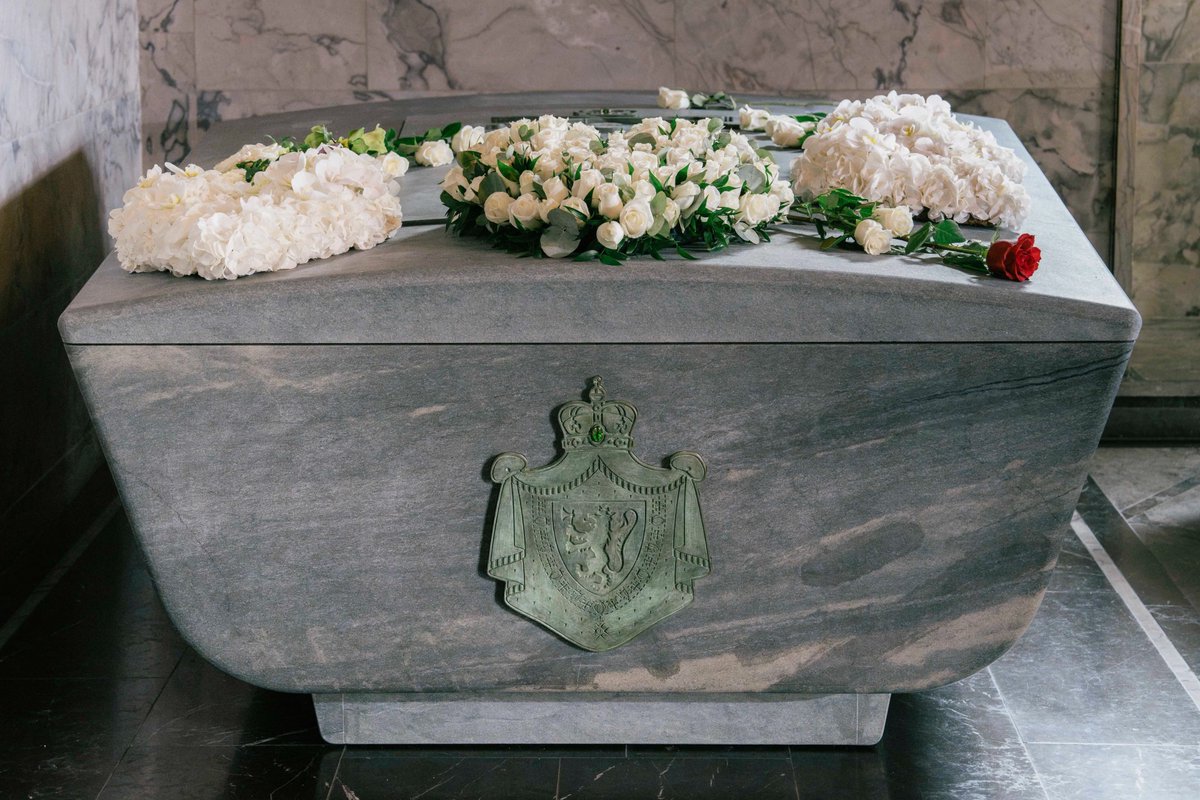
🇳🇴 King Harald’s Sarcophagus in the Royal Mausoleum at Akershus Fortress.
The new Sarcophagus has been designed as a vessel with a rounded bottom — inspired by King Harald’s close relationship with the sea. The hull protects what is on board & carries it safely onward. The motif also draws a line back in history to earlier ship burials, where the ship carried the deceased on a final journey to another realm.
The material used for the Sarcophagus is olivine, a rock formed in the Earth’s interior & pushed forward by the forces that have shaped Norway.
Just like King Harald’s life at sea, Queen Sonja’s relationship with Norwegian nature has been an important inspiration in the design of the Sarcophagus. Queen Sonja has gone on countless trips in the Norwegian countryside, on foot & on skis all over the country. It was therefore natural to choose Norwegian stone as the material for the joint Sarcophagus, & stone was chosen from Sunnmøre — an area where Queen Sonja has hiked often & knows very well.
The greenish olivine stone can absorb & bind CO2, which the designers have emphasised as a symbol of King Harald & Queen Sonja’s love for nature & care for future generations.
The joint Sarcophagus thus brings together what has been important to each of them into a common resting place.
New cat species discovered in over 100 years
Scientists have identified Leopardus tilcayo, a tiny wild cat found in Bolivia’s Yungas forests. The discovery began with a wildlife sanctuary reporting a “weird cat” and was later confirmed through genetic research
@Jebediah777@fitswimmer09@CedarsAndSaints There are more than 10000 saints, plus bodies from the catacombs that also count. The relics are usually only a few milimeters in size. Even an atheist like me can see it's quite possible.
@fitswimmer09@CedarsAndSaints There's a department at the Vatican that keeps a storage room full of relics since every altar has to contain one. Last I heard any priest can stop by or send a request. I knew a young priest who was amazed when they handed him a first class relic of his favorite saint.
In case you missed it, here's my article about historic magical (and religious) house protection.
Fire-starting demons; hag stones; evil-repelling plants; mystical markings; witch chimneys; Bibles under pillows & more!
Republished by @SmithsonianMag
https://t.co/XepJcYj79N
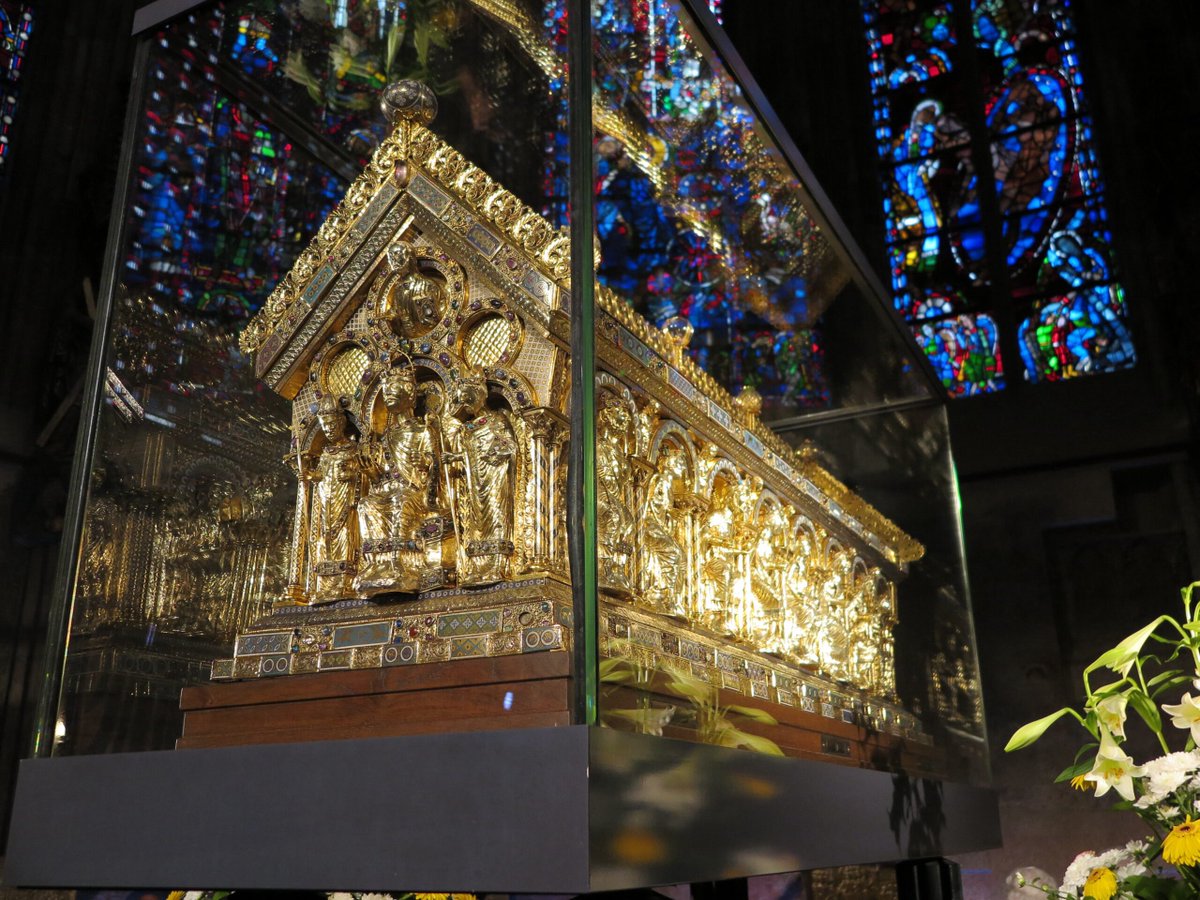
The tomb of Charlemagne in Aachen Cathedral. His remains were exhumed and studied in the 80’s and he was measured to have been at least 6 feet tall. Previous examinations of his remains in the 1800’s measured him to be as tall as 6’4″. Either way, with an average height of around 5’6″ in the 9th century, he was a man of tremendous stature.
I keep seeing variations on "Teachers warn that Gen Alpha can't read." Teaching them to read is a teacher's job. What they're doing is admitting that they're not doing their job and shifting the blame.