“Work hard to seem infallible and others will work to find our flaws. Admit our shortcomings and others will work to help us be infallible.” - Simon Sinek
We miss out on opportunities when we only ask what could go wrong. It's also worth asking what could go right.
Change carries risk: we might fail. But sticking to the status quo also brings risk: we might fail to grow.
It's better to test and learn than to never test at all.
Ninety percent of success can be boiled down to consistently taking the simple and obvious action for an uncommonly long period of time without convincing yourself that you're smarter than you are.
This #GivingTuesday, we're reaching out to you, our community, to help us fill 800 carts with nutritious food and household supplies. A gift of just $50 fills a cart and saves families $160. That makes a difference.
Let's fill these carts!
https://t.co/9mAeg2o0Ni
How to play the long game:
Don’t worry about being the best. Worry about being the best at getting better.
Don’t aim to be consistently great. Aim to be great at being consistent.
Ignore hacks, trends, and fads. Focus on nailing the basics over and over again.
Sleep at night.
“Cultural Moneyballism, in this light, sacrifices exuberance for the sake of formulaic symmetry. It sacrifices diversity for the sake of familiarity. It solves finite games at the expense of infinite games. Its genius dulls the rough edges of entertainment.” @DKThomp
"Like a lot of people of my generation, I spend a weird amount of time wondering why I don’t spend any amount of time watching baseball anymore," writes @DKThomp: https://t.co/FY8PoisXo7
We carry too much guilt about letting others down—and too little fear of letting ourselves down.
We don't fully control whether we live up to others' expectations. We do decide whether we meet our own.
The most important commitments to uphold are the ones you make to yourself.
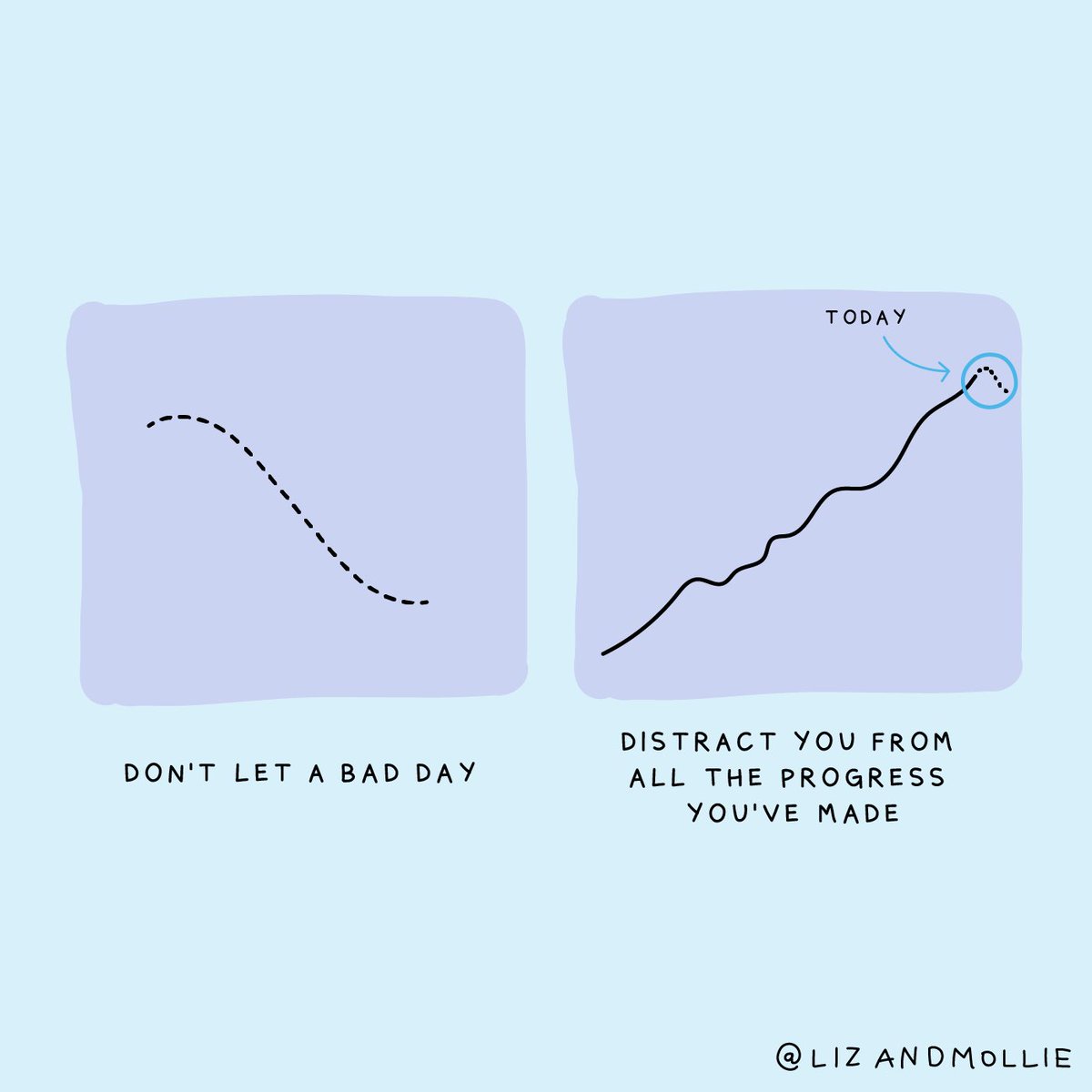
A common source of disappointment is recency bias: weighing the last week more heavily than the last year.
Zooming in on the immediate past magnifies slumps. Zooming out farther reveals upward slopes.
Progress is rarely visible at a snapshot in time. It unfolds over a lifetime.
The most undervalued skill of our time is the ability to write.
In an analog world, talking was the main currency of communication and connection. In a digital world, there's a growing premium on the capacity to convey thoughts in text.
The pen is mightier than the spoken word.
Expectations matter.
If you're running a marathon and expect it to feel easy at mile 20, you're in for a rude awakening. If you expect it to feel awful, you’ll be prepared to grind; perhaps on a good day you’ll even be pleasantly surprised.
This is true for all hard things:
Your worth is not defined by what you achieve or acquire. It’s a question of who you become and how you contribute to others.
Self-esteem should come from character, not success or status. The highest accomplishment is to be a person of generosity, curiosity, and integrity.
The roots of massive redwood trees only run 6 to 12 feet deep. Instead of deep, they grow out, extending hundreds of feet laterally, wrapping around the roots of their neighbors. They help each other stand firmly in the ground, even amidst storms.
This is a model for us, too.
The most practical skill in life is learning to do things when you don’t feel like doing them. Anyone can do it when it’s easy, but most people drop out the minute it gets hard.
"If you could go back in time one year, what would you do differently?"
A depressing question, because it's about black lines.
Instead, imagine yourself answering that question a year from now. You probably know many of the answers. And those lines are all still bright green.
Lasting progress is never straight up and to the right. It is up and down and left and right and sometimes static and sometimes intense. Play the long game and surround yourself with good people. Full stop.