Long story short, looks like a likely spillover from the O. longicaudatus rodent Argentina/Chile natural reservoir from a clade of Andes hantavirus that frequently infects humans.
alignments and trees for other to pick up the analysis available in the link above!
Andes Hantavirus analysis:
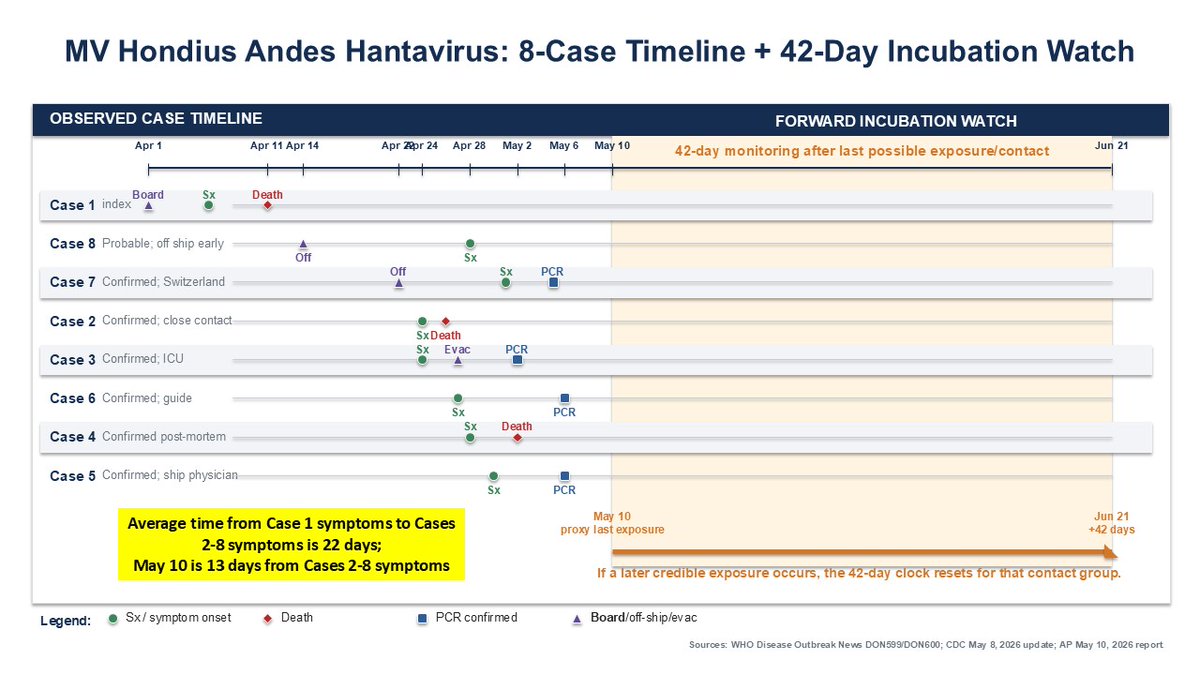
This chart suggests Cases 2-8 were all a single H-to-H jump from Case 1, since all of the incubation periods cluster at 22 days from Case 1 symptoms.
We are now 13 days from the 'mean' date of symptoms from Cases 2-8.
If there is to be a new generation of cases they should appear, on average, at about May 19 or 22 days from Gen 2.
Strict protocol would support a 42-day quarantine from last contact or about June 21st for all exposed individuals.
@votewillstancil @LongDesertTrain Sure it's possible. Right now it seems to have an immune advantage but likely a replication disadvantage.
The concern is that if it catches up on the replication end it could take off.
I learned yesterday that the fed gov’t is ending CDPH funding through “expanded ELC, Immunization and Vaccines for Children, Health Disparities Grant, and Respiratory Viral Network grants”
Ending Covid funding isn’t going to end the risk Covid poses to the public.
This is dumb.
@dfocosi@PeacockFlu@LongDesertTrain@theosanderson Have we observed actual transmission chains of molnupiravir-mutated sequences (I.e. on a tree)? Or have there primarily just been one-off sequences?
Maryland folks, I need another favor.
There is a person from Anne Arundel county that has been infected with SARS-CoV-2 for about 3 years (Delta infection).
They probably don’t even know they are infected, but they are shedding a ton of viral material in wastewater
1/
Much-needed data on the genetics of #longCOVID in a new preprint by @23andMeResearch - GWAS of #LongCOVID identified 3 loci pointing to immune and thrombo-inflammatory mechanisms 🔥 @ninaadsc
1) HLA-DQA1–HLA-DQB
2) ABO
3) BPTF–KPAN2–C17orf58
(1/)
https://t.co/0MUr9GbDiA
Happy gay day 2024 🌈
I know coming out is challenging for many people, but I hope that #NationalComingOutDay gives people the courage to come out like it did for me.
Go be gay and happy 🏳️🌈
Pseudovirus studies show ~equal Ab evasion & infectivity for KP.3 & other variants. So why is KP.3 dominant?
KP.3 can barely infect cells previous variants thrived in, but it's 5x better at infecting cells w/a different arrangement of ACE2+TMPRSS2.
See superb 🧵 below for more.
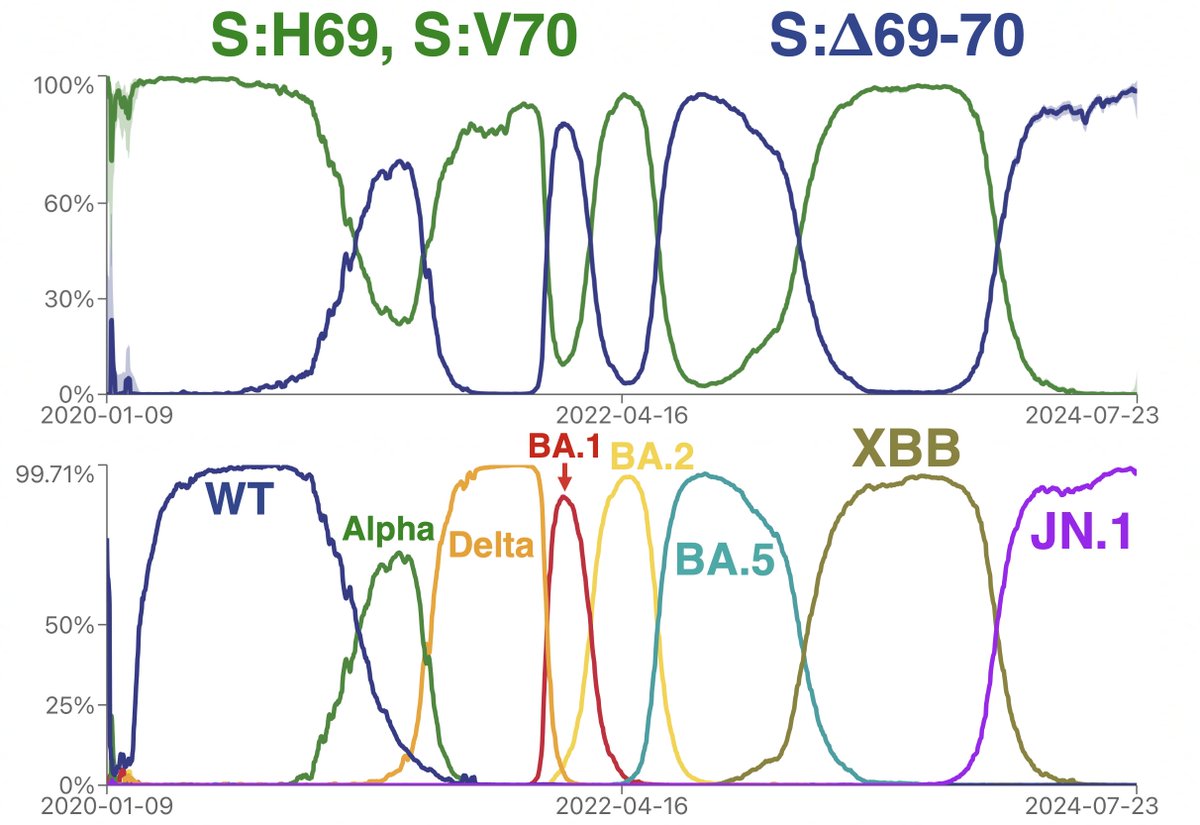
I'm too exhausted to elaborate on this today, but here's an updated CovSpectrum graph of the ∆69-70/H69,V70 pendulum swing, complete with the major variant in each wave.
This bizarre alternation remains a deep mystery, at least as far as I know. 1/3
PB2 Q591R: A basic amino acid at position 591 of PB2 can compensate for the lack of lysine at position 627 and confers efficient viral replication to pandemic H1N1 viruses in mammals.
ie., Q591R ~ E627K! 👀
https://t.co/IWgIyhwIC9
2/n
Congratulations to @RyderRahil and @EmilyAnne_Smith and all co-authors - great work reviewing sequence data for SARS-CoV-2 recombinants in California!! @VirusesMDPI
https://t.co/3rQ1KX6XzI
We’re seeing an uptick in COVID-19 in CA. Take steps to prevent viruses:
Stay home and test if you’re sick.
Seek treatments if you test positive for flu or COVID-19.
Consider masking indoors.
Wash your hands and cover your cough.
https://t.co/RoiHMSVH92
#SlowTheSpread
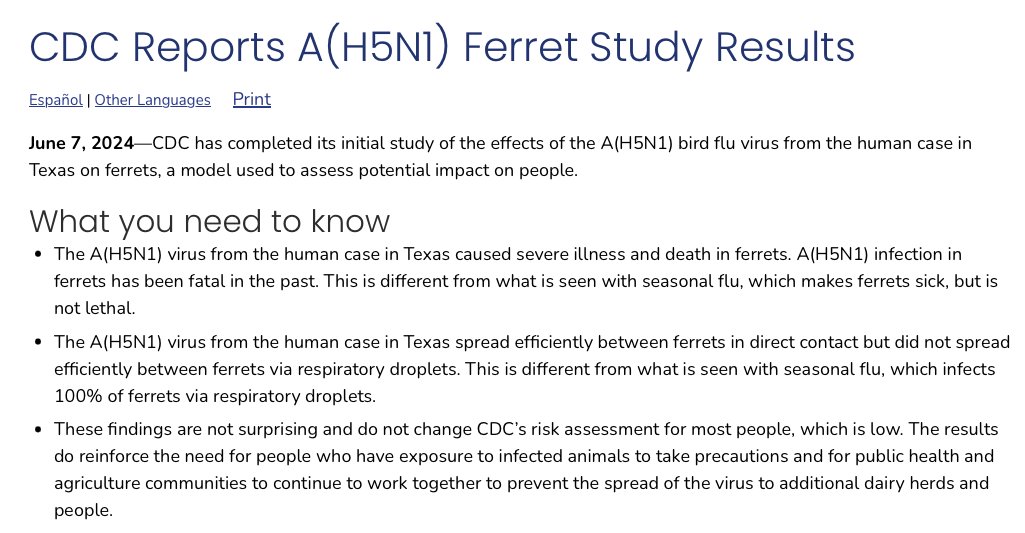
An important #H5N1 update from CDC:
"CDC has completed its initial study of the effects of the A(#H5N1) bird flu virus from the human case in Texas on ferrets, a model used to assess potential impact on people."
Caused severe illness/death in ferrets, consistent with prior experiments. Efficient transmission when ferrets in the same enclosure; poor transmission between ferrets via respiratory route.
https://t.co/XiWqh4YloP
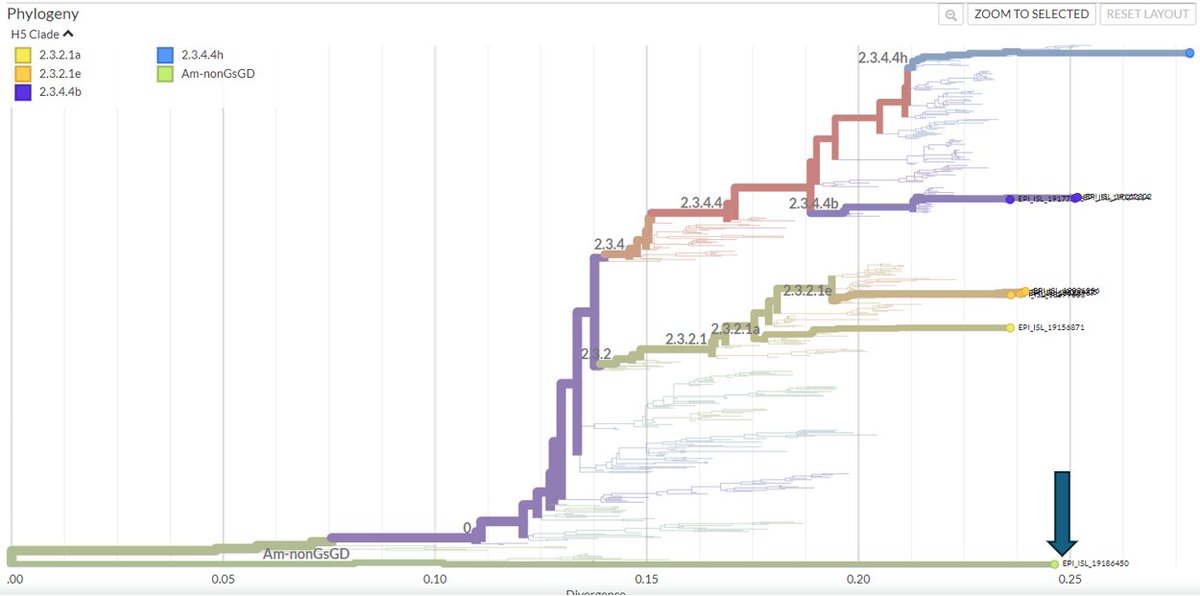
This Am-nonGsGd class (a mouthful, I know) is the same clade of H5N2 that’s previously been found in chickens in Mexico. Although it’s concerning that this was a fatal human case, it’s good to know that this isn’t the same HPAI we’re seeing in dairy cattle in the states.
Data from the human H5N2 case from Mexico are now available on GISAID. Here's an HA tree built using Nextclade, with all human H5 cases from GISAID highlighted. Unsurprisingly, this seq belongs to the Am-nonGsGd clade, and is very distinct from the dairy cattle outbreak in the US
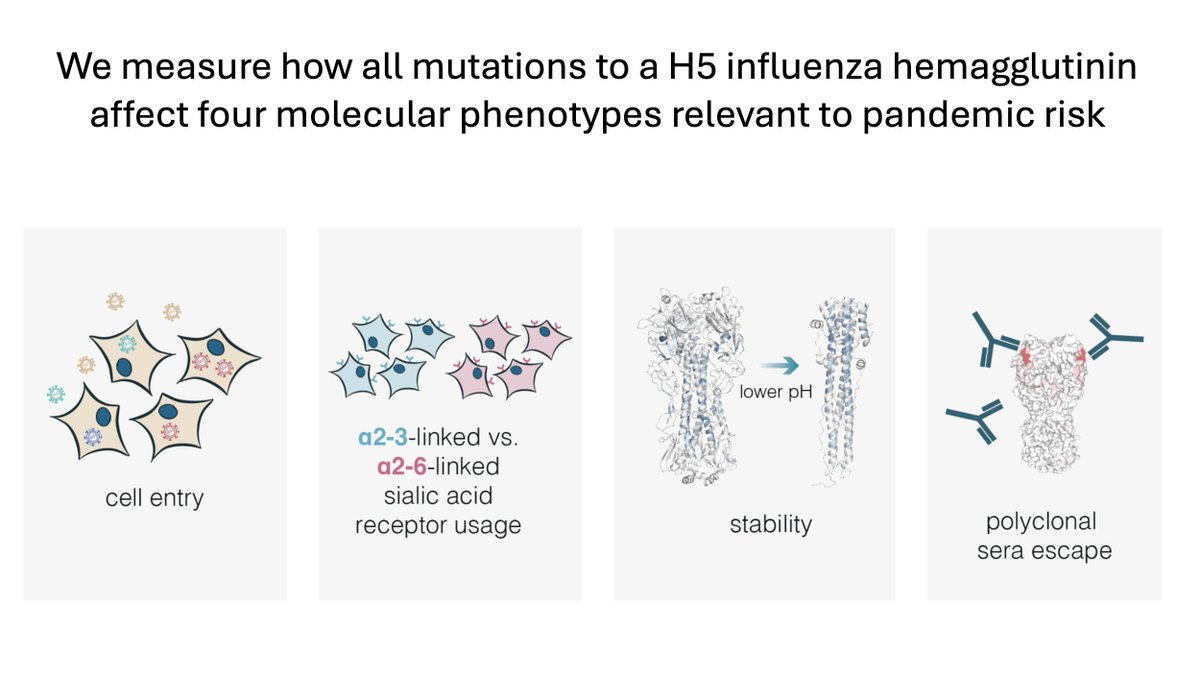
In new study led by @bdadonaite, we measure how all mutations to H5 influenza HA affect four molecular phenotypes relevant to pandemic risk:
https://t.co/QOjVTF4h9L
Results can inform surveillance of ongoing evolution of H5N1.
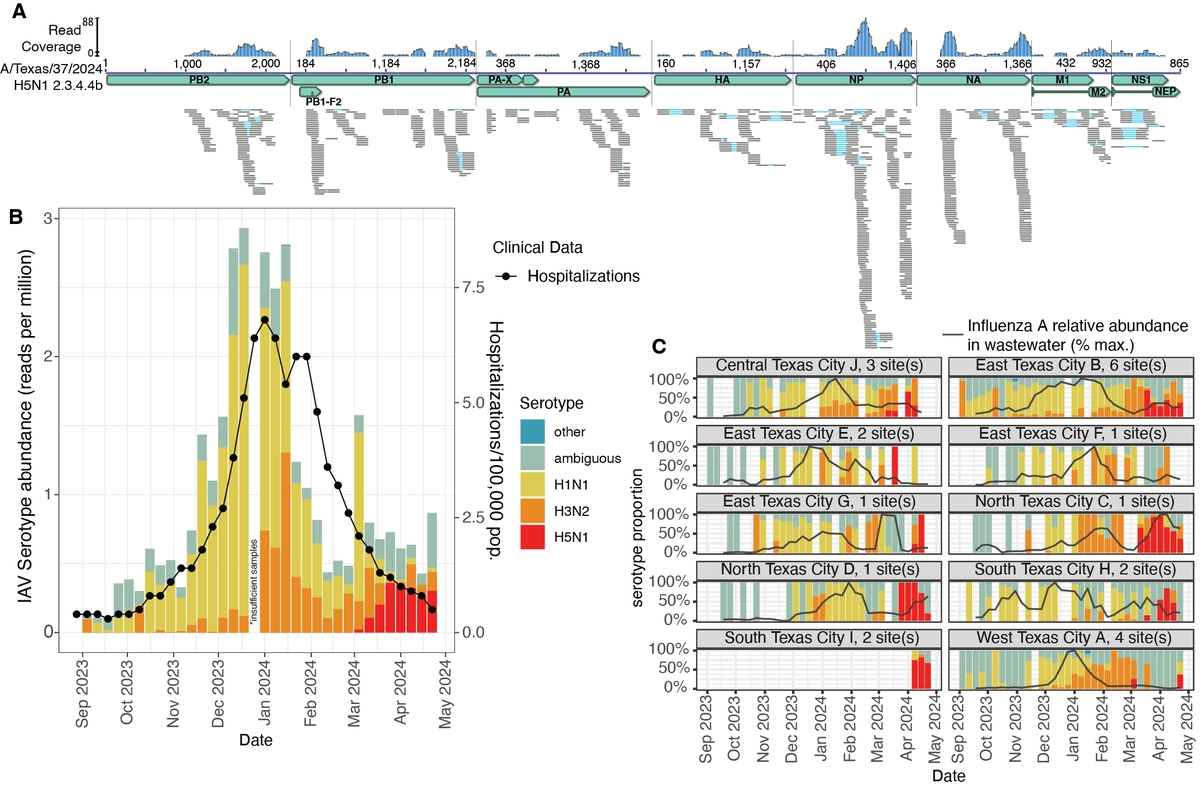
Many people are wondering how we can monitor this H5N1 situation. We sequence the whole virome from wastewater, and, well, H5N1 started showing up in our samples.
https://t.co/sQYffuVZGP
1/
@SolidEvidence I’ve been hearing a lot of the same — sometimes even more broadly about genomics. “How does that even help public health?” It’s frustrating.
4 years of a pandemic with however many new variants/waves, and people still don’t quite get it.
@LongDesertTrain@EmilyAnne_Smith@SolidEvidence There’s also a variety of terms used to refer to these infections that we could assign different definitions like time cutoffs etc for when they should be considered a chronic infection, persistent infection, or (my personal favorite) long-term infection.