Elon Musk just told a story that should terrify every AI company on Earth.
His son Saxon is autistic.
Saxon couldn’t understand why the family went to restaurants.
You can get the same food delivered.
You can call your friends over.
You can eat better at home for half the price.
So why go?
Musk: “He had an epiphany and said, ‘Oh, the reason people go to restaurants is to hang out with strangers.’”
A kid who takes the world literally just decoded something the rest of us never thought to question.
We like being around people we’ll never know.
Look at what we already built.
Delivery apps so you never wait in line.
Remote work so you never share an office.
Self-checkout so you never talk to a cashier.
Every innovation of the last 20 years was a bet against human proximity.
Every one paid off.
Until it didn’t.
Loneliness is now a public health emergency.
Depression has doubled since the smartphone.
The average American has fewer close friends than any generation in history.
We didn’t remove friction.
We removed the thing friction was hiding.
Now look at what’s coming.
AI agents that handle your emails.
AI companions that replace your conversations.
AI assistants that make every human interaction optional.
Same playbook. Same bet.
Except this time we’re not engineering out strangers.
We’re engineering out humans entirely.
The coffee shop where nobody knows your name.
The subway where no one speaks.
The restaurant where you’ll never see that couple again.
Those aren’t failed connections.
They’re the background radiation of belonging.
We don’t just need people who know us.
We need to exist in rooms full of people who don’t.
That’s what a kid understood at a dinner table that billion-dollar companies still can’t grasp in a boardroom.
We spent 20 years building a world you never have to show up to.
AI is about to finish the job.
And nothing it builds will ever replicate sitting in a room full of strangers and not feeling alone.
Joe Rogan: "74% of Americans are vitamin D deficient. Doctors are seeing patients with literally undetectable levels. They're depressed, sick, falling apart. Eating cheeseburgers, never seeing the sun."
🧠 An ADHD brain is not working improperly. It's wired differently.
A growing body od research shows ADHD comes with many overlooked advantages: an intense, impulsive drive to seek out new information — what is called "hypercuriosity."
Instead of viewing ADHD only as a disorder marked by distraction and impulsiveness, researchers are beginning to explore how those same traits might actually fuel curiosity and creativity.
Rather than being easily distracted, people with ADHD might be neurologically tuned to chase curiosity and uncover unexpected links. Studies suggest this curiosity and impulsivity share similar brain pathways, both light up reward centers in the brain, much like hunger or craving chocolate.
This drive to explore could have been useful in our evolutionary past, especially in unpredictable environments where risk-takers had an edge. In modern settings, though, it can be seen as disruptive, especially in classrooms and offices where sitting still and following rules is the norm.
Research shows people with ADHD often act like "busybodies" online, bouncing from topic to topic, but once they find something that excites them, they can hyperfocus like laser-focused "hunters." While this pattern seems messy, it often leads to creative thinking. The challenge is that modern education and work settings often try to suppress these behaviors with structure or medication, which may also suppress curiosity. That could mean we’re losing out on unique ways of thinking.
Engaging in creative, skill-based activities like dance, music, visual arts, or gaming can reduce your brain's biological age by ~6 years.
Researchers measured the 'brain age gap' (the difference between predicted and actual brain age) and found that creative experts had significantly younger brains.
This expertise translates to greater neural connectivity in brain regions responsible for motor control, precise timing, mental imagery, and salience detection. They also had more efficient local and global neural networks, which is a signature of robust cognitive function.
Healthy brain aging isn't just about nutrition and exercise protocols. Deliberately challenging your brain with creative and skill-intensive pursuits profoundly enhances neural resilience and longevity.
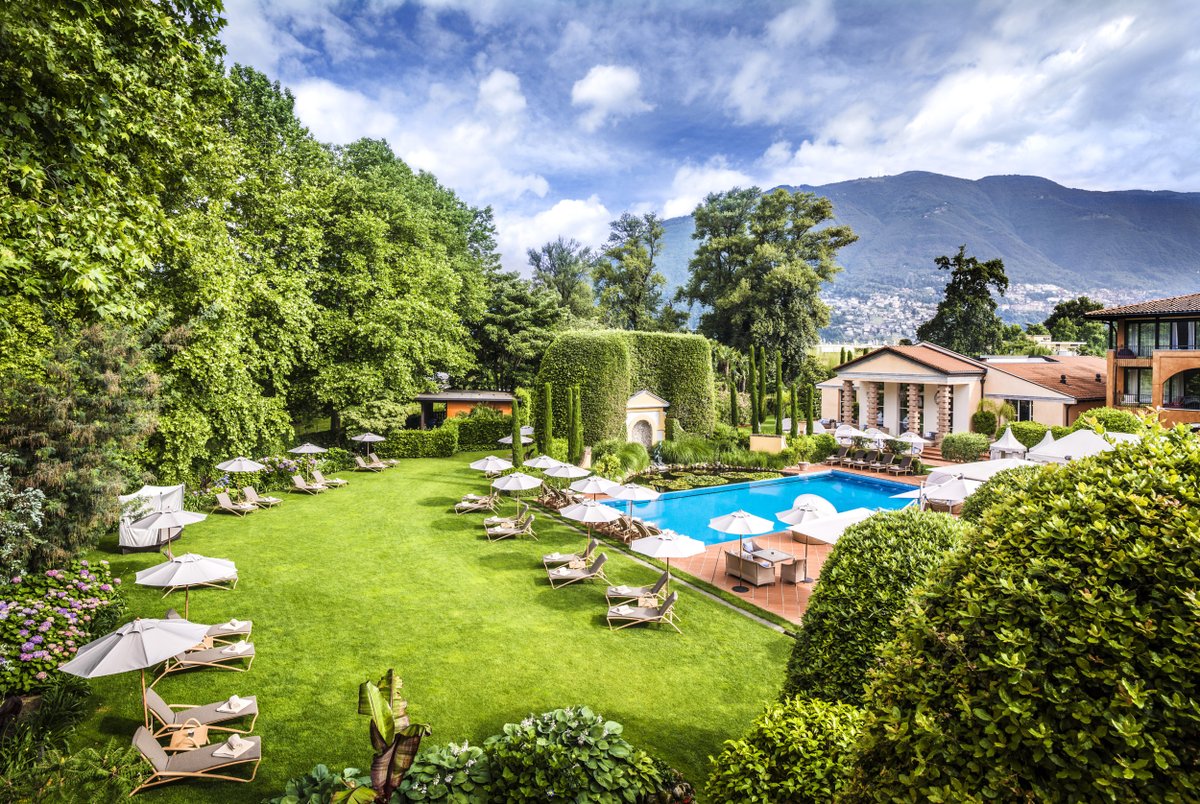
Explore our diverse range of #hotels and #accommodations, tailored to suit your every need. From cozy #chalets to #luxury resorts, create unforgettable moments in the heart of Switzerland: https://t.co/nS4JqRB56B
📍 Hotel Giardino, Ascona @ticinoturismo