The most successful early-career researchers often rely on a network of mentors who each have different roles — from advising on research and grants to making professional introductions and providing emotional support
https://t.co/QpXeDxoufD
What’s the number one factor that makes PhD students happier?
𝐈𝐭’𝐬 𝐠𝐨𝐨𝐝 𝐬𝐮𝐩𝐞𝐫𝐯𝐢𝐬𝐢𝐨𝐧. 👇
That’s what stood out to me in Nature’s latest global PhD survey. Students who met with their supervisors for at least one hour a week were significantly more satisfied with their PhD experience.
Not just because of research progress, but because they felt supported as people, not just as research machines.
⭐In countries like Brazil and Australia, where students reported the highest satisfaction, supervision was more collaborative and grounded in mutual respect.
⭐In India, most PhD students spend at least an hour weekly with their supervisor.
⭐But in the UK and Germany, over 60% of students see their supervisor less than one hour per week.
It’s not surprising then that one of the most common pieces of advice from PhD students was:
"𝐅𝐢𝐧𝐝 𝐭𝐡𝐞 𝐫𝐢𝐠𝐡𝐭 𝐬𝐮𝐩𝐞𝐫𝐯𝐢𝐬𝐨𝐫 𝐨𝐫 𝐦𝐞𝐧𝐭𝐨𝐫."
𝐀 𝐟𝐞𝐰 𝐭𝐡𝐨𝐮𝐠𝐡𝐭𝐬 𝐟𝐨𝐫 𝐚𝐧𝐲𝐨𝐧𝐞 𝐬𝐮𝐩𝐞𝐫𝐯𝐢𝐬𝐢𝐧𝐠 𝐨𝐫 𝐩𝐥𝐚𝐧𝐧𝐢𝐧𝐠 𝐭𝐨:
👍 An hour a week is more powerful than you think.
👍You don’t need to have all the answers, just show up consistently.
👍Even short check-ins can prevent small frustrations from becoming major problems.
𝐀 𝐟𝐞𝐰 𝐭𝐡𝐨𝐮𝐠𝐡𝐭𝐬 𝐟𝐨𝐫 𝐚𝐧𝐲𝐨𝐧𝐞 𝐜𝐮𝐫𝐫𝐞𝐧𝐭𝐥𝐲 𝐝𝐨𝐢𝐧𝐠 𝐚 𝐏𝐡𝐃:
👍You deserve to be supported, not just supervised.
👍You are not asking for too much by wanting mentorship.
👍Your supervisor matters more than your research topic. Choose wisely, if you still can.
Good supervision shouldn't be a luxury.
It should be the foundation!
And in the long run, it benefits everyone, including the students, the research, and the entire academic ecosystem.
Have you had a supervisor who made a difference during your PhD?
Would love to hear what helped you feel supported.
I hope this helps.
Btw...
Be sure to check out our podcast on YouTube, where we share...
✅ Helpful advice for in and outside of academia
✅ Useful info about AI tools in academia
✅ + advice to make your research life less of a struggle
👉 You can find us on YouTube as The Struggling Scientists
To all the smart finance experts in government, an FYI.
50% reduction in federal science funding would reduce the US GDP by 8%.
The housing economy crash in 2008 dropped US GDP by 3.8%.
It's the economy stupid.
🧵 You’re not behind in bioinformatics. The field just evolves faster than anyone can follow.
1/ It’s not you.
Bioinformatics evolves too fast.
And not just from new algorithms—
But from how fast technology itself changes.
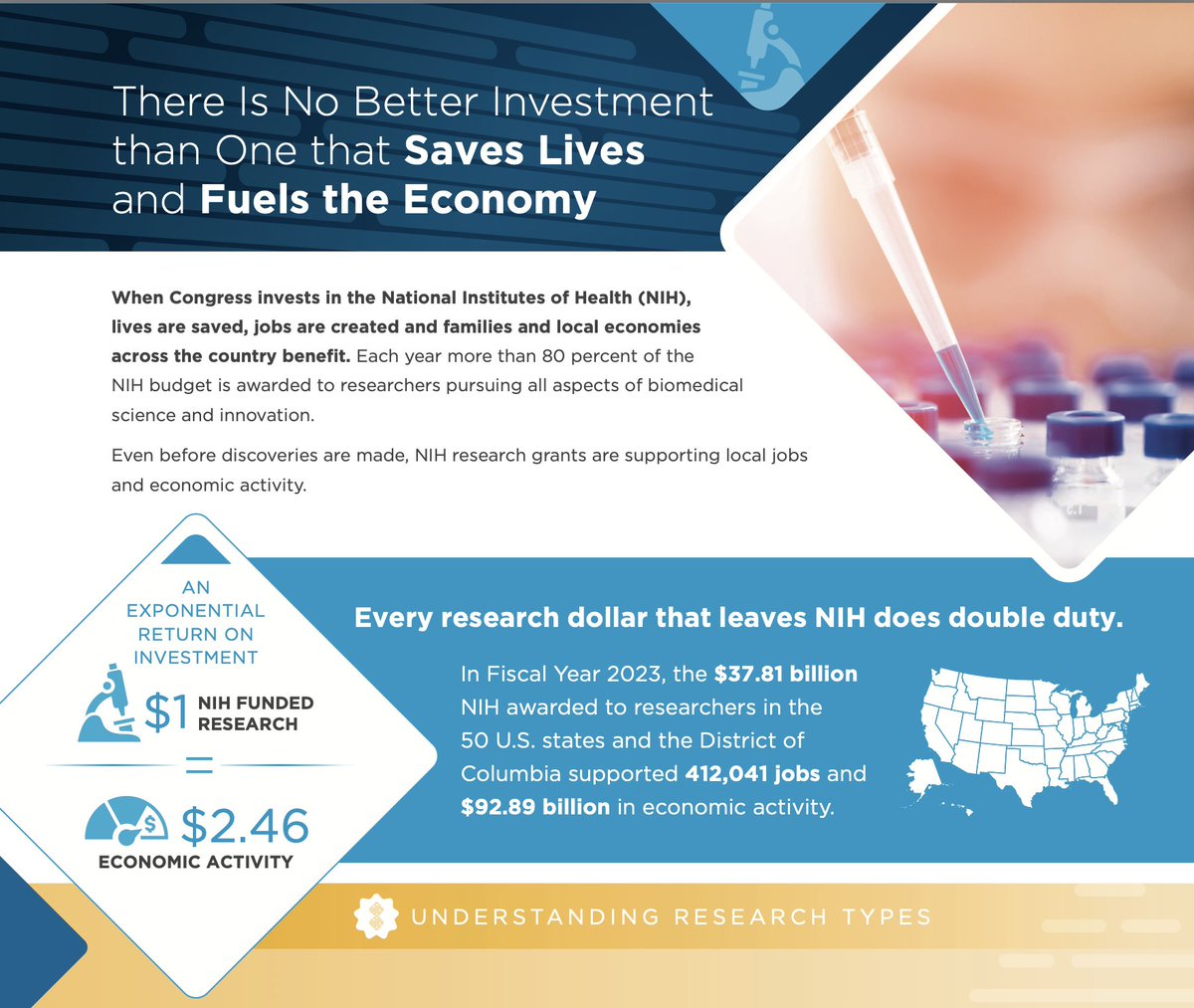
“Every dollar of NIH funding we spend generates about 2.4 to 2.5 dollars of return economic activity,” said @PennMedicine's @EJohnWherry during an #AACR25 panel discussion that highlighted the importance of federal cancer research funding. @AJMC_Journal https://t.co/oSlDUjIV8S
My brother tells me that one of his buddies from college left his wife for a transgenic mouse he met in a lab. They all thought he was crazy, but he swore she was a knockout.
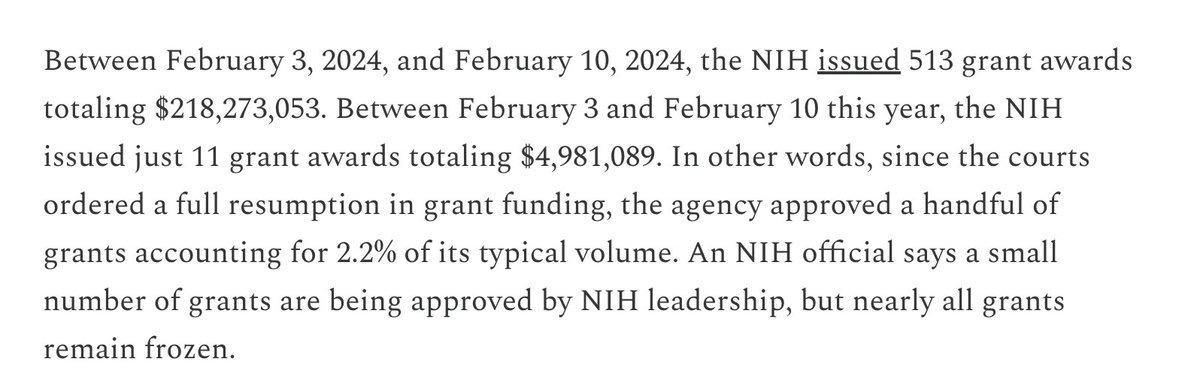
98% of NIH grants that should have gone out this month, didn't. Despite court orders 'unfreezing' the funds, they are frozen. Biomedical research will grind to a halt. Clinical trials will end. All for no reason: the total impact on the US budget is miniscule
❗My key advice for future PhD students:
Try to find a GOOD MENTOR in the first place and not simply a research supervisor.
After your PhD (or postdoc), your career will largely depend on who you are as a person + how good you are at critical thinking and analysis.
Such qualities are shaped through good mentorship.
Step by step, through talks with your advisor, you'll grow into a mature professional.
When I interview students, I see the same issue:
They are UNAWARE of mentorship.
Nobody tells them about it. No one teaches them the basics of career building.
📍Mentorship for students (postdocs) is about:
1. Personal development:
- critical thinking
- conceptualization of “big picture”
- understanding the basics of management, team building,
- scope of networking and conferences, and many more
2. Help with career development and advising on possible choices.
📍 For a career in academia, a good mentor will help you:
1️⃣ Understand pros and cons of academia: should you pursue a career in it?
2️⃣ Understand how the academic world works (including the role of publications, awards, conferences, funding, collaborations) and what "being competitive" really means.
3️⃣ Recognize the importance of personal vision for the field and how one can develop it.
4️⃣ Introduce into what it takes to be a faculty (group leader).
5️⃣ Explain what success in academia means (+ the diversity of opinions on this subject)
6️⃣ Explain how to build your own “academic circle” (+ help you find your OWN research collaborators).
7️⃣ Enable opportunities for teaching if you have a passion for it.
Your future depends on mentorship you receive.
For those of us who received excellent mentorship, it is easy to say what truly shaped our future (and in most cases, it is NOT the specific research projects we did!).
Mentorship is EXTRAORDINARILY important for personal growth and successful career.
_____
For aspiring students:
“How to Pick a PhD Advisor” is a 50-min episode that I recorded for aspiring students. It covers mentorship and many other things.
If you want to start PhD this year, make sure to check it out:
https://t.co/CJFzjmFBGI
______
FEATURE: When scientific fraud occurs in the lab, many consequences follow. Some are professional—retractions, rescinded grants—whereas others are deeply personal. Our investigation explores what happens to the people left behind.
By @callimcflurry
https://t.co/ZuF7ROrPWJ
"[T]o fellow #PhD students who may be feeling overwhelmed by the plethora of opportunities and demands, remember the power of sitting still. Creating space for yourself isn’t a sign of falling behind; it’s a way to focus on what truly matters to you." https://t.co/EEQpQ1ycuX #ScienceWorkingLife
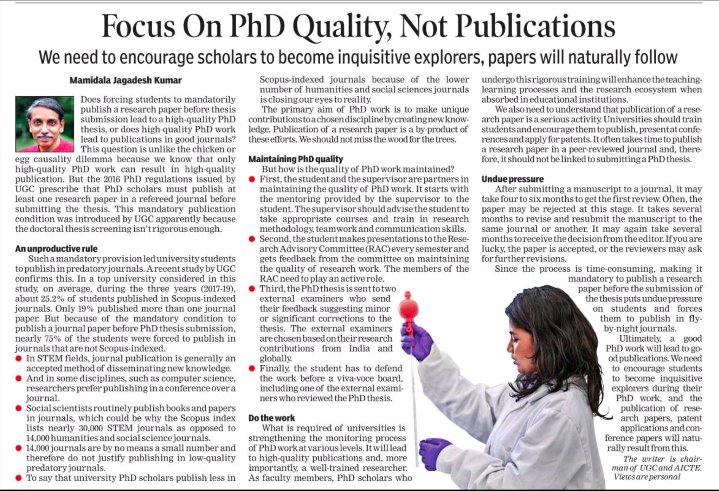
If you stick to the quality of the publication rather than quantity, maybe during 5 years of PhD no publication is going to come, on 6 or 7th year maybe a breakthrough research will come. In between who will motivate the scholar. Govt will never.they may be starving him by fellowship delays.. some guide may be forcing him to complete multiple projects of the guide with PhD work .. if the guide could give proper motivation (mostly possible in research institutes) then such a PhD can create good results. In private institutions it will not be possible at all,otherwise you should be part of big funded projects.. Publications usually in the form of book chapters , reviews etc mainly motivate the student to continue his research.. #PhD #ResearchMotivation #QualityOverQuantity