we are not far from everyone building their own hyper-personalized mobile apps.
i just vibe coded my own custom todo & fitness tracker in @GoogleAIStudio with zero Android dev experience, and now it’s running on my phone. still feels crazy🤯
Super excited to introduce Gemma 4 12B! 💎
- Multimodal: audio, image, video, and text input
- Novel architecture: we removed the multimodal encoders for a unified, streamlined arch
- New MacOS desktop app powered by LiteRT
- MTP support
Excited to see what you build with it!
Celebrating the milestone of a massive 150+ million downloads of Gemma 4 with the release of the new Gemma 4 12B model! It's incredibly powerful for such a small model and it’s tiny enough to run locally on a laptop with just 16GB VRAM. Apache 2.0 license - happy building!
Meet Gemma 4 12B!
A unified, encoder-free multimodal model designed to bring high-performance intelligence directly to your laptop, and released under an Apache 2.0 license.
Bridging the gap between edge efficiency and advanced reasoning. Here is what’s new with Gemma 4 12B: 👇
I went to the Asian buffet at 1:30 today, and as I grabbed a booth I looked around and thought, “wow, there sure are a lot of old people here. In fact, it’s all old people.”
Then I stopped for a moment as realization set in.
“Oh. Oh no. Ah fucking hell, man.”
PSoXide é um conjunto de ferramentas de desenvolvimento de código aberto para PlayStation 1 escrito em Rust. Ele reúne propositalmente todos esses componentes em um único repositório:
- Uma interface de emulador e depurador de PS1;
- Um SDK caseiro para PS1 baseado em Rust;
- Um motor de execução para hardware PS1 real;
- Um pipeline de ativos e editor para salas, entidades, modelos, texturas, animações e testes de jogabilidade;
- Construtores de imagens de disco CUE/BIN para exemplos e projetos autorais.
É um ambiente de desenvolvimento para criar um jogo de PS1 de verdade que rode no hardware original, mas com as conveniências dos ambientes de desenvolvimento de jogos modernos, uma linguagem moderna e de alto desempenho e uma cadeia de ferramentas verticalmente integrada.
We're in the process of writing a book on how foreign companies can navigate Japan. Almost done and now looking for an editor. Would love recommendations!
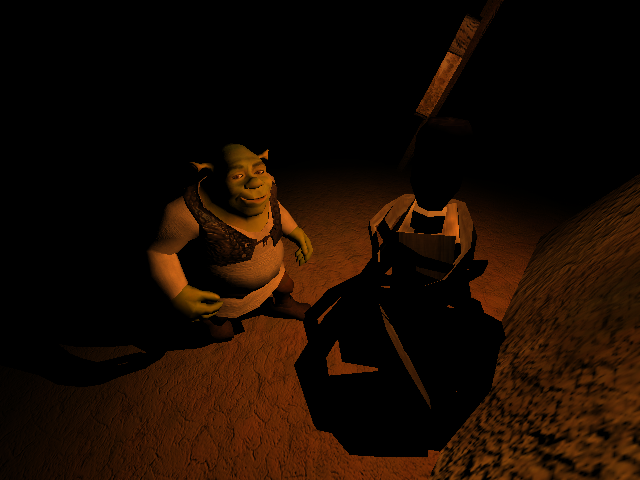
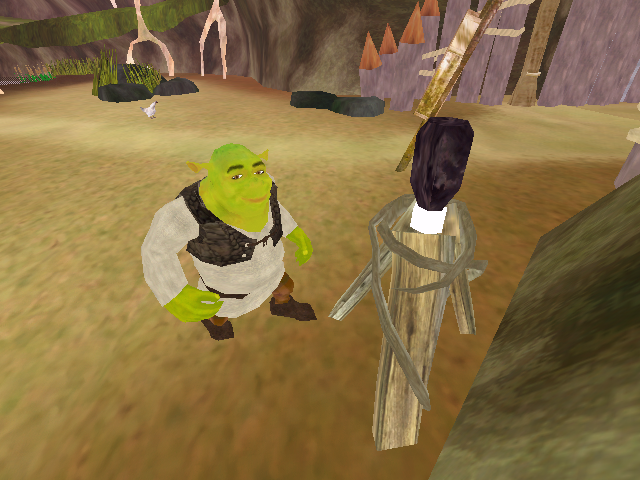
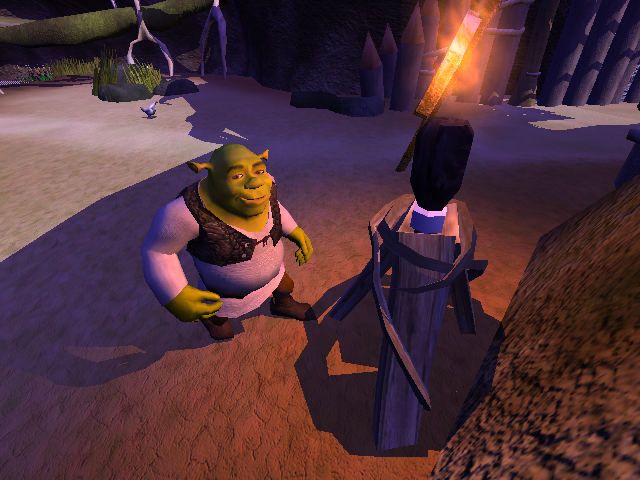
“Shrek” was a launch title for the original Xbox that I worked on 25 years ago. It was the first shipped game to use a technique called Deferred Shading. It wasn’t my first 3D game, though: I wrote Sandbox Studios’ software rasterizer and D3D7 renderers.
https://t.co/g2Bm4B7CBD
IMO, we have to stop fighting ourselves, and build more datacenters, because other countries are going to play to win.
Really great to see Satya setting the record straight for one of the key points people keep bringing up.
A DEVELOPER TAUGHT GIT WITH A BOX OF CHILDREN'S TOYS AND ENGINEERS WITH TEN YEARS IN SAY IT'S THE FIRST TIME THE THING EVER ACTUALLY MADE SENSE
90 minutes, one table, a pile of Tinkertoys. No wall of jargon -- he builds a real Git repo out of plastic rods right in front of you.
-> The moment he snaps the first pieces together, Git stops being scary command-line magic and becomes what it really is: a chain of tiny objects pointing at each other.
Branches, merges, rebase, the staging area -- every concept that's ever burned you at 2am -- he rebuilds with toys until a four year old could follow. He calls Git a two-trick pony. After this you'll see exactly why.
Memorizing commands was never the skill -> holding the graph in your head is. And with an AI agent now committing and rebasing on your machine all day, that mental model is the only thing between you and a history you can't read.
Scroll the comments and you'll see the same thing over and over: this is the talk that finally made Git click and made people the one their whole team comes to when it breaks.
Bookmark & watch it today. It's the 1.5 hours that pays you back for the rest of your career ↓
Okay, @pewdiepie 's Odysseus project is extremely well thought out. stupidly easy model comparisons, the ui is snappy, the cookbook is instant, and will be diving more into the deep research later!
Try it out https://t.co/LUXRnkTwRO
Retro rail shooter Wild Blue Skies has a release date!
Soar over oceans, desert, and caves while battling waves of enemies and pushing back Grimclaw’s forces. With the help of allies, fight to restore peace while experiencing the thrill of classic arcade flight-combat!
taught my non technical partner how to use codex to run their startup and it is genuinely life changing
romance is cool but have you tried making someone to ship without asking you for help every 10 minutes
A robot arm basically has a rocket equation problem. Each motor closer to the root must support the weight of all the ones above it.
An advantage of cable robots is that the motors don’t have to be on the moving part. In a CDPR you can place all the main motors on the wall, and they can all be the same part with the same torque. You don’t even have to place one in each corner. In theory you could have a cable robot in every room in your house and put all the motors in the basement with the lines passing through PTFE tubes in the walls.
In Stringman, each anchor has a pair of motors, one direct, and one indirect, routed though a ceramic fishing eyelet in another corner. Consolidating the motors into fewer components drives the cost down, but two camera angles still gives a good view of the room.
The spool motors are Damiao direct drive actuators (DM-H6215). And unlike an arm, they’re all sharing the load, so they can be one of the smaller models, and having no reducer keeps the noise to a minimum.
If you want a cable robot in every room in your house by the way, I’m your guy. https://t.co/NISnwnUxVI