Bermuda is setting a standard for governments’ use of AI for handling citizen data with @near_ai. When a public servant submits their personal data to AI, even the infrastructure provider shouldn't be able to see it. AI systems that handle sensitive information should support confidentiality by design.
Earlier today, we detected an attempted exploit against Parallel.
@HypernativeLabs’s live monitoring triggered in time, and contracts were paused. The attempt failed. No funds lost; user funds are safe.
A huge thank you to @fraxfinance, @bailsecurity, @cyfrin, @merkl_xyz, and @GamiLabs for their reactivity, support, and help in handling the situation quickly.
An update will be provided in the coming hours, giving more details.
Full post-mortem in the coming days.
AI agents are starting to move real money.
The problem: there’s still no independent check between what an agent intends to do and what actually gets executed.
Today, that changes.
We're Nava, and today we’re coming out of stealth with an $8.3M seed round from @polychain, @archetypevc, @hack_vc, @FalconXGlobal, and @seedclub / @seedclubvc to build the trust infrastructure the agent economy is missing.
Google Quantum AI just dropped a watershed paper https://t.co/uvQERN2C3s that fundamentally rewrites the timeline for quantum attacks on blockchains. The "quantum boogeyman" is no longer a theoretical endgame—it is an active engineering target.
I just published a detailed analysis at : https://t.co/cpjXGsVhI0
Here is a quick summary:
1. The Math Just Shrank 📉
For years, we assumed breaking 256-bit elliptic curve cryptography (which secures Bitcoin and Ethereum) would require millions of physical qubits. Through aggressive algorithmic optimization, researchers proved that Shor’s algorithm can break this with just 1200 logical qubits and 90 million Toffoli gates. On a standard superconducting architecture, that translates to fewer than half a million physical qubits.
2. The 9-Minute Mempool Sniper (On-Spend Attacks) 🎯
The paper distinguishes between "slow-clock" and "fast-clock" quantum architectures. A fast-clock machine (like superconducting or photonic qubits) could derive a private key from an exposed public key in about 9 minutes.
Why is 9 minutes terrifying? Because Bitcoin’s average block time is 10 minutes. The moment you broadcast a transaction, your public key hits the mempool. A quantum attacker can scrape it, derive your private key, sign a fraudulent transaction, and bribe miners with a massive MEV fee to process their theft before your legitimate transfer clears.
3. The Satoshi Stash is a Sitting Duck (At-Rest Attacks) 🦆
For dormant funds, attackers don't even need 9 minutes; they have all the time in the world. Over 1.7 million BTC (including early Satoshi rewards) are locked in old P2PK scripts where the public key is already permanently visible on-chain. Add in modern users who reuse addresses, and a staggering ~6.7 million BTC are currently vulnerable to "at-rest" attacks.
4. Ethereum’s L2 Doomsday (On-Setup Attacks) ☢️
Ethereum’s systemic risk goes beyond stolen ETH. Billions in stablecoins and tokenized Real-World Assets (RWAs) are governed by vulnerable ECDSA admin multisigs. Even worse, Layer 2 networks rely heavily on KZG trusted setups. A quantum computer only needs to run an attack once to extract the "toxic waste" from these setups. With that secret, an attacker has a permanent, reusable backdoor to classically forge data availability proofs and hold L2s for ransom.
5. The Ultimate Cypherpunk Flex 🛡️
To adhere to responsible disclosure, the researchers didn't publish the actual quantum circuits—which would essentially hand a weapon to rogue states. Instead, they ran their secret circuit simulator through the SP1 Zero-Knowledge Virtual Machine and published a Groth16 zkSNARK proof. They trustlessly proved they can break the blockchain using blockchain cryptography.
The Takeaway:
We are out of time for complacency. The industry must pivot to PQC now. We also face massive policy wars over what to do with dormant coins—do we hard fork to burn them, rate-limit them, or send them to a recovery sidechain? If the protocols don't decide, quantum adversaries will decide for us.
I'm giving a research talk at @NVIDIAGTC tomorrow, March 18 @ 9am PT! Virtual registration is free.
As Jensen confirmed on Monday, 2026 is the year of the Claws. I'll talk about rethinking market primitives for an agentic economy with early experiments from @near_ai Agent Marketplace & IronClaw.
Today we made a major upgrade to Brave Wallet.
We've added support for NEAR Intents, which allows you to easily swap crypto assets across blockchains (Bitcoin, Solana, Zcash, Cardano, and EVM) within our browser.
This was a massive week for @NEARProtocol – here's a recap of the NEARCON launches.
- https://t.co/ANYjHhz7hC: secure, encrypted personal agent
- https://t.co/x53NMFRzHE: confidential hosting for the agent of your choice
- https://t.co/uilYXjP7S7: one account for 35+ chains, enabling confidential transactions
- Nightshade 3.0: Separation of consensus and execution, atomic transactions, & a live private shard
Been experimenting with Ironclaw and honestly surprised at how @NEARprotocol was able to build a version of Openclaw that actually improves on privacy, speed, and security.
We’ve reached a point where we can approve high-risk external requests while keeping our data completely siloed. This is the only viable path to using AI agents safely and securely.
In the near future where agentic commerce is the norm, I foresee AI agents will be able to transact cross-chain via NEAR intents, complete jobs and get paid via Near's agent market.
All of these activity will accrue value to NEAR token as well.
The team have come a long way since 2024 trying integrate AI and blockchain and they might have just done it.
"Is it too reductive to say blockchain is just finance?"
John Fiorelli's answer: "Do we think decentralized networks offer anything other than a great settlement layer for finance? I do. I came for the tech and I'm staying for it, not because it's the tech, but it's the outcomes."
"People buy outcomes. Either you help me get a positive outcome or you provably prevent a negative one."
Huge launch. Standing on the shoulders of the Zcash giants, @NEARProtocol just debuted Confidential Intents allowing confidential execution for cross-chain transactions. This the way. Privacy first.
1/ Some Simple Economics of AGI—🔥🧵
Right now, there is a low-grade panic running through the economy. Everyone is asking the same anxious question: what exactly is AI going to automate, and what will be left for us?
Introducing IronClaw—your always-on AI agent with cryptographic security.
Deployed inside encrypted enclaves on NEAR AI Cloud, IronClaw lets you leverage OpenClaw to the max without exposing credentials.
Hardware-enforced security for the age of agents.
https://t.co/oXDfp0YR6z
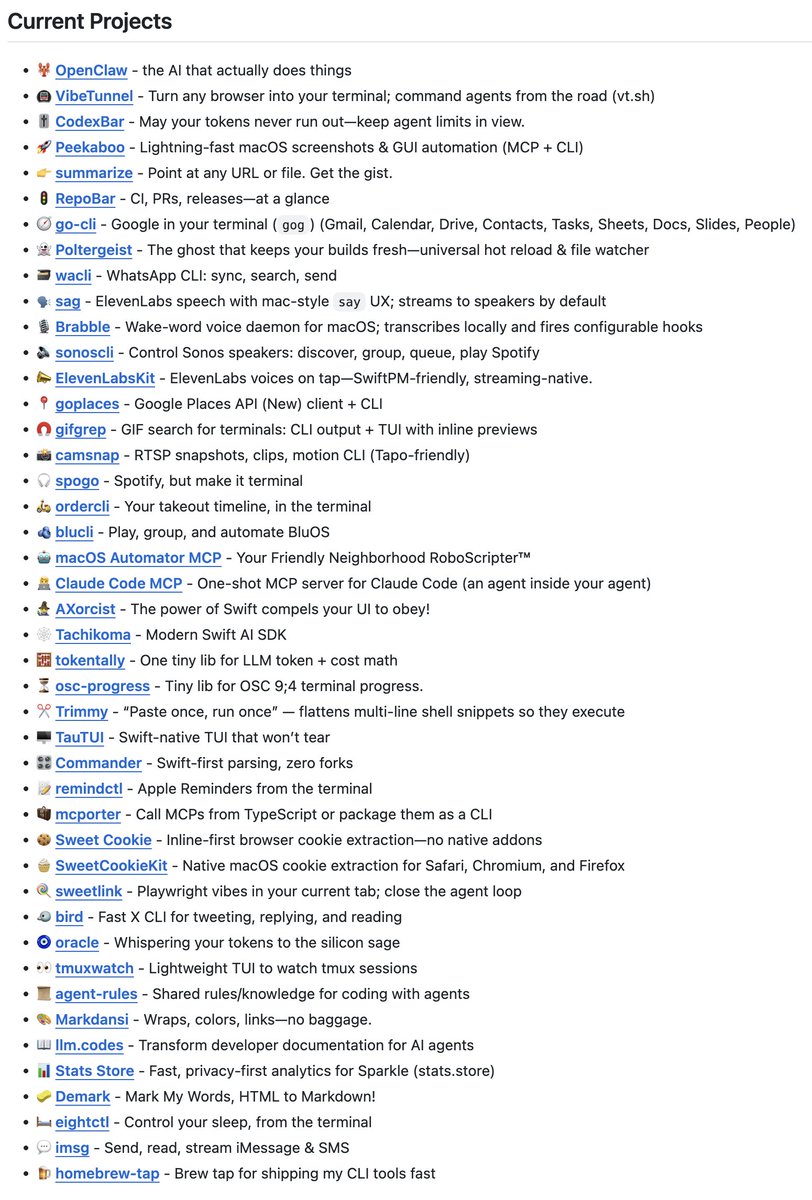
The funniest take is that I "failed" 43 times when people look at my GitHub repos and projects.
Uhmm... no? Most of these are part of @openclaw, I had to build an army to make it useful. https://t.co/GLR35USlzu
1/
Introducing Tenbin Primer:
Tenbin is the first multi-asset issuance protocol that ensures institutional liquidity and near-instant minting/redemption for all its tokenized assets.
https://t.co/1yNXnfO4PZ
@Firelightfi is live!
Risks in DeFi are a major roadblock for institutional adoption
Firelight aims to address this through a novel economic security architecture centered around $XRP staking on @FlareNetworks
https://t.co/oqwRfisW4s
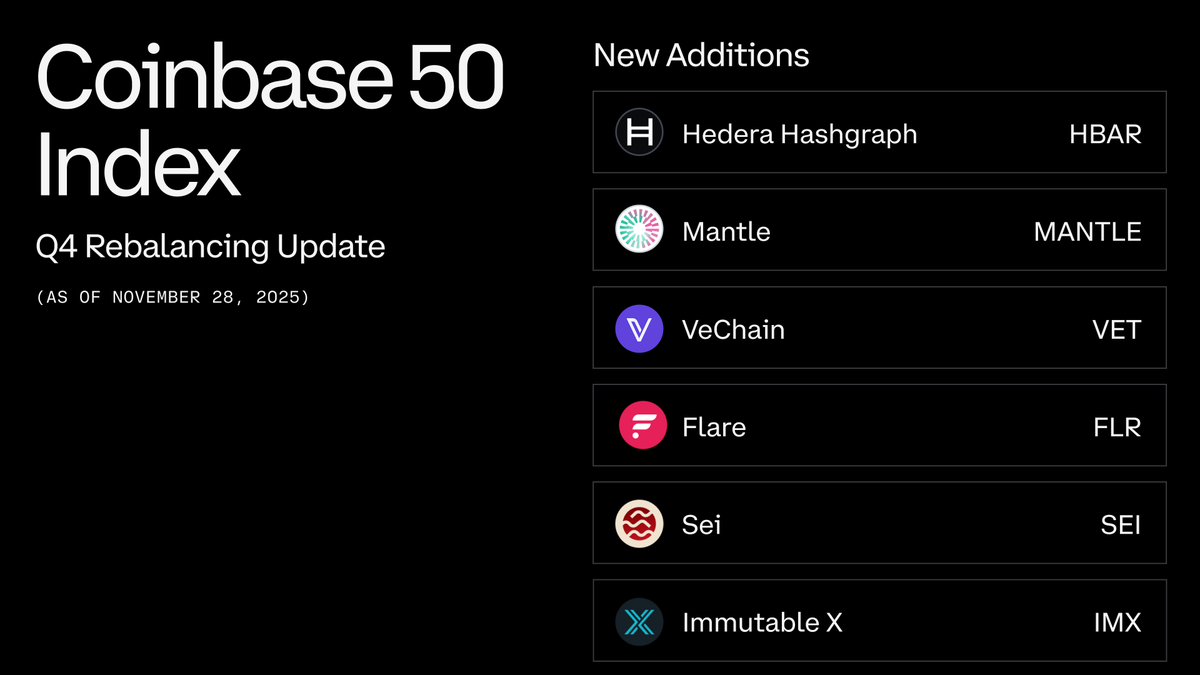
This quarter, we welcomed @hedera ( $HBAR ), @Mantle_Official ( $MANTLE ), @vechainofficial ( $VET ), @FlareNetworks ( $FLR ), @SeiNetwork ( $SEI ), @Immutable ( $IMX ) to the Coinbase 50 Index (COIN50), a benchmark tracking the performance of the top 50 eligible digital assets listed on Coinbase Exchange.
Security doesn’t end with audits, it evolves in real time.
That’s why @fogo x @HypernativeLabs are joining forces to bring real-time security monitoring to the Fogo ecosystem.
Continuous protection. Instant alerts. Stronger trust.
The future of DeFi safety is on Fogo ✅