Proud of our PhD alum Alex Huffman getting a plenary lecture on bioaerosols at the AAAR conference.
[And I don't think he learned anything about bioaerosols with us, so that has been all the result of his own effort over many years!]
It was a tremendous honor & joy to be asked to give the closing plenary talk at the #AAAR2024 conference in Albuquerque last week.
I poured more of myself into the talk than any I’ve done before, and it was challenging to pack all I felt the talk needed …
@AmericanAerosol
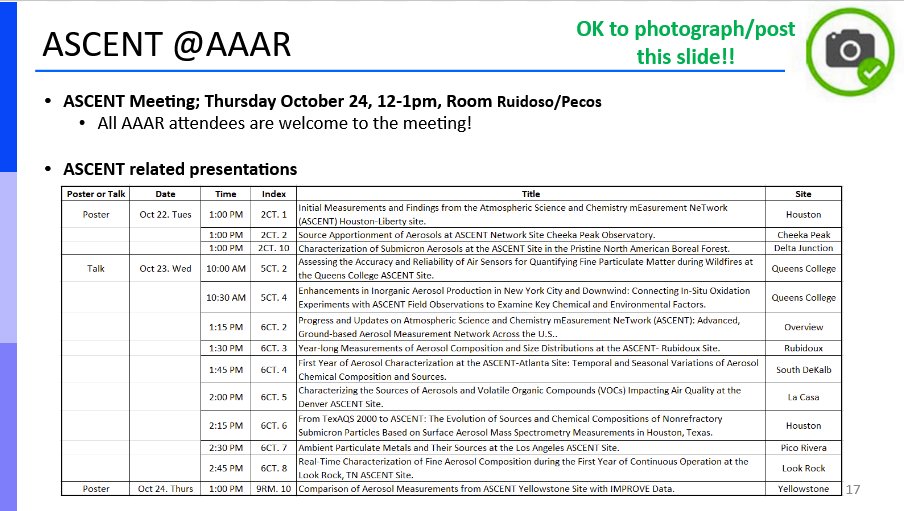
We will have the @ASCENT_USA meeting at the AAAR Conference this Thursday 10/24/2024 from 12-1pm at the Ruidoso/Pecos Room. All AAAR attendees are welcome to the meeting! Stop by the sessions sharing the latest updates from the @ASCENT_USA network. #AAAR2024
New paper out today!
We have a great new PM2.5 air pollution standard.
But our US EPA monitoring network has crucial gaps. It may miss many places that exceed the new standard.
More monitoring can help!
w/ @YuzhouYWang @MarshallJulian
https://t.co/x6zXBu9e38
Since 2021, CIRES researchers have helped lead a new air quality monitoring program, which includes 12 sites across the U.S. They set up a suite of instruments that collect high-resolution air samples day and night. Read more: https://t.co/nAHNWeitYR
@JgrpBoulder@dougchem
We join more than 100 leading air quality organizations and colleagues in committing to share #AirQuality data freely and openly, and we support those we fund to do the same.
Check out this community letter and join us: https://t.co/jIYpSs070Y #OwnYourAQData#AirPollution
It's National #CarFreeDay! 🚗
In July, Denver and the northern Front Range missed national air quality standards due to a nine-day streak of ozone pollution alerts. 😮
Hear from #CUBoulder atmospheric chemist Lindsey Anderson below! 🍃 ⬇️
https://t.co/9liqivYqjg
Two days ago, a lawfirm filed a federal antitrust lawsuit against 6 commercial publishers (incl Elsevier & Wiley) in the federal district court in New York.
They allege a 3-part scheme on part of publishers. 🧵
https://t.co/BswKVg5l5G
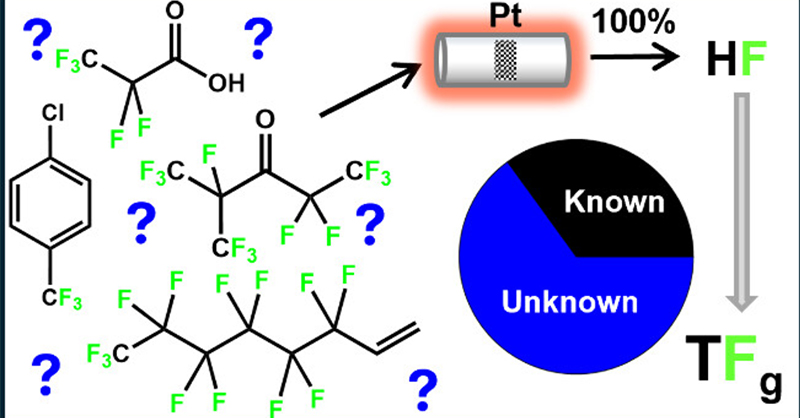
A team led by @SVOCora of @ChemistryatYork@YorkUniversity demonstrate an in situ instrumental method for gas phase Total #Fluorine measurements (TFg) via platinum catalyzed #Thermolysis at 1000 °C in the presence of propane. #PFAS
ES&T Letters: https://t.co/vinqbV2T7f
A Denmark nationwide study of >5.6 million people, age 30-45 years, with ~5 year follow-up, shows strong association of exposures and infertility
—Air pollution (PM 2.5) and increased infertility in men
—Noise pollution (roadside traffic) and increased infertility in women
All the big concerns about climate change, but each one occurs at different amount of warming. Ideally no more warming so we don't see any of it
How Close Are the Planet’s Climate Tipping Points? https://t.co/djBpT1F5hv
Since 2021, CIRES researchers have helped lead a new air quality monitoring program, which includes 12 sites across the U.S. They set up a suite of instruments that collect high-resolution air samples day and night. Read more: https://t.co/nAHNWeitYR
@JgrpBoulder@dougchem
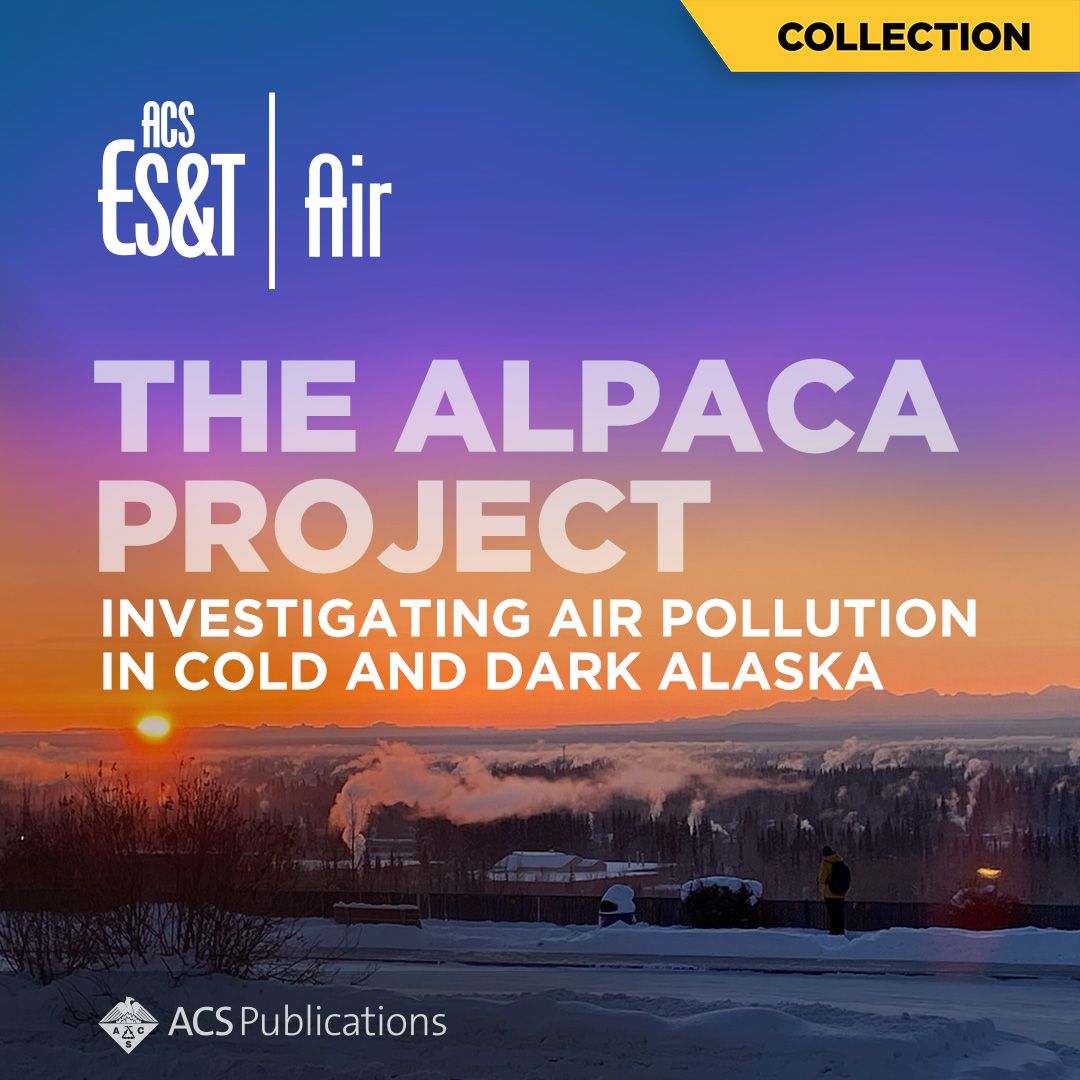
Check out our ACS ES&T Air team's compilation of published works from the ALPACA project, revealing the effects of winter conditions on air pollution in Fairbanks, Alaska. Learn more here: https://t.co/06xkVQO9sk
Instructions for this job group:
- If you want us to retweet a job ad, tag us on your tweet (add @AtmChemAeroJobs to your tweet). Then we'll find it & re-tweet it
- Or email it to <[email protected]> and she can tweet it. Only 280 characters, include link w/ details
Resources for early-career scientists in geosci, especially atmos sci: resources, career development, job listings, scholarships, fellowships, awards, grants, proposal writing, how the major federal agencies fund research in atmospheric chemistry, etc:
https://t.co/lbWWYz4qRR
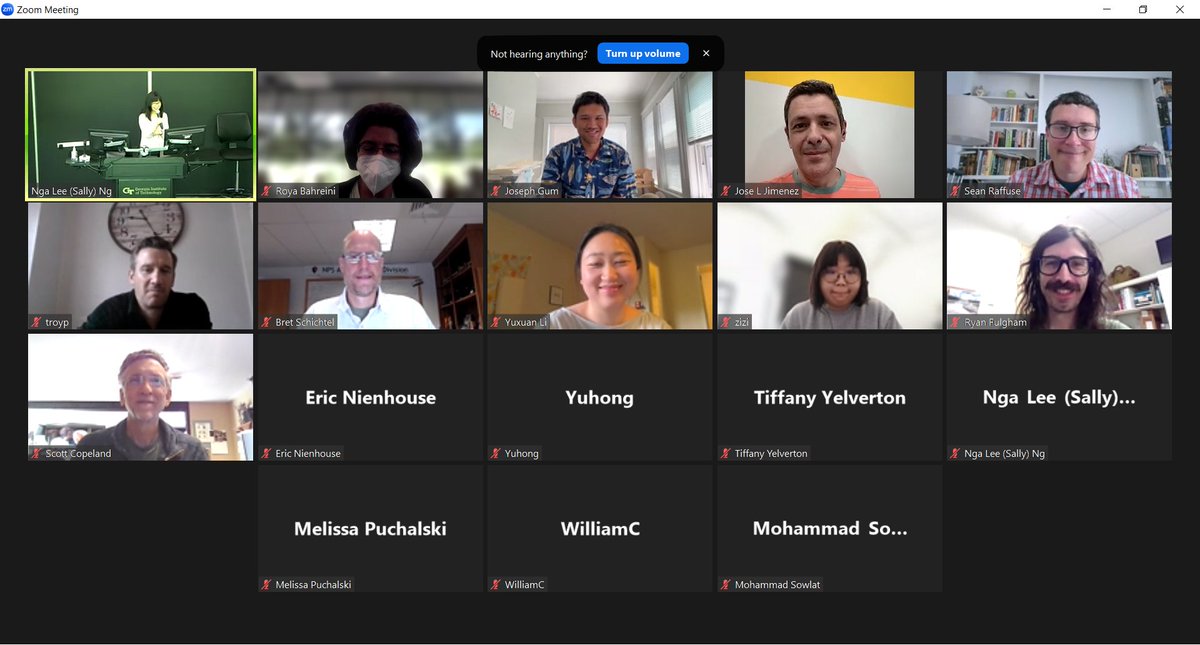
What a great turnout at our second @ASCENT_USA Internal Investigators’ Meeting & Workshop in Atlanta @GeorgiaTech 🙌. Thank you for joining (in person and remotely) and thank you for the fruitful discussions! #ASCENT_USA
Una revisión sistemática muy importante de @trishgreenhalgh de @UniofOxford y coautores sobre las mascarillas
En resumen: funcionan para prevenir la COVID-19, y las N95 / FFP2 son mucho mejores q las quirúrgicas