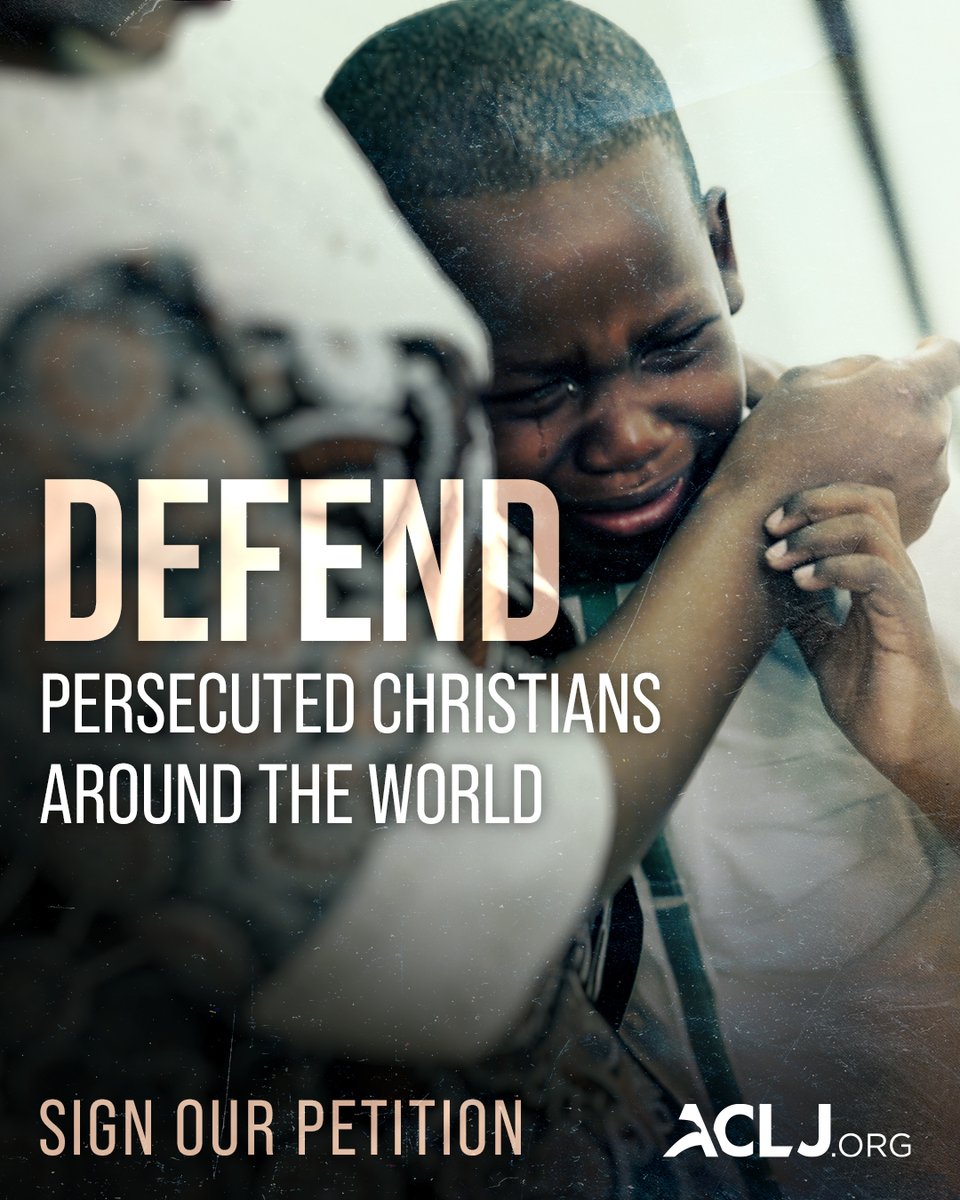
Today we are delivering a critical oral intervention at the U.N. Human Rights Council to keep the genocide of Nigerian Christians front and center before the world.
Most recently, 30 believers were killed by 100 gunmen in an attack that spanned several hours – just as they prepared for church services.
Take action with us to help save dying Nigerian Christians. Sign our petition: https://t.co/TR5YVsdpVv
Today we are delivering a critical oral intervention at the U.N. Human Rights Council to keep the genocide of Nigerian Christians front and center before the world.
Most recently, 30 believers were killed by 100 gunmen in an attack that spanned several hours – just as they prepared for church services.
Take action with us to help save dying Nigerian Christians. Sign our petition: https://t.co/TR5YVsdpVv
https://t.co/BiJvW7Kciz
REMEMBER ON PURPOSE
We don’t need to be taught as much as we need to be reminded.
Knowing we should take responsibility, seek wisdom, act, commit, choose our attitude, forgive, and persist doesn’t change anything.
What we recall and implement in the moment of a key decision does.
Principles are timeless. They don’t become less true because we overlook or forget to use them, which raises an important question:
What important truth do you already know—but need to put back to work?
Maybe the opportunity isn’t learning something new today. Maybe it’s remembering something important at precisely the moment you need it.
Choose one reminder. Write it down. Put it where you’ll see it. Act on it.
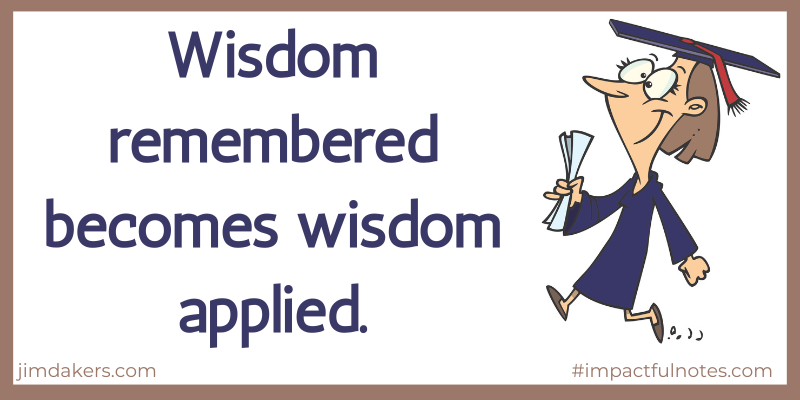
Wisdom remembered becomes wisdom applied.
Remember on purpose,
ImpACTful Notes
CAN WE KEEP IT?
Freedom doesn’t preserve itself.
When Benjamin Franklin left the Constitutional Convention in 1787, Elizabeth Willing Powel asked what kind of government had been created. His answer has challenged every generation since:
“A republic, if you can keep it.”
Nearly 200 years later, Ronald Reagan echoed the same warning:
“Freedom is never more than one generation away from extinction. It must be fought for, protected, and handed on…”
Different centuries.
The same message.
The Founders never believed America’s future would be determined solely by its Constitution, its courts, or its elected leaders. They believed it would ultimately be determined by the character of its citizens.
That may still be the defining question of our time.
ImpACT: Every generation inherits freedom. Every generation also inherits the responsibility to preserve it. Franklin’s question is no longer just America’s question.
It’s yours and mine.
Can we keep it,
https://t.co/34sH1fUzpI
THE HABITS THAT SUSTAIN FREEDOM
Freedom requires virtue. So, what does virtue actually look like?
The Founders didn’t leave us guessing.
They believed a free society depends on citizens who cultivate four essential habits:
•Self-reliance—taking responsibility for our lives, families, and communities.
•Character—living with integrity and keeping our word.
•Citizenship—understanding that rights and responsibilities belong together.
•Self-restraint—choosing what is right over what is merely easy.
Notice something remarkable: none of these habits can be legislated, mandated by courts, or enforced by government. Each must be chosen.
The Founders understood that a nation’s strength will never rise above the character of its citizens.
ImpACT: Freedom isn’t sustained by what a government does for its people, but by who its citizenry chooses to become.
Tomorrow we'll conclude by asking the question Benjamin Franklin left for every generation to answer: Can we keep it?
Freedom depends on us,
https://t.co/34sH1fUzpI
#Freedom
@PNWConservative
After Whitney Lynn, Christian evangelist got kicked off of Alaskan Airlines for sharing the gospel, the police were waiting for her in the terminal….
(Apparently a male, 🌈 flight attendant got her kicked off the plane!)
So then what happens?
They got the gospel too and they helped her rebook her flight!
CAN WE KEEP IT?
Boris Yeltsin, the first president of post-Soviet Russia, once observed:
“Freedom is like air. When you have it, you don’t notice it.”
Perhaps that’s why freedom is so easy to take for granted. We often don’t appreciate it until it’s threatened—or worse, lost.
America’s founders understood that danger. When Benjamin Franklin left the Constitutional Convention in 1787, he was asked what kind of government had been created. His answer has echoed through history:
“A republic, if you can keep it.”
Over the past four days, we’ve explored what Franklin understood—that freedom isn’t self-sustaining. The Golden Triangle of Freedom offers a timeless framework for preserving it:
•Freedom requires virtue.
•Virtue requires religion.
•Religion requires freedom.
Whether you agree with every conclusion or simply appreciate the questions it raises, one truth is difficult to ignore: free societies ultimately depend on people who possess the responsibility, character, and virtue to govern themselves. That was the promise and the challenge of the American experiment.
ImpACT: Freedom isn’t simply something we inherit. It’s something we preserve. Franklin’s challenge is now ours:
The Golden Triangle is the path to keeping it,
https://t.co/34sH1fUzpI
We must always keep in mind that our status of favor and friendship with God is always, and ever will be, based on the objective work of Christ for us as our representative and substitute. We have been forever reconciled to God through the death of His Son.
Here are three indicators of one’s salvation:
1. An Objective Reality — God has made a promise that anyone who puts their trust in Jesus for salvation. Those people who have Jesus have eternal life.
2. A Subjective Reality — Christians have a palpable awareness of God’s presence in our life and an awareness that we belong to him.
3. Another Objective Element — The presence of Christ should be demonstrable in your life by the way you live.
So, you want to be confident that you’re a Christian? Trust in the promise, be alert and aware of those times when you feel the presence of God in the sense that you are his, and assess your life.
— @gregkoukl