Article: Intensive bottom trawling causes a long-term reduction of organic carbon stored in seafloor sediments, suggesting a need for more effective management
https://t.co/nJKF8lcVyG
Our new @C2C_proj paper is out (and OA) in @NatureGeosci!
https://t.co/iB0IGioIHR
tldr: We recognize prolonged climate warming intervals after multiple LIPs. We suggest CO2 release can continue from deep LIP plumbing systems long after surface volcanism wanes, driving warming
Article: Substantial evolution of the Nile River over the past 11,500 years, shaping the riverine landscape and Ancient Egyptian culture, is linked to climate and environmental changes
https://t.co/qUHg309bgB https://t.co/YQZ6QkdmpJ
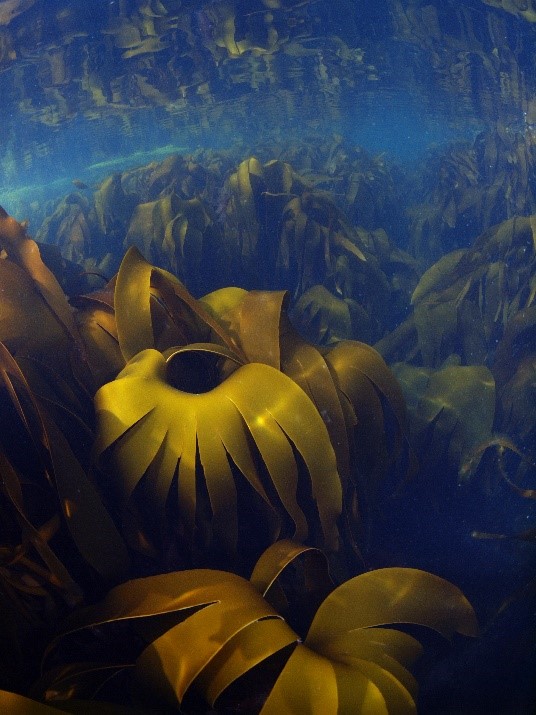
Global #seaweed forests export 56 million tonnes of carbon (15% of their production) to the deep ocean annually. These biodiverse #blueforests are overlooked in the global ocean #carbon budget. We provide national estimates of this C #sink https://t.co/GB4m7UYUnz @NatureGeosci
Article: A shift towards more frequent, less intense fires in Australia began about 11,000 years ago due to management by indigenous societies
@jcu@cabahCoE @GlobEcoFlinders @UOW @conservbytes
https://t.co/J2w4ZVdU31
Career Opportunity! We are looking for a talented editor to join our team, ideally with a background in the biogeosciences. Closing date: 19 Feb. https://t.co/994wFp6iuX
Article: Proto-monsoon expansion doubled rainfall in Central Asia during an early Eocene hyperthermal, which led to a rapid if transient spreading of forests
@MajeurNiels @AlexisLicht@CarinaHoorn@faezrch@Clumpy_Tag@geobiodiversity
https://t.co/OFKfcYXUDz
Scientific institutions must create--and sustain--new kinds of roles so that researchers can provide the deep public engagement necessary to respond effectively to the escalating impacts of #climate change. The status quo isn't working. [Thread: 1/n] https://t.co/2J9897Dddv
Excited to share my first, first author publication! We measured the past methane interpolar concentration difference in ice cores to determine how emissions varied across the last deglacation.
https://t.co/RI6He2P8Lu
Article: Indirect forcing by low regional orography and high atmospheric methane levels helped amplify Arctic temperatures in the early Eocene by enhancing polar stratospheric cloud formation
https://t.co/sAasUT8F2K
Article: The variable intensity of Southern Ocean and North Atlantic deep-water ventilation explain differences in atmospheric CO2 trends and magnitudes during cold stadials over the last 150,000 years
https://t.co/1P8Je1eTnd
Article: The variable intensity of Southern Ocean as well as North Atlantic deep-water ventilation explains differences in atmospheric CO2 trends and magnitudes during cold stadials over the last 150,000 years
https://t.co/1P8Je1eTnd
1/6📢out in @Nature today: from me and my brilliant co-authors @other_rock@slgstevenson@drynamics, a new 800-year reconstruction of my favourite big air circle: the Pacific Walker circulation. Link to code and data in the paper ⬇️
https://t.co/vcrPNNnkIH
Attention all Ph.D. students: The application period for 2024-25 USSSP Schlanger Ocean Drilling Fellowships is now open! Information can be found at https://t.co/azkXGz87M2. #IODP#NSFfunded
Article: While generally tracking Northern Hemisphere summer insolation, the Earth gained energy during cold millennial scale events throughout the last 150,000 years
https://t.co/G39jOJ77kq
It’s #MinCup23 Round 1 Match 2!
It’s heavy-hitters #Cinnabar v #Quartz. We know you love them both, but you need to decide. One moves to Round 2. The other is eliminated, never to be seen in #MinCup again (unless it wins a future play-in round).
VOTE! https://t.co/HR9KDEsJ7U