Reveal vulnerability…growth happens here. It takes courage to listen and then act, and the payoff is valuable to yourself and the people in your organization .
Dear managers: If you’re not going to consider feedback, it’s better not to seek it at all.
Data: When people in power request input but then disregard it, they’re judged more negatively than if they hadn’t asked.
Bad leaders ignore. Good leaders listen. Great leaders act.
Dear managers: If you’re not going to consider feedback, it’s better not to seek it at all.
Data: When people in power request input but then disregard it, they’re judged more negatively than if they hadn’t asked.
Bad leaders ignore. Good leaders listen. Great leaders act.
The best leaders don’t stand above—
They build from the bottom up:
They don’t chase titles or recognition.
They build trust.
They build culture.
They build people.
It’s about helping others see what’s possible.
Because the best leaders don’t build empires.
They build people who go further
than they ever could alone.
Please repost to help others out there! ♻️
👇 Want a PDF of my top infographics? 👇
Go Here: https://t.co/QLV2I0XGXV
Brains won’t keep you standing—
When the pressure hits, you need this:
IQ gets you in the room.
EQ builds trust in the room.
AQ keeps you standing when the room’s on fire.
To lead well, you need all three:
🧠 IQ: Intelligence Quotient
• Learns fast
• Solves problems
• Thinks analytically
Grow it through study, repetition,
and focused practice.
But watch for overthinking and analysis paralysis.
👥 EQ: Emotional Quotient
• Listens deeply
• Builds connection
• Regulates emotions
Grow it with mindfulness, feedback,
and self-awareness.
But beware of overload in high-stress moments.
📊 AQ: Adversity Quotient
• Adapts fast
• Embraces pressure
• Stays steady in change
Grow it by staying curious, reflecting,
and stepping into discomfort.
But avoid reacting too quickly without thinking.
When to use each:
✅ IQ when the problem is complex
✅ EQ when people are involved
✅ AQ when the ground shifts under your feet
Each strength fills a gap the others can’t.
IQ solves.
EQ connects.
AQ endures.
Mastery is balancing mind, heart, and grit.
Please repost to help others out there! ♻️
👇 Want a PDF of my top infographics? 👇
Go Here: https://t.co/VwjXadI9ZX
Setting boundaries is not a display of disrespect. It’s an expression of self-respect.
Declining a request is not a decision to let others down. It’s a commitment to stand up for yourself.
Saying no is not an admission of selfishness. It’s an act of self-preservation.
https://t.co/l6YaBz236P
Changing culture takes time. Every day is a battle against ego, insecurity, self-preservation, busyness. What was good yesterday can be on shaky ground today. But the fight is worth it.
Believe in yourself, your people, and the vision. Celebrate progress.
Show up daily.
When people bring you a problem, it's not always a sign that they blame you. It’s often a signal that they trust you.
Seeking support is an expression of vulnerability. It shows that they count on you to care and value your help.
It's a compliment to be chosen as a confidant.
As an instructional leader, you’re there to inspire, and sometimes you have to step back and listen more and be open to viewpoints that may support and yet alter your viewpoint. Take the time to be open and vulnerable to change in yourself.
You can’t make anyone else change; all you can do is create the conditions where change is more likely to happen.
I remember speaking with an administrator and hearing him complain that his staff wasn’t moving forward. Instead of commiserating with him at that moment, I said, “Maybe it’s you?”
It caught him off guard, but there was a point.
Too often, myself included, when we try to lead people to new ideas, and they don’t immediately embrace them, we blame them instead of looking at where we may be deficient. Sometimes, the new “approach” is sharing the ideas over again, only louder. That approach rarely works.
In this week’s newsletter, I shared 3 things that have helped me rethink how to help create better conditions for others to embrace change.
1. Truly listen to their thoughts and viewpoints, and be open to the idea that your way might not be the best.
2. Recognize that you also had resistance to new ideas, including things that you might consistently do and believe today. Be open with your own story of resistance and what made you change.
3. Start by focusing on the areas in which others are excelling, as opposed to your perception of their deficits. People who feel valued are more likely to move forward. People who feel you are trying to “fix” them will fight you non-stop.
You can only control your own actions. What do others see in you that will make them want to move forward, by your side?
People are more likely to take steps forward on a path if they see footprints from others already on the ground.
Read the entire newsletter here: https://t.co/RLL3MFCU8o
Before it’s a habit, it’s uncomfortable.
Before it’s a habit, it’s inconvenient.
Before it’s a habit, you’re bad at it.
Before it’s a habit, it’s an obstacle.
Before it’s a habit, it’s frustrating.
Before it’s a habit, it’s difficult.
Keep showing up.
🪵🪓
A key to lifelong learning is to see everyone you meet as a potential teacher.
No one has a monopoly on wisdom. Each interaction is a chance to question old assumptions and gain new perspectives.
Collecting lessons from others is the fastest way to fill gaps in your experience.
"The courage to start.
The discipline to focus.
The confidence to figure it out.
The patience to know progress is not always visible.
The persistence to keep going, even on the bad days.
That's the formula."
— @shaneparrish
I wish I knew this life hack sooner…
It’s called The Four Quarters Method.
And once you learn it, you’ll skyrocket your consistency.
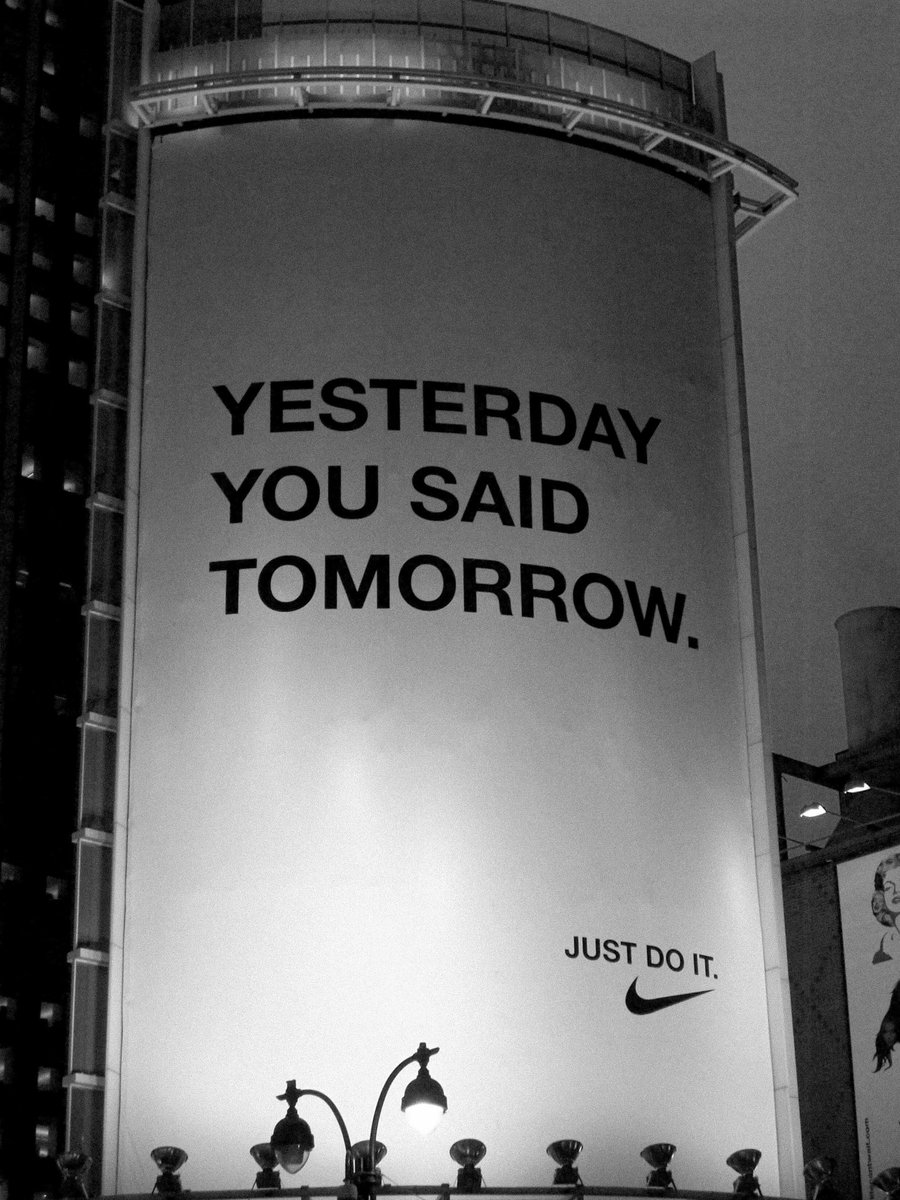
Whenever I used to hit a snag in my day, I’d think: “I’ll wait until tomorrow for a fresh start.”
It’s how watching one Netflix show spirals into binging a whole season. Or how an unhealthy snack can turn into an unplanned cheat day.
Sound familiar?
Then I came across The Four Quarters Method (courtesy of @gretchenrubin).
The big idea: What if you viewed your life like a game—with four daily quarters?
You see, most people only play 1-2 solid quarters daily.
Because they “quit” when things don’t go exactly to plan.
Imagine if you pushed that daily number to 3-4 well-lived quarters.
You’d close the gap between where you are and where you want to be—physically, financially, emotionally, etc.—up to 400% more quickly.
Three steps to execute The Four Quarters Method:
Step 1: Split your day into four sections.
Assuming you get 8 hours of sleep, you have 16 waking hours each day.
So divide those 16 waking hours into quarters.
For example, if you wake up at 6am, here’s how that looks:
Quarter 1 (Morning): 6am-10am
Quarter 2 (Midday): 10am-2pm
Quarter 3 (Afternoon): 2pm-6pm
Quarter 4 (Evening): 6pm-10pm
Step 2: Consider what you’d like to do in your quarters.
Potential Ideas:
Q1: Morning routine, deep work session
Q2: Healthy lunch, power nap, exercise
Q3: Meetings, admin tasks
Q4: Quality time with family, self-care
Everyone’s situation is different.
What’s important is to be intentional with your time.
Step 3: Journal on your daily execution.
In the evening, reflect on how you performed in each quarter.
Did you live intentionally?
Maybe you had a bad quarter but bounced back in the next one.
Celebrate that! Those turnarounds are life-changing.
—
Know this:
Our lives will never be perfect, but they can be extraordinary.
The next time you hit a rough patch in your day…don’t wait for a fresh start tomorrow.
There’s another quarter right around the corner.
Who’s in?
P.S. If you enjoyed this, follow me @SystemSunday for more systems like it.
Setting boundaries is not a display of disrespect. It’s an act of self-respect.
In toxic relationships, people can’t take no for an answer. They feel entitled to ignore your limits.
In healthy relationships, people don’t just accept your boundaries. They help you maintain them.
https://t.co/qEUjMN0IRx
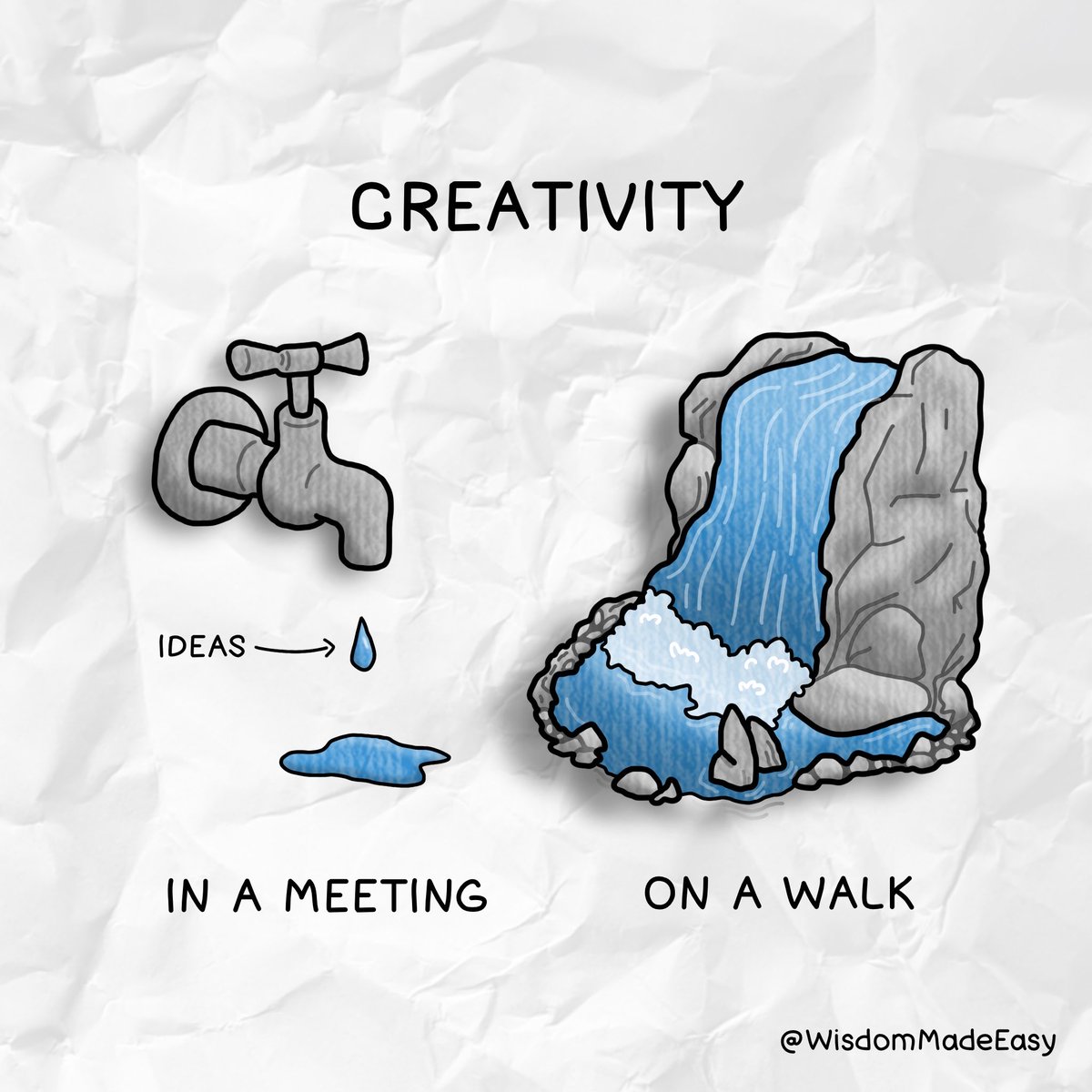
Feeling stuck? Go for a walk.
There is no mental block strong enough to outlast the power of a 30-minute walk.
It's a fact that some of your most creative moments come during periods of boredom.
• On a walk
• In the shower
• Driving in silence
• At dinner by yourself
You’re bored, your mind wanders, and your thoughts mingle.
Bam! Creative insight strikes.
Schedule more boredom into your weeks.
Simple challenge for all of you:
Go for a 30-minute tech-free walk every single day next week.
• No phone
• No music
• No podcasts
• No articles
• No audiobooks
Just you, your thoughts, your gratitude, and the fresh air.
It’s a simple reset that will unlock new creativity and shift your perspective.
Today was my last day at school. Working for the OCSB has been my life. SEAS is my second family. I will cherish the hundreds of children I’ve taught over the past 30 years. “A teacher never really retires since their work lives on in the hearts of their students.” Love Mrs C♥️
HOW TO SET A BOUNDARY:
1. Set the boundary at a time you’re not emotionally activated
2. Clear communicate boundary. Ex: “I’ll need you to call before you just drop by because I’m not always available.”
3. Allow the person to respond however they choose
4. Hold the boundary regardless of reaction
5. Show yourself compassion and learn to sit with the guilt and fear (it’s scary at first.)
A relationship must be developed by both mentor and mentee. The term “Connecting” rather than “Coaching” helps to set a mindset that both mentor and mentee are there to learn with and from each other.
Great mentors are learners as well as teachers.
Data: when mentors value insights from below, they're more engaged and effective—and their mentees are more successful.
Mentoring is not a transfer of wisdom from one to another. It's a relationship where two people grow together.