4+ yrs of work, our second muscle clock paper is out in PNAS!🚀
Muscle clock drives protein clearance at night, protecting against sarcopenia.
Sheds light on how circadian disruption (e.g. shiftwork) accelerates muscle ageing.
🔗 https://t.co/vOkX0HOb9b
#Clock#Muscle#Sarcopenia
A century ago, skeletal muscle was understood largely as the body’s engine. We now know that is much more vital
Our new framework in @NatMetabolism: The Hallmarks of Skeletal Muscle Health. 🧵
🔗 https://t.co/t9S3BdK3IH
#myotwitter
Thank you to everyone who joined me along the way, at posters, talks, and discussions across clock/muscle/zebrafish meetings. You all made this publication possible. I hope you enjoy the story, more to come as I look to grow this into a full research programme. 💪🕐
4+ yrs of work, our second muscle clock paper is out in PNAS!🚀
Muscle clock drives protein clearance at night, protecting against sarcopenia.
Sheds light on how circadian disruption (e.g. shiftwork) accelerates muscle ageing.
🔗 https://t.co/vOkX0HOb9b
#Clock#Muscle#Sarcopenia
This is the most important paper in the circadian field in over a decade. A completely new clock component that is evolutionarily conserved. @Eric_E_Zhang@susanksgolden @ @SRBR_Outreach
https://t.co/Gh8fUhDeP7
@aiysha1711@Time_MCR Cheers, thanks for having me. I enjoyed giving the talk today and I felt highly engaged with you all! Hope to see you in future meetings. 😊
⏰️ Are you looking to start a PhD? Interested in circadian rhythms & inter-organ crosstalk? Up for living in Barcelona? (who isnt?). If 3 yes's, get in touch via my website (link in bio).
Shares/RTs appreciated 🙏
#circadian#interorgan#metabolism#liver#muscle#PhD#newPI
I will be visiting Manchester this Friday (18th Oct) to share my work on the muscle clock 💪🏽🕑. If you're around and wanted to know how muscle grows with time, please feel free to join! 😊
MRC Come&See are back with an exciting seminar from Dr. Jeffrey Kelu entitled “Circadian regulation of protein turnover by muscle peripheral clock.”! Please join us in the Michael Smith Lecture Theatre on Fri 18 Oct at 1-2pm. Bring your friends! :)
Sign up via Eventbrite (free):
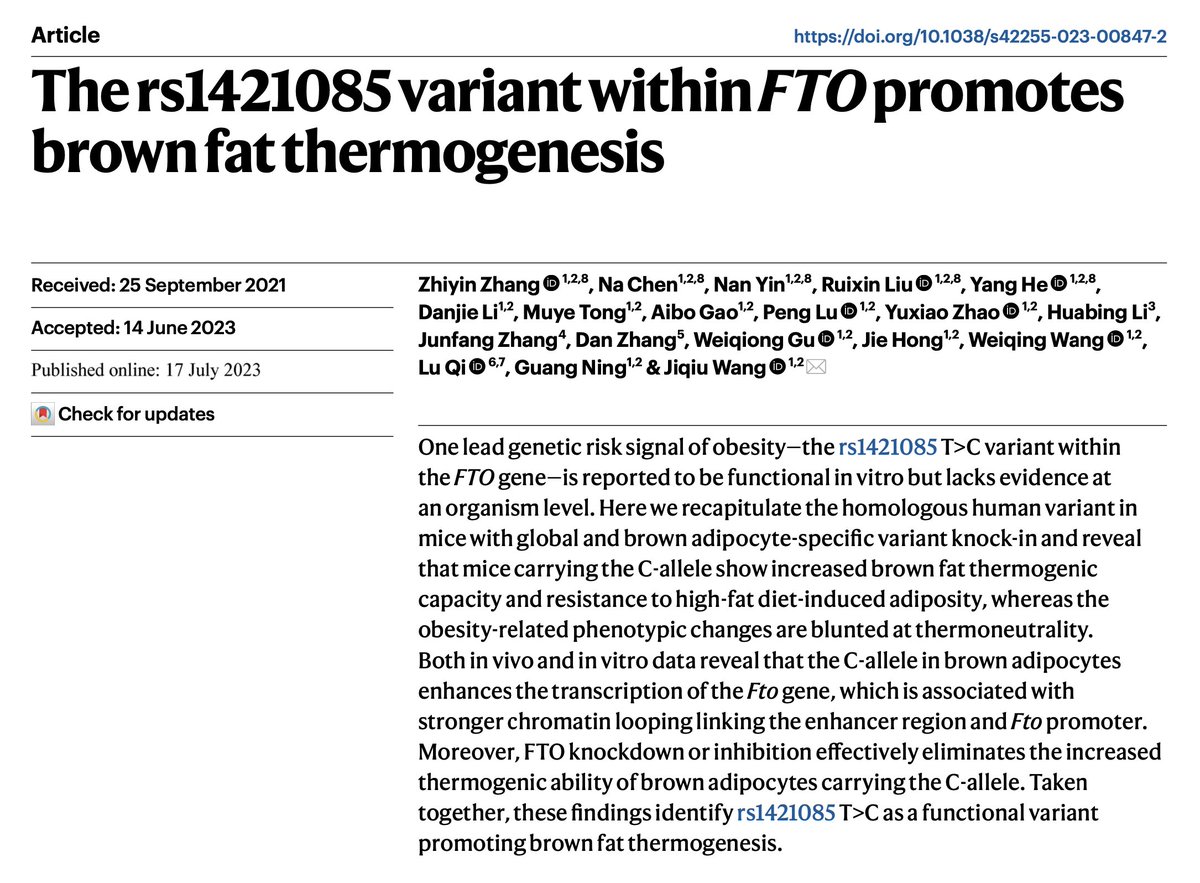
Buckle up! We're in for a wild ride today. A new @NatMetabolism paper by scientists from China adds a surprising twist to the long-known FTO GWAS story.
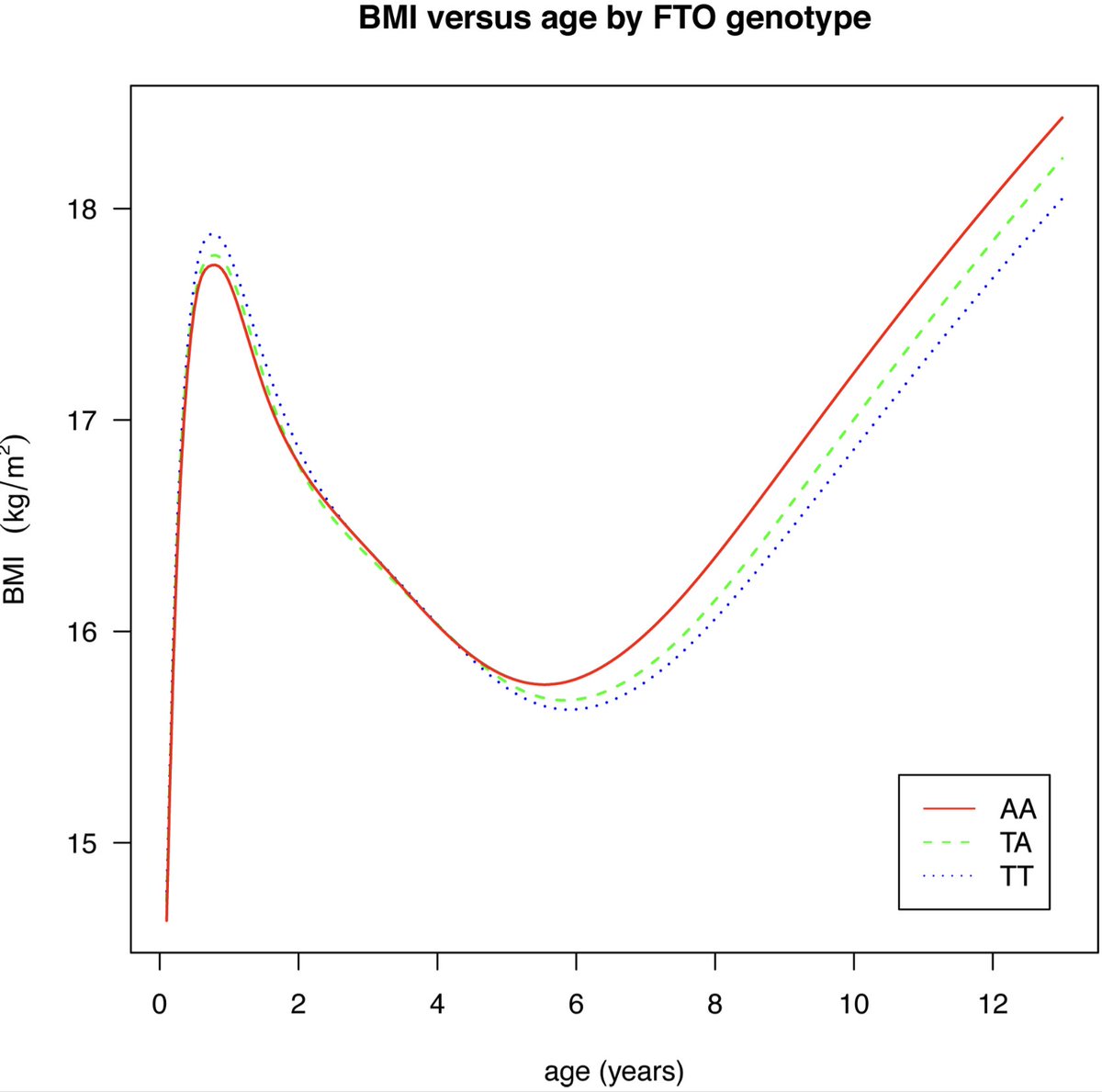
The FTO locus (16q12.2) is the first ever GWAS locus to be associated with obesity and even after 16 yrs now, scientists appear to be scratching their heads trying to make sense of this locus. Non-coding intronic variants within FTO strongly associate with BMI, where individuals homozygous for the top risk variant weigh ~3kg more than non-carriers (https://t.co/vh4ceXVQaQ).
Since its discovery in 2007, there have been tremendous efforts to identify the causal gene(s) at this locus. Given that the risk variants are sitting right within a gene, FTO was of course the primary suspect. How do you find out if FTO has an effect on BMI? Delete it in mice and see if the animal gains weight. And that's what scientists did and found out that Fto knockout mice were stunted and lean, and the leanness was mainly due to burning too much fat (https://t.co/DkKIGLvD0P). That's great. So FTO must be the causal gene.
But then contradicting findings appeared. If you knock out the Fto only in adipose tissue (https://t.co/W5A8JwT2Hx) or globally after the animal has grown (https://t.co/uJ69bO8A9x), the mice actually gain weight!
Amidst this confusion came an even bigger one: two landmark papers, one in Nature (https://t.co/Kq3uqKrAg1) and the other in NEJM (https://t.co/Ztqf4FTOYT), said, forget about FTO, the causal genes are located far away. The FTO locus is an enhancer that folds in the 3d space and touches the promoter of distant genes IRX3 and IRX5. And deleting Irx3 in mice resulted in weight loss.
Then scientists were like, you know, a proper experiment would be not to knock out Fto or Irx3, but to delete the homologous noncoding region in mice. So, they deleted an 82 basepair-homologous region in mice and showed that without this region, the mice don't gain weight when fed with a high-fat diet, and deleting this locus increases Irx3 and Irx4 expression (https://t.co/NFFL2OQNL8). So, the causal genes are IRX3 and IRX4 then.
And now, in the current paper, the scientists argue, you know, the most appropriate way to study the FTO locus is to recreate the exact genetic variant in mice and study the consequences.
What did they find? The exact opposite of what was found in humans. The risk allele that increased weight in humans, decreased weight in mice. Can it be because of some off-target effects of the CRISPR experiment? No. Even if you do the knock-in in an old-fashioned way, the results are the same. The weight loss is mainly via over energy expenditure via brown adipose tissue. Wait, there is another twist.
There is an interesting difference between humans and mice. Humans have brown adipose tissue only during infancy and then lose it as they grow into adults, which isn't the case in mice. The brown adipose tissue helps mainly during cold temperatures. The experiment mice are usually housed at around 20-22 degrees Celsius, which is an ambient temperature for humans but not for mice. It's substantially cooler than mice's "thermoneutral zone (29-31 degrees)".
So what happens when you repeat the experiments in what might be the mice's ambient temperature--30 degrees? All the weight loss effects that were previously seen at 20-22 degrees are now blunted. So, the FTO locus effects are strongly dependent on two things: temperature and the presence of brown adipose tissue. And it turned out, in fact, it was previously shown in humans that the FTO variant has an age-dependent effect. It lowers the body weight in infants and then increases the body weight in adults, which aligns with the current finding. (https://t.co/S7iKVj0p5d)
Overall, the current paper is an impressive work and will stand as a landmark in the long twisty road of FTO story. But above all, this paper is a remarkable example to show case the challenges behind translating mice physiology to human physiology.
https://t.co/i8IIr2bSFc
TransitID is out today in Cell! This is a proximity labeling method for unbiased discovery of endogenous proteins that traffick from a defined “source” location to a defined “destination” location. TransitID uses sequential labeling by TurboID in the source, followed by a chase period (minutes to hours) and then 1-minute APEX tagging in the destination compartment. Proteins tagged by both enzymes are enriched with streptavidin and anti-fluorescein antibody, and identified by mass spec.
We explore 4 intracellular and intercellular applications of TransitID:
- discovery of locally translated mitochondrial proteins (translated at OMM, then imported into mito matrix)
- mapping proteins whose cytoplasm-to-nucleus shuttling is dampened by stress
- discovery of proteins that transit between nucleolus & stress granules during stress & stress recovery
- analysis of proteins that traffic intercellularly bw tumor cells & macrophages
Work of amazingly talented co-first authors @WeiQinChemBio and @CheahJoleen, and collaborators Steve Carr @namude & Paul Taylor
https://t.co/yo4laOA14z
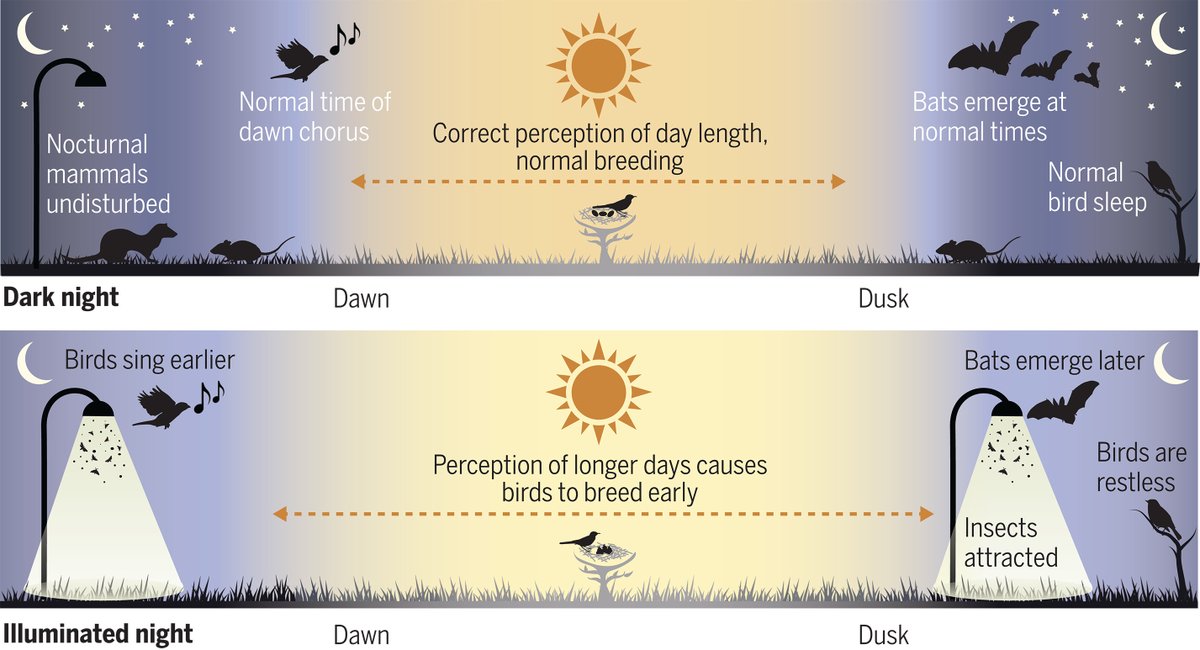
Artificial light at night has variable and complex impacts on plants and animals, disrupting entire ecosystems, according to a new #ScienceReview. https://t.co/E1jZjOD8wh #LightPollution
Had an amazing week in Il Ciocco at the GRS & GRC #myogenesis, very delighted to learn from all the cool sciences. Felt grateful to catch up with old faces and make a lot of new friends! Can't hide my joy in connecting with @kaesser and @clara_peek 💪🕐 :) Such a great meeting