Every apartment operator is hunting for margin right now.
Rents are flat. Insurance is up. Taxes are up. Most owners stare at the revenue line and hope. The smart ones look at the expense line and act.
The first place we look, in good markets and bad, is the water bill.
Your water bill is not a fixed tax. It is a controllable variable.
If your water bill shows use of over 200 gallons per unit, per day, you are burning cash.
We see deals in due diligence averaging 500 gallons. That is not "old plumbing." That is system failure.
We target 130 to 160 gallons per unit, per day.
Hitting this number does not require a miracle. It requires a specialized crew and a checklist. You can cut usage by 50% or more in less than a week.
A crew of eight plumbers can sweep a 200-unit property in days. The scope is surgical.
Toilets. Replace tanks with high-efficiency models (Toto Entrada CST244EF).
Regulators. Install low-flow showerheads residents won't notice.
The "silent" leaks. Replace angle stops. These drip for years, rotting subfloors and draining bank accounts.
Main line. Fix underground leaks that never surface but spin the meter.
Now the math:
Take a 100-unit property in Dallas. Current usage: 300 gallons per unit, per day. Annual water bill: $120,500.
We spend $100,000 on a full conservation sweep. We drop usage to 160 gallons per unit, per day. New annual bill: $64,250.
Annual savings: $56,250. That is a 56% return on capital in Year 1.
But the savings are only half the story.
Real estate trades on a multiple of NOI. At a 6% cap rate, that $56,250 in savings adds $937,500 to your asset value.
$100,000 in. $937,500 out.
In a flat rent market, this is how you force appreciation.
If you operate 100+ units in Texas and need to find margin immediately, DM me. We run the analysis. We find the leaks. You keep the equity.
Owning a small business is still the best tax deal in America.
Owning real estate (as a pro) makes it tax-free.
Generate cash from your business.
Generate losses from your real estate.
All cash, no tax.
My client made $847K last year and paid $0.
Here's the exact blueprint:
There seems to be a lot of confusion around how real estate properties are valued.
The #1 myth you’ll hear is "Properties are sold based on their in-place income"
This is dead wrong. Here’s a breakdown of how it actually works:
Easiest way to think about why this is false is by imagining a vacant 4 unit property. Vacant properties have no income. So if properties were actually sold based on the in-place cap rate, vacant properties would have a 0% cap rate and be sold for $0 dollars
That's obviously not the case. Vacant properties are generally worth more than $0 (there are some exceptions)
Why is this?
Because properties are sold based on the stabilized yield, not based on the in-place cap rate
Let's walk through an example. You have a vacant 4 unit property, how would you value it?
Assumptions are that the market rent is $1,200, lease-up costs are $60k ($10k per unit * 4 units + $20k in reserves), the market occupancy is 95%, the market NOI margin is 65%, & the market cap rate is 5%
First thing you need to do to value the property is to find out the stabilized NOI
Income: $1,200 market rent * 4 units * 12 months * 95% occupancy = $54,720
Expenses: The market NOI margin is 65%, which means that expenses are 35% of income
$54,720 * 65% NOI margin = $35,568 NOI
Now that you have the stabilized NOI, you can calculate the stabilized value
Stabilized Value: $35,568 / 5% market cap rate = $711,360
The next step in valuing the property is accounting for the costs to "get there" (to stabilization)
It’s going to cost you $60k between reserves & unit renovations
So while the stabilized value may be $711,360, you can't pay that much - you need to net out the $60k to get there. So you can only pay $711,360 - $60,000 = $651,360
So that's the *market* value. But you don't want to pay market value for a value-add deal, right? Because you're taking a lot of risk by buying a vacant property - you should have a larger payday than if you just bought a stabilized (no-risk) deal at market value
That means you need to determine what type of reward (return) is appropriate for the risk you're taking. Let's say that you come to the conclusion that it's 250 basis points above the market cap rate, or a 7.5% stabilized yield (5% + 250 bps)
Int that case, you would pay: $35,568 / 7.5% = $474,240
But remember – you still have that $60k in renovation costs you need to subtract out. $474,240 - $60,000 = $414,240
So, if your cost of capital was 250 bps above the market cap rate, $414,240 is what you would pay for the property. The remaining spread would be your profit ($711,360 stabilized value - $474,240 = $237,120)
And that's how real estate properties are bought & sold. Potential buyers assign a market cap rate to the deal as well as a spread above the market cap rate for it & the buyer with the lowest spread (the lowest cost of capital) wins the deal. It's that simple
A lot of people get confused about this, mainly because there are a lot of terms.
So I'll define a few of them:
In-place cap rate: The current cap rate based on the *seller's* numbers
Going-in cap rate: The *new buyer's* year 1 cap rate. This usually ends up being slightly different than the in-place cap rate as rents can be slightly increased, property taxes can be reassessed, etc. This is the cap rate you should be using for your year 1 underwriting purposes
Market cap rate: The average cap rate that similarly located properties of similar quality sell for in the area. This is the cap rate stabilized deals sell at
Stabilized yield: The stabilized NOI divided by all the costs in the deal (transaction costs, purchase price, renovation costs)
Thats really it - simple in theory, harder in reality
// If you want to make real money in real estate but don't know where to start
Apply below to the Acquisitions Bootcamp to work with me to find a profitable deal that fits your needs //
HOW TO AVOID A MULTI-MILLION DOLLAR MISTAKE:
Why it only makes sense to renovate *some* and not *all* of the total units on a given property and then sell the dream to someone else
Basically what it boils down to is: It doesn't make sense to renovate all the units on your own because you only really get paid for setting the "market rent"
To understand this, you have to understand how value-add properties are sold
They're sold based on a future proforma
For those of you who don't know, a proforma is essentially a projection of the *future* profit and loss statement of the property. Very notably, it *does not* take into account in-place cash flow
And the single most important assumption in the proforma is the market rent
Typically these are provided through rent comps from similar buildings
But what if you were able to provide them yourself from your own building?
Well that's exactly what you're doing when you renovate a unit to achieve a new market rent
You're hand-selecting and serving up the new market rent to the prospective buyer on a silver platter
The way I look at it, the entire purpose of renovating in a value-add deal is to provide the proforma market rent to the next buyer
Once that's accomplished, your work is done
Wipe your hands clean of the deal, sell it off, move on to the next one
Ok - so now that we know the purpose of renovating is to *realize a new market rent*, how can we achieve that outcome?
(btw, this is what 99% of "flippers" get wrong - you're not "renovating for cashflow")
Let's use my last deal as an example. Current market rent of $900. Reno cost of $13k. New market rent of $1,200. 40 total units
What's the effect of renovating and creating a new market rent?
You renovate your first unit and the $1,200 rent sets a new "high water mark" rent for the building
Most people don't realize this but this single renovation fundamentally changes the value of the building, which is far more significant than the returns from one particular unit
So, how does this work?
Well, previously, the highest rent in the building had been $900
Renovating and proving that the building can actually achieve rents of $1,200 makes *every single unit* more valuable
You’re able to multiply the new “high water mark” market rent across every unit in the building
If you think about it, previously the proforma for the building (from the perspective of a new buyer) had looked like this:
$900 market rent * 40 units * 12 months * 95% occupancy * 65% NOI margin = $266,760 NOI. $266,760 / 6.5% market cap rate = $4.1MM sale value when they exit
With the renovation, the buyer can now substitute out that $900 for $1,200
$1,200 * 40 units * 12 months * 95% occupancy * 65% NOI margin = $355,680 NOI. $355,680 / 6.5% = $5.5MM sale value. So that one renovation *theoretically* increased the building value by $1.4MM
But we're forgetting something - what about the cost to get to those $1,200 rents? It cost me ~$13k
Let's be conservative and say the next buyer budgets $15k/unit in their proforma
$15k * ~40 unrenovated units = $600k in costs to achieve $1,200 rents across the entire building
The buyer will most likely add a risk premium though (renovation and value-add involves risk), so let's add a risk premium factor of 20%. $600k cost * (1+20%) = ~$720k
So once you net that $720k "cost to get there" out of the $1.4MM in additional value, you end up with $680k in additional value at sale as a result of a single renovation
In reality these numbers are all approximate - it's tough to correctly estimate how a potential buyer will view a proforma for a property, but it's definitely directionally accurate
That's how impactful setting a new market rent is
A $13k renovation cost could potentially yield you $680k in additional value at sale
But let's get back to our central question - why only renovate a *few* units, why not renovate *all* 40 units?
The answer is simple:
Once a new market rent has been set, renovating additional units does not change the proforma rent that the next buyer is going to underwrite
So the marginal value in renovating an additional unit becomes pretty much zero
This is where investors really get tripped up and waste a ton of time on a mostly pointless activity (renovating additional units for no reason)
To be fair, there's a strong argument to be made that you need to renovate >1 unit to set the market rent and I agree with that
The reason is that the market rent from one unit might not be believable to future buyers - Maybe it was a fluke. Maybe it was due to concessions
But ~4 units (~10%) of the units is likely enough
Shows that it's not a fluke and firmly "sets" the new market rent at $1,200
Every additional unit after that is largely a waste of time
Mathematically, if you go back to the proforma, only diff (in terms of profit to you) between you renovating units and the buyer renovating units is the risk premium of 20%, which comes out to 36 units*$15k*20% = $108k
So basically after those first 4 units (for which you got paid $680k) you're only getting paid $108k to renovate the remaining 36 units (which could take 6+ mths)
That's an insane amount of work for very little pay and a horrible return on your time compared to the first 4 units
That's why you only ever renovate enough units to set the market rent for the next buyer's proforma
Everything beyond that is a very poor use of your time, energy and money
Once you set the market rent, the value in the deal has been unlocked - far more profitable to just move on to the next deal
This is a "hidden mistake" that a lot of investors make. They keep renovating for the low return
It actually ends up being a multi-million dollar mistake
Because time is by far your most important resource as a real estate investor
And renovating 36 unnecessary units for $108k is a very poor use of time
If you think about it, instead of wasting your time doing that you should be spending your time searching for a new deal in which you can set the new market rents with only a few renovations
May not seem like a big deal but spending your time doing $108k work when you should be doing $680k work really adds up over time
A multi-million dollar mistake that this thread should allow you to avoid
// If you want to buy your own profitable deals but don't know where to start
Apply below to the Acquisitions Bootcamp to work with me to find a deal that fits your needs //
You’re bearish on office but, realize people need a small office.
You’re bullish on industrial but, realize most people don’t want 100k sqft with a 10 year lease commitment.
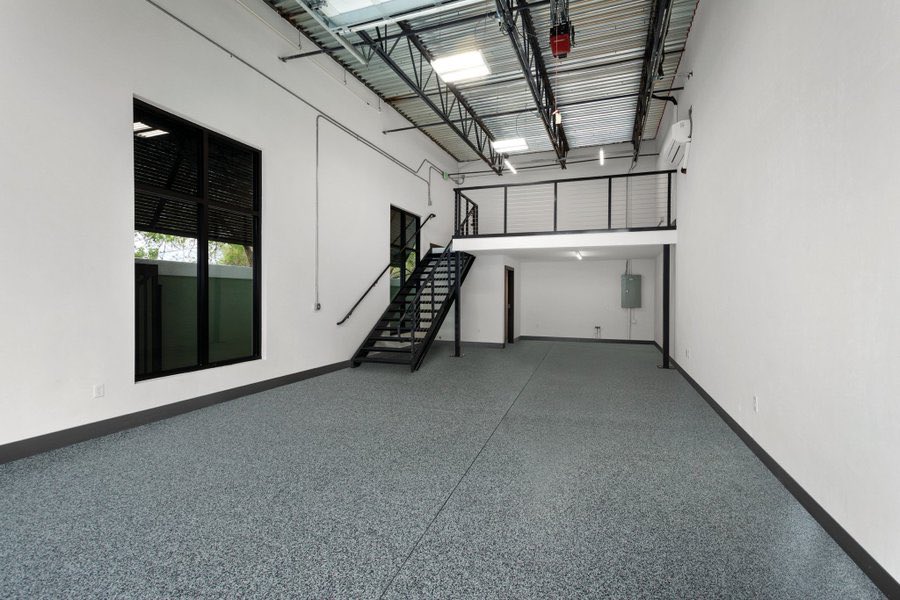
Contractor garages are a no brainer and we are still in the early stages.
Don’t spend $5,000 on a nice watch.
Instead, invest in a Micromarket that can pay you $5,000 every month.
(One of mine makes $17k/month).
Best part?
No big down payment needed.
Here's how you can start yours:
This is Magic Johnson.
He owns 400+ boring businesses that have made him a billionaire.
(he even taught Shaq how to do it)
I’m no Ex-NBA Star…
But I still own 6 boring businesses that make $725k per year.
Here’s how I bought them as a normal guy:
American Hedge Fund billionaire Bill Ackman is a learning machine.
"You can learn investing by reading books."
Here are his 9 favorite investing books everyone should read:
I’ve meet many people asking for life advice.
When we sit for a conversation on a deeper level, most of them want to “happy.” It could be my current scandals or a man in his 40s.
“Happy” is a state that cannot remain permanent. It’s setting yourself up for failure.
Instead, walk this path I’ve taken. Walk the path of growth, abundance and uncertainty. Growth as in always learning and self improvement. Abundance as in giving without the expectation for any returns. If someone screws me over, it’s fine. Move on. In life, you only need a few good brothers who have your back regardless.
And I’ll end with a famous quote done in one of my videos. “The happiest people in the world are those most comfortable with uncertainty.”
Hope this message helps you walk the better path.
📚 USE THIS TOOL TO KNOW WHEN THE BULL MARKET IS LOSING STEAM
This tool helped me get out of the market before the crash in the previous cycle. Let's dive in! 👇🏽
I can't stop thinking about this...
Michael Caine on his defining philosophy on life:
Use the Difficulty
As a young actor, he was rehearsing a play scene when a chair got stuck in the door and blocked his path.
He told the other actor he couldn't get by the chair to enter the room in the scene.
The actor's response:
"Use the difficulty...if it's a comedy, fall over it, if it's a drama, pick it up and smash it."
This idea—of using the difficulty—became a defining mantra for Michael Caine's life.
"There's never anything so bad that you cannot use that difficulty...if you can use it a quarter of one percent to your advantage, you're ahead, you didn't let it get you down."
This idea hit me hard...
How can you use the difficulty you're currently facing?
How can you embrace the struggle?
How can you find flow through the friction?
How can you sow the seeds of your light during the periods of darkness?
As with everything in life, control the controllable:
The difficulty is already there, you can't control it.
You can control how you react to it.
You can control your response to it.
You can control your attitude towards it.
Lesson: Difficulty is inevitable. Use it.
“How do I analyze a deal in 5 minutes?”
// The Art of the Back of the Envelope //
BOE’s are extremely easy
Basically what you’ll be doing is:
1. Multiplying market rents by the property’s unit count
2. Applying a vacancy factor to get total revenue
3. Multiplying the total revenue by the market NOI margin to get NOI
4. Dividing the NOI by your total cost in the deal to get your stabilized yield
5. Comparing your stabilized yield to the market cap rate (greater than 150 bp spread means it pencils)
Here’s an example: Let’s assume that you’re underwriting a 10-unit deal in a market with a 5% vacancy rate where market rents are $1,000, the NOI margin is 65% and the market cap rate is 7%. You’d be buying the property for $700k and spending $100k on renovations
10 units * 12 months * $1,000 market rents = $120,000
$120,000 * 95% occupancy = $114,000 total revenue
$114,000 total revenue * 65% NOI margin = $74,100 NOI
$74,100 NOI / $800k total cost = 9.3% stabilized yield
9.3% is 230 basis points above the 7% market cap rate, which means the deal pencils
Why does it pencil?
The property would be worth $74,100 / 7% market cap rate = $1,058,571, which would be over $250k of profit
Simple. Didn’t even take 5 minutes - you’ve analyzed the deal in about 30 seconds
So what’s the catch? The hard part of the process is making sure you have the right assumptions. If the market rent, market NOI margin or market cap rate is off, your numbers are going to be wildly inaccurate
That’s why you have to know your market cold when you’re buying real estate. The math is as simple as it gets, the money is in having the right process to arrive at the correct assumptions
If you’d like to learn how to underwrite and buy deals like this (or even smaller deals, my first deal was $200k and I only used $2,500 of my own capital) apply in the next tweet for the Acquisitions Bootcamp to work 1-on-1 with me
I’ve gotten a fair amount of requests to analyze smaller deals
Here’s a good example of a smaller deal where you have a pretty direct path to making $100k profit in under a year
These types of deals are everywhere – as I’ve mentioned before, the sub-$1MM range is not difficult to find a deal in
This particular deal is 3 units (all 2-beds) in a decent neighborhood (would call it a solid “B”). The location is also very strong, walkable to a nice downtown
In-place rents are extremely low at $1,300 and although the exterior is in great shape, the units would each need roughly $15,000 to achieve the market rents of $2,000
The list price is $580k but the property’s been sitting on the market for over 3 months and it shouldn’t be too difficult to get a 5% reduction off the ask (I just had a larger deal under contract at 25% off the ask)
Even though the in-place rents are low, the in-place cap rate actually isn’t too bad at 6%. Makes the risk/reward of the deal pretty attractive since you don’t have to take any “cashflow” risk to stabilize the deal
Something to note is that smaller buildings (under 4-units) generally operate at higher NOI margin than larger buildings in the same market. Some of this is due to the fact that they operate more efficiently but they’re also sometimes taxed differently as well (taxed as residential, not commercial)
This building has the benefit of tenant-paid utilities, which is part of the reason why it’s operating at a very healthy 72% margin at stabilization
The business plan itself is extremely basic. Just need to execute 3 low-level cosmetic unit renovations, which shouldn’t take more than a few months
Could be in and out of this deal in under a year if you wanted (although I wouldn’t recommend that for tax purposes)
You’d stabilize at just under a 9% yield and should be in the double digits cash on cash if you wanted to hold. Profit at sale would be ~$100k, not including the cashflow during the hold
The one thing I’d note is that your basis at sale is definitely creeping up there at just under $250k/key but it’s based on strong yield on a high-quality asset, so I’m inclined to de-emphasize basis in favor of yield
A few main takeaways:
1. Analyzing a smaller deal is the same exact thing as analyzing a larger deal. Only thing that’s changing is the numbers
2. Smaller deals often operate at pretty attractive margins
3. Value-add deals with significant in-place cashflow are very attractive opportunities from a risk/reward perspective
4. These types of deals are out there in the sub $1MM range
If you’d like to learn how to underwrite & buy deals (even smaller deals, my first deal was $200k & I only used $2,500 of my own capital) apply in the next tweet for the Acquisitions Bootcamp to work 1-on-1 with me