The @SpaceForceDoD just unveiled its principles guiding how the service will prioritize and support the commercial space sector. This new approach emphasizes collaboration with industry partners, boosting both national security and innovation.
https://t.co/M505gtEy8q
Big ideas don’t go far without the right support.
For nearly 30 years, @ADI_Inc has helped companies navigate defense contracts & national security.
Now, they're backing #Austin4America
🔗 Check out ADI: https://t.co/jGFYJCOla0
📝 Sign up: https://t.co/yzyL5umLCS
#ADI4America @jnrowlison
Really excited to finally be able to talk about this mission:
- $60M Space Force contract
- Feb 2026 Launch
- First of its kind mission to MEO
- Mission name: Gravitas
https://t.co/twMX7QTz2u via @techcrunch@K2SpaceCo
Heading to @DeutscheBank's Global Space Summit in NYC? Catch Impulse President & COO Eric Romo (@_Eric_Romo) on the Launch Shortage panel on Wednesday, November 20th.
Panelists will dive into the challenges and opportunities shaping the rocket launch market and how growing demand and the complexities of reliable rocket development are driving the future of space mobility. 🌌
Don’t miss this discussion on trends that will redefine launch capacity and impact the space sector for years to come.
https://t.co/XQYTVLEiOZ
ANNOUNCEMENT
Today we’re announcing major changes to our mission at ABL. We are stepping away from the commercial launch market and focusing our efforts on missile defense.
Commercial Launch
Over the past six years, we developed an orbital rocket with unique traits. It can be packed into shipping containers, set up anywhere, and launched quickly with a small team. Things like this have been done before but not at such a large scale. RS1 is six feet in diameter, a hundred feet long, weighs 150,000 pounds, and can lift thousands of pounds of material into orbit.
Our pursuit of this mission created strong technological building blocks. We designed a novel rocket engine, modern avionics system, flight software, control algorithms, and the hefty ground equipment required to operate it all. We set up three test sites, two factories, and a launch site in three different states. We built dozens of engines – printing and cutting the piece parts, assembling, hotfire testing, integrating to boosters, ground testing and flying them. We set up development, verification, and release pipelines for software and simulations of many types. We shaked and baked the hell out of valves, actuators, computers and more to certify and license the rocket. We did deep analysis and bench testing to assess nuanced risks that popped up during operations.
Our team conducted two extended flight test campaigns working around the clock in all four seasons in Alaska. These demanding operations stressed and matured our systems, with each success and failure advancing our technology readiness.
From a personal perspective, if you’ve never been a part of something like that, it can be difficult to understand the magnitude. Physically taxing operations happen at all hours across many sites. Seemingly insurmountable problems arise every week, and are overcome. The accomplishments of the RS1 program – from the individual level to the company level – have been unbelievable. I think that there’s no other challenge comparable to building a new rocket with a small team. I have tremendous respect for our group and every other group that has taken it on.
However, over the past few years, we’ve seen our ability to make a meaningful impact in the launch industry diminish. Take a look around. U.S. rockets fly every couple of days, with perfect success. It’s revolutionary. While there is still a need for more providers in certain market segments, those opportunities are decreasing. To succeed in such a demanding effort as scaling up an orbital launch program, you need deep motivation around your mission and potential impact, from many stakeholders. As the launch market matured, those motivations thinned and our path to making a big contribution as a commercial launch company narrowed considerably.
Missile Defense
At the same time, we’ve seen the world change in ways that demanded our attention as rocket designers. In 2022, while ABL mobilized for our first flight campaign, Russia launched a brutal invasion of Ukraine and used long-range missiles to target civilians. China began a rapid buildup of nuclear ICBMs while ramping up aggression in the Indo-Pacific. North Korea tested new, larger missiles while sending soldiers to the Russian front. Iran launched massive barrages against Israel, depleting defensive systems.
We began working with folks in the U.S. government who are responsible for responding to these threats. We came to understand that the current defensive solutions are inadequate on multiple levels. They’re too expensive, too slow to produce, and poorly tested against modern threats. We recognized that ABL’s technology could help to solve these problems by offering new capabilities with more test ranges, more frequent flights, and more creative R&D. We became convinced that to address these needs, a company would need to be singularly focused on the mission, rather than approaching it merely as an additional line of business.
For that reason, we have made the decision to focus our efforts on national defense, and specifically on missile defense technologies. We’ll have more to share soon on our roadmap and traction in this area. For now, suffice to say we see considerable opportunity to leverage RS1, GS0, the E2 engine, and the rest of the technology we’ve developed to date to enable a new type of research effort around missile defense technologies.
We are excited to work with anyone who is motivated by this mission. If that’s you, please reach out. We have lots of work to do and are excited to embark on this new journey.
Impulse Space has been selected by @SemperCitiusSDA to join the HALO pool, competing for rapid prototype demonstrations and experimentation to support future missions. We look forward to advancing space mobility for national security missions.
Learn more: https://t.co/RoLSP9njzs
Today Varda received authorization from @AusSpaceAgency for multiple W-series vehicle reentries into the Koonibba Test Range, hosted by our friends at @SouthernLaunch. We’re honored to perform Australia’s first commercial space reentry.
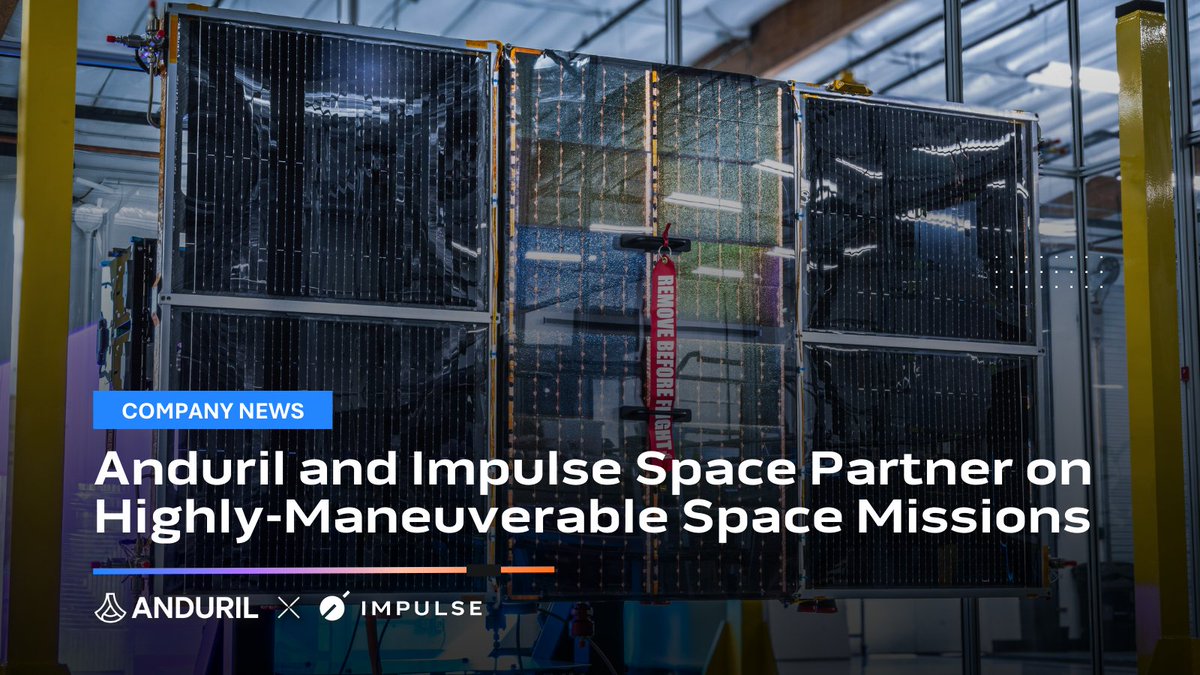
Impulse Space and @anduriltech are partnering to deliver autonomous in-space mobility for select national security missions. Combining our Mira vehicle with Anduril’s Lattice AI platform brings next-gen capabilities for RPO, Space Control, & SDA.
🔗 https://t.co/FRF7PlATJ3
Impulse Space has been awarded a $34.5M SBIR Phase III contract from @USSF_SSC for the VICTUS SURGO & VICTUS SALO missions. Our Mira vehicles will demonstrate TacRS capabilities, launching on future @SpaceX missions. 🌌
🔗 https://t.co/gxhqQxIIQK
“The FAA has seen a 1,500% increase in the number of license applications in the last decade…We’ll have to adapt the regulatory regime to keep pace,” writes Varda CEO @WillBruey this morning in @payloadspace
https://t.co/UuohaTDjof
We’re excited to announce the close of our $150M Series B funding round, led by Founders Fund, bringing our total raised to $225M. This investment will drive continued development of our Helios and Mira vehicles. 🌌 (1/5)
We are happy to announce that Varda received our FAA reentry license for our upcoming second mission launching in early November.
This flight will advance pharmaceutical research as well as fly several payloads in support of NASA and other government partners.
We're honored to have been selected by @SpaceWERXDOD for a $60M STRATFI award, supporting Helios development. Our high-performance kick stage unlocks responsive missions across all orbits, crucial for national defense. Thanks for trusting in our mission.🌟
https://t.co/N5kafSUkNj
We recently sat down with Carl Haken, VP of Avionics at Impulse Space, to gain insights into the incredible work his team is doing.
Carl shared his journey, the team’s innovative projects, and what he loves about being part of Impulse Space. ⬇️ https://t.co/FqIj6JS7My
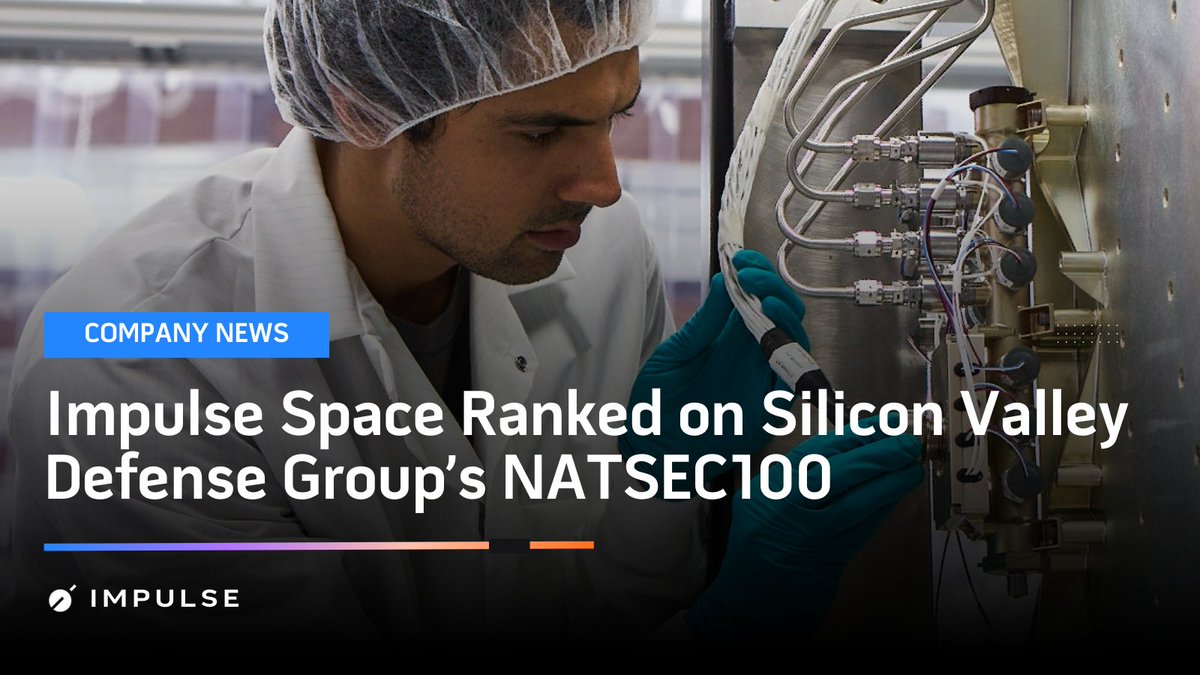
Absolutely thrilled to announce that Impulse Space has been ranked on the 2024 NATSEC100 list by @SVDG_official! 🚀🌌
Honored to be among the top national security-focused startups driving tech innovation and paving the way for the future of in-space transportation. 🌠✨
🚀 MISSION CONCLUDED: LEO Express-1 🚀
On its inaugural flight over the past 9 months, our Orbital Transfer Vehicle, #Mira, has successfully completed all mission objectives — and achieved several exciting milestones. (1/8)
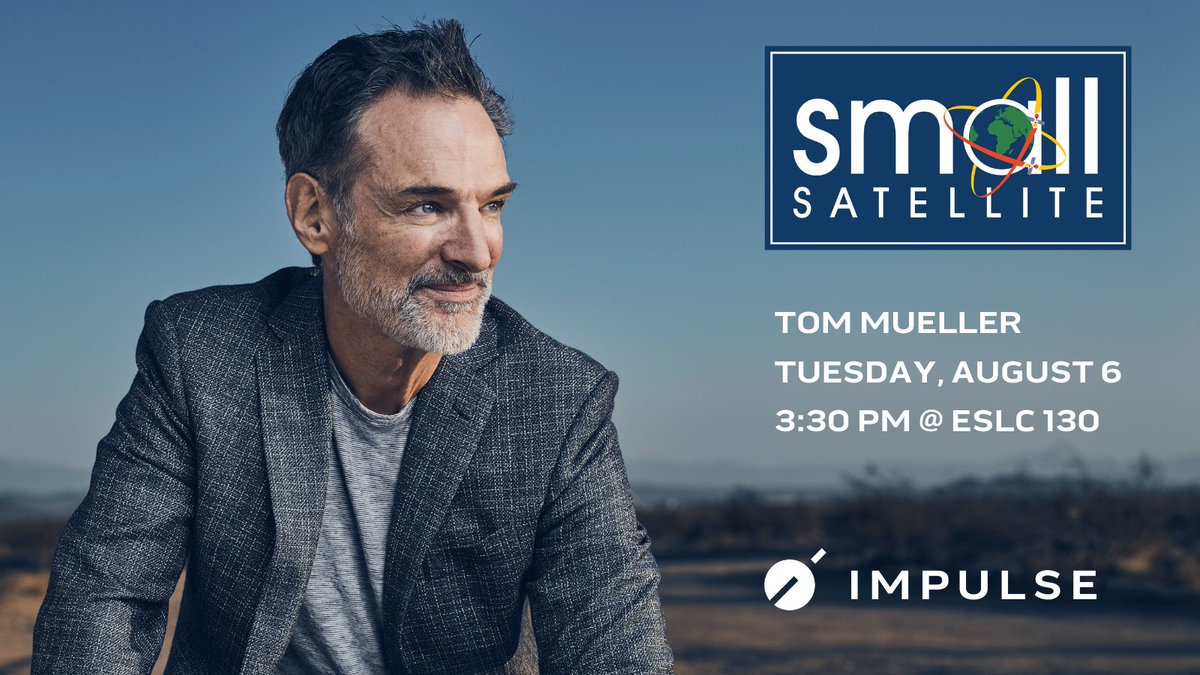
Join our CEO @lrocket at @SmallSat! Tom will give a personal update on a new program we plan to launch for small GEO satellites.
Tuesday, 3:30 pm August 6th @ ESLC 130
Exact location 👉 https://t.co/XzpaH4bvgN