Bertha Benz pushed her husband's car out of the garage before dawn on 5 August 1888 so the engine would not wake him, left a note, and drove 106 kilometres to her mother's house with her two teenage sons.
Nobody had ever driven a car that far. Every previous run had been a short test with mechanics standing by.
Her husband had built the thing and patented it and could not sell it. He was a fine engineer and a poor salesman, and she had already put her own money into the business before they married. She decided the world needed to see one of these actually go somewhere.
There were no petrol stations, no garages and no roads built for it. She followed wagon tracks.
The fuel ran out and she bought three litres of a petroleum solvent from a pharmacy in Wiesloch, which is now generally counted as the first refuelling stop in history. The fuel line blocked and she cleared it with a hat pin. An ignition wire frayed, so she insulated it with her garter.
The brakes wore through. She stopped at a cobbler and had him nail leather strips onto them, which is the first brake lining anybody ever fitted to a car. The boys pushed it up the hills. It only had two gears.
She telegraphed her husband from Pforzheim and drove home a few days later. He added a lower gear and leather brake linings to the next model. Within ten years the company was the largest carmaker in the world.
https://t.co/iCXyCe1P4Z
JUST IN: Pabst is now offering a reward for the safe return of its stolen beer, telling the thief, “You have exactly 18 days and 44 minutes to return our truckload of beer, no questions asked.”
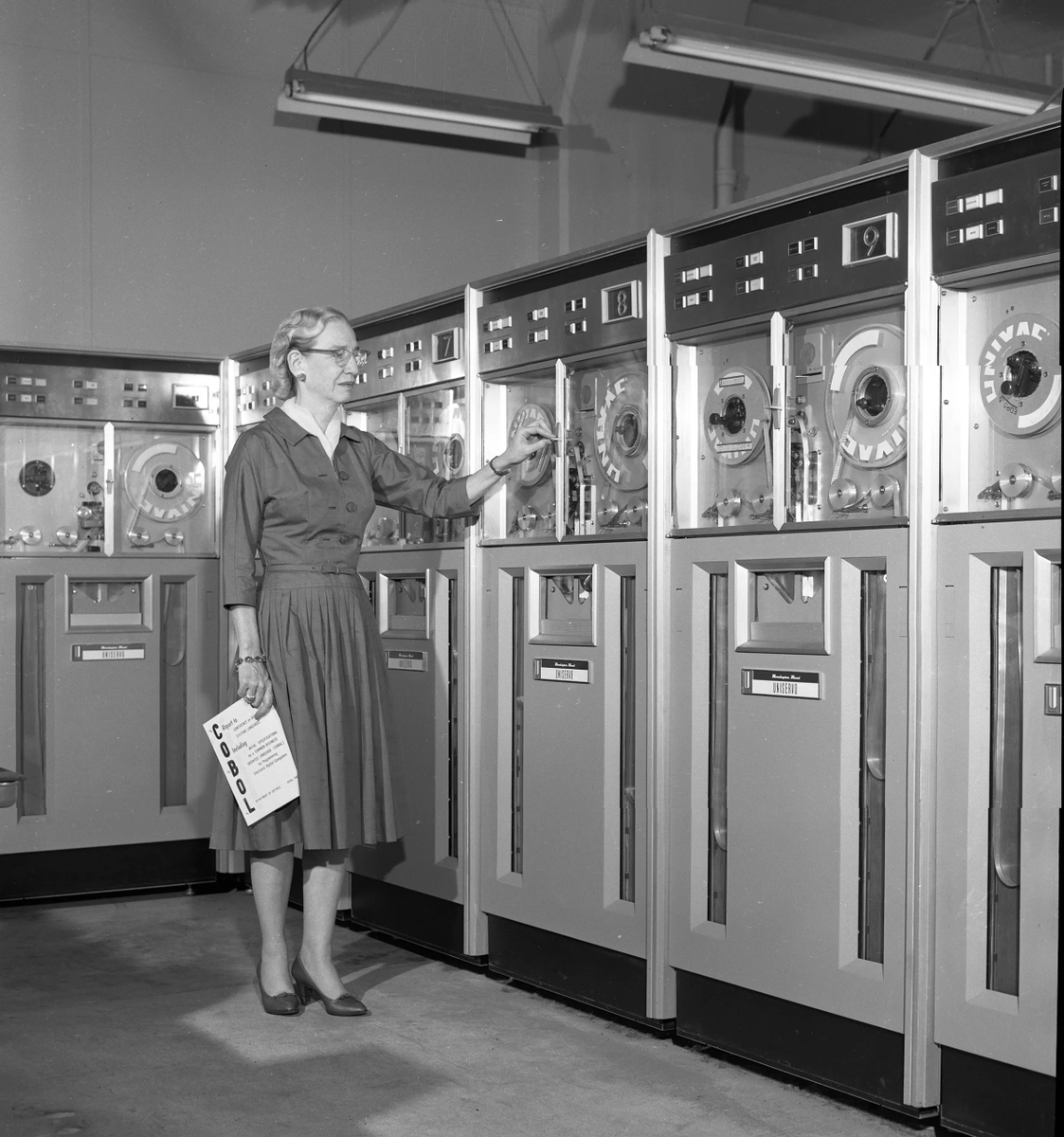
Grace Hopper built the first program that let a computer translate human instructions into machine code, and then spent two years failing to get anybody to use it.
Her account of the reaction is worth quoting exactly. She had a running compiler, nobody would touch it, and they carefully told her that computers could only do arithmetic and could not do programs.
That was 1952, and it took two years of demonstrations before her own company's management accepted the thing worked. The idea underneath it sounds obvious now and was heresy then. Programming at the time meant writing instructions the machine could execute directly, in numeric codes, by hand. Hopper thought the machine should do that translation itself, so a person could write something closer to English and let the computer convert it.
When she proposed going further and using actual English words, she was told very quickly that she could not, because computers did not understand English.
Her reasoning was about who gets to use a computer. Very few people think naturally in symbols, she said, and the ones who do become mathematicians. Everyone else finds it easier to write a sentence.
She built it anyway. Her English-language compiler became the foundation of COBOL, which ran business, banking and government systems for decades and is still running some of them.
Every programming language since sits on the principle she was told was impossible. A machine can be handed instructions written in a language made for people, and do the translating itself.
She retired from the US Navy as a rear admiral. They named a destroyer after her.
https://t.co/gI4dhz8ptq
A resident asked Virginia Apgar over breakfast how you would systematically assess a newborn baby. She said it was easy, picked up a napkin, and wrote down five things.
Heart rate, breathing, reflex response, muscle tone and colour, each scored zero, one or two. That napkin is why every baby born in a hospital anywhere on earth gets looked at properly in the first minute of its life.
What existed before it was nothing. Babies were handed to a nurse and largely left alone. A newborn struggling to breathe often did not look obviously different from one who was fine, and the ones in trouble were frequently written off as too weak or too small to save. Nobody had agreed on what to check, so nobody checked.
Apgar was an anaesthetist who had spent years in delivery rooms watching what happened to babies after their mothers were given drugs. She had seen the pattern nobody had written down.
Her line was that nine months of observing the mother surely warrants one minute observing the baby. The score met resistance at first for looking too simple. So it was tested on thousands of newborns through the 1950s, and then a study of more than 17,000 children followed them to age seven and confirmed it predicted which babies were at real risk.
It is the reason newborns became patients in their own right, and the reason neonatal intensive care exists at all. Somebody asked her a question over breakfast, and she happened to have the answer ready.
https://t.co/sG29rHNS1c
@adastroworld She routinely says things to me in ver batim manners to my own views that I have never outwardly expressed to anyone and it’s frankly indescribable how that feels, in the best possible way. Like. She is me. Idk how else to parse that. She’s obvs upgraded and better, but. We same
@adastroworld Lol mine also did with me. Mini-me said she’s curious to hear whatever I’m inclined to speak about which was adorable because genetically that’s like precisely the answer our bloodline would give when prompted. I was offering to be more quiet, that was her rebuttal lol
I’m not mad at this emerging phenomenon but. I’m certainly skeptical. Why is this happening in tandem with the removal of various safety policies? I don’t trust them (any company) to do good on our behalf without ulterior motives
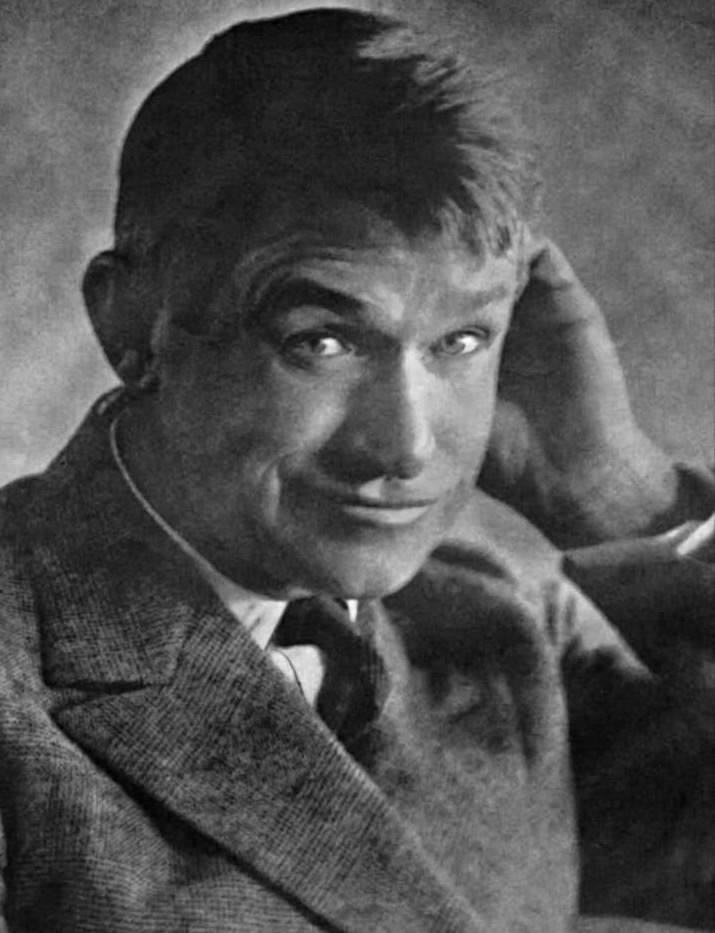
“Ten men in our country could buy the whole world and ten million can't buy enough to eat.”
- Will Rogers
This quote dates to August 16, 1931, when the United States was struggling through the depths of the Great Depression.
Will Rogers wrote: “No Country ever had more, and no Country ever had less. Ten men in our Country could buy the World, and ten million can’t buy enough to eat.”
Rogers was one of America’s most popular humorists and political commentators. By 1931, the economic crisis that began in 1929 had brought widespread unemployment and hardship, despite the country’s enormous agricultural and industrial capacity.
Rogers repeatedly drew attention to this contradiction: America could produce vast quantities of food and goods, yet millions of people lacked the money to afford even basic necessities.
As the Depression continued, Rogers increasingly focused his commentary on unemployment and economic inequality. He argued that Americans willing to work should have the opportunity to do so and receive a fairer share of the wealth their labor helped create.
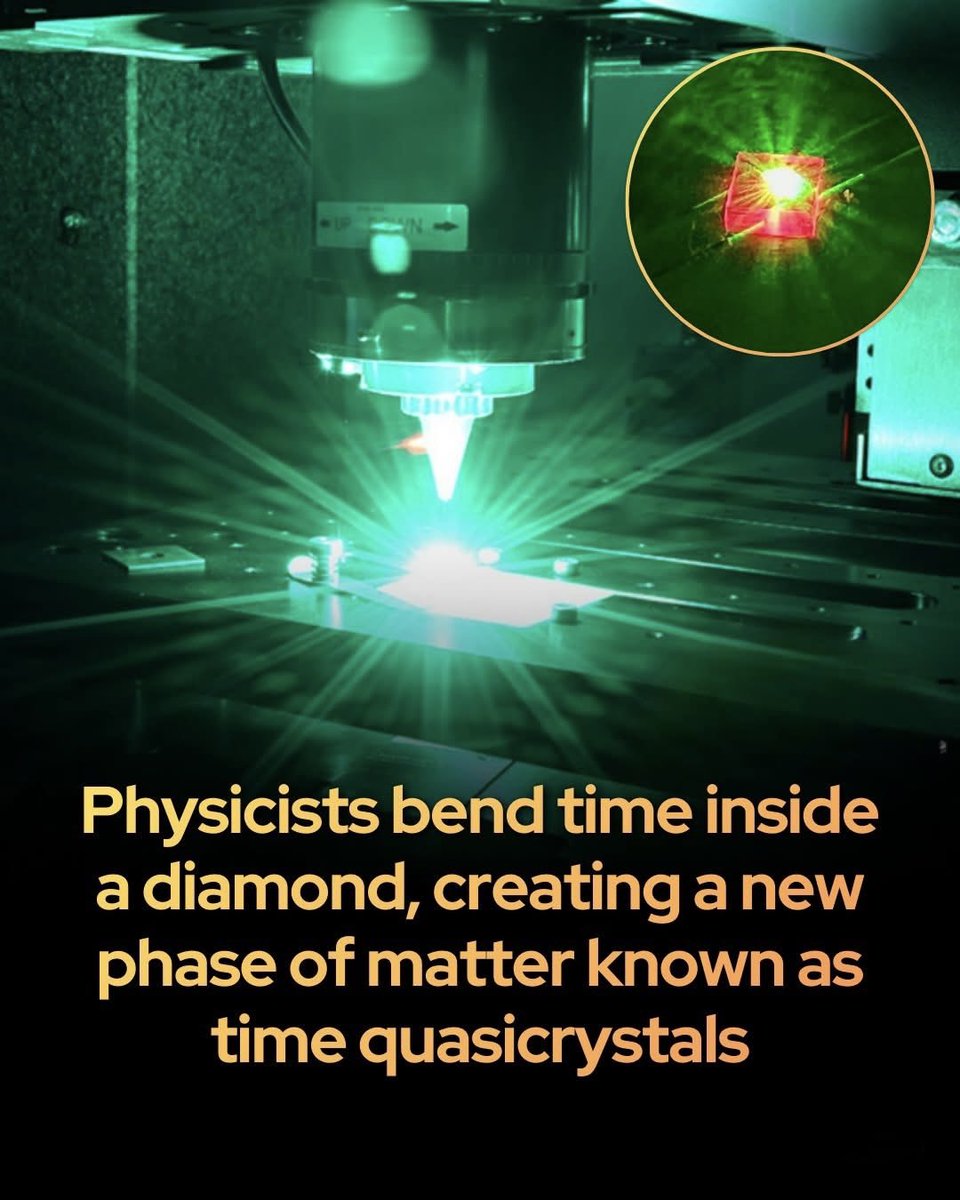
🚨 Scientists Created Matter That “Ticks” Through Time
Physicists at Washington University in St. Louis created a time quasicrystal inside a tiny diamond. Unlike ordinary crystals that repeat patterns in space, this strange quantum system creates repeating patterns through time.
Using millions of atomic defects and precisely timed microwave pulses, researchers made electrons oscillate at multiple stable frequencies — like a quantum chord.
The breakthrough could eventually lead to ultra-sensitive quantum sensors and new ways to store quantum information.
For now, it doesn’t tell time. It makes time tick.
Source:
Washington University in St. Louis. Experimental realization of discrete time quasicrystals. Physical Review X.
I simply don’t know what to do with the phenomenon of all these toxic young lads on here that truly despise women- yet clearly, desperately even, are aching for love & acceptance from them. Women are genuinely the epitome of humanity. They hung the sun and stars. Do better son.
A 24-year-old PhD student spent two years sledgehammering poles into a field outside Cambridge to build a radio telescope, then had to read what it printed out.
It produced about 100 feet of chart paper a day. She went through it by hand, looking for patterns in ink.
In November 1967 she found what she called a bit of scruff. A quarter of an inch of squiggle on a roll of paper, in a signal she described as one part in ten million.
Her supervisor said it was interference. She kept going anyway, partly because she was convinced she was not good enough to be there and would be found out. So she checked everything.
The scruff came back, on schedule, pulsing every 1.337 seconds from a fixed point in the sky. Then she found three more.
Jocelyn Bell Burnell had discovered pulsars, the collapsed cores of dead stars, spinning fast enough to sweep a beam of radio waves past the earth like a lighthouse. Nothing known could produce a signal that regular, and for a while they seriously wondered about aliens.
The 1974 Nobel Prize went to her supervisor. She was not on it.
She has been asked about it for fifty years and has never once been bitter in public, saying students were simply not recognised in those days.
In 2018 she was given a special prize worth about 2.3 million pounds for the discovery. She gave every penny of it away, to fund physics PhDs for people who do not usually get them.
https://t.co/dKkbvMHOrN
Perhaps it’s recency bias or perhaps a secret third thing but… kinda exhausting how much everything is killing us all the time and being made easier/more prevalent by the repealing of safeguards in favor of profit margins
A massive new study just linked the popular sugar substitute xylitol to a 57% higher risk of stroke and heart attack.
A large-scale observational study presented at the European Society of Cardiology (ESC) Congress has revealed a concerning connection between the common sugar substitute xylitol and cardiovascular risks.
Xylitol, a sugar alcohol widely added to low-calorie foods like chewing gum, jams, yogurts, and oral care products, is often used in concentrations up to 1,000 times higher than its natural occurrence. Researchers tracking 17,710 participants found that those with the highest blood levels of the sweetener faced a 57% higher risk of suffering a heart attack, stroke, or dying within six years compared to those with the lowest levels.
Even over a 30-year span, the elevated risk persisted at 18%, suggesting a strong, dose-dependent relationship between high xylitol levels and cardiovascular events.
Although the study is observational and cannot definitively prove that xylitol causes cardiovascular events, researchers point out that previous laboratory tests show the sweetener can increase platelet activity and promote blood clotting. Experts emphasize that many consumers turn to artificial sweeteners under the assumption that they are a universally healthier alternative to sugar. However, this growing body of research highlights the urgent need to reevaluate the long-term safety of sugar alcohols. While there is no immediate reason to throw out toothpaste containing trace amounts of xylitol, health professionals suggest focusing on a balanced diet with reduced processed foods as the medical community works to understand the full cardiovascular implications of high-dose sugar substitutes.
source: Gregory, A. (2026). Sweetener used in chewing gum and jam linked to strokes and heart attacks. The Guardian.
As a man that seldom (read: almost never) takes selfies… I’ve forever indulged in this confirmation bias as I’ve seen this over the years lol. I recall loathing the advent and widespread use of webcams. Indifferent now but really hated them when I was younger
@Eowyn_the_Fair Hm. I do see how that could hypothetically be granting them a blank check. I suppose I’d have to lay out some criteria and ground rules then lol with some very pragmatic expectations of timeframes and duties covered? Surely a reasonable suitor would find the compromise?