Two types of pertussis vaccine are available in combination with diphtheria and tetanus vaccines. Visit ASHP's SafeMedication for patient-friendly information written by pharmacists for an article about pertussis vaccination. SafeMedication provides trusted information to consumers about prescription and over-the-counter medications and answers common health questions. https://t.co/VENzZ1zFUj
“Experts” & “expertise” can be very dangerous to change interventions.
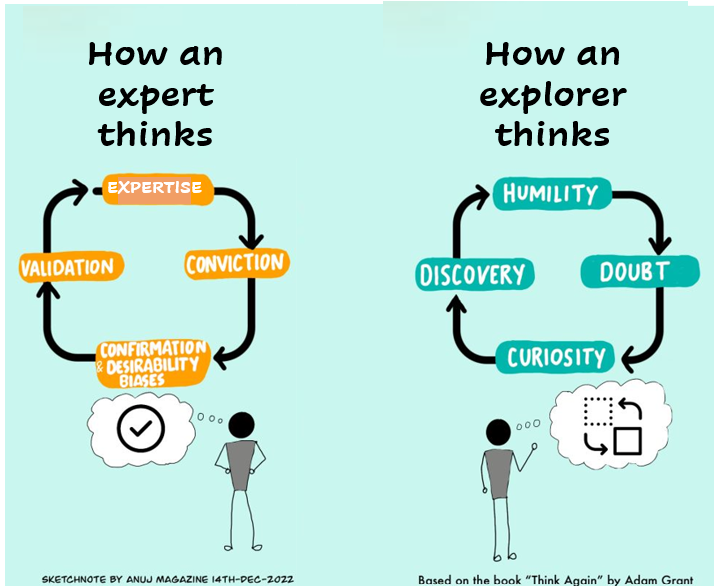
In leading change, it’s better to think like an explorer than an expert. See the graphic below.
An “expert” way of thinking can become a loop where knowing a lot turns into strong certainty. That leads us to mainly look for information that backs up what we already know, which then makes us feel confirmed. Experts can become oriented toward being right & getting affirmed, which can make their thinking narrower & more self-sealing over time.
An “explorer” way of thinking is a loop focused on learning. It starts with being humble enough to admit we might not have the full picture, then asking questions, staying curious & trying to find out more - so new information keeps shaping our views & change practice over time.
One of the greatest dangers in change experts (especially prevalent in external change experts coming into an organisation) is bias. Common biases are:
- Confirmation bias: we search for information/evidence that supports what we already think & overlook anything that contradicts this.
- “Solutioneering”: We jump quickly to a preferred intervention (new structure, operating model, digital tool etc) before fully understanding the local context & constraints.
- Authority bias: we can give extra weight to the opinion of the most senior person (or the loudest “expert”) & discount what others (especially people closer to the work) are seeing or can contribute.
- Overconfidence effect: we can be too sure we’ve got this under control, so we plan as if the future is predictable & leave too little room for learning & adaptation.
- One-size-fits-all / template bias: we over-apply what worked elsewhere (reusing change models, templates & assumptions) even when culture, incentives, capability or demand patterns differ.
- Case-study trap: We lean too heavily on successful past engagements & familiar sectors (“this looks just like Y”) & under-sample what is unique about this organisation.
In a relatively stable world, expert-led change can deliver results. But as AI accelerates the pace of disruption, the edge shifts from having the answers to staying open to better ones. The most effective change leaders will be those who keep their curiosity switched on, run experiments, learn quickly & humbly adapt when the evidence changes. In other words, the future belongs to explorers - because in an AI-shaped world, agility is likely to beat expert ability when it comes to change.
For experts/explorers see Joey Davis: https://t.co/Ya2L36fAPO
For more on biases, see the review by @grahamkmann of the work of Rolf Dobelli: https://t.co/54H7jtZBPs
Graphic adapted from one by @anujmagazine.
Misinformation represents a serious threat to individual and global health.
We need to understand more about how susceptibility to misinformation is socially patterned so that it doesn’t deepen health inequalities, say @drsimonwilliams & @Sander_vdLinden https://t.co/qZBC0Yh3LQ
ASHP is looking for speakers for the Medication Safety and Quality Pearls at the upcoming 2024 Midyear this December. This is a highly-regarded, fast-paced, two-hour session that showcases FIVE-minute presentations by experienced practitioners. If you have specific, practical advice on solutions for medication use issues every day, we would like to hear from you! Please submit proposed pearls by April 22: https://t.co/O62xkVRhHx
The SICP SAG on Medication Safety is proud to bring forward an exciting opportunity for residents who are working on projects that address a medication safety gap in their organization. https://t.co/dLx1rQpIBL
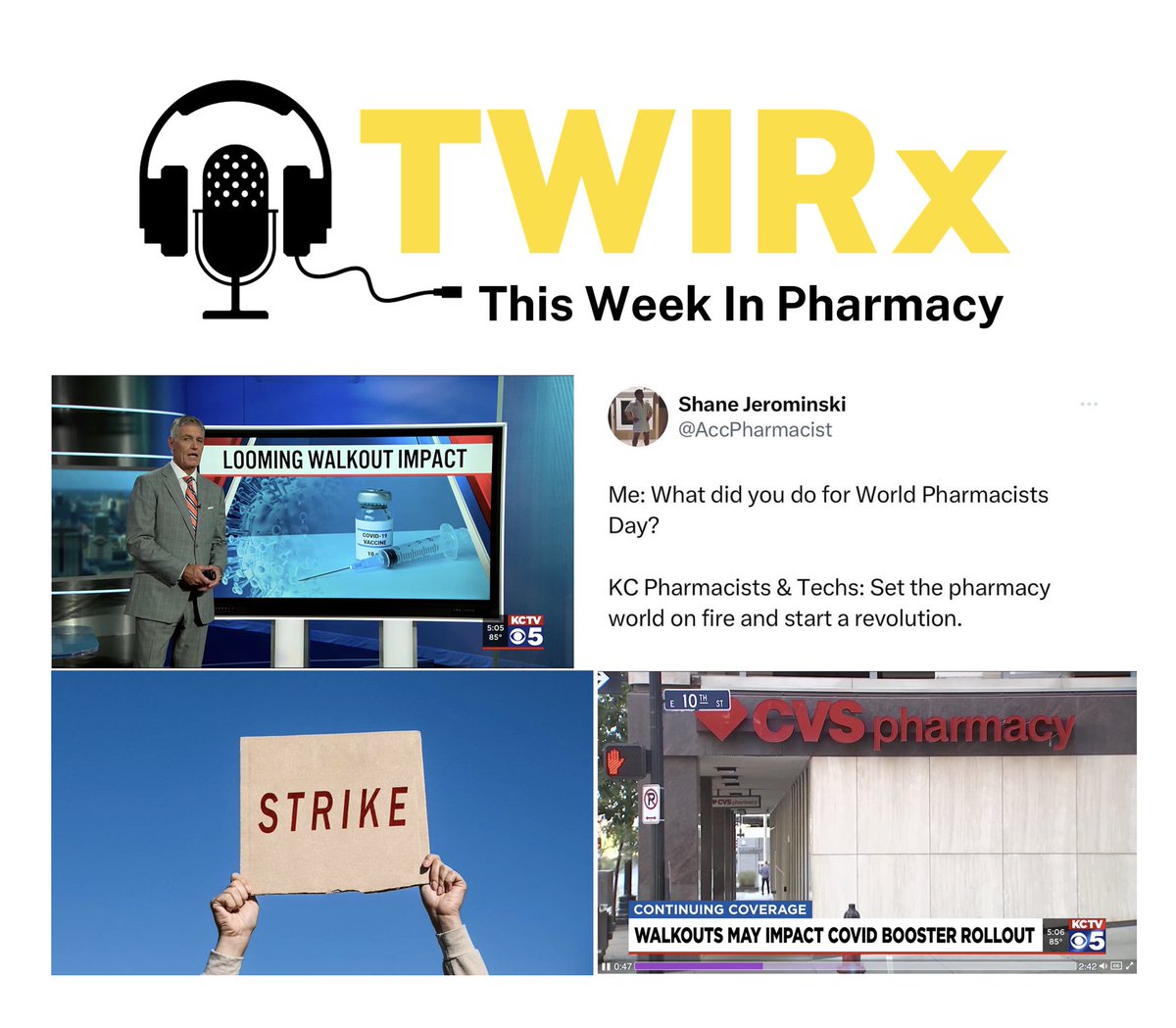
“@Pharmacists all over the nation have talked about, joked about, wanted to, wished that we could do things like this,” one of the walkout organizers told @USATODAY. “I know the #pharmacists in this district – a lot of us have worked together for a long time, and we just decided we’ve had enough.”
The Nation has heard loud and clear from #Pharmacists in Kansas City and Missouri that the working conditions at @CVSPharmacy are not safe for Pharmacists, Techs, and most importantly Patients.
We're joined by 'Would Your Like Shots with That' Marie WIlda @ShotsWithThat and 'Pizza Is Not Working' Dr. Candace Olusola PharmD collaborators on 'This Week in Pharmacy' @PINW_CA
Don't miss it!! 2PM ET FRIDAY!!
https://t.co/MZS3ssxyI8
@saltylungs Just didn't want you to think it is the pharmacy, as you stated. I understood it was a common misappropriation of blame as they are the ones you physically see.
@saltylungs PBMs don't appear to take anything but profit into account, unfortunately. Somehow we allowed this in the name of better managed care... then the monster got out of control.
@saltylungs To be clear, it's most likely the conditions that PBMs and upper management force chain pharmacies to work under. Totally unsafe and doesn't do anything positive for patients.
Agree with trying to talk with the pharmacy manager.
@thepedipals Not a hard no, but haven't reported to speaking in years. Would have used it considerably less if starting over. Too many tools in the toolbox to use a 🔨 very often.
Only used it as much when younger because I didn't have the skills as a parent that I do now.
@mmPharmD@EB_Hirsch Looking at examples for something reasonably close: when many outlets talk about a president, they use President the first time, and Mr. or just the last name mostly thereafter. Same with MDs.