Mom: how’s work going?
Me: pretty good, we made all the numbers go way up in this table and shipped the best model in the world
Mom: that's nice but what's happening with the "SWE Bench" row
Me: mom can you not right now
More AI legal action, this time for agents -> Amazon sends a cease-and-desist letter to Perplexity, demanding it to stop letting Comet make purchases on users' behalf and accusing it of computer fraud https://t.co/87LtNGDUFI
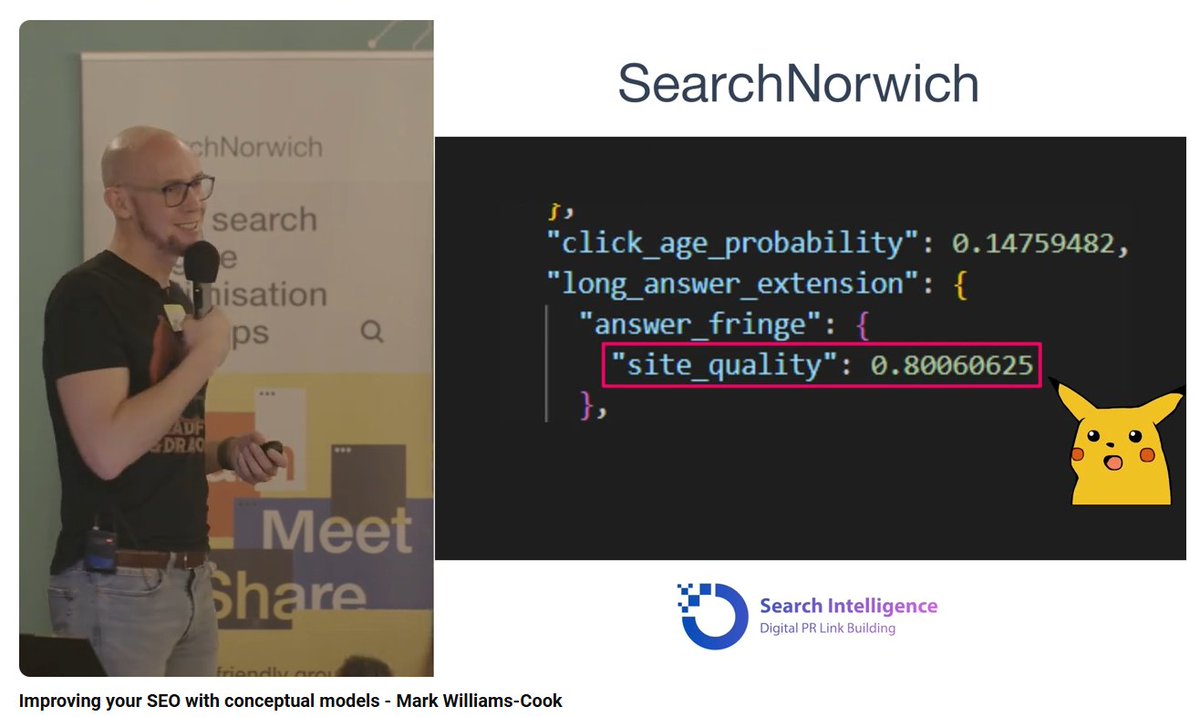
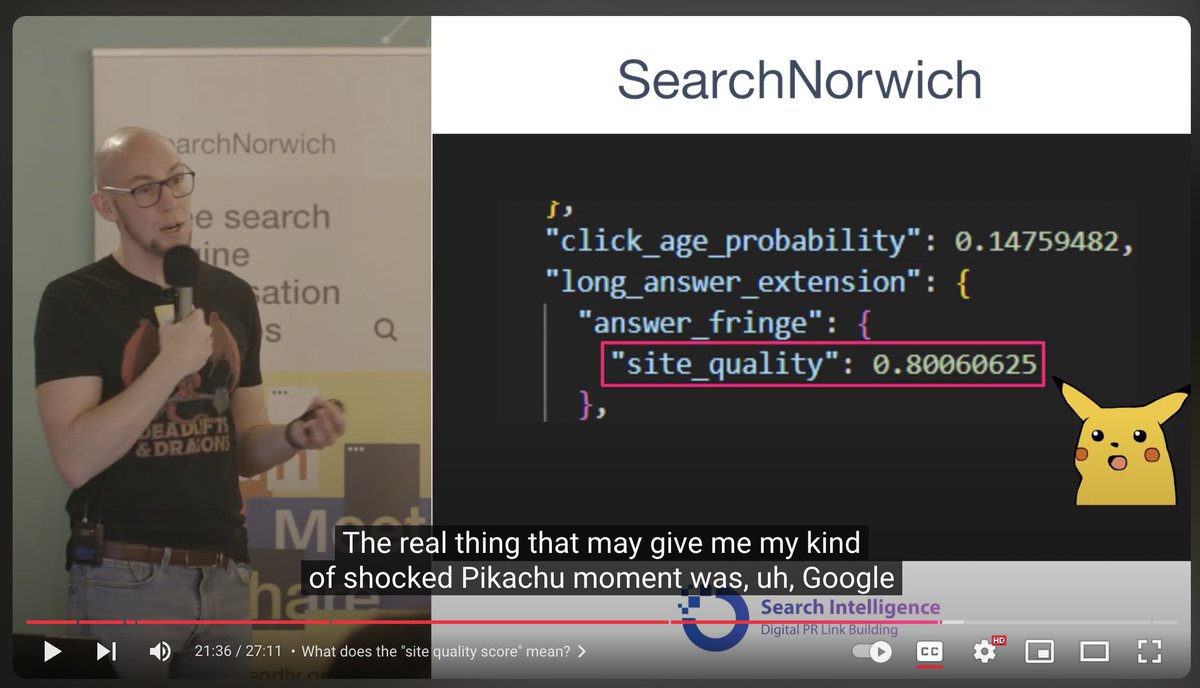
This is so good. I highly recommend watching @thetafferboy's presentation. Mark and his team found a Google endpoint and was paid $13K+ for reporting the vulnerability. But in true SEO fashion, they first received 2TB of data based on 90M queries, and identified 2,314 properties Google uses. That includes site quality scores (by subdomain like I have explained before), YMYL flags, consensus flags, click age probability, and more. Great stuff from Mark. https://t.co/2nxXGFGFEI
A must watch video presentation from @thetafferboy about Conceptual Models of SEO and Google Exploits, sharing what he and his team discovered through a Google endpoint:
* By manipulating network requests, the team was able to translate the data into plain text, resulting in a large dataset of over 2,000 properties used by Google to classify queries and sites, as well as data from over 90 million queries
* Google uses a consensus score to determine the reliability of information on the web, which is generated by counting the number of passages in content that agree, contradict, or are neutral to the general consensus.
* The consensus score likely impacts ranking on specific queries, and Google uses classifiers such as debunking queries to determine the intent behind a user's search.
* For debunking queries, Google prioritizes results that align with the consensus, while for more subjective topics, such as politics, Google intentionally includes a mix of consensus, neutral, and non-consensus results.
* For queries that are classified as "Your Money or Your Life" (YMYL), Google weights its algorithm differently to prioritize accurate and trustworthy results.
* Queries can be classified into one of eight query classes, known as Refined Query Semantic Classes (RQ), which include short fact or bull (Bing) queries that have yes or no type answers.
* A click probability exists for every organic result, which Google uses to build a prediction model, and this probability can be influenced by modifying page titles
* Google does not use click-through rate directly in ranking, but rather uses a prediction model that can be optimized against.
* Google assigns a site quality score to every website on a subdomain level, with scores ranging from 0 to 1, and this score is used to determine eligibility for features like feature snippets and People Also Ask boxes.
* Sites with a site quality score below 0.4 are not eligible for these features, regardless of optimization efforts, and this score serves as a prerequisite for ranking in certain search results.
* Site quality score is calculated based on factors such as how often people search for a website along with other search terms, how often they select the website even when it's not the top result, and how often the website's name or brand name appears in anchor text around the web.
* When there is no user data available, Google uses a predictive model called Painton to estimate site quality, which involves building a phrase model by turning page content into numerical data.
* Real-world data and studies have shown that classic SEO metrics are becoming less reliable, and site quality is becoming a more important factor in determining ranking.
* Much more!
Watch it here: https://t.co/7dmZbHZycS
Dive into the future of AI with 'Situational Awareness: The Decade Ahead'—a must-read by @leopoldasch for anyone interested in the journey from GPT-4 to superintelligence.
https://t.co/iDvZH62Teo
😬The forum take-over isn't slowing down. 2 weeks ago, the top-ranking sites for this SERP were:
1. A garage door company
2. Video carousel
3. A niche forum
4. Discussions & forums block
Today it's:
1. Video carousel
2. Discussions & forums block
3. A niche forum
4. Reddit
The garage door company that had the featured snippet was shoved down to position 6.
Newly released internal slides explaining Google's use of click data for ranking the previous decade.
Key points:
• Using CTR could lead to spam/click-bait & NOISY results
• But these results are ALMOST good
• Compensate by adding page quality scores, relevance, etc.
1/3 🧵
Visual Studio Code Shortcuts, VSCheatsheet provides a list of instructive illustrations with the most frequently used shortcuts and extensions #vscode
https://t.co/K9Xf5vbuXn
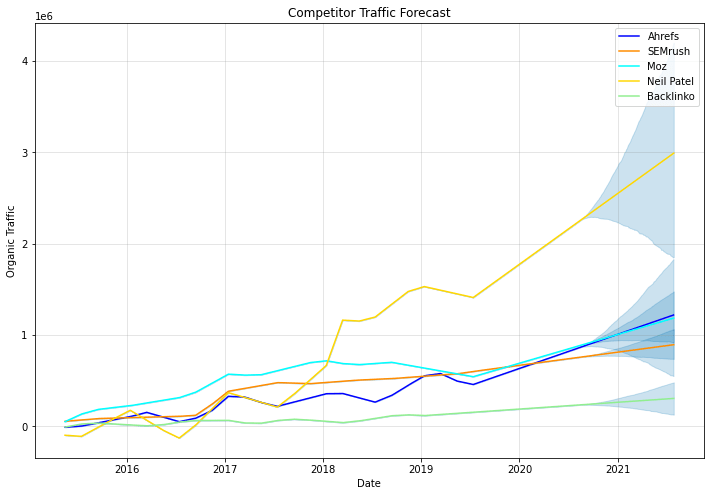
Forecasts using 3rd party data from @ahrefs help with sales / justifying resources. https://t.co/IVWUIqGtqg
Use cases:
-Predict your own traffic or traffic value
-Compare against competitors
-Page forecasts help you schedule content updates
-See how a core update may impact you